Flash Memoir Prompt: Sound from Childhood that You Haven’t Heard Since

memoir prompt sound from childhood

A warm flash memoir prompt for following one vanished childhood sound into a clear scene, a sensory detail, and the feeling it still carries.

You may not think about the sound for years. Then one day, something close to it reaches you: the squeak of a screen door, the groan of an old bus, the click of a rotary dial in a movie. For half a second, you are not where you are. You are back in a kitchen, a classroom, a basement, a backyard, or the back seat of a car.

This flash memoir prompt about a sound from childhood you haven’t heard since invites you to listen for that small, lost piece of your past. The sound does not need to be dramatic. In fact, the quieter ones often hold the most power.

memoir prompt sound from childhood

The Prompt

Write about a sound from childhood that you haven’t heard since.

That sound might be the rattle of milk bottles, a parent’s key in the door, a cartoon theme song, a church bell, a playground whistle, or the hum of a machine no one owns anymore. It could be a sound tied to a place that has changed or a person who is gone.

A prompt like this works because sound can bypass the usual way we remember. You may not recall the full story at first, but you might remember the exact pitch of a garage door, the rhythm of someone’s footsteps, or the hollow thump of a wooden drawer. From there, the memory begins to open.

Why This Memory Matters

Sounds often mark the borders of childhood. They told us when someone was home, when dinner was ready, when school had ended, or when it was time to be quiet. Some sounds made us feel safe. Others made us tense before we even understood why.

This flash memoir prompt sound childhood haven’t heard since can uncover more than nostalgia. It may reveal a family routine, a neighborhood that no longer exists, or a version of yourself who knew the world through small signals.

Maybe the sound belonged to a person. The scrape of your grandfather’s chair. Your sister’s laugh through a bedroom wall. Your mother’s bracelets as she reached for the light switch. These details can carry emotion without needing a large explanation.

Sound also helps writers stay close to the scene. If you want to build sharper memories, it can help to practice the same careful attention used in close reading in literature. Notice what is actually there before you decide what it means.

How to Approach This Prompt

Begin with the sound itself. Do not start by explaining your whole childhood or naming the lesson. Write the sound as clearly as you can.

Was it sharp, dull, tinny, soft, uneven, far away, or too close? Did it happen once a day or only in one season? Did you wait for it, dread it, or barely notice it until it disappeared?

Then narrow the memory to one scene. Choose one room, one afternoon, one car ride, or one walk home. A flash memoir works best when it gives the reader a small door instead of a whole house.

You might write, “The sound was the metal snap of my lunchbox closing,” or “The sound was my father clearing his throat before each phone call.” Let that physical detail lead you.

After you have the moment on the page, ask what was happening around it. Who was there? What did you want? What did you not know yet? Try to write what you noticed before you explain what it meant.

If you get stuck, read your draft like a student marking a passage. Circle the strongest image. Underline the most honest sentence. If that method appeals to you, this guide on how to annotate literature can also help you look closely at your own writing.

Avoid trying to tell the whole story at once. The sound is enough. Trust it to carry the memory.

The Flash Memoirist
previous arrow
next arrow

A Quick Example

The sound I haven’t heard since childhood is the clack of my grandmother’s ice cube tray. It was metal, with a handle she pulled up like she was starting a machine. The cubes cracked loose all at once, sharp and bright, and she dropped them into tall plastic cups that had faded flowers on the sides. I would sit at her yellow table and wait for the lemonade, pretending not to watch the sugar sink. Her kitchen was always too warm, even with the window open. I remember the clack more clearly than her voice now, which makes me sad if I think about it too long. That sound meant she had noticed I was thirsty before I said anything.

Try It Yourself

Set a timer for ten minutes and write about one sound from childhood that you haven’t heard since. Stay with the sound longer than feels natural. Let it echo in the room of the memory.

You do not need a perfect ending. You only need one true detail and one honest feeling. If the memory leads somewhere unexpected, follow it. If it stays small, let it stay small.

This flash memoir prompt sound childhood haven’t heard since is less about the past being gone and more about what your mind kept. A sound can be a tiny archive. Open it carefully.

Want More Flash Memoir Prompts?

If this prompt helped you find a memory, keep going. Short prompts can make a daily writing practice feel simple and meaningful. Explore all 365 prompts in The Memory Trigger: 365 Flash Memoir Writing Prompts.
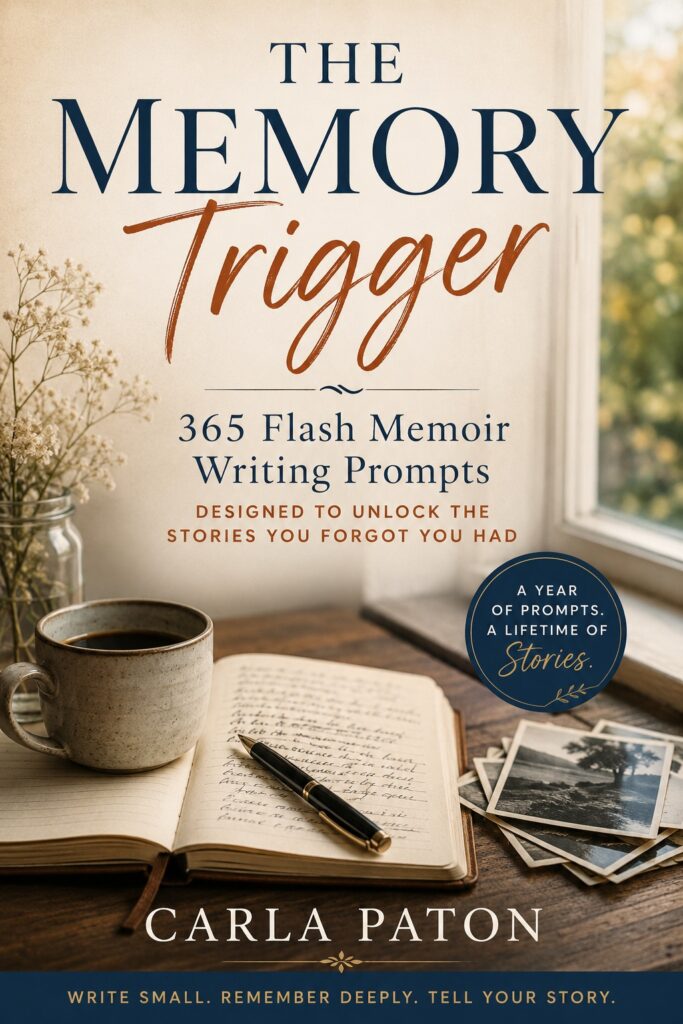
The Memory Trigger

Themes in The Road: A Student-Friendly Guide

The Road Themes
The Road Themes

The themes in The Road help students see why Cormac McCarthy’s novel feels so powerful and bleak. This guide explains the major ideas behind the father and son’s journey so you can discuss the book with more confidence.

In this Guide

Use this guide to review the main ideas, conflicts, and symbols in the novel.

  • Why themes matter in the novel
  • Major themes students should know
  • Love, survival, hope, morality, and faith
  • How to write about the novel in an essay
  • Helpful books and links
  • FAQ for quick review

Why the Themes in The Road Matter

McCarthy does not name the disaster that ruined the world. That choice shifts our focus away from the event and toward what people become after it.

When students study themes in The Road, they should look at choices. The father and son face hunger, fear, and danger, but the deeper question is moral: how do you stay human when the world no longer helps you?

The novel asks hard questions in simple scenes. A can of food, a fire, a stranger, or a safe place can carry deep meaning.

Major Themes in The Road

The novel’s biggest ideas center on what people protect when almost everything is gone.

The major themes in The Road include parental love, survival, moral choice, hope, faith, memory, and loss. These ideas overlap, so a strong essay should not treat them as separate boxes.

For example, the father’s love helps the boy survive. Yet that same love also makes the father fearful and harsh. McCarthy shows love as both a gift and a burden.

This makes the novel different from many adventure stories. The goal is not victory. The goal is to carry goodness forward, even in a world that seems empty.

Themes in The Road: Love and Fatherhood

The bond between the father and son is the emotional center of the novel.

The father lives for the boy. He searches for food, watches for danger, and teaches the boy how to survive. His love gives him purpose when there is little else left.

Still, the novel does not make fatherhood simple. The father protects the boy, but his fear can make him cold toward others. He often sees strangers as threats before he sees them as people.

The boy offers a different kind of love. He feels pity for others and wants to help. This creates tension between safety and compassion.

A useful comparison is Atticus and Scout in To Kill a Mockingbird. Both novels show how parents teach children right and wrong. In The Road, that lesson happens in a world with almost no rules left.

Themes in The Road: Survival and Moral Cost

Survival keeps the plot moving, but morality gives the struggle meaning.

One of the hardest themes in The Road is the cost of staying alive. The father must make fast choices, often with little information. If he trusts the wrong person, the boy may die.

McCarthy forces readers to ask if survival alone is enough. If a person lives but loses mercy, has that person truly survived?

The boy becomes the novel’s moral compass. He keeps asking whether they are still the good guys. That question matters because the ruined world has no courts, schools, or safe communities to confirm right and wrong.

This theme connects well to Lord of the Flies by William Golding. In both books, social order breaks down, and people reveal what they value under pressure.

Themes in The Road: Hope, Despair, and Fire

The phrase about carrying the fire is one of the novel’s clearest symbols of hope.

Fire can mean warmth, life, memory, and moral goodness. When the father tells the boy that they carry the fire, he means they carry something human inside them.

Hope in this novel is not cheerful. It is small and fragile. It looks like another step down the road, a shared meal, or a promise kept.

Despair is always near. The gray setting, ash-covered land, and empty towns make the world feel dead. Yet the boy’s kindness keeps a spark alive.

These themes in The Road show why the ending matters so much. The novel does not erase suffering, but it suggests that goodness can pass from one person to another.

Themes in The Road: Morality in a Broken World

The novel asks what goodness means when no one rewards it.

In a normal society, laws and customs shape behavior. In McCarthy’s world, those systems have collapsed. People must decide who they are without outside support.

The father often chooses caution. The boy often chooses mercy. Neither view is easy to dismiss because the world is truly dangerous.

That tension makes the novel strong for AP Literature essays. You can argue that McCarthy does not give one simple answer. He shows morality as a daily choice made under fear.

For help shaping that kind of claim, see our guide on how to write a literary analysis essay.

Faith, Doubt, and the Search for Meaning

Faith in the novel feels uncertain, but it never fully disappears.

The father sometimes speaks about the boy in sacred terms. He seems to see the boy as a reason to believe that meaning still exists.

At the same time, the ruined world makes faith difficult. The landscape offers little proof that justice or mercy rules human life.

This mix of belief and doubt is common in modern literature. Like King Lear, The Road shows people who suffer deeply and still search for meaning.

Students can read the novel as a spiritual test. The test is not whether the characters find easy answers. It is whether they can keep love and mercy alive without proof that the world will reward them.

Nature, Memory, and Loss

The dead landscape shows how deeply the world has been wounded.

Nature in The Road is not a peaceful escape. Trees fall, animals are rare, and the sky stays dark. The setting reminds readers that the loss is not only human.

Memory also carries pain. The father remembers the old world, including his wife and past comforts. Those memories can help him feel human, but they also sharpen his grief.

The boy has less memory of the world before. Because of that, he represents a possible future. He may carry the past forward, but he is not trapped inside it in the same way.

These themes in The Road connect setting to character. The gray world is not just background. It reflects sorrow, fear, and the fragile need for hope.

How to Write About themes in The Road

A strong theme essay should connect an idea to the author’s choices.

Do not just write, The Road is about survival. That is true, but it is too broad. Instead, explain what McCarthy says about survival.

A stronger claim might be: McCarthy shows that survival has little value unless people protect mercy and love. This claim gives you room to discuss the father, the boy, and the world around them.

Use short scenes as evidence. You might discuss their talks about being the good guys, the symbol of fire, the father’s fear of strangers, or the boy’s concern for people in need.

If you want a quick review tool, our student-friendly theme guide can help you organize notes before class or an essay draft.

For more writing support, review this literary analysis essay guide before you build your thesis.

Suggested Books for Further Reading

These books pair well with The Road because they explore survival, social collapse, or moral pressure.

  • The Road by Cormac McCarthy
  • Lord of the Flies by William Golding
  • Station Eleven by Emily St. John Mandel

You can find these through school libraries, local bookstores, or Amazon.

Helpful Links for Context

A little context can help you understand McCarthy’s style and place in American literature.

Use outside sources for background, but keep your essay focused on the novel’s language, scenes, and symbols.

FAQ: Themes in The Road

These quick answers can help you review before a quiz, class talk, or essay.

What are the main themes in The Road?

The main themes in The Road are love, survival, morality, hope, faith, memory, and loss. The father and son reveal these ideas through their choices.

What does carrying the fire mean?

Carrying the fire means keeping goodness alive. It stands for hope, love, and moral courage in a broken world.

Is The Road more hopeful or hopeless?

It is both. The world is dark and violent, but the boy’s compassion gives the story a small light of hope.

Why is the father and son relationship important?

Their bond gives the novel its heart. It shows how love can help people endure fear, hunger, and loss.

What is a good thesis about The Road?

A strong thesis should explain McCarthy’s message. For example, you could argue that the novel shows survival must include mercy, not just physical safety.

Key Takeaway

The novel’s meaning rests on one clear question: what should people protect when the world falls apart?

At the center of themes in The Road is the idea that love and goodness matter most when they are hardest to keep. McCarthy’s world is bleak, but the boy’s mercy keeps the fire alive. 🔥

From Story Spark to Strong Novel Blueprint

Novel Blueprint

Moving from a vague story spark to a strong novel blueprint is one of the most important shifts a writer can make. A novel does not begin only with “a good idea”; it begins with the right idea for you, shaped with enough clarity that you can build a whole book from it. This is the stage where you excavate your creative archive, generate possibilities, test them, and finally commit to the concept with the strongest energy, tension, and promise.

Novel Blueprint

Unearthing the Story Sparks You Already Carry

Many writers believe ideas arrive like lightning: rare, dramatic, and impossible to control. In reality, story ideas are often already scattered throughout your life. They live in memories you cannot stop revisiting, questions that bother you, images that return at odd moments, news stories that unsettle you, dreams that linger, and books you love so much you wish you had written them yourself.

A useful first step is the Obsession Inventory. List 20 topics, images, fears, relationships, places, or questions you return to again and again. Do not try to make them “novel-worthy” yet. Just notice what feels urgent, unresolved, emotionally charged, or strangely magnetic. The strongest story sparks often come from material that will not leave you alone.

You can also create an Idea Source Map to understand where your best material tends to come from. Divide your ideas into categories such as memory, research, emotion, observation, dreams, and existing fiction. This helps you see your dominant creative well. Some writers are driven by personal history; others by intellectual questions, visual images, or social issues. Knowing your source makes idea generation feel less mysterious and more repeatable.

Turning Obsessions Into Testable Novel Ideas

An obsession is not yet a novel, but it can become one when you turn it into a dramatic question. A topic like grief, ambition, betrayal, inheritance, or identity needs pressure. It needs a character, a situation, and a reason things cannot remain the same. This is where raw fascination becomes a testable story premise.

Try a “What If” Rapid Fire exercise. Set a timer for 10 minutes and write 15 sentences beginning with “What if…?” Do not edit, judge, or slow down. For example: “What if a woman inherited a house that remembered every lie ever told inside it?” or “What if a failed musician discovered his most famous song had been stolen from a dream?” Quantity matters because your first ideas are often predictable, while your tenth or fifteenth may surprise you.

Another powerful tool is the Influence Autopsy. Choose one novel you love and identify three specific things about it you wish you had written. Maybe it is the voice, the moral complexity, the slow-burn romance, the locked-room tension, or the way the ending redefines the beginning. These are not things to copy; they are aesthetic clues. They reveal the kind of reading experience you may want to create for someone else.

Pressure-Testing Concepts Before You Commit

Not every exciting spark can sustain a full novel. Some ideas are beautiful but too thin. Others have atmosphere but no engine. Before committing months or years to a concept, you need to pressure-test it. Ask whether the idea contains conflict, escalation, consequence, and enough emotional weight to carry a reader through hundreds of pages.

A strong test is to ask: Who wants what, why can’t they have it, and what happens if they fail? If you cannot answer those questions, the idea may need more development. You can also test whether the concept naturally produces scenes. If you can quickly imagine confrontations, reversals, secrets, choices, and moments of no return, the idea likely has narrative fuel.

Pressure-testing does not mean killing your excitement with over-analysis. It means protecting your future self. A concept that survives questioning will give you more confidence when drafting becomes difficult. The goal is to compare multiple story sparks and identify the one with the best combination of personal urgency, dramatic tension, originality, and reader appeal.

From Idea to Novel Blueprint

Choosing a Genre Lane and Target Reader

Once you have a promising concept, you need to understand what kind of book it wants to be. Genre is not a cage; it is a communication tool. It tells readers what sort of experience they can expect. A story about a missing sister could be a psychological thriller, a literary family drama, a police procedural, a gothic mystery, or even speculative fiction depending on the promises it makes.

Choosing a genre lane helps you make smarter creative decisions. It clarifies pacing, stakes, tone, structure, and reader expectations. A romance reader expects emotional intimacy and a satisfying central relationship arc. A thriller reader expects suspense, danger, and escalation. A fantasy reader expects worldbuilding that matters to the plot. When you know your lane, you can innovate with intention rather than confusion.

Defining your target reader is equally important. Ask yourself who will be most excited by this book. What do they already read? What emotional experience are they seeking? What themes, tropes, or conflicts will attract them? You do not need to please everyone. In fact, trying to write for everyone often weakens a novel. A clear target reader gives your blueprint focus.

Shaping Your Strongest Spark Into a Blueprint

After exploring, generating, and testing ideas, the final step is commitment. Choose the story spark that feels both emotionally alive and structurally promising. This does not mean you must know every scene yet. It means you have enough clarity to say: this is the novel I am building, this is the genre lane it belongs to, and this is the reader I want to reach.

Your early blueprint should include the core premise, protagonist, central conflict, stakes, genre, target reader, and the main question driving the story forward. For example: “A disgraced journalist investigates a series of impossible disappearances in her hometown, risking her last chance at credibility and the safety of the sister she once abandoned.” Even a simple blueprint like this gives future planning something solid to build on.

This foundation matters because every later stage of novel writing depends on it. Character arcs, plot structure, setting, theme, and scene design all grow from the strength of the original concept.

A strong novel blueprint does not begin with forcing one perfect idea to appear. It begins with learning how to notice, collect, question, and shape the sparks you already carry. By mining your obsessions, generating multiple possibilities, pressure-testing your concepts, and choosing a clear genre lane and target reader, you give your novel the creative foundation it needs to survive the long journey from first idea to finished book.

Finish Your Short Story in 60 Guided Days

Short Story Workshop

Finishing a short story can feel mysterious from the outside, as if some writers are simply born with the discipline, clarity, and confidence to reach the end. But finishing is not magic. It is a skill you can practice, strengthen, and repeat. First Draft Finished is a guided 60-day writing workshop designed to take you from a blank page to a fully revised, polished short story ready to submit to literary magazines, one focused daily lesson at a time.

Short Story Workshop

Why Finishing Your Story Is a Learnable Skill

Many writers do not abandon stories because they lack talent. They abandon them because the process becomes emotionally messy, structurally unclear, or too easy to avoid. A story that felt exciting on day one can become intimidating by day ten, especially when the middle sags, the ending feels distant, or the writer starts comparing the rough draft to published work.

The first step in learning to finish is understanding why you usually stop. In First Draft Finished, writers examine their unfinished projects with honesty instead of shame. One activity asks you to write a “why I always quit” autopsy: list every abandoned draft, identify the real reason each one stalled, and look for the pattern underneath. Maybe you quit when the plot gets complicated. Maybe you lose faith when the prose is imperfect. Maybe you never define what “finished” actually means.

Once you know your biggest obstacle, finishing becomes practical instead of personal. You are no longer “bad at writing”; you are a writer with a specific finishing problem to solve. That shift matters. It turns the end of a story from a test of worth into a process you can plan, practice, and complete.

Turn Blank Pages Into a 60-Day Writing Plan

A blank page is easier to face when it is not asking you to solve everything at once. The 60-day structure of First Draft Finished breaks the journey into focused daily lessons, so each day has a clear purpose. Instead of vaguely promising yourself you will “work on the story,” you know what step comes next.

The workshop begins with commitment, because consistency needs a container. Writers sign a personal 60-day commitment contract that includes a daily writing window, a word-count target, and one accountability partner. These details may seem simple, but they remove many of the decisions that often drain creative energy. You do not have to negotiate with yourself every day about when to write or whether the session counts.

A strong plan also helps you move from drafting into revision without getting stuck forever in either stage. Over 60 days, you are not just generating pages; you are learning how to shape them. The goal is not merely to produce a rough draft, but to create a short story that has been revised, polished, and prepared for submission.

Face Fear, Perfectionism, and Vague Goals

Fear often disguises itself as research, planning, or “waiting until the idea is ready.” Perfectionism disguises itself as high standards. Vague goals disguise themselves as freedom. All three can keep a writer circling a story without ever finishing it.

The workshop directly addresses these common blocks by helping writers name them and work through them in manageable ways. If fear is the issue, the 60-day commitment keeps you moving even when confidence drops. If perfectionism is the issue, the daily lessons remind you that messy drafts are part of the process. If vague goals are the issue, the course replaces them with concrete actions and deadlines.

Writers also study what completion looks like by reading two published flash-fiction pieces and annotating what makes each feel whole. This is a powerful exercise because it shifts attention from “Is this perfect?” to “How does this story earn its ending?” By noticing the moment a published story feels complete, you begin to understand how your own story can arrive somewhere satisfying.

Submit With First Draft Finished After 60 Days

The final goal of First Draft Finished is not just to have a document on your computer. It is to have a short story ready to send into the world. That means the workshop carries you beyond the first burst of inspiration and through the revision work that turns an idea into a polished piece.

Submitting to literary magazines can feel intimidating, especially if you have never done it before. But a finished, revised story gives you something real to stand behind. The course helps writers build the confidence that comes from completing the full process: beginning, drafting, revising, polishing, and preparing to submit.

After 60 guided days, you are not only left with one completed short story. You also have a repeatable method for finishing future work. You know your obstacles, you understand your writing rhythm, and you have practiced following through. That experience can change the way you see yourself as a writer.

A short story does not finish itself, and it does not have to be finished through talent alone. With structure, accountability, honest reflection, and daily guidance, finishing becomes a learnable craft. First Draft Finished offers a clear 60-day path from blank page to polished submission, helping you stop abandoning drafts and start completing the stories that matter to you.

Map Your Writing Resistance Before Morning Pages

Writing Resistance

Morning Pages can look simple from the outside: sit down, open the notebook, and write three pages. But the moments before writing often tell a different story. Resistance appears quietly, sometimes as a reasonable excuse, sometimes as a physical feeling, and sometimes as a sudden need to do anything except write.

Writing Resistance

The useful thing to remember is that resistance is rarely random. Most of us return to the same patterns again and again: perfectionism, distraction-seeking, tiredness, self-doubt, or the urgent desire to tidy, plan, scroll, or make coffee first. When you learn to notice these patterns before your Morning Pages, you can stop treating them as personal failures and start reading them as signals.

Mapping your resistance gives you a practical way to meet avoidance with curiosity. Instead of forcing yourself through the same struggle every morning, you name what is happening, follow it for a few minutes, and prepare a prompt that helps you begin.

Notice the Signs Before Your Morning Pages

The ten minutes before Morning Pages are often more revealing than the writing itself. This is when resistance tends to put on its favorite disguises. You might suddenly feel sleepy, remember an email you “must” answer, decide your pen is wrong, or feel an odd pressure to make the page meaningful before you have even begun.

Start by watching this pre-writing window with gentle attention. Before you sit down to write, pause and list every excuse, impulse, or physical sensation that appears. Include the obvious ones, such as “I don’t have time,” and the subtle ones, such as tightness in the chest, heaviness in the hands, or a restless urge to check your phone.

Do this without judgment. The point is not to shame yourself into being more disciplined. The point is to gather information. Your resistance has habits, and when you write them down, they become easier to see, easier to name, and easier to work with.

Name the Excuses That Keep You from Writing

Once you have a list, look for repetition. Which excuses show up most often? Maybe you frequently think, “I’m too tired,” or “I’ll write later when I can do it properly.” Maybe your resistance sounds responsible: “I should clean the kitchen first,” or “I need to plan my day before I write.”

Circle the excuses and sensations that appear again and again. These are your personal resistance signatures. For one person, the main pattern might be perfectionism: the fear that the writing will be messy, boring, or useless. For another, it might be distraction-seeking: the urge to escape into messages, news, chores, or online browsing.

Naming these patterns gives you distance from them. “I am failing at Morning Pages” becomes “My perfectionism is active this morning.” “I’m lazy” becomes “My avoidance pattern is trying to protect me from discomfort.” That small shift can soften the struggle and help you return to the page.

Follow Your Top Resistance Pattern for Eight Minutes

After you identify your most common resistance pattern, choose the one that feels strongest today. Set a timer for eight minutes and begin with the prompt: “The reason I don’t want to write today is…” Then keep going. Do not stop to edit, explain, or make the writing sound wise.

Follow the thread wherever it leads. You might begin with a simple complaint and discover fear underneath it. You might start by writing, “I’m too tired,” and end up admitting that you do not want to hear your own thoughts this morning. Or you might find that your urge to reorganise your desk is really an attempt to create control before facing uncertainty.

This eight-minute practice is not meant to solve everything. It is meant to disarm the resistance by letting it speak. Often, once the avoidance pattern has been named and followed, it loses some of its power. You may find that Morning Pages feel less like a battle and more like the next natural step.

Build a Resistance Map for Tomorrow’s Page

A Resistance Map is a simple one-page tool you can keep in your journal. Draw two columns. In the left column, list your common avoidance patterns. In the right column, pair each one with a specific counter-prompt you can use the next time it appears.

For example, if your pattern is perfectionism, your counter-prompt might be: “What would I write if this page did not need to be good?” If your pattern is distraction-seeking, try: “What feeling am I trying not to feel by reaching for something else?” If your pattern is tiredness, you might write: “If my energy could speak honestly, it would say…”

The map does not need to be complicated. Its value is in being ready before resistance arrives. Tomorrow morning, when the familiar excuse appears, you do not have to invent a solution from scratch. You can open your notebook, find the matching prompt, and begin there.

Morning Pages become more approachable when you stop expecting resistance to disappear. Instead, you learn its shapes. You notice the excuses, the sensations, and the rituals of avoidance that tend to arrive before the first sentence.

By naming your resistance signatures and matching them with counter-prompts, you create a practical bridge back to the page. The goal is not to become a perfectly consistent writer with no hesitation. The goal is to understand your hesitation well enough that it no longer has to run the morning.

Before your next Morning Pages session, spend a few minutes mapping what gets in the way. Your resistance may still show up, but now you will know how to meet it: with attention, language, and a prompt that helps you begin.

Books About Parallel Worlds: Why Readers Love Stories Beyond Reality

Parallel World Books

Books About Parallel Worlds invite readers to step through doors, mirrors, wardrobes, and hidden cracks in reality. These stories ask a powerful question: what if another world existed beside our own?

For students, these books offer more than adventure. They help us study identity, choice, power, and the strange feeling of not quite belonging.

In this Guide

  • Why parallel world stories matter
  • Classic examples in literature
  • Modern books to read
  • Major themes and symbols
  • How to analyze these stories
  • FAQs
Parallel World Books

Why Books About Parallel Worlds Still Matter

These stories turn “what if?” into a full literary world.

Books About Parallel Worlds are popular because they make reality feel flexible. A character may leave home and enter a place where the rules are strange, unfair, or magical.

That new world often reflects problems from the real one. A cruel ruler, a broken family, or a hidden danger may appear in a form that feels larger than life.

This is why parallel world fiction works so well for students. It gives readers an exciting plot while also raising serious questions about growing up, truth, and moral choice.

Classic Books About Parallel Worlds in Literature

Many famous stories use other worlds to explore courage and belief.

One of the best-known examples is Alice’s Adventures in Wonderland by Lewis Carroll. Alice falls into a world where logic breaks down. The story feels playful, but it also questions adult rules and language.

The Chronicles of Narnia by C.S. Lewis is another key example. A wardrobe becomes a doorway to Narnia, a world filled with danger, wonder, and moral tests.

These classic Books About Parallel Worlds use fantasy settings to show inner change. The journey into another world becomes a journey into fear, faith, or self-knowledge.

For background on the fantasy genre, Britannica offers a useful overview of fantasy as a literary form.

Modern Books About Parallel Worlds Students Should Know

Recent authors often make parallel worlds darker, stranger, or more personal.

His Dark Materials by Philip Pullman is one of the most important modern examples. The series moves through several worlds and asks deep questions about authority, knowledge, and freedom.

Coraline by Neil Gaiman gives readers a chilling version of the parallel world idea. Coraline finds another home that looks like hers, but everything feels wrong. The “other mother” turns comfort into a threat.

Books About Parallel Worlds like these are useful in class because they mix suspense with meaning. They show how a second world can reveal what a character fears most.

These titles are strong choices for students, book clubs, and fantasy readers.

  • Alice’s Adventures in Wonderland by Lewis Carroll
  • Coraline by Neil Gaiman

If you want a longer and more complex read, try Northern Lights by Philip Pullman, published as The Golden Compass in the United States.

Each book uses a different doorway into the impossible. One uses nonsense, one uses horror, and one uses epic fantasy.

Themes in Books About Parallel Worlds

Parallel worlds often reveal hidden truths about the real world.

A major theme is identity. Characters often learn who they are only after they leave the world they know. Alice, Coraline, and Lyra all face versions of fear, power, and choice.

Another key theme is escape. At first, the other world may seem better than ordinary life. Soon, the character learns that escape can come with danger.

Books About Parallel Worlds also explore control. A strange world may have harsh rules, false kindness, or leaders who demand obedience. This helps readers think about freedom in their own lives.

Symbols Commonly Found in Books About Parallel Worlds

These stories often use simple objects with deep meaning.

Doors, mirrors, wardrobes, tunnels, and windows often act as symbols of change. They mark the point where a character leaves one version of life and enters another.

Food can also become symbolic. In many fantasy stories, eating in another world can signal trust, danger, or temptation.

In Coraline, buttons are especially important. They seem small, but they stand for control and the loss of human feeling.

How to Read Books About Parallel Worlds for Class

A strong reading looks at both plot and meaning.

When you study Books About Parallel Worlds, ask why the author created the second world. Is it a dreamlike escape, a warning, or a mirror of real life?

Pay attention to the moment of crossing. The way a character enters the other world often tells you what the story values.

If you need help turning these ideas into a school paper, this guide on how to write a literary analysis essay can help you build a clear argument.

Books About Parallel Worlds and Literary Culture

These stories shape how readers think about imagination.

Books About Parallel Worlds appear in children’s literature, young adult fiction, science fiction, and fantasy. They appeal to many ages because they make the familiar feel strange.

They also connect with real ideas from science and philosophy. The term “multiverse” is often used in science, though fiction uses the idea more freely. Britannica has a helpful entry on the multiverse if you want more context.

In literature, the point is not always science. The second world often helps readers feel the emotional truth of a character’s life.

FAQ: Books About Parallel Worlds

What are Books About Parallel Worlds?

They are stories where characters enter or discover another reality. That world may be magical, futuristic, dreamlike, or strange.

Why do authors use parallel worlds?

Authors use them to explore identity, fear, power, and choice. A second world can make hidden problems easier to see.

Is a parallel world the same as a fantasy world?

Not always. Some fantasy worlds stand alone, while parallel worlds usually exist beside or behind the main world.

What is a good parallel world book for students?

Coraline is a strong choice because it is short, suspenseful, and rich with symbols. Alice’s Adventures in Wonderland is also useful for studying language and logic.

Key Takeaway

Books About Parallel Worlds matter because they make imagination feel meaningful. They show that another world can help us understand this one more clearly.

Whether the doorway is a wardrobe, a mirror, or a hidden hall, the best stories leave readers changed after they return.

What Is Psychological Realism?

Psychological Realism

What Is Psychological Realism?

What Is Psychological Realism? It is a style of writing that focuses on a character’s inner life, not just what happens on the outside.

In these stories, thoughts, fears, guilt, desires, and private conflicts matter as much as the plot. This guide will help you spot psychological realism and understand why it matters in literature.

In this Guide

  • What psychological realism means
  • How it works in stories
  • Why it matters in literature
  • Examples from famous books
  • Books to read
  • FAQ and key takeaway

What Is Psychological Realism? A Simple Definition

Psychological realism shows how people think and feel in a believable way.

A basic answer to What Is Psychological Realism? is this: it is fiction that tries to represent the mind honestly. Instead of only asking, “What happens next?” it asks, “Why does this person act this way?”

Psychological realism often focuses on inner conflict. A character may seem calm in public but feel fear, shame, or doubt inside.

This style became important in the 1800s and 1900s, as writers grew more interested in human behavior. You can learn more about realism as a literary movement through Britannica’s overview of realism.

What Is Psychological Realism? in a Story

In a story, psychological realism helps readers enter a character’s mind.

When you ask, What Is Psychological Realism? look for moments when the story slows down to explore thought and feeling. The action may be simple, but the inner world is rich.

For example, a character might walk into a room and say very little. A psychologically realistic story may reveal that the character feels jealous, nervous, proud, or afraid while saying almost nothing.

This makes the character feel more human. Real people do not always explain their feelings clearly. Literature can show what they hide.

Why What Is Psychological Realism? Matters in Literature

Psychological realism matters because it makes characters feel complex and true to life.

If a teacher asks, What Is Psychological Realism? they may want you to think beyond the plot. The key is to study motivation.

Why does a character lie? Why do they avoid the truth? Why do they want love but fear being seen?

These questions help readers move from summary to analysis. If you want help building that skill, see this guide on how to read literature with deeper attention.

Common Features of Psychological Realism

Psychological realism has a few traits that are easy to notice once you know what to seek.

One common feature is close attention to thought. The narrator may describe memories, private fears, or sudden shifts in mood.

Another feature is moral tension. A character may know what is right but still choose what is easy, selfish, or safe.

You may also see limited action. The “big event” may happen inside the character’s mind.

Some works use stream of consciousness, a style that follows the flow of thoughts. The Poetry Foundation’s guide to stream of consciousness gives a helpful overview of that technique.

What Is Psychological Realism? Famous Examples

Some of the best-known novels in English literature use psychological realism.

In Crime and Punishment by Fyodor Dostoevsky, the plot centers on murder, guilt, fear, and punishment. The real power of the novel comes from Raskolnikov’s mind as he tries to justify what he has done.

In Jane Eyre by Charlotte Brontë, Jane’s inner voice matters deeply. Readers understand her choices because they hear her moral struggle and desire for self-respect.

In Mrs. Dalloway by Virginia Woolf, the story covers one day, but the characters’ minds move across years of memory. The novel shows how the past lives inside the present.

So, What Is Psychological Realism? These examples show that it is not just about “real life.” It is about the hidden life of the mind.

How Psychological Realism Differs from Regular Realism

Realism often shows everyday life in a believable way. Psychological realism goes deeper into the mind.

A realist novel may describe a family, a job, a city, or a social problem. A psychologically realistic novel asks how those things shape a person’s thoughts and choices.

For example, a realist story might show a poor student trying to succeed. A psychologically realistic version would also show the student’s pride, fear, anger, and private hopes.

Both styles can overlap. The difference is the level of attention given to inner life.

What Is Psychological Realism? How to Spot It While Reading

You can spot psychological realism by watching how the writer handles character thought.

Ask yourself: does the story care more about what happens, or why it happens? If the “why” feels central, you may be reading psychological realism.

Look for moments when a character changes their mind, hides a feeling, or says one thing while meaning another. Those moments often reveal the deepest parts of the text.

This is a strong habit for AP Literature and college essays. It helps you build claims about character, theme, and conflict instead of retelling the plot.

Books That Show Psychological Realism

These books are useful if you want to see psychological realism in action.

  • Crime and Punishment by Fyodor Dostoevsky
  • Mrs. Dalloway by Virginia Woolf

Both works spend serious time inside the minds of their characters. They are also common in advanced literature classes.

Practical Reading Tip

When you read, mark places where a character’s outer action does not match their inner feeling.

Write a short note like, “She says she is fine, but the narration shows fear.” This simple habit can help you find psychological realism fast.

For more close reading help, use this guide on how to read literature like a scholar.

FAQ: What Is Psychological Realism?

What Is Psychological Realism? in simple words

Psychological realism is a style of fiction that shows a character’s thoughts, emotions, motives, and inner conflicts in a believable way.

Is psychological realism the same as realism?

No. Realism focuses on believable life and society. Psychological realism focuses more on the inner life of characters.

Why do authors use psychological realism?

Authors use it to make characters feel deep, complex, and human. It helps readers understand why people make difficult choices.

What is a strong example of psychological realism?

Crime and Punishment is a strong example because it spends so much time inside Raskolnikov’s guilty and troubled mind.

Key Takeaway

What Is Psychological Realism? It is literature that treats the mind as seriously as the plot. If you follow a character’s thoughts, fears, and hidden motives, you will understand the story on a deeper level.

Flash Memoir Prompt: First Time You Understood that Your Family Was Different from Other Families

memoir prompt family

The moment might arrive at a friend’s dinner table, when everyone seems to know the same rules and you suddenly realize your house has its own language, its own silences, and its own way of surviving. This flash memoir prompt first time understood family different invites you to return to that small, sharp moment when comparison became awareness.

memoir prompt family

The Prompt

Write about the first time you understood that your family was different from other families.

This prompt can unlock a memory that may have seemed ordinary at the time. Maybe you noticed how loudly another family laughed, how calmly they spoke to each other, how much food filled their cabinets, or how no one seemed afraid of a ringing phone.

The power of this prompt is in the first noticing. You do not have to explain your whole childhood. You only need to find the moment when something shifted inside you and you thought, even briefly, “Oh. We are not like them.”

Why This Memory Matters

Every family has a private culture. Some families show love through teasing. Some through food. Some through rules, work, quiet, religion, jokes, secrets, or routines no outsider would understand.

As children, we often think our family is the whole world. We assume everyone eats dinner the same way, argues the same way, celebrates the same way, or avoids the same topics. Then we visit another home, hear another parent speak, or watch a friend move through life with a freedom we did not know existed.

This kind of memory may uncover pride, shame, confusion, anger, love, or even humor. You might write about realizing your family had less money. You might remember learning that other parents hugged their children more easily. You might recall the opposite, discovering that your family’s odd customs made you feel lucky.

A flash memoir prompt first time understood family different is not about judging your family from a distance. It is about honoring the moment when your view widened. That moment can reveal who you were then and what you understand now.

If you enjoy looking closely at how people behave in stories, you may also like this guide on how to analyze characters in literature. Memoir often asks you to study real people with the same care, including yourself.

How to Approach This Prompt

Begin with one physical detail. Do not start with a big explanation like, “My family was different because…” Start with the thing you saw, heard, smelled, or touched.

Maybe it was the plastic cover on your grandmother’s couch. Maybe it was your friend’s father asking about your day and then actually waiting for the answer. Maybe it was the way another family left cereal boxes on the table instead of hiding food in the pantry until payday.

Keep the memory to one scene. A kitchen. A car ride. A school event. A sleepover. A birthday party. The smaller the scene, the stronger the writing can become.

Write what you noticed before you explain what it meant. Let the reader stand beside you in that moment. Let them see the socks on the floor, the quiet hallway, the full refrigerator, the locked bedroom door, or the way your mother’s face changed when another adult asked a harmless question.

You can also treat the memory like a page you are marking up for meaning. If that helps, try this simple method for how to annotate literature, then apply the same idea to your own memory. Notice what repeats. Notice what feels charged. Notice what you still remember clearly.

Try not to tell the whole family history at once. Flash memoir works best when one small moment carries the weight. You can hint at the larger story without explaining every cause, every wound, or every person involved.

For this flash memoir prompt first time understood family different, ask yourself: Where was I? Who was there? What did I notice first? What did I pretend not to notice? What do I understand now that I did not understand then?

The Flash Memoirist
previous arrow
next arrow

A Quick Example

At Maya’s house, her mother knocked before opening the bedroom door. I remember the sound more than anything, two soft taps, like she was asking permission from the wood. Maya said, “Come in,” without looking up from her magazine. Her mom entered with a plate of apple slices and asked if we wanted lemonade. No one checked our backpacks. No one told us to keep the door open. No one shouted from another room. I sat cross-legged on the carpet and stared at the plate. The apples were peeled in thin green curls, arranged in a circle. When I went home that night, our apartment felt louder than usual. My mother asked why I was so quiet. I said I was tired, but really I was trying to understand that some children had doors people knocked on.

Try It Yourself

Set a timer for ten minutes and write the scene as plainly as you can. Do not worry about making it beautiful at first. Your only job is to return to the room, the street, the car, or the table where the realization began.

If the memory feels tender, give yourself permission to write around it before you write into it. You can begin with the weather, the furniture, the clothes you wore, or the sound of someone’s voice. Often, the emotional truth appears after the details are already on the page.

You do not have to decide whether your family was better or worse than anyone else’s. You only have to write the moment when you noticed difference. That is enough for a strong flash memoir draft.

Want More Flash Memoir Prompts?

If this prompt opened a memory you did not expect, keep going. Short prompts can help you build a steady writing practice, one focused scene at a time. Explore all 365 prompts in The Memory Trigger: 365 Flash Memoir Writing Prompts.

The Memory Trigger

Life of Pi Summary and Analysis for Students

Life of Pi Summary

This Life of Pi summary and analysis gives students a clear overview of the plot, structure, conflicts, and literary meaning. Yann Martel’s novel asks a hard question: when life feels impossible, what kind of story helps us survive?

In this Guide

  • Quick overview
  • Plot summary
  • Structure and narration
  • Major conflicts
  • Themes and symbols
  • The ending explained
  • FAQ
Life of Pi Summary

Life of Pi Summary and Analysis: Quick Overview

Pi’s story blends adventure with a deep debate about truth and faith.

Life of Pi was published in 2001 and later won the Booker Prize. You can read more about the author in Britannica’s profile of Yann Martel.

This Life of Pi summary and analysis starts with the basic setup. Piscine Molitor Patel, called Pi, grows up in India as the son of a zookeeper. He practices more than one religion and refuses to treat faith like a contest.

When his family moves to Canada, their ship sinks. Pi survives on a lifeboat with a Bengal tiger named Richard Parker, and his fight to live becomes the heart of the novel.

Life of Pi Summary and Analysis: Plot Summary

The plot moves from Pi’s childhood to his long fight to stay alive at sea.

For a Life of Pi summary and analysis, start with Part One. Pi learns from the zoo. He also trusts both science and faith, which shapes how he sees the world.

In Part Two, the ship Tsimtsum sinks. Pi first shares the lifeboat with several animals, but the tiger soon becomes his only companion. Pi must find food and collect water. He also builds strict routines.

Richard Parker is dangerous, yet he gives Pi a reason to act. Like Santiago in The Old Man and the Sea, Pi survives because he turns each day into a task.

In Part Three, officials ask Pi what happened. He tells them another version of the story, one without animals. The reader must decide which story to believe, or why belief matters at all.

Life of Pi Summary and Analysis: Structure and Narration

The novel is built like a frame story, so the way it is told matters as much as the events.

This Life of Pi summary and analysis must notice the narrator. An adult writer figure says he heard Pi’s story years later. That frame makes the novel feel like both an interview and a remembered legend.

The book also splits the story into clear parts. Part One builds Pi’s mind. Part Two tests his body. Part Three tests the reader.

This structure is close to works like Heart of Darkness, where a story inside a story forces readers to ask who controls the truth.

If you want to study details like point of view and repeated images, try our guide to close reading in literature.

Major Conflicts in Life of Pi

The conflict is not only Pi against nature. It is also Pi against fear.

A strong Life of Pi summary and analysis must include the outside conflict. Pi faces hunger, storms, sharks, and the tiger. The ocean strips life to basic needs.

The deeper conflict is inside Pi. He wants to stay human while he does things that shock him. The novel asks if survival can damage the self.

Richard Parker turns that inner battle into a visible shape. The tiger can stand for fear and instinct. He may also show the part of Pi that refuses to die.

From Idea to Novel Blueprint

Themes in Life of Pi Summary and Analysis

The major themes help explain why the novel is more than an ocean survival tale.

In a Life of Pi summary and analysis, faith is one of the most important ideas. Pi does not treat religion as a math problem. He treats it as a way to love the world.

Storytelling is just as important. The two endings push readers to ask whether facts always give the whole truth. A story may not change what happened, but it can change how pain is carried.

Survival is another key theme. Pi lives because he adapts, not because he feels brave every moment. This makes him easier to understand than a perfect hero.

Important Symbols in Life of Pi

Martel uses symbols that are clear enough to notice but rich enough to debate.

The lifeboat is a small world. It holds danger and routine. It also shows the thin line between order and chaos.

The ocean can mean freedom, but it can also mean loss. Its size makes Pi feel tiny, which is why his daily systems matter so much.

Richard Parker is the most debated symbol. If he is real, the tiger is a threat and a companion. If he is symbolic, he may be Pi’s hidden survival force.

Life of Pi Summary and Analysis: What Does the Ending Mean?

The ending does not hand readers an easy answer.

The officials prefer the story without animals because it sounds more realistic. Pi then asks which story they like better. They choose the one with the tiger.

This is the novel’s central move. It does not say facts are useless. It asks why humans reach for meaning when facts are not enough.

Many students compare this choice to Hamlet, where truth depends on clues and performance. Trust becomes part of the problem.

You can also see the novel’s public history on The Booker Prizes page for Life of Pi.

Why Life of Pi Still Matters for Students

The novel gives students a sharp way to discuss belief without simple answers.

Life of Pi summary and analysis often begins with plot, but the best essays move toward meaning. Pi’s journey asks how people survive trauma and how stories help them face it.

The book also rewards careful reading. Small details about animal behavior and religion become more important after the ending. Even Pi’s name starts to feel richer.

If you want a faster review before a quiz, pair this post with our student study guide resources.

Books to Search for on Amazon or at Your Library

These books pair well with Life of Pi because they explore survival and belief.

  • The Old Man and the Sea by Ernest Hemingway
  • Robinson Crusoe by Daniel Defoe

FAQ About Life of Pi

What is Life of Pi about?

It is about Pi Patel, a boy who survives a shipwreck and lives on a lifeboat with a tiger. It is also about faith, trauma, and the power of stories.

Is Richard Parker real?

The novel leaves room for debate. Richard Parker may be a real tiger, but he may also represent Pi’s survival instinct.

Why are there two stories at the end?

The two stories force readers to think about truth. Martel asks whether a meaningful story can help people face pain.

Is Life of Pi hard to read?

Most students can follow the plot, but the ending needs careful thought. The novel works best when you track symbols and point of view.

Key Takeaway

Life of Pi is a survival story, but its real power comes from its question about truth: when suffering cannot be erased, a story can help a person live with it.

When Morning Pages Feel Hard Start Gently

Morning Pages begin gently

Morning Pages are meant to be a place to arrive, not a test to pass. But some mornings, the blank page feels less like an invitation and more like a wall. When that happens, the kindest way forward is not to force brilliance, but to begin gently, with words small enough to step over.

Morning Pages begin gently

When the Page Feels Like a Wall, Begin Here

Some mornings, writing feels natural. The pen moves, thoughts loosen, and the page becomes a soft place to land. Other mornings, even opening the journal can feel like too much.

When the page feels like a wall, it helps to lower the doorway. You do not need insight, eloquence, or emotional clarity before you begin. You only need one honest sentence that meets you exactly where you are.

Morning Pages are not valuable because they are always beautiful or deep. They are valuable because they give you a daily place to practice showing up. On hard mornings, showing up gently still counts.

Let Not Feeling It Be Your Gentle First Line

One of the most freeing writing habits you can build is allowing “not feeling it” to be a valid beginning. It is not a disqualifier. It is material.

You might start with, “I don’t feel like writing today.” Then write it again in another way: “I feel tired and resistant.” Or simply, “This feels hard.” These lines may seem plain, but they open the door.

The goal is not to argue yourself into a better mood. The goal is to tell the truth without making it dramatic. Once the truth is on the page, even in its smallest form, the wall often becomes a little less solid.

Use Three Small Observations to Loosen Words

When your mind feels crowded or blank, observation can help. Instead of reaching for big thoughts, begin with what is already here. The body, the room, and one small wish are enough.

Try writing three simple sentences: “Right now my body feels…” “Right now the room looks…” “Right now I wish…” You do not have to explain, analyze, or elaborate. Just finish each sentence honestly.

For example: “Right now my body feels heavy.” “Right now the room looks grey and quiet.” “Right now I wish I had more energy.” That may be all you write, or it may lead somewhere else. Either outcome is fine.

Keep Floor-Level Prompts Ready for Hard Days

On your worst mornings, you do not want to invent a way in. That is why it helps to keep a sticky note beside your journal with five personal “floor-level” prompts. These should be so easy they almost feel silly.

A floor-level prompt might be: “Write three things I can see.” Or, “Describe the mug beside me.” Or, “List what I hear right now.” The point is to remove pressure and make starting almost automatic.

You can also pick one object within arm’s reach and write for five minutes describing it as if you have never seen anything like it before. A pen becomes a strange narrow tool. A sock becomes a soft fabric tunnel. A spoon becomes a tiny silver shovel. This playful attention can wake up language without demanding anything grand.

When Morning Pages feel hard, start smaller than you think you should. Let resistance speak first, let observation carry you, and keep gentle prompts close for the mornings when your energy is low. The page does not need you to arrive inspired; it only asks you to arrive as you are.

error

Enjoy this article? Please spread the word :)

Follow by Email
BLUESKY
fb-share-icon
Reddit
LinkedIn
Share
RSS