A focused writing invitation about the first time a lifelong belief cracked open, using one clear memory, one honest detail, and the quiet surprise of realizing you were wrong. Maybe it happened at a kitchen table, in a classroom, during a car ride, or while watching someone you loved do the opposite of what you expected. This flash memoir prompt first time changed mind something asks you to return to that small turning point, before it became a lesson you could explain.
Changing your mind can feel embarrassing at first. You may remember the heat in your face, the need to defend yourself, or the strange silence that came after you realized the old answer no longer fit. The moment may have been loud and dramatic, or so quiet that no one else even noticed.
The Prompt
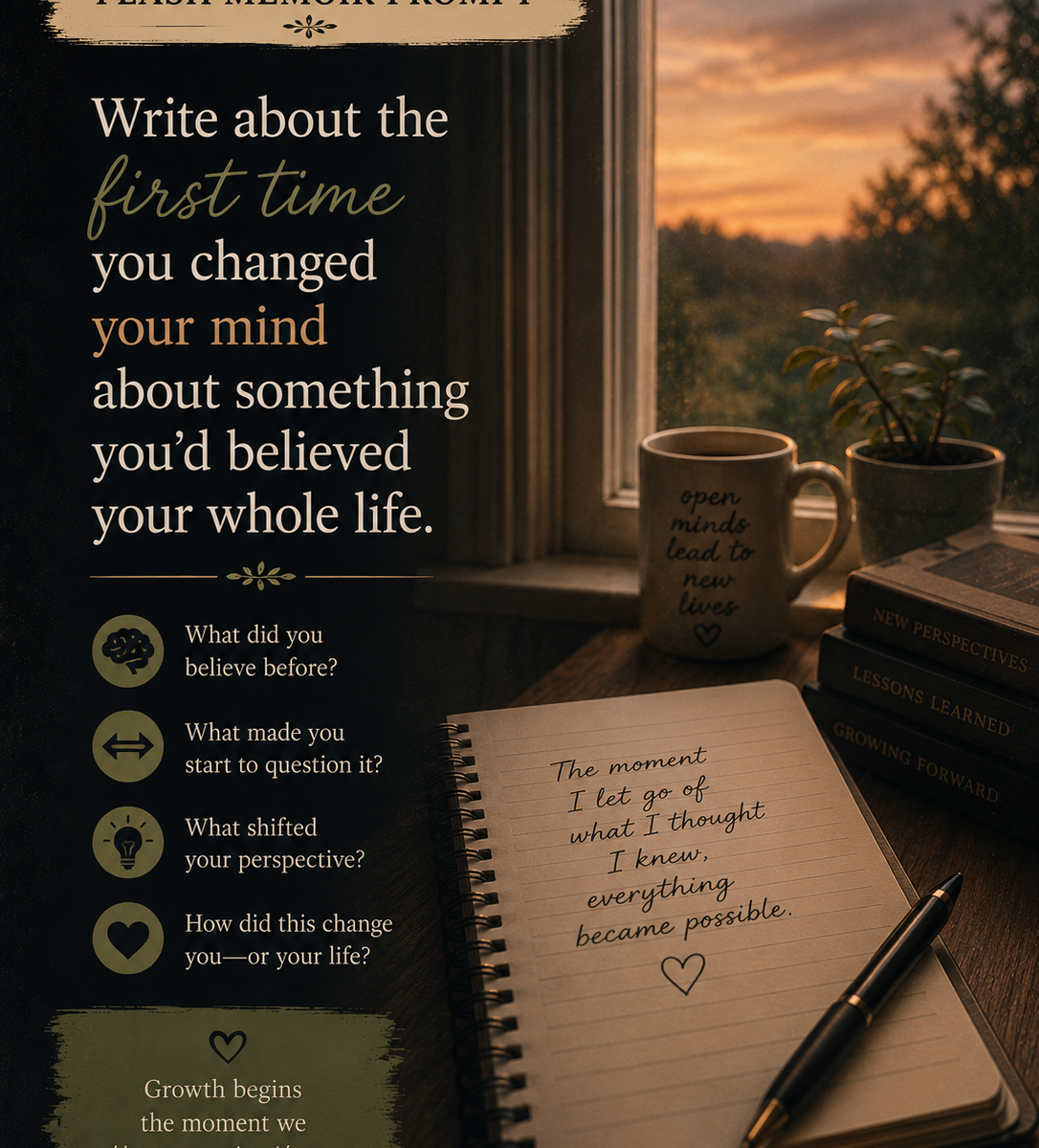
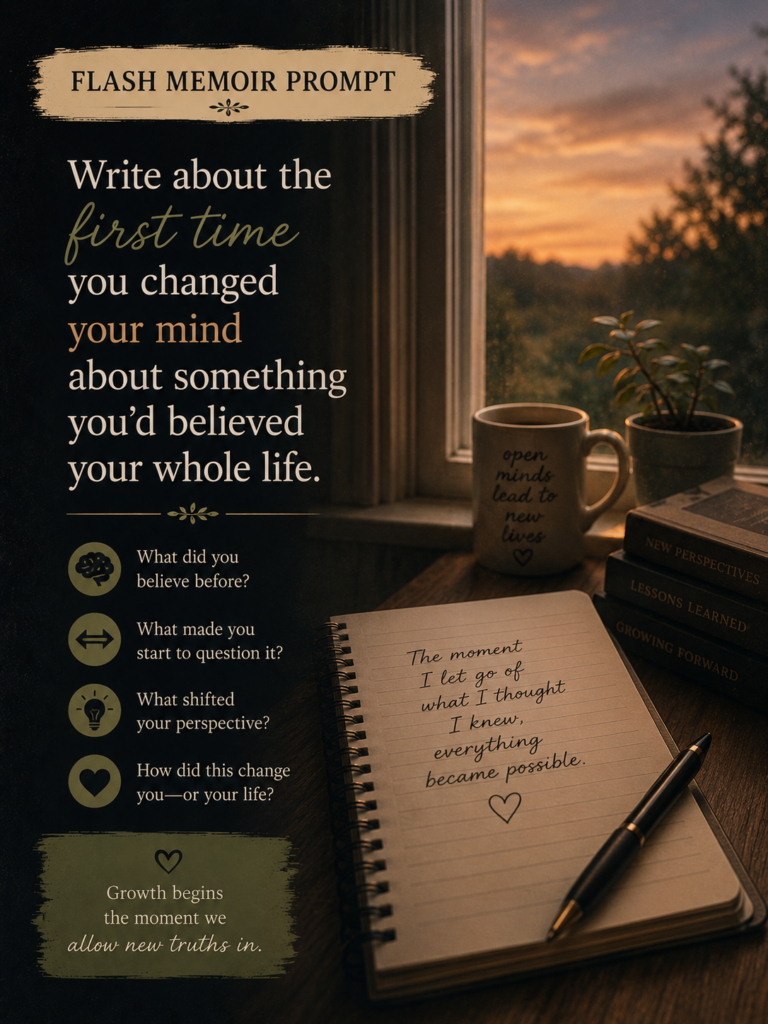
Write about the first time you changed your mind about something you’d believed your whole life.
This prompt can unlock a meaningful memory because it points to a shift. Memoir often lives in the space between who you were then and who you became later. A belief you carried for years might have come from family, faith, school, culture, fear, or love. Then one scene made you pause.
You do not need to write about a huge public issue. You might write about the first time you realized your parent was not always right, the first time you doubted a rule you had followed, or the first time you saw someone you had judged with more kindness. The power is in the moment when certainty gives way.
Why This Memory Matters
A changed mind is rarely just about facts. It is usually about identity. When you let go of a belief, even a small one, you may also let go of a version of yourself.
That is why this flash memoir prompt first time changed mind something can lead to a layered story. On the surface, you may be writing about an argument, a book, a teacher, a friend, a news story, or a family secret. Underneath, you may be writing about loyalty, shame, courage, or grief.
For example, maybe you grew up believing that asking for help meant weakness. Then you watched someone strong reach out when life became too heavy. That memory is not only about changing an opinion. It is about seeing strength in a new shape.
Or maybe you believed your hometown was boring and small until you left it. One ordinary street, seen after months away, might reveal something tender you had missed. A good flash memoir does not need to announce its theme. It lets the reader feel it through the scene. If you want to think more about that deeper meaning, this guide on how to identify theme in literature can also help you notice the theme inside your own memories.
How to Approach This Prompt
Begin with the exact second before your mind started to change. Do not start with the lesson. Start with the room, the weather, the smell of coffee, the sound of someone’s voice, or the object your hands were holding.
Try to narrow the memory to one scene. If you try to explain your whole belief system from childhood to adulthood, the piece may grow too wide. Flash memoir works best when you choose one clear moment and let it carry the weight.
You might begin with a sentence like, “I still believed my father knew everything when he got lost on the way to the hospital.” Or, “I was sixteen and certain rich people were happy until I saw my aunt cry in her parked car.” Sentences like these place the reader inside a moment and hint at change.
Write what you noticed before you explain what it meant. What did the person say? What did you want to say back? Did you feel defensive, confused, relieved, or angry? Let the first draft stay close to the body.
After you draft the scene, you can look back and mark the turning point. If you enjoy close reading your own work, these tips on how to annotate literature can be useful for rereading your draft. Circle the sentence where the old belief starts to loosen.
For this flash memoir prompt first time changed mind something, avoid trying to make yourself look wise too quickly. Let the younger version of you be sincere. The reader will trust the change more if they can see why the old belief once made sense.
A Quick Example
I believed teachers lived at school until third grade, and I mean I truly believed it. They were part of the building, like the flagpole or the pencil sharpener bolted to the wall. Then one Saturday morning, I saw Mrs. Alvarez in the cereal aisle at the grocery store. She wore jeans and old sneakers. Her hair was wet, and she had a box of cornflakes tucked under one arm. I ducked behind my mother’s cart because it felt wrong, like seeing the moon in daylight. Mrs. Alvarez smiled and said, “Good morning, Daniel.” I could barely answer. All week, she had seemed like a person who knew every answer. That morning, she looked tired and kind and real. I never listened to her the same way again.
Try It Yourself
Set a timer for ten minutes and write one scene from the first time you changed your mind about something you had always believed. Keep the focus small. Choose one place, one conversation, or one image that stayed with you.
If the memory feels uncomfortable, write around the edge of it first. Describe the chair, the light, the food on the table, or the sound in the room. You can move toward the emotional truth slowly.
When you finish, ask yourself one question: What did I believe at the beginning of this scene that I could no longer believe by the end? That answer may become the final line, or it may stay hidden beneath the story. Either way, it will shape the piece.
Want More Flash Memoir Prompts?
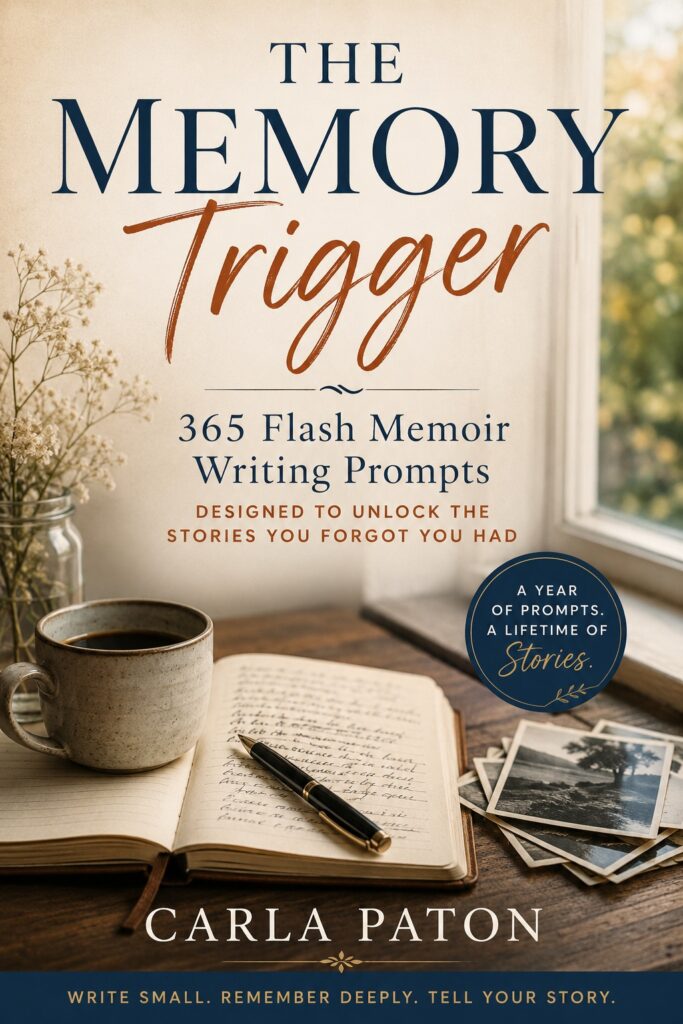
If this prompt helped you find a turning point worth writing about, you may enjoy a full year of short, focused memory invitations. Explore all 365 prompts in The Memory Trigger: 365 Flash Memoir Writing Prompts.