Learning how to find the Theme of a Story can make reading feel less confusing and more meaningful. A theme is the big idea a story explores, such as courage, greed, love, justice, or growing up.
This guide will show you a clear process you can use for homework, essays, class talks, or your own writing.
In this Guide
What theme means
How to find the theme step by step
How characters reveal theme
How conflict and endings point to theme
Examples from famous books
Common mistakes to avoid
Book suggestions
FAQ
What Does Theme Mean in a Story?
Theme is the message or idea a story asks you to think about.
A theme is not just one word. “Love” is a topic. A theme says something about that topic, such as “Love can make people brave.”
Stories can have more than one theme. A novel like To Kill a Mockingbird explores justice, prejudice, courage, and innocence.
A simple process can help you move from plot details to a strong theme statement.
When students ask How to Find the Theme of a Story, the best answer is to look for patterns. Theme is not hidden in one sentence. It grows from the whole story.
Step 1: Ask what the story is mostly about
Start with the main topics. These may be friendship, fear, power, family, freedom, or guilt.
In The Great Gatsby, some topics are wealth, dreams, love, and status. These topics are clues, but they are not full themes yet.
Step 2: Watch what the main character learns
Characters often change because of what they face. That change can point to the theme.
In A Christmas Carol, Ebenezer Scrooge learns that money matters less than kindness and human connection.
Step 3: Notice the main conflict
Conflict shows what the story tests. It may test a character’s honesty, loyalty, courage, or pride.
In Lord of the Flies, the conflict shows how quickly order can break down when fear and power take over.
Step 4: Study the ending
The ending often gives the clearest clue. Ask what the final events suggest about life or people.
Does the hero win? Does someone pay a price? Or, does the story end with hope or warning?
Step 5: Turn the idea into a full sentence
A strong theme statement should make a claim. It should not be just a topic.
Weak: “Friendship.”
Stronger: “True friendship helps people face fear.”
How to Find the Theme of a Story Through Characters
Characters are one of the best places to look for theme.
If you want to know How to Find the Theme of a Story, ask what the main character wants. Then ask what the story teaches them about that desire.
In The Hunger Games, Katniss wants to survive. Over time, the story also shows how love, sacrifice, and public courage can challenge an unfair system.
Look at the choices characters make under pressure. Their choices often reveal the story’s message.
How to Find the Theme of a Story Through Conflict and Ending
Conflict and endings often reveal what the author wants readers to notice.
Another useful way to practice How to Find the Theme of a Story is to ask, “What problem keeps returning?” A repeated problem usually connects to a key theme.
In Romeo and Juliet, the conflict between the two families leads to loss. One theme could be: “Long-held hatred can destroy innocent lives.”
The ending matters because it shows the result of the characters’ actions. If a character lies and loses everything, the story may explore honesty, pride, or trust.
Quick Examples of Theme in Well-Known Literature
Examples can make theme easier to see.
In To Kill a Mockingbird by Harper Lee, one theme is that real courage means doing what is right, even when you may not win.
In Animal Farm by George Orwell, one theme is that power can corrupt people who claim to fight for equality.
Lastly, in The Giver by Lois Lowry, one theme is that a safe life without freedom can cost people their humanity.
If you practice How to Find the Theme of a Story with books you already know, the skill gets easier fast.
Common Mistakes to Avoid When Finding Theme
These mistakes can lead to weak or unclear answers.
Mistake 1: Confusing theme with topic
A topic is one word or a short phrase. A theme is a full idea about that topic.
Topic: “Greed.”
Theme: “Greed can make people ignore what truly matters.”
Mistake 2: Writing a theme that is too broad
“Life is hard” is too general. It could fit almost any story.
Try to make the theme match the actual events in the text.
Mistake 3: Ignoring evidence
A theme needs support. Use character choices, conflict, symbols, or the ending as proof.
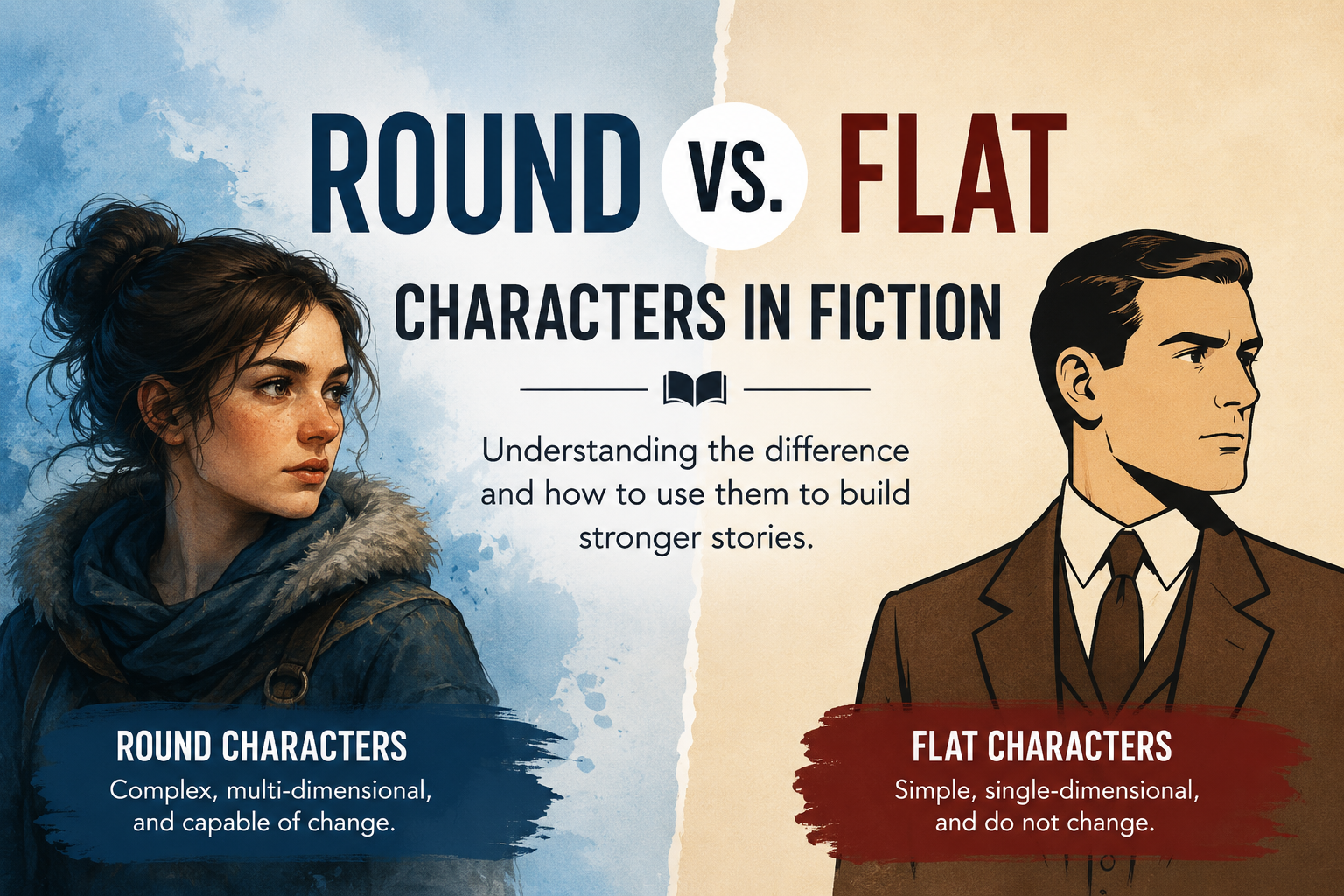
Round vs Flat Characters in Fiction is a key idea in literary analysis. Once you know the difference, you can explain why some characters feel real and complex while others serve a clear, simple role.
This guide breaks the idea down in plain language, with examples from famous books and tips you can use in essays.
In this Guide
What round characters are
What flat characters are
Round vs Flat Characters in Fiction examples
How to use the idea in literary analysis
Common mistakes to avoid
Book suggestions
FAQ
What Are Round Characters?
Round characters feel complex, layered, and close to real people.
A round character has more than one side. They may have mixed feelings, personal flaws, hidden fears, or changing beliefs.
Round characters often surprise us, but their actions still make sense. They are not random. Their choices grow out of who they are.
Elizabeth Bennet in Pride and Prejudice is a strong example. She is smart and funny, but she also misjudges Darcy. Her pride affects how she sees others.
By the end of the novel, Elizabeth learns more about herself. That growth makes her feel human.
Flat characters are simple, clear, and easy to understand.
A flat character usually has one main trait. They do not have deep inner conflict, and they may not change much.
This does not mean they are badly written. Flat characters can be useful. They can add humor, reveal a theme, or push the plot forward.
Mr. Collins in Pride and Prejudice is a good example. He is proud, awkward, and eager to please Lady Catherine. He does not have much depth, but he plays an important role.
Flat characters often help readers see the main characters more clearly.
Round vs Flat Characters in Fiction: The Main Difference
Round vs Flat Characters in Fiction comes down to depth and complexity.
A round character has an inner life. A flat character has a simpler role. One is built with layers, while the other is shaped around a clear purpose.
Think of Scrooge in A Christmas Carol. At first, he may seem flat because he is greedy and cold. But as the story moves forward, we see his fear, regret, and pain.
Scrooge becomes round because the story reveals why he acts the way he does. His change also matters to the whole meaning of the book.
In contrast, some minor characters in the same story stay simple. They may show kindness, poverty, or social pressure without much personal depth.
That contrast helps the story work.
Round vs Flat Characters in Fiction Examples from Literature
Examples make Round vs Flat Characters in Fiction much easier to understand.
In To Kill a Mockingbird, Scout Finch is round. She grows as she learns about justice, fear, and unfair treatment. Her view of the world changes.
Atticus Finch also has depth. He is calm and moral, but he faces pressure from his town. His choices show courage without making him perfect.
In Animal Farm, many characters are flatter on purpose. Napoleon often stands for power and control. Boxer stands for loyalty and hard work.
George Orwell uses flat characters to support satire. The point is not deep psychology. The point is political meaning.
In Harry Potter, Harry is round because he has fear, anger, love, and doubt. Some side characters are flatter, but they still help build the world.
Why Writers Use Both Round and Flat Characters
Good fiction does not need every character to be round.
If every character had a deep backstory, many stories would feel crowded. Flat characters help keep the focus on the main conflict.
A round character often carries the emotional weight of the story. A flat character may create pressure, offer comic relief, or show a social idea.
In Romeo and Juliet, Romeo and Juliet feel more complex than many side characters. Their feelings change quickly, and their choices shape the tragedy.
Characters like the Nurse have strong traits that are easy to spot. She is lively and practical, which makes her memorable even if she is less complex.
Round vs Flat Characters in Fiction and Character Change
Round vs Flat Characters in Fiction is related to change, but it is not the same thing.
A round character does not always change. Some round characters stay the same, but readers still see many sides of them.
A flat character can change in a small way, but still remain simple. The key question is depth, not just change.
For example, a villain may become nicer at the end of a story. If we do not learn much about their mind, fears, or motives, they may still feel flat.
On the other hand, Hamlet is round even before he makes final choices. He thinks deeply, doubts himself, and struggles with grief.
How to Analyze Round vs Flat Characters in Fiction
Round vs Flat Characters in Fiction can help you write stronger literary analysis.
Start by asking what the character wants. Then look at what makes the character hard to define. A round character often has tension inside them.
Ask these questions:
Does the character have more than one clear trait?
Does the character face inner conflict?
Does the character change how readers understand the theme?
When you write about the distinction, do not just label the character. Explain why the label matters.
For example, do not only say, “Scrooge is round.” Say, “Scrooge is round because Dickens reveals his fear of loneliness, which helps the story argue that people can change.”
Common Mistakes with Round vs Flat Characters in Fiction
Many students think “round” means good and “flat” means bad. That is not true.
A flat character can be well written if the role is clear. A round character can still fail if the author does not make the person believable.
Another mistake is to confuse flat characters with minor characters. A minor character can be round if the story gives them depth.
Readers also mix up flat characters with static characters. A static character does not change much. A flat character lacks deep complexity.
The terms overlap sometimes, but they do not mean the same thing.
How to Use Round vs Flat Characters in Fiction in an Essay
Round vs Flat Characters in Fiction gives you a useful tool for claims about theme.
Your essay should connect character type to meaning. Ask why the author made a character simple or complex.
Here is a strong sentence frame:
“The author presents [character] as a [round/flat] character in order to show [theme or idea].”
Example:
“Orwell presents Boxer as a mostly flat character in order to show how loyalty can be used by those in power.”
This kind of sentence does more than name a term. It links the character to the author’s message.
Books to Look Up on Amazon
These books are useful if you want more practice with Round vs Flat Characters in Fiction.
Pride and Prejudice by Jane Austen
A Christmas Carol by Charles Dickens
Animal Farm by George Orwell
Each book gives clear chances to compare deep characters with simpler ones.
Quick Reference: Round vs Flat Characters in Fiction
Round vs Flat Characters in Fiction is easiest to remember this way:
Round characters have depth, conflict, and layers.
What is the difference between round and flat characters?
A round character has depth and complexity. A flat character is simpler and usually has one main role or trait.
Can a flat character be important?
Yes. Flat characters can support the plot, reveal a theme, or make the main character stand out.
Is a round character always a main character?
No. Main characters are often round, but some minor characters can also have depth.
Is a flat character the same as a static character?
No. A static character does not change much. A flat character lacks depth. A character can be both, but the terms are different.
How do I write about round and flat characters in an essay?
Explain how the character type helps show a theme. Do not stop at the label.
Key Takeaway
Round vs Flat Characters in Fiction is not about good versus bad writing. It is about how much depth a character has and how that character helps the story make meaning.
It is a character who changes in an important way over the course of a story.
This guide explains the idea in simple terms, shows why it matters, and gives clear examples from books many students know.
In this Guide
What a dynamic character means
Why dynamic characters matter
Dynamic character examples
How to spot a dynamic character
Books to read for practice
FAQ
A Clear Definition
A dynamic character changes in a deep and meaningful way.
The change may involve beliefs, values, goals, or how the character sees the world. It is not just a new haircut, a new job, or a new location.
When students ask, What Is a Dynamic Character in Literature?, the simplest answer is this: a dynamic character learns, grows, falls apart, or becomes someone different because of the story’s events.
For example, Ebenezer Scrooge in A Christmas Carol begins as selfish and cold. By the end, he becomes generous and caring. His change is central to the story.
Why It Matters
Dynamic characters help readers see how conflict can shape a person.
A story feels more powerful when a character has to face hard choices. Those choices can reveal fear, pride, courage, guilt, or love.
What Is a Dynamic Character in Literature? It is often the answer to why a story feels meaningful. The plot may show what happens, but the character’s change shows why it matters.
In many novels, the main character’s growth connects to the theme. If a story is about forgiveness, the dynamic character may need to let go of anger. If a story is about identity, the character may need to understand who they truly are.
A dynamic character changes. A static character stays mostly the same.
A static character is not always boring or unimportant. Some static characters help highlight the growth of another character.
In Pride and Prejudice, Elizabeth Bennet is a dynamic character because she changes how she judges Darcy. She learns that her first opinion was not fully fair.
Mr. Collins, on the other hand, stays mostly the same. His lack of growth makes him a useful contrast to Elizabeth’s self-awareness.
So, What Is a Dynamic Character in Literature? Think of a character whose inner life shifts in a clear way from the beginning to the end.
Recognizable Examples
Many famous books use dynamic characters to carry the emotional weight of the story.
Ebenezer Scrooge in A Christmas Carol changes from greedy to generous. His journey shows that moral change is possible.
Elizabeth Bennet in Pride and Prejudice learns to question her own pride and quick judgments. Her growth makes the love story feel earned.
Harry Potter in the Harry Potter series grows from a lonely boy into a braver and more self-aware young man. His change happens across many books, not all at once.
Ask what the character wants at the start. Then ask what the character understands by the end.
A dynamic character often faces a conflict that forces a choice. That choice may expose a flaw, teach a lesson, or push the character toward change.
When thinking about What Is a Dynamic Character in Literature?, focus on inner change. A character may travel far, lose money, or gain power, but those events only matter if they change the character in a real way.
Here are helpful questions:
What does the character believe at the beginning?
What conflict challenges that belief?
What does the character understand at the end?
Does the change connect to the theme?
Common Mistakes Students Make
One common mistake is calling every main character dynamic.
A character can be important and still remain static. The key is not how much page time the character gets. The key is whether the character changes in a meaningful way.
Another mistake is confusing mood with growth. A character who feels sad in one chapter and happy in the next has not necessarily changed. A dynamic character has a deeper shift in values, beliefs, or self-understanding.
If you need a full approach, use this character analysis guide to connect traits, conflict, and theme.
Books That Help You Study Dynamic Characters
These books are useful if you want to practice spotting character change:
A Christmas Carol by Charles Dickens
Pride and Prejudice by Jane Austen
Both books make character growth easy to see, which helps if you are new to literary analysis.
FAQ: What Is a Dynamic Character in Literature?
What Is a Dynamic Character in Literature?
A dynamic character is a character who changes in an important internal way during a story. The change may affect beliefs, values, choices, or self-knowledge.
Does a dynamic character have to become a better person?
No. A dynamic character can improve, but they can also become worse. The main point is that they change in a meaningful way.
Can a minor character be dynamic?
Yes. A minor character can be dynamic if the story shows a clear inner change. Main characters are just more likely to get that kind of attention.
Is a dynamic character the same as a round character?
No. A round character is complex and feels realistic. A dynamic character changes. A character can be both, but the terms do not mean the same thing.
Key Takeaway
What Is a Dynamic Character in Literature? It is a character who changes in a meaningful way because of the story’s conflict.
When you read, track what a character believes at the start and what they understand at the end. That simple habit can lead to stronger essays and better literary analysis. 📚
A Practical Guide to Recognizing Hidden Meaning in Literature
Many stories contain objects, images, or actions that seem ordinary at first but gradually reveal deeper meaning. Learning how to find symbolism in a story helps readers recognize these subtle patterns.
Symbolism is one of the ways authors communicate ideas without stating them directly. A setting, an object, or even a repeated action may represent a larger idea about life, identity, or human relationships.
When readers learn how to find symbolism in a story, literature begins to feel richer and more layered. Instead of seeing only the plot, readers start noticing how authors use details to express deeper themes.
If you’re new to careful literary reading, you may want to begin with:
That guide explains the reading habits that help uncover symbolism.
⭐ Key Takeaway
Symbolism often appears through repetition and context. When an image, object, or action appears several times in a story, it may represent a larger idea the author wants readers to notice.
Emily Brontë’s Wuthering Heights (affiliate link) offers a strong example of how to find symbolism in a story.
Throughout the novel, the wild moorland landscape appears repeatedly.
The moors are often described as harsh, stormy, and unpredictable.
At first, these descriptions may seem like simple background setting. However, a closer reading suggests something deeper.
The turbulent landscape mirrors the intense emotions of characters such as Heathcliff and Catherine.
The stormy weather and isolated setting symbolize the novel’s themes of passion, conflict, and emotional instability.
By observing how the landscape repeatedly reflects the characters’ emotional world, readers begin to uncover the story’s symbolic meaning.
📌 A symbol often becomes visible when readers connect physical details to emotional patterns in the story.
Many of the patterns readers notice while studying literature come from techniques known as literary devices. If you’re new to these techniques, this guide explains 32 literary devices with examplesfrom classic literature.
How Symbolism Supports Literary Analysis
Recognizing symbolism is an important part of literary interpretation.
When readers identify symbols, they can begin explaining how those symbols contribute to the story’s themes.
For example, a literary essay might explore:
how weather imagery reinforces emotional conflict
how symbolic objects reflect character development
how recurring settings express thematic ideas
If you’re interested in turning observations like these into essays, see:
A classic guide to active reading and thoughtful interpretation.
Conclusion: Symbols Reward Careful Readers
Learning how to find symbolism in a story does not require guessing the author’s hidden message. Instead, it involves observing patterns and asking thoughtful questions about what those patterns suggest.
As readers pay closer attention to objects, images, and repeated details, literature begins to reveal deeper layers of meaning.
With practice, symbolism becomes one of the most rewarding aspects of reading.
FAQ — How to Find Symbolism in a Story
What is symbolism in literature?
Symbolism occurs when an object, image, or action represents a larger idea within a story.
How can I tell if something is a symbol?
Look for repetition, emotional significance, and connections to the story’s themes.
Can a symbol have more than one meaning?
Yes. Symbols often carry multiple interpretations depending on context.
Why do authors use symbolism?
Symbolism allows authors to communicate ideas indirectly and add depth to their stories.
A Simple Guide to Understanding Poems One Line at a Time
Poetry can feel intimidating at first. Poems often compress ideas into a few lines, use unusual imagery, and leave important meanings unstated. Many readers enjoy poetry but wonder how to analyze poetry step by step in a clear and practical way.
The good news is that poetry analysis relies on the same skills used in close reading and literary interpretation. When you slow down and pay attention to language, patterns begin to appear.
Learning how to analyze poetry step by step means noticing details such as imagery, tone, structure, and repetition. These clues help reveal the poem’s deeper meaning.
If you’re new to close reading, you might first explore this guide:
That article explains the careful reading habits that make poetry analysis possible.
⭐ Key Takeaway
Learning how to analyze poetry step by step means paying attention to small details in language. Imagery, sound, structure, and repetition often reveal the poem’s central meaning.
📚 In This Guide
In this article you’ll learn:
How to analyze poetry step by step
What details scholars look for when reading poems
How imagery and sound shape meaning
A practical example using a public-domain poem
How poetry analysis connects to literary essays
Image by Carla Paton
Step 1: Read the Poem Slowly
A good way to begin how to analyze poetry step by step is to read the poem more than once.
The first reading helps you understand the general subject of the poem. The second reading allows you to notice details.
While reading, ask simple questions:
What seems to be happening?
Who is speaking?
What emotions appear in the poem?
Many scholars recommend reading poems aloud because the sound of the language often reveals meaning.
These books provide helpful guidance for readers learning poetry analysis (affiliate links).
How to Read Poetry Like a Professor — Thomas C. Foster A widely used introduction explaining how imagery, symbolism, and poetic structure shape meaning.
A Practical Guide to Tracking Characters, Themes, and Important Details
Many readers enjoy novels but struggle to remember key details after finishing a chapter. Characters blur together, important moments slip by, and themes can be difficult to track. Learning how to take notes while reading a novel helps solve this problem.
Taking notes does not mean interrupting the pleasure of reading. Instead, it helps readers notice patterns, remember important passages, and develop deeper insights into the story. Scholars, students, and thoughtful readers often use note-taking to stay engaged with a text.
If you’ve already explored careful reading strategies, this process will feel familiar. In fact, note-taking naturally grows out of close reading in literature.
Learning how to take notes while reading a novel helps transform passive reading into active engagement. By tracking characters, themes, and meaningful passages, readers begin to notice patterns that reveal deeper meaning in the story.
Image by Carla Paton
📚 In This Guide
In this article you’ll learn:
How to take notes while reading a novel effectively
What kinds of notes scholars and students record
How to track characters, themes, and important passages
How note-taking supports literary analysis and essays
Why Take Notes While Reading a Novel?
Learning how to take notes while reading a novel helps readers notice patterns that might otherwise be easy to miss.
When reading quickly for plot, it is easy to overlook small but meaningful details. A character’s remark, a repeated image, or a subtle shift in tone might later prove important.
Taking notes helps readers:
remember key characters and relationships
track themes and recurring ideas
record memorable passages
notice patterns across chapters
Many literature students use note-taking as a bridge between reading and writing essays.
📌The best notes capture what catches your attention while reading.
What Kind of Notes Should You Take?
Effective note-taking while reading a novel focuses on patterns rather than plot summaries.
Many readers assume they should write long summaries. In reality, short observations are often more useful.
Common note categories include:
Characters Write down new characters and key traits.
Themes Notice recurring ideas such as love, reputation, identity, or power.
Important passages Record quotations that seem meaningful.
Questions Mark moments that confuse or surprise you.
These notes help you track how a novel develops its meaning over time.
Example: Taking Notes While Reading Pride and Prejudice
A simple example shows how taking notes while reading a novel can help track characters and themes.
Consider the early chapters of Jane Austen’s Pride and Prejudice (affiliate link). When Elizabeth Bennet first encounters Mr. Darcy, the narrator describes his behavior as proud and distant.
A reader taking notes might record something like:
Character note
Mr. Darcy — appears proud and reserved at the Meryton assembly.
Theme note
Reputation and first impressions may influence how characters judge each other.
Passage note
Elizabeth overhears Darcy refusing to dance with her, which shapes her opinion of him.
Later in the novel, these early impressions become important to the story’s exploration of misjudgment and social perception.
By writing down small observations like these, readers begin to notice patterns that shape the narrative.
📌Small notes made during reading often reveal the larger themes of a novel.
Simple Note-Taking Methods for Novels
There are several easy ways to practice how to take notes while reading a novel.
Different readers prefer different approaches.
Margin Notes
Write short observations directly in the book’s margins.
Sticky Notes
Use small tabs to mark important pages or passages.
Reading Journal
Keep a notebook where you track characters, themes, and quotations.
Digital Notes
Readers using e-books often highlight passages and record comments digitally.
The best method is the one that helps you stay engaged with the text.
How Note-Taking Connects to Literary Analysis
Taking notes while reading a novel often leads naturally to interpretation and analysis.
When readers collect observations across a novel, patterns begin to emerge (affiliate links).
How to Read a Book — Mortimer J. Adler & Charles Van Doren A classic guide to active reading and intellectual engagement with texts.
Conclusion: Turning Reading Into Active Thinking
Once readers learn how to take notes while reading a novel, the reading experience changes. Instead of simply following the plot, readers begin noticing how the story is constructed.
Characters, themes, and patterns gradually connect across chapters. What once seemed like small details become meaningful clues.
Over time, note-taking transforms reading into an active conversation with the text.
FAQ — Taking Notes While Reading a Novel
Should I take notes while reading fiction?
Yes. Taking notes helps readers remember characters, track themes, and notice patterns that shape the story.
How detailed should reading notes be?
Short observations are usually best. Focus on meaningful passages, character traits, and recurring ideas rather than summarizing every chapter.
Do scholars take notes while reading novels?
Yes. Literary scholars often annotate texts and record observations while reading, which later become ideas for research or interpretation.
Can note-taking improve my understanding of literature?
Absolutely. Writing down questions and observations helps readers engage more deeply with the text.
A Simple Guide to Understanding How Scholars Read Texts Carefully
When students first encounter literary analysis, they often hear the phrase close reading in literature. At first it can sound technical or mysterious. In reality, close reading simply means paying careful attention to how a text works.
Instead of reading quickly for plot, close reading slows the process down. Readers begin noticing patterns, imagery, tone shifts, repeated language, and structure. These details help reveal how an author creates meaning.
Close reading is the foundation for many other literary skills. It leads naturally to annotation, research questions, and literary analysis essays.
Close reading in literature means paying attention to the small details of a text. By noticing patterns in imagery, language, and structure, readers can uncover deeper meaning and develop thoughtful interpretations.
📚 In This Guide
In this article you’ll learn:
What close reading in literature actually means
Why close reading is important for literary analysis
What details scholars look for when reading closely
How close reading leads to annotation and research
How close reading supports writing literary essays
Image by Carla Paton
What Is Close Reading in Literature?
Close reading in literature focuses on examining the language and structure of a text rather than simply summarizing its plot.
Close reading is a method of reading that emphasizes careful attention to the text itself.
Readers ask questions such as:
Why does the author repeat certain words?
What images appear throughout the text?
Does the tone change at key moments?
How does the structure shape meaning?
Instead of reading quickly, close readers pause and examine how each detail contributes to the overall work.
When practicing close reading in literature, scholars focus on patterns that reveal how a text creates meaning.
Some of the most important features include:
Imagery Descriptions that appeal to the senses often reveal symbolic meaning.
Tone Changes in emotional tone can signal important moments in a narrative.
Repetition Repeated words or phrases may point to central themes.
Structure The arrangement of scenes, stanzas, or chapters shapes interpretation.
Symbolism Objects, settings, or actions may represent larger ideas.
When these details appear repeatedly, they often guide readers toward interpretation.
Example of Close Reading in Literature: Wuthering Heights
A short example can help illustrate how close reading in literature reveals meaning through small details in language.
To see how close reading works in practice, let’s look at a brief moment from Emily Brontë’s Wuthering Heights (affiliate link). In the novel, the narrator describes the harsh environment surrounding the house on the moors:
“Wuthering being a significant provincial adjective, descriptive of the atmospheric tumult to which its station is exposed in stormy weather.”
A quick reading might simply note that the house is located in a windy place. Close reading, however, focuses on the specific language Brontë uses.
First, the word “wuthering” itself is unusual. It suggests not just wind, but violent turbulence. The landscape is described as constantly exposed to “stormy weather,” which gives the setting a sense of instability and emotional intensity.
Second, the passage connects the physical environment with the emotional atmosphere of the novel. The chaotic weather mirrors the passionate and often destructive relationships between characters such as Heathcliff and Catherine.
Through close reading, we begin to see that the setting is not just background. Instead, the stormy landscape reflects the emotional conflicts that drive the story.
This is the essence of close reading in literature: paying attention to individual words and details until they reveal deeper patterns in the text.
📌In close reading, even a single word can reveal how a novel creates its emotional world.
A Deeper Close Reading Example: Heathcliff and Catherine in Wuthering Heights
This example shows how close reading in literature can reveal emotional and thematic meaning through specific language choices.
One of the most famous lines in Emily Brontë’s Wuthering Heights (affiliate link) occurs when Catherine explains her connection to Heathcliff:
“Whatever our souls are made of, his and mine are the same.”
At first glance, the line appears to express deep affection. A closer reading, however, shows that Brontë is doing something more complex.
The phrase “whatever our souls are made of” introduces a sense of mystery. Catherine does not define what a soul is or how it functions. Instead, she suggests something elemental and beyond ordinary explanation.
The second half of the sentence—“his and mine are the same”—removes the boundary between two individuals. Catherine does not say that Heathcliff is similar to her. She claims their identities share the same essence.
Through close reading, this moment reveals one of the novel’s central themes: a relationship that blurs the line between love, identity, and obsession. Heathcliff and Catherine are not simply romantic partners. The language suggests they see themselves as parts of the same being.
This interpretation emerges only when readers pay careful attention to individual words and phrasing, which is the core of close reading in literature.
📌Close reading shows how a single sentence can reveal the emotional core of a novel.
⭐ Close Reading Tip
When practicing close reading in literature, focus on specific words and phrases rather than large sections of plot. Ask yourself questions like:
Why does the author choose this particular word?
What emotions or ideas does the language suggest?
Does this passage connect to other moments in the text?
Often, the smallest details reveal the most important meanings.
How Close Reading Connects to Annotation
Practicing close reading in literature often leads naturally to annotating the text.
Annotation allows readers to record the observations they notice during close reading.
How to Read a Book — Mortimer J. Adler & Charles Van Doren A classic guide to active reading and careful interpretation.
These books reinforce the habits involved in close reading in literature.
Conclusion: Why Close Reading Changes the Way We Read
Once readers learn the habit of close reading, literature begins to feel different. Instead of simply following a story, readers start noticing how authors shape meaning through language.
Small details that once seemed insignificant—an image, a repeated phrase, a subtle shift in tone—begin to reveal deeper connections.
Close reading transforms reading from passive observation into active interpretation.
FAQ — Close Reading in Literature
What is close reading in literature?
Close reading in literature is a method of carefully analyzing the language, structure, and details of a text to understand its deeper meaning.
What is an example of close reading?
A reader might examine repeated imagery in a poem and analyze how those images contribute to the poem’s theme.
Why do teachers use close reading?
Teachers use close reading because it helps students develop analytical thinking and understand how literary texts create meaning.
How is close reading different from summary?
A summary explains what happens in a text. Close reading explains how the text creates meaning through language and structure.
Learning how to annotate literature can transform the way you read poems, novels, and plays.
When students first hear the instruction “annotate the text,” the task can feel unclear. Does annotation mean highlighting passages? Writing notes in the margins? Underlining important lines? Many readers sense that annotation is supposed to help them understand a text more deeply, but they are rarely shown what that process actually looks like in practice.
In literary studies, annotation is simply a way of reading with attention. Instead of moving quickly through a story or poem, you pause to notice patterns, mark surprising moments, and write down questions that arise as you read. These small notes create a record of your thinking. Over time, they help you see connections in the text that might otherwise pass unnoticed.
Scholars use annotation as one of the first steps in close reading. By marking details—repeated images, unusual word choices, shifts in tone—you begin to observe how a work of literature is built. Those observations often become the starting point for interpretation, discussion, or research.
Learning how to annotate literature is one of the first steps toward reading literature like a scholar, because careful notes help you notice patterns, themes, and questions that shape literary analysis.
The good news is that you don’t need special training to know how to annotate literature. With a pencil, a notebook, or even digital notes, you can begin practicing the same habits that literary researchers use every day. This guide will show you how annotation works, what kinds of details to look for, and how your notes can turn ordinary reading into close reading.
Image by Carla Paton
In This Guide
In this article, you’ll learn:
What annotation means in literary study and why it is more useful than simple highlighting
What scholars look for when annotating literature, including patterns, imagery, tone shifts, and repeated language
Simple annotation symbols that make it easy to mark important passages while you read
How annotated passages reveal deeper meaning through close reading
How annotations can grow into research questions and literary analysis
⭐ Key Takeaway: Annotation Turns Reading Into Close Reading
Annotating literature is more than highlighting lines that stand out. It records your observations and questions while you read, helping you see patterns and deeper meanings in the text.
How to Annotate Literature
Learning how to annotate literature is one of the most effective ways to develop close reading skills. Annotation slows the reading process and encourages you to notice patterns, ask questions, and record observations as they appear in the text. Over time, these small notes help reveal how a poem, novel, or play develops its meaning.
What Annotation Means in Literary Study
Understanding how to annotate literature begins with recognizing the difference between simple highlighting and thoughtful notes that capture your observations while reading.
Many readers begin annotating by highlighting lines that feel important. Highlighting can be helpful, but highlighting alone is not the same as annotation. When you highlight a sentence, you mark it as noticeable, but you usually don’t explain why it matters. Annotation goes one step further. It asks you to record your thinking while you read.
In literary study, annotation means writing brief notes that capture your observations, questions, and reactions to a text. These notes often appear in the margins of a book, in a notebook, or in digital comments if you are reading on a screen. Instead of simply marking a passage, you pause to ask what makes it interesting. A single sentence might prompt a short note such as “repeated image of winter,” “tone shifts here,” or “this line sounds ironic.” These small remarks help you keep track of patterns and ideas that might become important later.
Another key difference is that highlighting is passive, while annotation is active. Highlighting often happens quickly. Your eye catches a striking sentence, and you mark it before moving on. Annotation slows the process down. You reread the line, consider its meaning, and write a brief comment about what you notice. This moment of reflection is what transforms simple reading into close reading.
Annotation also helps you build a conversation with the text. Your notes become a record of your thinking as it develops. Early in a chapter you might write a question about a symbol or a character’s behavior. Later in the book you may notice the same idea appearing again, and your notes help you connect those moments. Over time, these small observations begin to form patterns.
For this reason, scholars often think of annotation as a tool for discovery. It allows readers to capture the moment when something in the text catches their attention. A highlighted sentence may fade into the background, but a written note reminds you exactly what you noticed and why it seemed important. In that way, annotation turns reading into an active process of exploration rather than a simple act of marking lines on a page.
When learning how to annotate literature, scholars focus on patterns, imagery, tone shifts, repeated language, and structural changes that shape meaning in a text.
When scholars annotate a text, they are not trying to mark every interesting sentence. Instead, they are looking for details that reveal how the work is constructed. Literature often develops meaning through patterns and subtle shifts that become clearer when you pause to notice them. Annotation helps you capture those moments so you can return to them later.
One of the most important things scholars watch for is patterns. When something appears more than once in a text, it usually deserves attention. A certain image may repeat throughout a poem, or a novel may return to the same setting during key moments in the story. When you notice these patterns, make a brief note in the margin. Even a short comment such as “repeated winter imagery” or “return to the same memory” can help you recognize how the text is developing its ideas.
Scholars also pay close attention to imagery. Imagery refers to the sensory details that help readers picture what is happening in a scene. These details often carry symbolic meaning. For example, a poem might repeatedly describe light and darkness, or a novel might use images of storms and calm weather to reflect emotional tension. When you encounter vivid descriptions, note what they suggest and whether similar images appear elsewhere in the work.
Another important feature to notice is tone shifts. Tone reflects the emotional attitude of the speaker or narrator. Sometimes the tone changes suddenly. A passage may move from calm reflection to urgency, or from humor to seriousness. When this happens, it is worth marking the moment. A quick note such as “tone becomes ironic here” or “sudden seriousness” can help you identify turning points in the text.
Scholars frequently annotate repeated language as well. Authors sometimes return to the same word or phrase at significant moments. A narrator may repeat a particular idea, or a poem may echo a phrase in several stanzas. These repetitions often signal themes that the author wants the reader to notice. Marking them allows you to track how the language evolves across the text.
Finally, scholars watch for structural changes. Literature is not only about what is said but also about how it is organized. A chapter might shift from narration to dialogue, a poem might change rhythm or perspective, or a novel might move suddenly between time periods. When the structure of the text changes, it often signals a new phase in the story or argument. Writing a short note such as “flashback begins here” or “speaker changes” helps you see how the work unfolds.
By paying attention to patterns, imagery, tone shifts, repeated language, and structural changes, you begin to notice how a piece of literature builds meaning. Annotation helps capture these observations in the moment, turning your reading into a careful record of what the text is doing and how it develops its ideas.
How to Annotate Literature for Close Reading
Simple Annotation Symbols You Can Use
A simple system of symbols can make how to annotate literature much easier, allowing you to quickly mark questions, patterns, and important themes while reading.
Annotation does not need to be complicated. In fact, many scholars rely on simple symbols and short notes rather than long explanations in the margins. These quick marks allow you to capture your thoughts while reading without interrupting the flow of the text. Over time, a small system of symbols helps you scan your notes quickly and recognize patterns that appear throughout the work.
The goal is not to create a perfect system but to develop a consistent set of symbols that remind you what caught your attention. Even a few basic marks can turn a page of text into a record of your thinking. When you return to the book later, those small notes help you remember what seemed important during your first reading.
Here are a few simple symbols many readers find helpful:
? — confusing passage Use this symbol when a line or scene is unclear. Writing a question mark reminds you to return to the passage later or to think about why it feels difficult.
! — surprising moment This symbol works well when something unexpected happens in the text. It might signal a surprising detail, a sudden shift in tone, or an idea that feels especially striking.
★ — important theme A star can mark passages that seem central to the work’s meaning. These might include statements about identity, nature, love, power, or another major idea that the text explores.
↺ — repeated idea Use this symbol when a word, image, or theme appears again. Tracking repetition helps you notice patterns that develop across chapters, scenes, or stanzas.
You can adapt these symbols to fit your own reading habits. Some readers add circles around key words, arrows connecting related passages, or short phrases such as “tone shift” or “symbol.” The most important thing is that your system helps you notice patterns and remember why a passage stood out. Over time, these small marks become a map of your reading, guiding you back to the places where the text begins to reveal its deeper meanings.
Example of Annotating a Passage
Seeing an example can clarify how to annotate literature, showing how short notes and symbols help reveal patterns within a poem or passage.
Sometimes the easiest way to understand annotation is to see what it looks like in practice. When scholars annotate, they are not writing long explanations beside every line. Instead, they add short notes that capture what they notice while reading. These notes may point out patterns, raise questions, or highlight details that seem important.
Below is a short excerpt from Robert Frost’s poem “Stopping by Woods on a Snowy Evening.” The annotations show how a reader might mark observations while reading closely.
Whose woods these are I think I know. His house is in the village though; He will not see me stopping here To watch his woods fill up with snow.
Possible annotations
“woods” repeated → ↺ repeated image of woods
“He will not see me” → ? Why does the speaker emphasize being unseen?
quiet observation of snow → ★ moment of reflection or stillness
“village” vs. “woods” → contrast between society and nature
Notice that the annotations are brief. A reader might circle the repeated word woods, write a short question beside the line about being unseen, or note the contrast between the village and the quiet forest. These small comments capture ideas that could become important later in interpretation.
When you return to the poem, the annotations help you see patterns that might otherwise be easy to overlook. You might begin to notice how often the poem contrasts human responsibility and quiet solitude, or how the repeated images of woods and snow create a calm but slightly mysterious atmosphere.
This is the purpose of annotation: to record the moment when something in the text catches your attention. Over time, these small notes begin to form connections that can guide deeper interpretation or literary analysis.
Turning Annotations Into Research Questions
Annotation is not only a way to mark passages that stand out. It is also the first step toward developing a deeper investigation of a text. When you annotate carefully, you begin to see patterns that might not have been visible during a first reading. A repeated image, a sudden change in tone, or a line that raises a question can become the starting point for a larger idea.
As you review your notes, look for places where several annotations seem connected. You may notice that a certain symbol appears again and again, or that you wrote questions about the same theme in different parts of the text. These connections often reveal the beginnings of a research question. For example, you might ask why a poem repeatedly returns to images of darkness, or why a narrator describes nature in detail but speaks briefly about human relationships.
This is the moment when annotation begins to move from observation to interpretation. Instead of simply marking passages, you start asking what those passages suggest about the meaning of the work. A note that says “repeated image of winter” might grow into a question like, “How does winter imagery reflect the emotional state of the speaker?” Small observations gradually become more focused lines of inquiry.
Once you begin annotating patterns and questions in a text, you’re already practicing how to read literature like a scholar. Scholars rely on exactly this process of noticing details, recording observations, and turning those observations into thoughtful questions.
If you want to explore this process further, you can read my guide “How to Read Literature Like a Scholar: A Beginner’s Guide,” which explains how scholars develop research questions, find sources, and build literary analysis from careful reading. Annotation is often where that larger process begins.
Further Reading on Close Reading and Literary Annotation
Readers who want to practice close reading further might enjoyHow to Read Literature Like a Professor by Thomas C. Foster, which explains many of the recurring patterns scholars look for when analyzing literature.
For readers interested in poetry, Foster’s How to Read Poetry Like a Professor offers a helpful introduction to noticing imagery, rhythm, and structure during close reading.
Readers who want to explore active reading more deeply might also enjoy How to Read a Book by Mortimer Adler and Charles Van Doren, a classic guide that encourages readers to mark passages, ask questions, and engage with texts through careful annotation (affiliate links).
Continue Learning on RapidReads
If you’re interested in learning more about literary research and close reading, you may also enjoy:
FAQ – How to Annotate Literature for Close Reading
What does it mean to annotate literature?
To annotate literature means writing brief notes that explain what you notice while reading a text. These notes might point out patterns, imagery, tone changes, repeated words, or questions about meaning. Annotation helps readers slow down and engage more carefully with the text, which is an important part of close reading.
How do you annotate a poem for close reading?
When annotating a poem, readers usually look for imagery, repeated words, tone shifts, and structural features such as rhyme or line breaks. Writing short notes beside these details helps you see how the poem builds meaning across its lines and stanzas.
What is the difference between close reading and annotation?
Annotation is the tool that supports close reading. Close reading is the process of carefully analyzing a text, while annotation is the practice of writing notes that record your observations during that process. Together they help readers notice patterns and develop deeper interpretations.
Do I need to annotate every line of a text?
No. Effective annotation focuses on meaningful moments, not every sentence. Scholars usually mark passages where something stands out: a repeated image, a surprising phrase, a shift in tone, or a line that raises a question. The goal is to capture observations that help you understand the text more deeply, not to fill the margins with notes.
Is highlighting the same as annotating?
No. Highlighting marks a passage, but annotation explains why it matters. Annotation usually includes brief notes, symbols, or questions written beside the text. These notes help you remember what caught your attention and how it connects to other parts of the work.
Should I annotate while reading the first time?
Many readers find it helpful to annotate lightly during the first reading and more carefully during a second pass. The first reading helps you understand the overall story or structure, while later readings allow you to notice patterns and details that were easy to miss before.
What if I’m reading a digital text?
You can annotate digital texts in much the same way you would annotate a printed book. Many reading apps allow highlights, comments, and notes. Digital annotation still works best when you record short observations and questions, not just highlighted lines.
How do annotations become ideas for essays or research?
Annotations often reveal patterns that develop throughout a text. When you notice the same image, theme, or question appearing repeatedly, it may point toward a larger interpretation. Those observations can grow into research questions or literary analysis, which is one way scholars begin exploring a text more deeply.
Can annotation improve my understanding of literature?
Yes. Annotation slows your reading and helps you notice details that might otherwise pass by. Over time, these notes help you recognize connections, themes, and structural choices in a work of literature, which makes your reading more thoughtful and more rewarding.