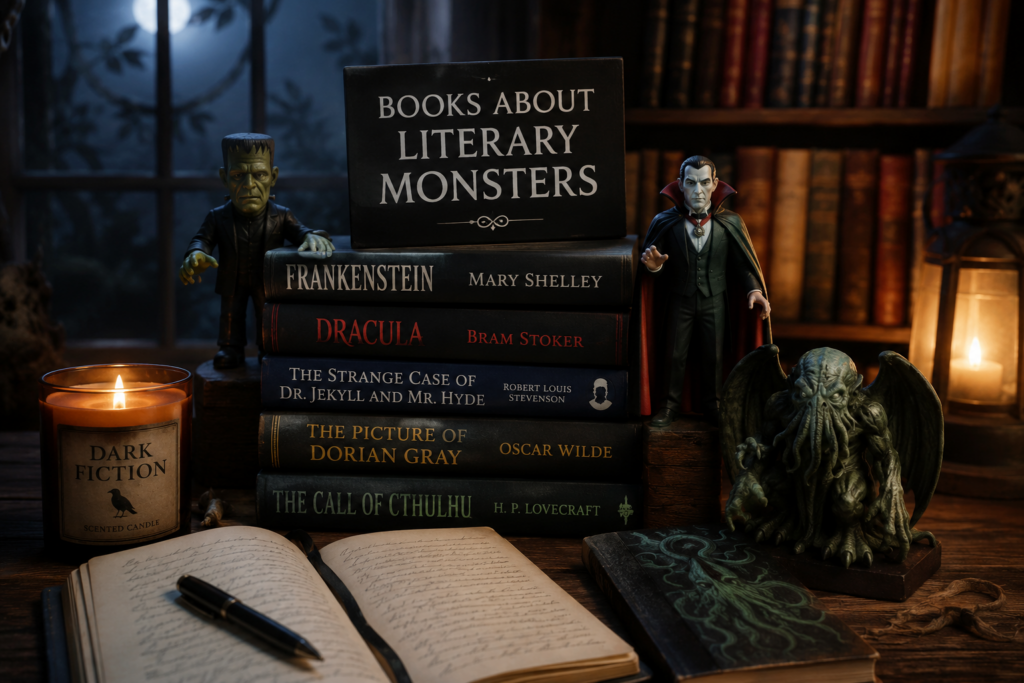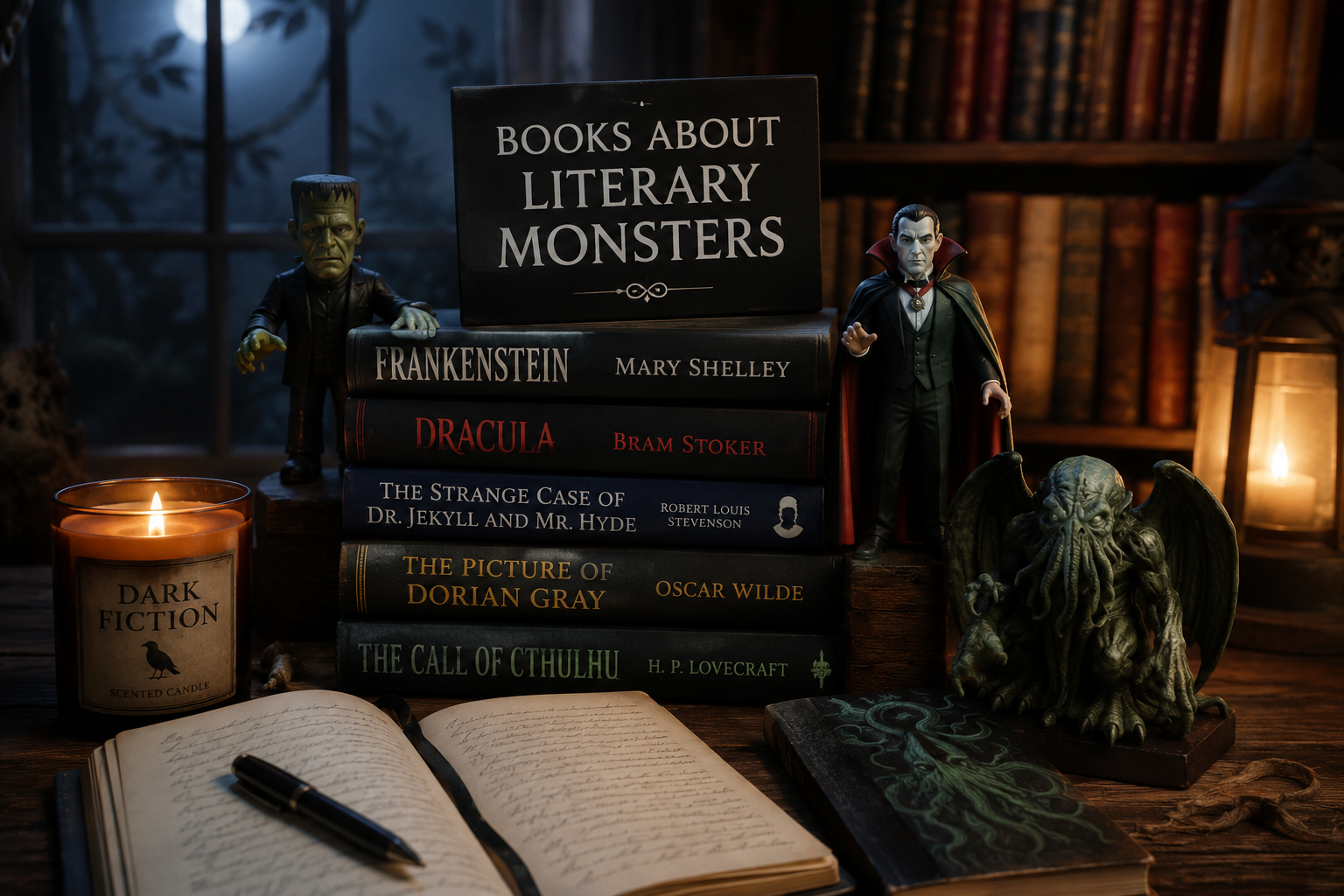
Books About Literary Monsters: Why Fiction’s Creatures Still Haunt Us

Books about literary monsters

Books About Literary Monsters help us face fear, guilt, power, and loneliness through unforgettable creatures. These stories are not just scary. They ask deep questions about what makes someone human.

From Frankenstein to Dracula, literary monsters have shaped classrooms, film, and pop culture for generations.

In this Guide

  • What makes literary monsters so powerful
  • Classic monster books students should know
  • Recommended books to read next
  • Major themes and symbols
  • How to read monster stories in class
  • FAQs about literary monsters
  • Key takeaway
Books about literary monsters

What Makes Books About Literary Monsters So Powerful?

Great monster stories turn fear into meaning.

Books About Literary Monsters often use creatures to show what people hide. A monster can stand for anger, shame, illness, greed, or social fear.

That is why these stories last. The creature may look strange, but the problem behind it often feels very human.

Mary Shelley’s creature in Frankenstein is a strong example. He is frightening, but he is also lonely. Readers begin to ask if the real monster is the creature or the society that rejects him.

This is what makes literary monsters different from simple horror villains. They do not only scare us. They make us think.

Classic Books About Literary Monsters Students Should Know

Many famous monster stories began as serious works of literature.

Books About Literary Monsters appear in many periods of literary history. Some come from ancient epics. Others come from Gothic novels or modern fiction.

Frankenstein by Mary Shelley is one of the most important examples. Published in 1818, it explores science, ambition, family, and the pain of rejection. You can learn more about the novel’s background through Britannica’s overview of Frankenstein.

Dracula by Bram Stoker gives readers a vampire who stands for fear of disease, desire, and the unknown. Count Dracula is not just a monster. He is a force that threatens the safe world of the characters.

The Strange Case of Dr. Jekyll and Mr. Hyde by Robert Louis Stevenson explores the monster inside the self. Mr. Hyde shows what can happen when hidden desires break free.

Beowulf also belongs in this conversation. Grendel is a monster, but he is not random. He reflects violence, exile, and the fear of a world outside human order.

Best Books About Literary Monsters to Read Next

These books are strong choices for students, book clubs, and curious readers.

If you want to build a shelf of Books About Literary Monsters, start with works that give the creature emotional weight. A good monster story should leave you with questions after the final page.

Here are a few useful titles to search for on Amazon or at your local library:

  • Frankenstein by Mary Shelley
  • Dracula by Bram Stoker
  • Grendel by John Gardner

Grendel is especially useful for students who know Beowulf. John Gardner retells the old story from the monster’s point of view. This shift makes readers question who gets called a monster and why.

For poetry lovers, monster themes can also appear in shorter works through images of death, isolation, or the unknown. If you want to practice close reading, this guide to New Criticism and Emily Dickinson shows how to focus on language, form, and meaning.

Themes in Books About Literary Monsters

Monster stories often reveal what a culture fears most.

One major theme is isolation. Frankenstein’s creature becomes violent after he is denied love and friendship. His pain grows because no one accepts him.

Another key theme is double identity. Dr. Jekyll and Mr. Hyde show that a person can have a public self and a hidden self. The monster becomes a symbol of what society asks people to repress.

Power is also central to many monster tales. Victor Frankenstein wants to control life itself. Dracula wants control over bodies, homes, and blood. These stories warn readers about power without care.

In Books About Literary Monsters, fear often points to a deeper conflict. The monster may stand for class anxiety, gender roles, race, science, death, or moral guilt.

Why Monsters Are Symbols, Not Just Creatures

A literary monster usually means more than it seems to mean.

A vampire may symbolize desire or corruption. A ghost may symbolize guilt. A beast may symbolize human violence.

This is why teachers often ask students to look beyond the plot. The question is not only, “What does the monster do?” The better question is, “What fear does the monster reveal?”

For example, Dracula enters homes and disrupts families. That makes him a symbol of invasion. He crosses borders, changes bodies, and breaks social rules.

Frankenstein’s creature has a different meaning. He shows the danger of creating life without love or duty. He also shows how cruelty can shape a person.

How to Read Books About Literary Monsters in Class

Strong close reading can turn a scary story into a rich literary study.

When you read Books About Literary Monsters, start with the creature’s first appearance. Notice how the author describes its body, voice, movement, and setting.

Then ask who tells the story. A monster may look different based on the narrator’s fear or bias. In Frankenstein, the creature speaks for himself, which changes how we judge him.

Pay close attention to repeated images. Blood, darkness, mirrors, scars, and doors often matter in monster fiction. These details can reveal the story’s deeper pattern.

Why Books About Literary Monsters Still Matter Today

Modern readers still need monster stories because fear has not gone away.

Our fears change over time, but the pattern remains. People still worry about technology, identity, illness, isolation, and power.

That is why Books About Literary Monsters still feel fresh. They let readers face hard ideas through story. A monster gives fear a shape, which makes it easier to examine.

These books also teach empathy. Sometimes the monster is dangerous. Sometimes the monster is wounded. The best stories force readers to hold both truths at once.

FAQs About Books About Literary Monsters

What are Books About Literary Monsters?

Books About Literary Monsters are works of fiction that use creatures, villains, or strange beings to explore deeper ideas. They often focus on fear, identity, guilt, or society.

Is Frankenstein’s creature a monster or a victim?

He is both. He commits violent acts, but he is also rejected and abandoned. That tension makes the novel powerful.

Why do teachers assign monster stories?

Teachers assign them because they are rich in symbols and themes. They help students study character, setting, narration, and social fear.

Are literary monsters always supernatural?

No. Some are human. Mr. Hyde, for example, is monstrous because he reveals the dark side of Dr. Jekyll.

What is the best monster book to start with?

Frankenstein is a strong starting point. It is famous, readable, and full of ideas that still matter.

Key Takeaway

Books About Literary Monsters endure because they make fear meaningful.

The best monster stories do more than shock us. They ask what society rejects, what people hide, and what it means to be human.

When you read these books, do not stop at the creature. Look at the world that created it. That is where the real story often begins.

Count Dracula as a Symbol of Fear and Corruption in Dracula

Count Dracula as a symbol of fear and corruption

Count Dracula is one of the most famous villains in literature, yet his role goes far beyond a simple monster. In Dracula, he represents something deeper and more unsettling. He stands as a symbol of fear, moral decay, and the spread of corruption within society.

When readers look closely at his actions, his influence, and his presence in the novel, they begin to see that Dracula is not just a character. He is a force that threatens both the body and the soul.

This article contains affiliate links.

In this Guide 📚

  • What Dracula represents in the novel
  • How fear shapes his character
  • How corruption spreads through his victims
  • Why Dracula’s power goes beyond physical danger
  • What his defeat reveals about the novel’s message
Count Dracula as a symbol of fear and corruption
Image by Carla Paton

Count Dracula as a Symbol of Fear and Corruption

Dracula is more than a villain. He represents a deeper threat that spreads through fear and moral decay.

At the beginning of the novel, Count Dracula appears calm, polite, and even refined. Jonathan Harker meets a nobleman who speaks with care and shows control. Yet something feels wrong from the start. His strange habits and silent movements create unease long before his true nature is revealed.

This early tension matters because it shows that fear does not always appear in obvious ways. Dracula does not rely on loud violence at first. He creates fear through mystery and uncertainty. Readers feel this same unease as Harker slowly realizes he is trapped in the castle.

📌 Key Insight: Fear in Dracula begins with the unknown, not with open danger.

Count Dracula as a symbol of fear and corruption
Image by Carla Paton

How Dracula Represents Fear

Dracula’s power comes from his ability to appear, disappear, and remain unseen.

As the novel moves forward, Dracula’s supernatural abilities deepen this fear. He can change form, travel through darkness, and strike without warning. These traits make him difficult to fight because he cannot be understood in normal terms.

The characters struggle not just against a physical enemy, but against something they cannot fully explain. This sense of helplessness increases the tension of the story. Fear grows stronger when people feel they have no control.

Dracula’s presence also creates fear in the minds of his victims. He invades their thoughts and weakens their sense of self. This makes his threat feel personal and psychological, not just physical.

💬 “Fear grows strongest when it cannot be clearly seen or understood.”

Count Dracula as a symbol of fear and corruption
Image by Carla Paton

How Dracula Symbolizes Corruption

Dracula does not only harm his victims—he changes them.

One of the clearest examples of corruption appears in Lucy Westenra. She begins as kind and gentle, yet after Dracula’s attacks, she transforms into something dangerous. Her change shows how Dracula spreads his influence like a disease.

This transformation is not just about becoming a vampire. It represents the loss of innocence and moral stability. Lucy becomes a version of herself that reflects Dracula’s influence rather than her own character.

Mina Harker’s experience deepens this idea. Even though she is strong and intelligent, Dracula forms a connection with her that threatens her mind and identity. This shows that no one is fully safe from corruption, even those with strong character.

📌 Key Insight: Corruption in Dracula spreads quietly, often before anyone realizes it is happening.

Dracula’s Power Over Others

Dracula seeks control, not just survival.

Dracula does not act randomly. He plans carefully and moves with purpose. His journey from Transylvania to England shows his desire to expand his reach. He wants to spread his influence into new places and create more victims.

This ambition makes him more than a monster. He becomes a symbol of invading corruption that moves through society. His goal is not only to exist, but to multiply his power through others.

The group led by Van Helsing must work together to stop him. Their unity stands in contrast to Dracula’s isolation and control. This contrast highlights the difference between community and corruption.

💬 “Where Dracula divides and dominates, the others unite and resist.”

What Dracula’s Defeat Reveals

The ending of the novel shows that fear and corruption can be overcome.

Dracula’s defeat does not come from one person alone. It requires trust, courage, and shared purpose. Each character plays a role in stopping him, which suggests that evil cannot be defeated in isolation.

The novel presents a clear message. Fear may spread quickly, and corruption may take root, but they are not unstoppable. When people stand together with conviction, they can resist even the darkest forces.

This ending gives the story its lasting meaning. Dracula may be powerful, but he is not invincible.

Count Dracula as a symbol of fear and corruption
Image by Carla Paton

Why This Symbol Still Matters Today

Dracula remains powerful because his meaning goes beyond the story.

Readers still connect with Dracula because he represents fears that feel real. The fear of losing control, the fear of hidden danger, and the fear of moral decline all appear in modern life as well.

His character reminds us that the greatest threats are often the ones that spread quietly. They do not always appear as clear enemies. Instead, they work beneath the surface, shaping thoughts and actions over time.

Key Takeaway ✨

Count Dracula represents both fear and corruption, showing how evil can spread through secrecy, influence, and control—but also how it can be defeated through courage and unity.

FAQ – Count Dracula as a symbol of fear and corruption

Why is Dracula considered a symbol instead of just a villain?

Because his actions represent larger ideas like fear, moral decay, and loss of control rather than simple physical danger.

How does Dracula create fear in the novel?

He uses mystery, unpredictability, and psychological control, which makes him difficult to understand and resist.

What does Lucy’s transformation represent?

It shows how corruption spreads and how innocence can be lost through Dracula’s influence.

Why is Mina important to the symbolism?

She shows that even strong individuals can be affected, which makes Dracula’s threat more serious.

What is the main message of Dracula?

That fear and corruption are powerful, but they can be overcome through unity and moral strength.

Want to Go Deeper? 📖

If you want a full breakdown of Dracula with themes, characters, and analysis, check out the full guide here:
👉 https://rapidreadspress.com/product/dracula-study-guide/

Dracula Study guide

If you want to learn how to write essays like this step by step:
👉 https://rapidreadspress.com/product/literary-analysis-essay-examples/ (includes this analysis)

Lastly, for background on the novel’s publication and literary importance, Britannica provides a helpful overview of Dracula.