

Sometimes an image feels less like a picture and more like a memory waiting for language. That is part of what makes ekphrasis poetry so powerful. A poet looks closely at a visual image and begins to speak back to it. The poem becomes a conversation between silence and observation.
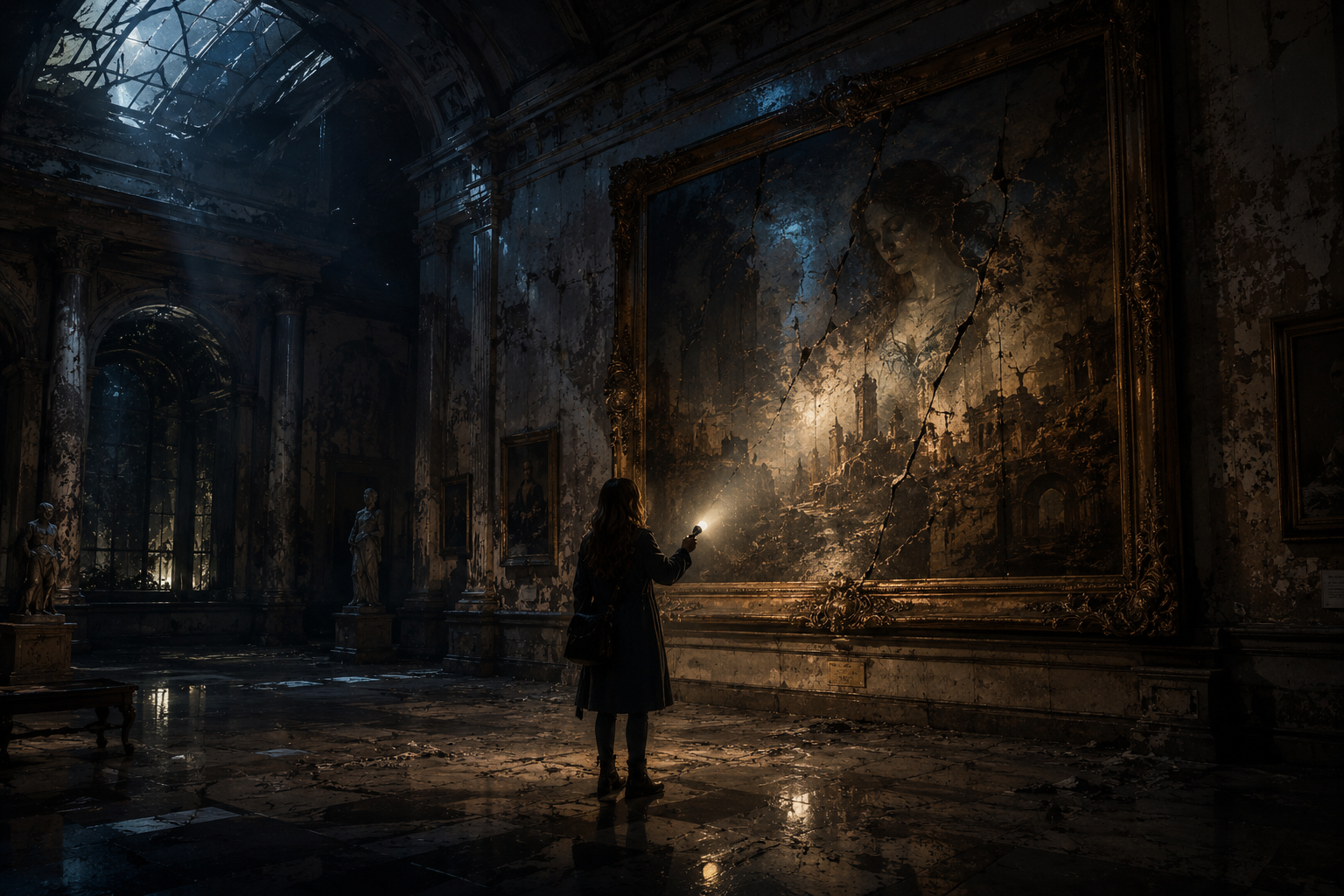
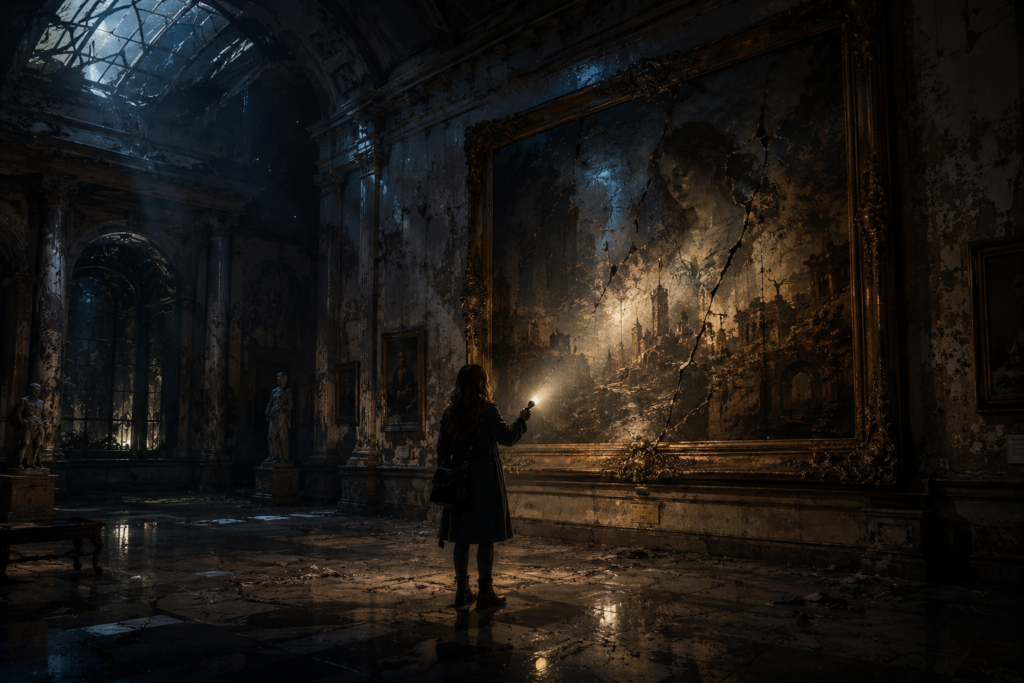
This ekphrasis poetry prompt invites you to write from the emotional atmosphere of an abandoned museum and a damaged painting that seems to hold a secret inside it.
In this Prompt
What ekphrasis poetry is
How to approach the image emotionally
A creative poetry prompt
Questions to deepen the poem
Tips for strong sensory writing
What Is Ekphrasis Poetry?
Ekphrasis poetry is poetry inspired by visual art.
The art can be real or imagined. A poet might respond to a painting, sculpture, photograph, film still, or even a mural seen on the side of a building. Sometimes the poem describes the image directly. Sometimes it explores the emotions, memories, or hidden story behind it.
John Keats’ “Ode on a Grecian Urn” remains one of the most famous examples. Modern poets often use ekphrasis to explore grief, identity, memory, fear, beauty, or history through visual details.
The goal is not to explain the image perfectly. The goal is to let the image open a door inside the poem.
The Prompt
Look at the image of the abandoned museum and the cracked painting.
Write a poem about the moment someone realizes the painting is trying to tell them something.
The message may be literal or emotional. The painting might remind the speaker of a forgotten memory, a lost relationship, a fear they buried, or a version of themselves they no longer recognize.
You can write in first person, second person, or third person.
You might focus on:
The silence of the museum
The flashlight beam moving across the damaged canvas
The feeling that the painting is watching back
What the cracks in the artwork reveal
Why the speaker came to the museum in the first place
Whether the painting offers comfort or warning
You do not need to explain everything. Mystery often gives ekphrasis poetry its emotional force.
Questions That Can Deepen the Poem
What emotion appears first when the speaker sees the painting?
What detail feels impossible to ignore?
Ask, what does the broken artwork reveal about the speaker’s own life?
What sounds fill the empty museum?
Does the speaker leave changed?
Tips for Writing the Poem
Focus on sensory detail before explanation. Let readers hear the echo of footsteps, smell dust in the air, or notice the cold light on marble floors.
Avoid summarizing the image too quickly. Stay inside one moment long enough for tension to build.
Strong ekphrasis poetry often moves from observation into reflection. The image becomes a mirror for something human.
You can also let the painting remain partly unknowable. Some of the strongest poems leave space for uncertainty.
Final Thought
A powerful image can hold emotion before language ever arrives. Ekphrasis poetry gives writers a way to step inside that silence and answer it.
The abandoned museum in this prompt is not just a setting. It is a place where memory, art, loneliness, and imagination begin speaking at the same time.












