A warm, specific writing invitation for remembering the last time you stood in a place you loved before you understood it would become part of your past.
You may remember the room before you remember the goodbye. The way the afternoon light hit the floor. The chipped mug near the sink. The smell of dust, laundry soap, rain, or old wood. At the time, it may have felt ordinary. You were just leaving for the day, closing a door, walking across grass, turning off a lamp.
Only later did you realize it was the last time.
This flash memoir prompt last time place loved before asks you to return to that strange kind of memory: the goodbye you did not know you were having. It is tender because the scene carries two versions of you at once. One version is inside the moment, unaware. The other is looking back, able to see what was already ending.

The Prompt
Write about the last time you were in a place you loved, before you knew you were leaving it for good.
This prompt can unlock a powerful memory because it does not begin with a dramatic farewell. It begins with ordinary details. A porch step. A classroom desk. A childhood bedroom. A library table. A backyard gate that squeaked every time you opened it.
The place does not need to be beautiful to matter. It only needs to have held part of your life. When you write from this flash memoir prompt last time place loved before, you are not trying to explain everything that happened there. You are choosing one final visit and letting the details carry the feeling.
Why This Memory Matters
Places can hold memory in a way people sometimes cannot. They keep the shape of old routines. They remind us who we were when we still belonged there.
The place in your story might be your grandmother’s kitchen, where the radio was always too loud. It might be an apartment you were ready to leave until you actually had to. It might be a school hallway, a church basement, a summer cabin, or the corner store that closed without warning.
What makes this memory rich is the gap between what you knew then and what you know now. In the moment, you may have been distracted. You may have been annoyed, rushed, hungry, or thinking about something small. Looking back, those small things become charged with meaning.
That is often where memoir comes alive. The lesson does not have to be stated in a grand way. A single object can do quiet work. If you want to think more about how objects carry emotional meaning, you might enjoy this guide on how to find symbolism in a story. The same skill can help you notice symbols in your own life.
A place you loved can also reveal change. Maybe you left because of choice. Maybe someone else made the choice for you. Maybe the place changed first. In any case, the story is less about real estate and more about attachment. It asks: What did this place give you, and what did you lose when you could no longer return?
How to Approach This Prompt
Start with one physical detail. Do not begin by explaining why the place mattered. Begin with what your hand touched, what your eye noticed, or what sound filled the room.
For example, write about the dent in the screen door, the cold tile under your feet, the poster peeling near the ceiling, or the smell of pencil shavings in a classroom. Let the place become real before you name the emotion.
Next, narrow the memory to one scene. Stay in the last visit. Resist the urge to summarize every year you spent there. You can mention the larger story later, but the flash memoir will feel stronger if the reader can stand beside you in that final moment.
You might use a sentence like, “I did not know this was the last time I would…” Then complete it with a simple action. Sit on that porch. Open that locker. Sleep in that room. Walk down that driveway.
Write what you noticed before you write what it meant. This helps the memory feel honest instead of forced. If you are the kind of writer who likes to mark up details before drafting, the habits in how to annotate literature can also help you study your own memories. Circle the images that seem to glow. Those may be the ones your piece needs.
For this flash memoir prompt last time place loved before, try writing for ten minutes without stopping. If you get stuck, return to the room, the ground, the air, or the door. The body often remembers what the mind has filed away.
A Quick Example
I did not know it was the last time I would sit on the back steps of my father’s house. I was seventeen, eating cereal from a plastic bowl because all the real bowls were packed or missing. The yard looked tired. The dog had dug a hole under the fence again, and someone had left a blue tarp folded near the garage. I remember being annoyed that the milk was warm. I remember slapping a mosquito on my ankle. Nothing felt important enough to save. A week later, the house was sold, and my father moved two states away. Now, when I think of that place, I do not picture my bedroom or the living room. I picture those steps, the bowl balanced on my knee, and the morning acting like it would happen again.
Try It Yourself
Set a timer and write the scene as if you are walking back into it. Do not worry about making it polished. Your first job is to notice.
Where were you standing? What was close to your body? What did you hear? What were you thinking about instead of the goodbye?
If the memory feels sad, let it be sad without pressing too hard. If it feels funny or strange, trust that too. Sometimes the truest memories arrive crooked. You might write about losing a place and still remember a ridiculous argument, a bad sandwich, or the way the floor creaked in one exact spot.
This flash memoir prompt last time place loved before works best when you let the ordinary moment stay ordinary for a while. The meaning can enter slowly. It can arrive in the final sentence, or it can stay under the surface.
Want More Flash Memoir Prompts?
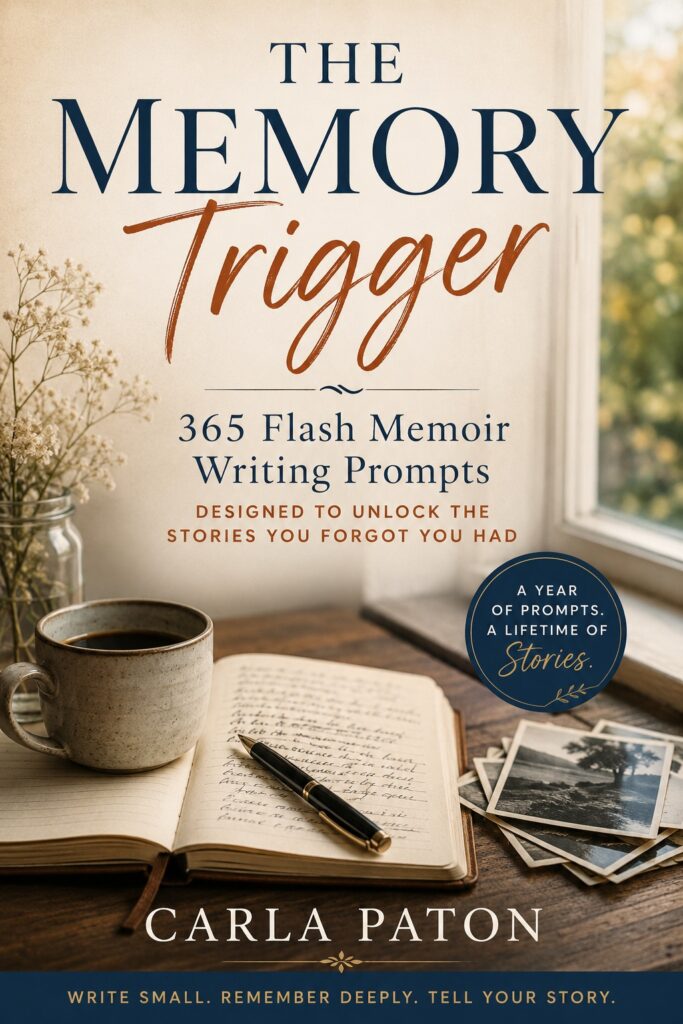
If this prompt opened a memory you want to keep exploring, you can build a steady writing habit one small scene at a time. Explore all 365 prompts in The Memory Trigger: 365 Flash Memoir Writing Prompts.