

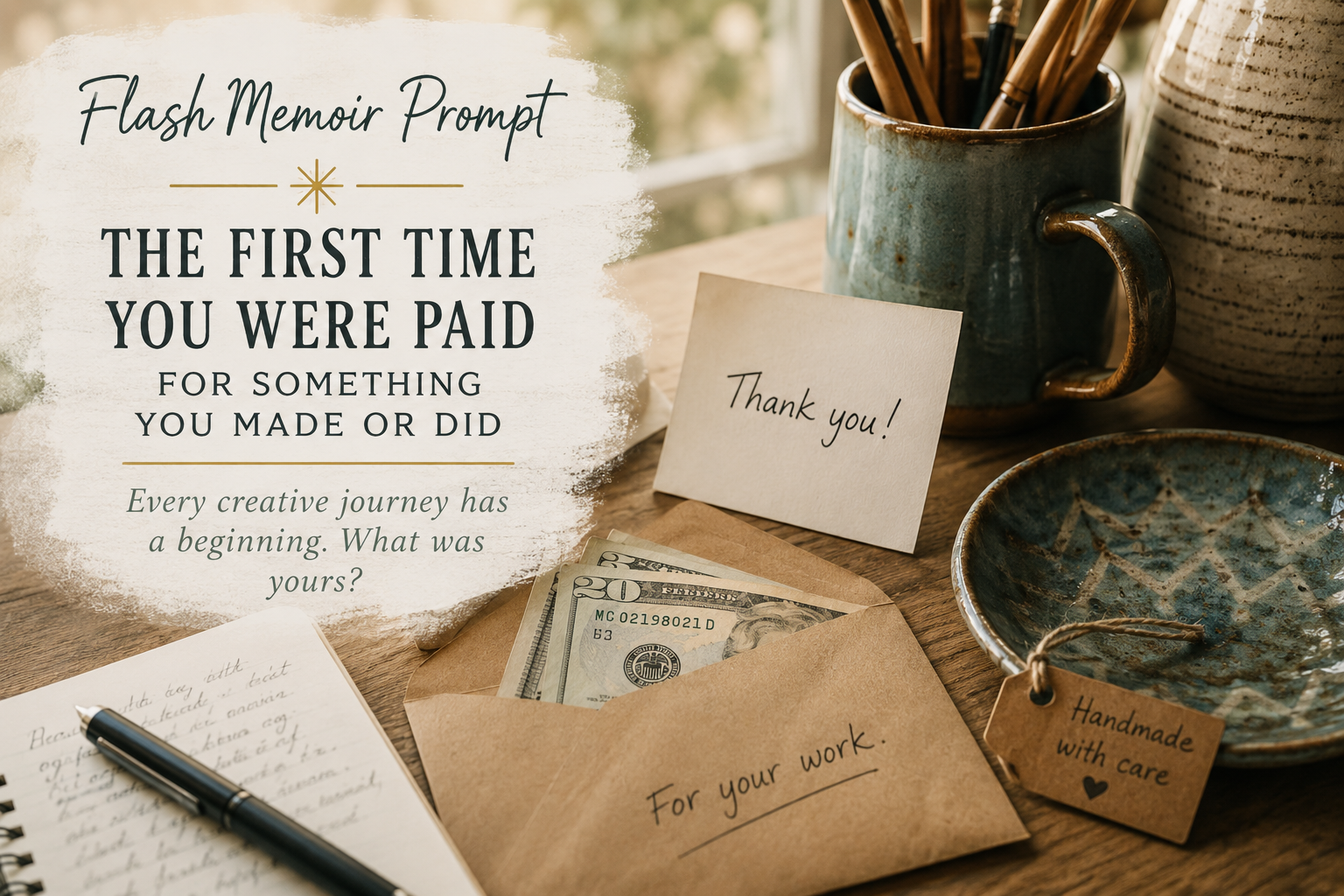
A warm flash memoir prompt for remembering the first dollar, check, tip, or thank-you envelope that made your effort feel real. Maybe you can still picture the way the money arrived: folded into your palm, tucked inside a card, sent through an app, or handed over with a casual “thanks” that did not feel casual to you at all.
The first time someone pays you for something you made or did can be strangely powerful. It might be a few coins for mowing a lawn, babysitting money stuffed into your pocket, a craft fair sale, a paycheck from a summer job, or five dollars from a neighbor who loved the brownies you baked. The amount may have been small. The feeling may have been huge.
This flash memoir prompt first time paid something made invites you to return to that moment before it became part of your life story. Before you had a resume. Before you knew what your work was worth. Before you learned to act calm when someone gave you money for your time, skill, care, or courage.
The Prompt
Write about the first time you were paid for something you made or did.
This prompt can unlock a memory because payment is rarely just payment. It can carry pride, surprise, pressure, embarrassment, or a sudden sense of being seen. In memoir, money often points to something deeper: independence, value, effort, family expectations, or the first tiny feeling of adulthood.
You do not have to write about a major job or a big success. In fact, this prompt works best when you stay close to one small exchange. Focus on the hand, the envelope, the register, the kitchen table, or the moment you counted the money later when no one was watching.
Why This Memory Matters
The first paid moment often marks a quiet shift. Someone outside yourself decided your work had value. That can feel thrilling, awkward, or even confusing.
Maybe you were a child selling lemonade, and you suddenly understood that warm coins could come from your own idea. Maybe you were a teenager with tired feet after a long shift, holding a paycheck that looked official and disappointing at the same time. Maybe you created something personal, like art, music, writing, or food, and payment made you feel proud and exposed.
This kind of memory may also reveal how you learned about work. Did your family celebrate the moment? Did someone tell you to save it? Did you spend it right away? Did you feel guilty taking money for something that had felt easy, fun, or natural?
Those questions matter because memoir is built from meaning hiding inside ordinary scenes. If you need help seeing that deeper layer, you might enjoy this guide on how to identify theme in literature. The same skill can help you notice the theme inside your own memory.
How to Approach This Prompt
Begin with a physical detail. Do not start by explaining your whole relationship with money or work. Start with the exact thing you remember seeing or touching.
For example, write about the paper route bag rubbing your shoulder. Write about the smell of wet grass after you finished mowing. Write about the purple ink on the check. Write about the sticky table at the bake sale or the way the babysitting cash felt too crisp to spend.
Then narrow the memory to one scene. This is flash memoir, so you do not need to cover every job you ever had. Choose one moment: the making, the doing, the handoff, or the private moment after.
Try to write what you noticed before you explain what it meant. If you jump too quickly to the lesson, the piece may feel flat. Let the reader stand beside you first.
You might begin with a sentence like, “The first money I ever earned smelled like chlorine,” or “Mrs. Alvarez paid me in quarters from a blue ceramic bowl.” A concrete start gives the memory a place to live.
If you are writing for school, this same habit can help with close reading. When you learn how to annotate literature, you practice noticing small details before making big claims. Memoir works in a similar way. Notice first. Explain later.
A Quick Example
The first time I got paid, I was eleven, and Mrs. Gentry gave me three dollars for pulling weeds along her fence. The bills were soft and faded, like they had already passed through every hand in town. I remember the dirt under my fingernails more than the money. I remember trying to act like three dollars was normal, like I was the kind of person who earned cash on Saturday mornings. My knees were green from the grass, and my back hurt in a way I felt proud of. At home, I laid the bills on my dresser and kept checking to see if they were still there. I did not buy anything for a week. I just liked knowing they had come from my own hands.
Try It Yourself
Set a timer for ten minutes and write one scene from the first time you were paid for something you made or did. Keep the focus tight. Where were you? Who gave you the money? What did your body feel like in that instant?
If you get stuck, write about the object connected to the memory. The coins, the check, the craft, the tool, the apron, the lawn mower, the receipt, or the envelope can carry the story for you.
Do not worry about making the memory sound impressive. The best flash memoir prompt first time paid something made pieces often come from small, almost funny moments. A crooked bracelet sold at a school fair can hold as much meaning as a first paycheck.
After you draft, read it once and underline the sentence that feels most honest. That sentence may be the real center of the piece.
Want More Flash Memoir Prompts?
If this prompt helped you remember a small but meaningful first, you may enjoy building a steady memoir practice one scene at a time. Explore all 365 prompts in The Memory Trigger: 365 Flash Memoir Writing Prompts.












