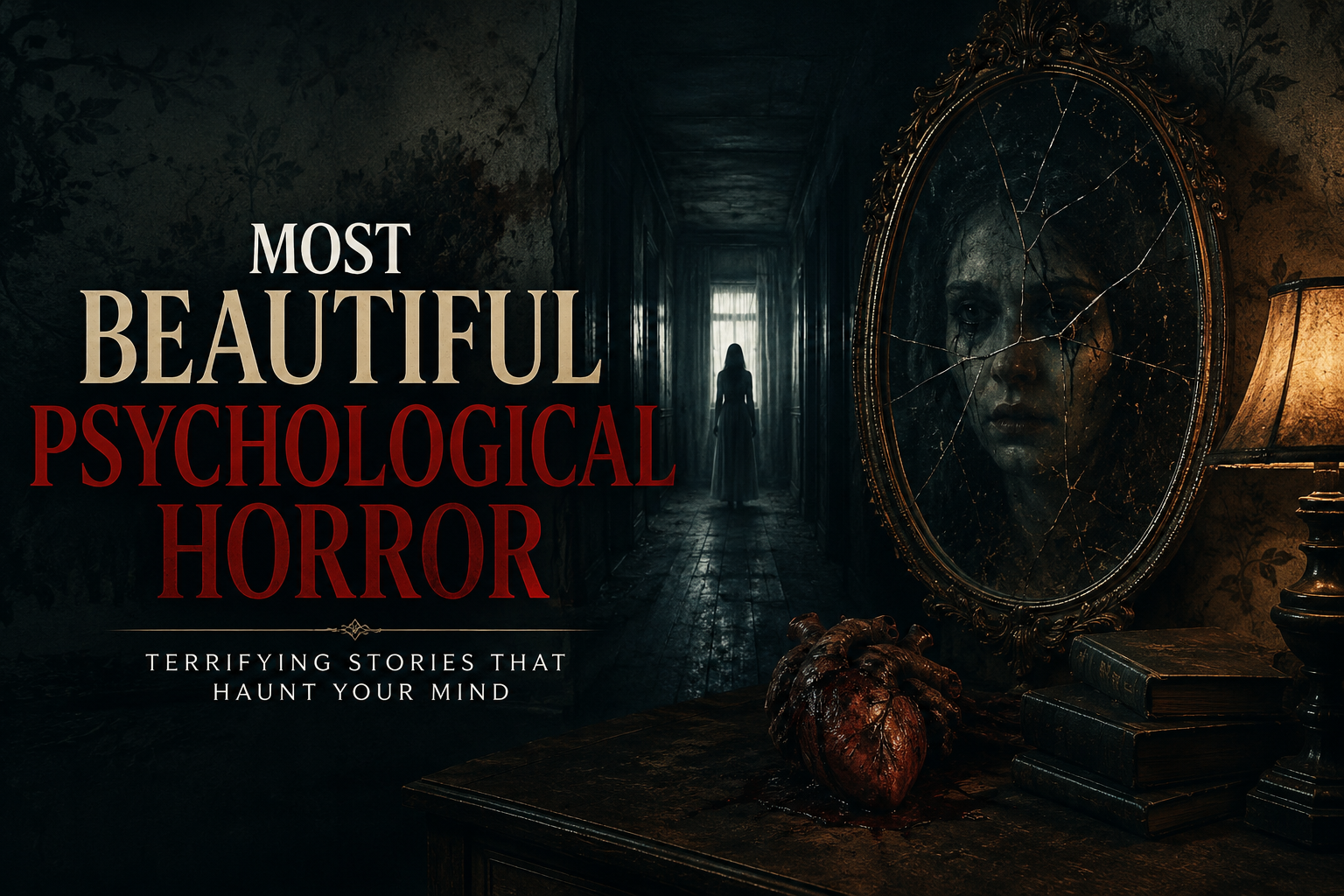
Some horror stories scare us with monsters, but others frighten us with memory, guilt, desire, and doubt. Most Beautiful Psychological Horror is the kind of writing that feels haunting because it is both terrifying and carefully made.
These stories do not only ask, “What is out there?” They ask, “What is happening inside the mind?”
In this Guide
- What Most Beautiful Psychological Horror Means
- Why Beauty Makes Horror More Powerful
- Classic Examples in Literature
- Books to Read or Search For
- Themes and Symbols
- FAQs
- Key Takeaway
What Most Beautiful Psychological Horror Means
Most Beautiful Psychological Horror describes stories that use fear, style, and emotion at the same time.
These works often focus on a troubled mind. The danger may be real, imagined, or both. That uncertainty is part of the fear.
The “beautiful” part does not mean the story is happy. It means the writing has shape, rhythm, and power. A cruel moment may be written with quiet grace.
In these stories, fear grows slowly. A house feels wrong. A voice sounds too calm. A memory will not stay buried.
Why Most Beautiful Psychological Horror Feels So Disturbing
Most Beautiful Psychological Horror works because beauty can make fear feel closer.
When a scary scene is written in lovely prose, the reader may lean in instead of pull away. That creates a strange tension. We want to keep reading, even when we feel unsafe.
This style often uses calm language to describe painful events. The contrast can feel more upsetting than a loud shock.
Think of a dark hallway described like a dream. The image may seem graceful, but it also tells us something is deeply wrong.
Classic Examples of Most Beautiful Psychological Horror
Many famous works show how fear can become art.
In The Turn of the Screw by Henry James, the terror comes from doubt. Are the ghosts real, or is the governess losing her grip on reality? The story never gives readers a simple answer.
In Charlotte Perkins Gilman’s “The Yellow Wallpaper,” the horror grows inside one room. The wallpaper becomes a symbol of mental pressure, control, and trapped identity. You can read more about Gilman through the Poetry Foundation.
In Shirley Jackson’s The Haunting of Hill House, the house feels alive because the characters feel broken. The fear is not only in the walls. It is in loneliness, grief, and the need to belong.
These works help define Most Beautiful Psychological Horror because they do not rely on quick scares. They make fear feel personal.
Most Beautiful Psychological Horror and the Gothic Tradition
Gothic literature helped shape this kind of horror.
Gothic stories often use old houses, family secrets, strange weather, and hidden guilt. These details create mood before anything violent happens.
Dracula by Bram Stoker is a strong example of fear linked to desire, disease, and moral decay. For a deeper look at that idea, read Count Dracula as a symbol of fear and corruption.
The Gothic style matters because it turns setting into emotion. A castle is not just a building. A locked room is not just a room.
For more background on the Gothic tradition, Britannica offers a helpful overview of the Gothic novel.
Books to Read for Most Beautiful Psychological Horror
These books are strong choices if you want horror that feels emotional, strange, and well written.
- The Haunting of Hill House by Shirley Jackson: A classic haunted house novel that explores fear, isolation, and fragile identity.
- Rebecca by Daphne du Maurier: A tense novel about obsession, marriage, memory, and the shadow of a dead woman.
You can search for these titles on Amazon, at your school library, or through a local bookstore.
Both books show why Most Beautiful Psychological Horror appeals to students and serious readers. The language is rich, but the fear remains clear.
Symbols and Themes in Most Beautiful Psychological Horror
Most Beautiful Psychological Horror often uses symbols to show fear that characters cannot say out loud.
A house may stand for the mind. If the house has locked rooms, broken stairs, or strange sounds, it may reflect hidden trauma or guilt.
Mirrors often suggest a split self. A character may look in a mirror and feel like a stranger. That image turns identity into something unstable.
Wallpaper, portraits, letters, and shadows can also carry meaning. They seem ordinary at first, but they slowly gather fear.
Common themes include guilt, control, madness, grief, and desire. These ideas matter because psychological horror is rarely only about death. It is about losing trust in the self.
Why Students Should Study Most Beautiful Psychological Horror
Most Beautiful Psychological Horror is useful for literature students because it rewards close reading.
Small details matter. A repeated color, a strange sound, or a shift in tone may reveal what a character fears most.
These stories also help students think about unreliable narrators. When a narrator cannot be fully trusted, readers must become detectives.
This is why works like The Turn of the Screw and “The Yellow Wallpaper” often appear in high school, AP Literature, and college courses. They invite debate.
How to Read Most Beautiful Psychological Horror Closely
Slow reading helps with this genre.
Watch how the setting changes. If a room feels smaller, darker, or more alive, that shift may show a change in the character’s mind.
Pay attention to repeated images. Repetition often signals fear that has not been solved.
Ask whether the narrator seems reliable. If the story gives mixed clues, the uncertainty may be the main source of horror.
When you read Most Beautiful Psychological Horror, do not only look for what happens. Look at how the story makes you doubt what is true.
Psychological Horror vs. Supernatural Horror
Psychological horror focuses on fear inside the mind.
Supernatural horror often uses ghosts, demons, curses, or monsters. Psychological horror may include those things, but it does not depend on them.
The key question is simple: does the story scare us because of an outside threat, or because the character’s mind feels unsafe?
Some of the best works blur that line. That blur is one reason Most Beautiful Psychological Horror feels so lasting.
FAQs About Most Beautiful Psychological Horror
What is Most Beautiful Psychological Horror?
It is horror that uses elegant writing, deep emotion, and mental fear. The story may feel scary, sad, and poetic at the same time.
Is psychological horror always supernatural?
No. It may include ghosts or strange events, but it can also focus on guilt, trauma, or obsession.
What is a good first book in this style?
The Haunting of Hill House by Shirley Jackson is a strong place to start. It is clear, tense, and rich in meaning.
Why is beauty important in horror?
Beauty can make fear feel more intense. Lovely language can draw readers toward scenes that disturb them.
Key Takeaway
Most Beautiful Psychological Horror shows that fear can be more than shock. It can reveal grief, desire, guilt, and the hidden rooms of the mind.
The best works in this style stay with us because they are not only scary. They are artful, emotional, and hard to forget. 🕯️