Most Beautiful Water Symbolism in Literature: Meaning, Themes, and Books to Read

water symbolism
water symbolism

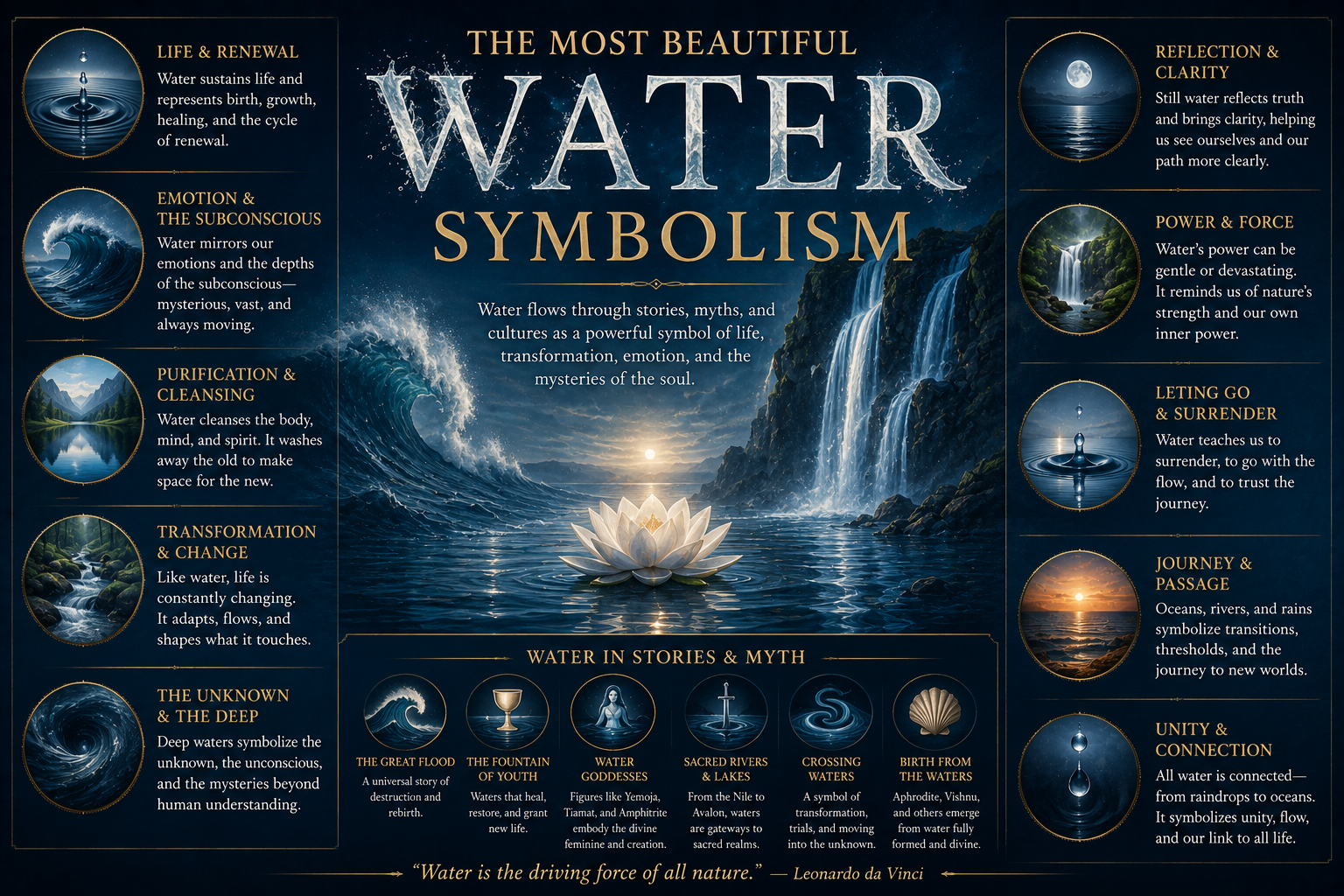
Most Beautiful Water Symbolism shows how rivers, rain, oceans, and lakes can carry deep meaning in a story. Water can stand for life, change, fear, memory, grief, or hope, often in the same scene.

For students, water is one of the easiest symbols to notice because it appears in so many famous books and poems. Once you learn what to look for, it can make a story feel richer and more alive.

In this Guide

  • What water symbolism means
  • Why Most Beautiful Water Symbolism matters
  • Common meanings of water in literature
  • Famous examples from books and poems
  • Recommended books to read
  • FAQs about water symbolism

What Does Water Symbolism Mean?

Water often points to emotions that characters cannot say out loud.

In literature, water is rarely just water. A river can show a journey. Rain can mark sorrow or renewal. An ocean can suggest freedom, danger, or the unknown.

Writers use water because readers already feel its power. We know water can heal, destroy, wash away, and return again. That makes it a strong symbol for human life.

If you want a simple method for spotting symbols, this guide on how to find symbolism in a story can help you build the skill step by step.

Why Most Beautiful Water Symbolism Feels So Powerful

The beauty of water symbolism comes from its many sides.

Most Beautiful Water Symbolism works because water is never only one thing. It can be calm in one scene and violent in the next. It can save a character or trap them.

This is why water feels so human. People also change. We can feel peaceful, afraid, hopeful, or lost, sometimes all in one day.

In many stories, water becomes a mirror. It reflects what a character hides inside. A quiet lake may show calm, but it may also hide pain below the surface.

Most Beautiful Water Symbolism and Common Meanings

Water symbols often connect to life, death, change, and truth.

One common meaning is rebirth. A character who enters water may come out changed. This can feel like a fresh start, even if the story stays painful.

Water can also mean danger. Storms, floods, and deep seas often show forces that people cannot control. This makes water a strong symbol for fate or fear.

Another meaning is memory. Rivers and oceans move, but they also seem ancient. In this way, Most Beautiful Water Symbolism can connect a character’s private life to a larger past.

Water can also suggest truth. A clear pool may show what is hidden. Muddy water may suggest confusion, lies, or moral doubt.

Famous Examples of Water Symbolism in Literature

Many classic works use water to shape mood and meaning.

In The Odyssey by Homer, the sea is both a road and an enemy. Odysseus wants to return home, but the ocean delays him again and again. The water stands for struggle, distance, and the test of human will.

In Moby-Dick by Herman Melville, the ocean feels endless and mysterious. It becomes a place where obsession grows. Captain Ahab’s search across the sea shows how the unknown can pull a person toward ruin.

In Shakespeare’s The Tempest, a storm at sea begins the action. The water helps create fear, magic, and change. It pushes characters into a strange world where old wrongs must face judgment.

In T. S. Eliot’s poem The Waste Land, water is tied to both need and fear. The poem’s dry land suggests spiritual emptiness, while water hints at renewal. You can read more about the poem through the Poetry Foundation.

Most Beautiful Water Symbolism in Modern Reading

Modern readers still connect with water because it feels close to daily life.

Most Beautiful Water Symbolism is not limited to old books. It appears in novels about family, identity, trauma, and survival. Water often helps writers show emotions that are hard to name.

For example, rain in a modern novel may mark grief after a death. A beach may show escape from stress. A river may stand for a choice that cannot be undone.

This is why water symbols work well in class essays. They let you connect setting, character, and theme in a clear way.

Recommended Books with Most Beautiful Water Symbolism

These books are strong choices for students who want to study water symbols.

  • The Odyssey by Homer: A classic journey story where the sea tests courage, pride, and longing for home.
  • Moby-Dick by Herman Melville: A deep study of obsession, mystery, and the danger of chasing one idea too far.

Both books show Most Beautiful Water Symbolism in very different ways. One treats water as a hard path home. The other turns the ocean into a vast space of fear and wonder.

For a wider look at how symbols work in literature, Britannica’s overview of symbolism gives useful background.

How to Write About Water Symbolism in an Essay

A strong essay links the water image to a clear idea.

Start with the scene. Ask what kind of water appears. Is it rain, ocean, river, lake, or flood?

Then ask what the character feels in that moment. Water symbolism is strongest when it connects to conflict, choice, or change.

Last, connect the symbol to a theme. If a character crosses a river, the theme may involve growth or loss. If a storm breaks, the theme may involve fear, guilt, or truth.

For more practice, use this helpful guide on finding symbolism in fiction before you draft your paragraph.

Most Beautiful Water Symbolism and Major Themes

Water often gives a story its emotional center.

Most Beautiful Water Symbolism often links to change. Water moves, shifts, and reshapes the world. Characters who meet water often face a turning point.

It also links to cleansing. A bath, rainfall, or river can suggest a wish to remove guilt or pain. Yet the story may ask whether a person can truly wash the past away.

Water also links to the unknown. Deep water can hide danger, secrets, or truth. This makes it useful in stories about fear and discovery.

FAQs About Most Beautiful Water Symbolism

What is Most Beautiful Water Symbolism in literature?

Most Beautiful Water Symbolism refers to powerful water images that carry deep meaning. These images may show life, change, danger, memory, or renewal.

Why do writers use water as a symbol?

Writers use water because it is familiar and emotional. Readers understand its power to comfort, harm, hide, and reveal.

What does rain usually symbolize?

Rain can symbolize sadness, cleansing, rebirth, or tension. The meaning depends on the scene and the character’s state of mind.

What does the ocean symbolize in books?

The ocean often symbolizes mystery, freedom, danger, or the unknown. In many stories, it also shows how small people feel against nature.

How can I find water symbolism in a story?

Look for repeated water images and ask what changes when they appear. If water appears during a key choice or crisis, it likely has symbolic meaning.

Key Takeaway

Most Beautiful Water Symbolism matters because water can hold many truths at once. It can show hope and fear, peace and danger, life and loss.

When you notice water in a story, slow down. Ask what it reveals about the character, the mood, and the theme. That simple question can open the whole text. 🌊

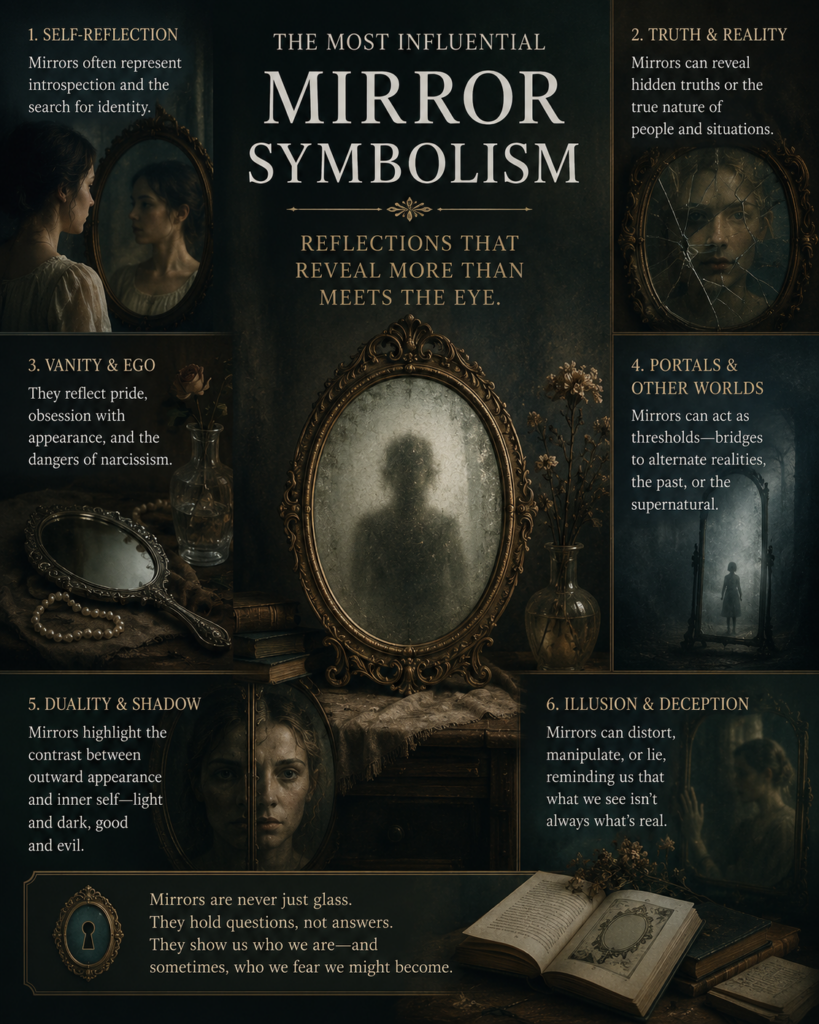
Most Influential Mirror Symbolism in Literature: What Reflections Reveal

mirror symbolism in Literature

Mirrors in stories do more than show a face. The Most Influential Mirror Symbolism often reveals truth, fear, desire, or a hidden part of the self.

From fairy tales to modern poems, mirror scenes help readers see what a character cannot say out loud. That is why this symbol still feels fresh in classrooms and book clubs today.

In this Guide

  • Why mirror symbolism matters
  • Most Influential Mirror Symbolism in classic literature
  • Mirror symbolism in poems and fairy tales
  • Common themes linked to mirrors
  • Recommended books with mirror symbolism
  • How to analyze mirror scenes
  • FAQs about mirror symbolism
mirror symbolism in Literature

Why the Most Influential Mirror Symbolism Still Matters

Mirrors are simple objects, but writers use them to ask hard questions.

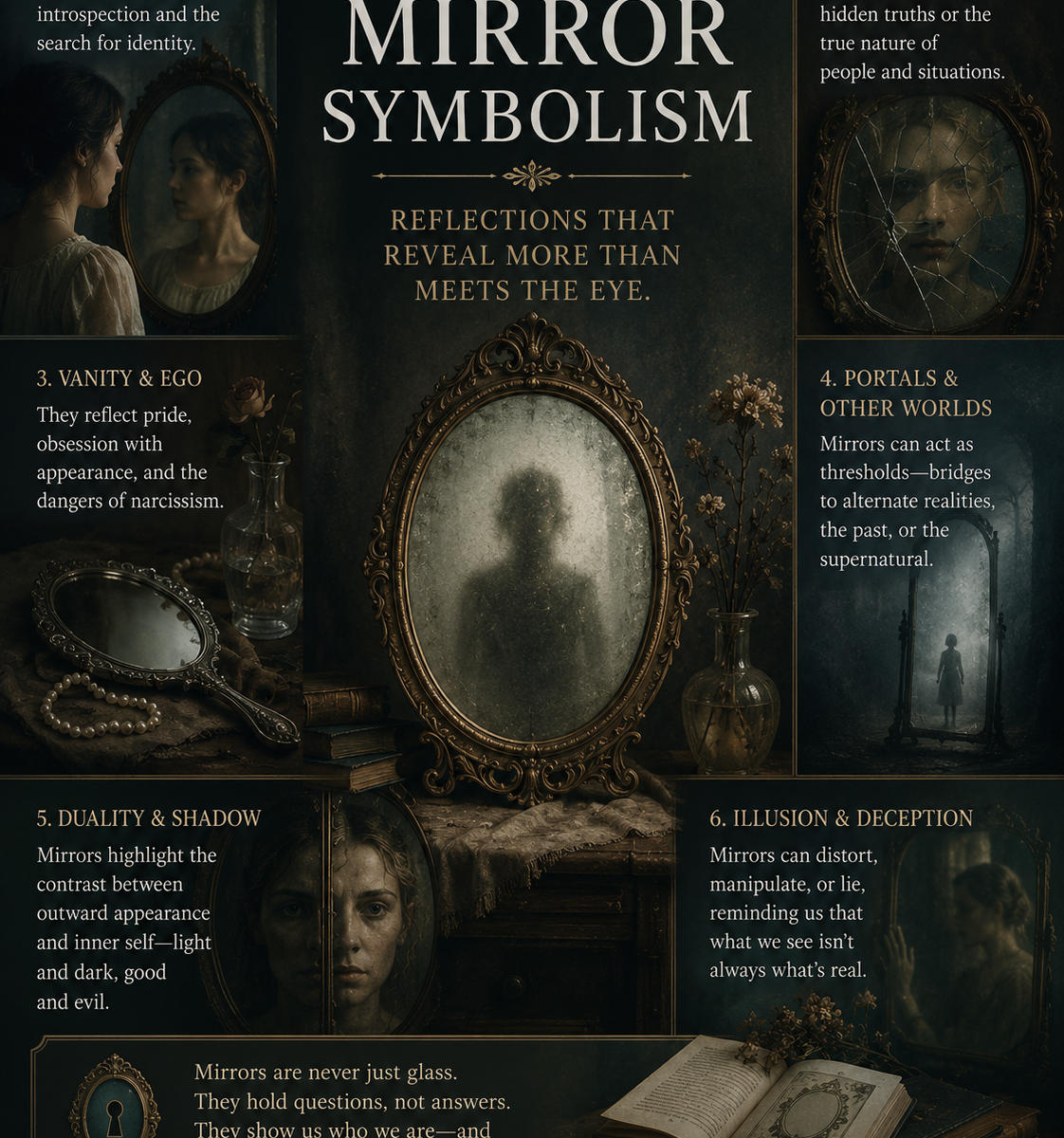
The Most Influential Mirror Symbolism often deals with identity. A character looks into a mirror and faces a version of the self that may feel strange, broken, proud, or false.

This makes mirrors useful in stories about growing up, guilt, beauty, madness, and truth. A mirror can show what society values, but it can also show what society hides.

Readers often remember mirror scenes because they feel private. A character alone with a reflection can reveal more than a long speech.

Most Influential Mirror Symbolism in Classic Literature

Classic works use mirrors to expose desire, fear, and the danger of self-image.

One famous example appears in “Snow White.” The magic mirror does not just answer a question about beauty. It shows how power and jealousy can grow from obsession.

The queen needs the mirror to confirm her worth. When it stops doing that, she turns cruel. This is one reason the Most Influential Mirror Symbolism often connects beauty with control.

In Mary Shelley’s Frankenstein, the creature sees his reflection and understands how others may see him. That moment is painful because it joins self-awareness with rejection.

Oscar Wilde’s The Picture of Dorian Gray does not center on a mirror, but the portrait works like one. It reflects Dorian’s inner corruption while his face stays young.

This is a key mirror-like symbol. It asks whether a person can hide from the truth if the surface still looks perfect.

Mirror Symbolism in Poems and Fairy Tales

Poets and fairy-tale writers often use mirrors to make truth feel sharp.

Sylvia Plath’s poem “Mirror” is one of the clearest examples of the Most Influential Mirror Symbolism in modern literature. The mirror speaks as if it has no feelings, yet the poem feels deeply emotional.

The speaker says it reflects “faithfully.” Still, that honesty hurts the woman who looks into it. You can read the poem at the Poetry Foundation.

In fairy tales, mirrors often know what humans refuse to admit. They may act like judges, warnings, or magical doors.

Lewis Carroll’s Through the Looking-Glass turns the mirror into a passage. Alice steps through it and enters a world where logic shifts. Here, the mirror suggests a second reality that sits just behind ordinary life.

Common Themes in the Most Influential Mirror Symbolism

Mirror symbols often return to the same deep concerns.

Identity is the most common theme. A mirror can make a character ask, “Who am I really?” This matters in stories where people feel split between public image and private truth.

Vanity also appears often. When a character trusts the mirror too much, the story may warn against pride or shallow judgment.

Self-knowledge is another major idea. The Most Influential Mirror Symbolism often marks the moment when a character can no longer avoid the truth.

Mirrors can also show social pressure. A character may not see the real self, but instead the version shaped by beauty rules, class, gender, or power.

For more help with symbols in general, read our guide on how to find symbolism in a story.

Recommended Books with Powerful Mirror Symbolism

These works are strong choices for students who want to study reflection, identity, and truth.

  • Through the Looking-Glass by Lewis Carroll
  • Frankenstein by Mary Shelley

Both books show why the Most Influential Mirror Symbolism lasts across time. Carroll uses the mirror as a doorway into strange logic. Shelley uses reflection to show pain, isolation, and self-awareness.

If you want a shorter text, pair either book with Sylvia Plath’s “Mirror.” It works well for poetry study, AP Literature practice, or a quick close reading lesson.

How to Analyze the Most Influential Mirror Symbolism

A good mirror scene usually changes how we understand a character.

Start by asking what the mirror shows. Does it reveal beauty, fear, age, guilt, or desire?

Then ask what the character feels. A calm reaction means something very different from panic, shame, or anger.

Look at the setting too. A mirror in a bedroom feels private. A magic mirror in a palace may connect reflection with power.

The Most Influential Mirror Symbolism becomes clearer when you ask what truth the character wants to avoid. If the mirror forces that truth into view, it is likely doing important symbolic work.

Mirror Symbolism and Literary Culture

Mirrors remain popular because they fit the way people think about image today.

Modern readers live in a world full of photos, screens, and self-presentation. That makes mirror symbolism feel even more relevant.

Stories with mirrors ask whether the image we show is the same as the person we are. This question appears in old myths, Gothic novels, poems, and young adult fiction.

The Most Influential Mirror Symbolism also links literature with art history and psychology. For background on symbolism as a larger movement, see Britannica’s overview of Symbolism.

FAQs About Most Influential Mirror Symbolism

What does a mirror usually symbolize in literature?

A mirror often symbolizes identity, truth, vanity, or self-knowledge. It can show how a character sees the self or how society judges that character.

Why do writers use mirrors in stories?

Writers use mirrors because they create strong visual moments. A reflection can reveal inner conflict without long explanation.

What is the best example of mirror symbolism?

“Snow White” is one of the best-known examples. Sylvia Plath’s “Mirror” is one of the strongest literary examples for close reading.

Can a mirror symbolize lies?

Yes. A mirror can seem truthful, but it may also reflect a false image, a shallow value system, or a character’s distorted view of the self.

How do I write about mirror symbolism in an essay?

Focus on what the mirror shows, how the character reacts, and what theme the scene supports. Connect the symbol to the larger meaning of the work.

Key Takeaway

The Most Influential Mirror Symbolism in literature helps readers see hidden truths. In literature, a mirror is rarely just glass. It reflects identity, pressure, fear, and the difficult act of knowing yourself.

When a character looks into a mirror, pay attention. The story may be showing its deepest truth in plain sight.

Best Classic Moon Symbolism in Literature: Meaning, Themes, and Books to Read

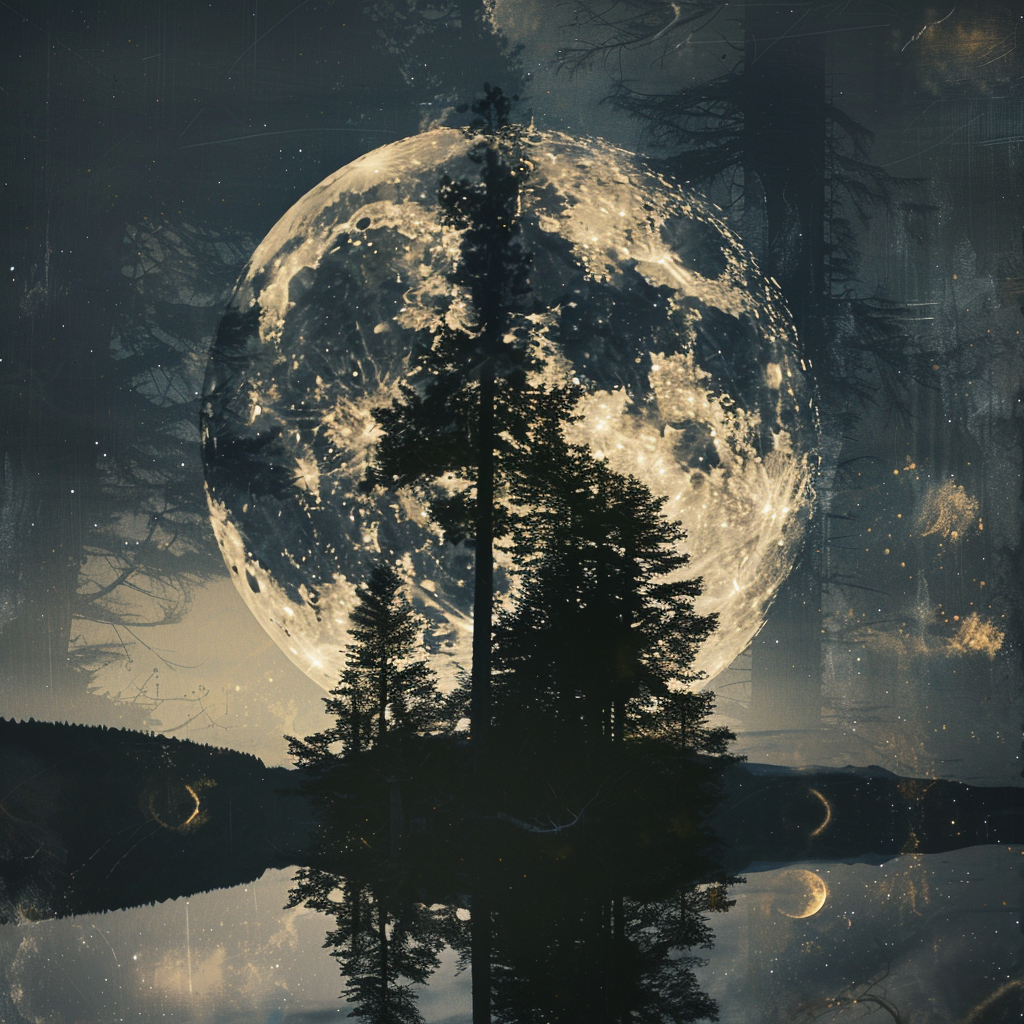
Moon symbolism

The Best Classic Moon Symbolism in literature often points to mystery, change, hidden truth, and emotion. Writers use the moon because it feels familiar, but it also feels strange and powerful.

From Gothic novels to Romantic poems, the moon can light up secrets that characters try to hide. It can also show fear, love, madness, or hope in a quiet way.

Moon symbolism

In this Guide

  • What moon symbolism means in classic literature
  • How Gothic writers use the moon
  • Moon symbolism in poetry
  • Famous examples from novels and plays
  • Common moon themes
  • Books to read for moon symbolism
  • FAQs about moon symbolism

What Is Best Classic Moon Symbolism?

The moon often acts like a mirror for a character’s inner life.

In classic literature, the moon is rarely just part of the setting. It can show that a scene is strange, emotional, secret, or unsafe.

The Best Classic Moon Symbolism works because the moon changes shape. It grows, fades, disappears, and returns. That makes it a strong symbol for change, time, memory, and unstable feelings.

The moon also rules the night. Since night often hides what daylight reveals, moonlight can create tension. It lets readers see a little, but not everything.

For more help with symbols in fiction, read our guide on how to find symbolism in a story.

Best Classic Moon Symbolism in Gothic Literature

Gothic writers use the moon to make fear feel beautiful and dangerous.

In Gothic literature, moonlight often falls on castles, graveyards, windows, and wild landscapes. It gives scenes a dreamlike look, but it can also make them feel unsafe.

In Dracula by Bram Stoker, the night world matters. The moon helps build a mood of danger because Dracula’s power grows after dark. Moonlit scenes remind readers that evil can move quietly when people feel most helpless.

In Frankenstein by Mary Shelley, moonlight often appears during lonely or fearful moments. Victor sees the world through guilt and dread, so the moon can feel cold instead of calm.

This is why the Best Classic Moon Symbolism in Gothic fiction often connects to fear, isolation, and the unknown. The moon does not comfort the characters. It watches them.

Best Classic Moon Symbolism in Romantic and Victorian Poetry

Poets often turn the moon into a symbol of longing, beauty, and deep thought.

Romantic poets loved nature because they saw it as a path to feeling and imagination. The moon gave them a perfect image for quiet sadness, wonder, and spiritual mystery.

Percy Bysshe Shelley’s poem To the Moon presents the moon as tired and wandering. It feels almost human. You can read the poem at the Poetry Foundation.

Emily Dickinson also uses the moon in striking ways. In poems like “The Moon was but a Chin of Gold,” the moon becomes strange, almost like a face in the sky. Her moon is not simple or soft. It feels alive and hard to explain.

The Best Classic Moon Symbolism in poetry often depends on mood. A moon can feel romantic in one poem and lonely in another. The symbol changes with the speaker’s mind.

Famous Examples of Moon Symbolism in Classic Literature

Many famous works use the moon to show love, secrecy, or a shift in power.

In Shakespeare’s A Midsummer Night’s Dream, the moon is tied to romance, magic, and confusion. Lovers meet in the woods at night, where moonlight helps create a world that feels playful but unstable.

In Nathaniel Hawthorne’s The Scarlet Letter, moonlight matters during scenes of guilt and hidden truth. The night does not fully hide sin. Instead, the moon gives just enough light to make secrets feel visible.

In Jane Eyre by Charlotte Brontë, the moon often has a guiding role. Jane sometimes sees it as calm and almost motherly. It can reflect her need for safety, love, and moral direction.

These examples show why moon symbolism stays popular in classrooms. It helps readers track a character’s fear, desire, or private struggle without a long speech.

Best Classic Moon Symbolism and Common Themes

The moon can carry many meanings, but a few themes appear again and again.

Change is one of the most common meanings. Because the moon has phases, it often points to growth, decline, or a coming shift.

Mystery is another key theme. Moonlight reveals shapes but not details. That makes it perfect for scenes where characters do not fully understand what they face.

Madness also appears in older literature and folklore. The word “lunatic” comes from an old belief that the moon could affect the mind. You can learn more about the moon’s cultural history through Britannica’s overview of the Moon.

Love is a softer meaning. Moonlit scenes can feel private and emotional, which is why writers often place lovers under the moon.

The Best Classic Moon Symbolism does not have one fixed meaning. The scene, character, and genre all shape what the moon suggests.

How to Spot Best Classic Moon Symbolism in a Story

Look at what happens when the moon appears.

Ask what the moon changes in the scene. Does it make the setting feel peaceful, eerie, romantic, or tense?

Notice who sees the moon. A lonely character may read the moon as cold. A hopeful character may see it as beautiful.

Pay attention to light and shadow. Moonlight often sits between darkness and full truth. That makes it useful when a story deals with secrets.

If you want a simple method, use this symbolism reading guide to practice with any poem, novel, or short story.

Recommended Books for Studying Best Classic Moon Symbolism

These books are strong choices for students who want clear examples of moon imagery and symbolism.

  • Dracula by Bram Stoker
  • Jane Eyre by Charlotte Brontë
  • The Poems of Emily Dickinson by Emily Dickinson

Dracula is useful if you want to study moonlight, fear, and Gothic mood. The night scenes show how setting can shape terror.

Jane Eyre gives a different kind of moon symbol. The moon often feels moral, emotional, and personal.

Emily Dickinson’s poetry is a great choice for close reading. Her moon images are short, strange, and rich with meaning.

FAQs About Moon Symbolism in Literature

What does the moon usually symbolize in literature?

The moon often symbolizes mystery, change, emotion, secrecy, or the hidden self. Its meaning depends on the scene and the character.

Why do Gothic writers use the moon so often?

Gothic writers use the moon because it creates fear and beauty at the same time. Moonlight makes a scene visible but still unclear.

Is moon symbolism always romantic?

No. The moon can suggest romance, but it can also suggest danger, madness, loneliness, or guilt.

How can I analyze moon symbolism for school?

Start with the mood of the scene. Then ask what the moon reveals, what it hides, and how the character reacts to it.

Key Takeaway: Best Classic Moon Symbolism Still Matters

The Best Classic Moon Symbolism works because the moon feels both close and mysterious. It lights the dark without removing the dark completely.

That is why writers keep returning to it. The moon can show love, fear, change, and secret truth in one quiet image.

When you see the moon in a classic text, pause for a moment. It may be telling you what the characters cannot say out loud.

error

Enjoy this article? Please spread the word :)

Follow by Email
BLUESKY
fb-share-icon
Reddit
LinkedIn
Share
RSS