

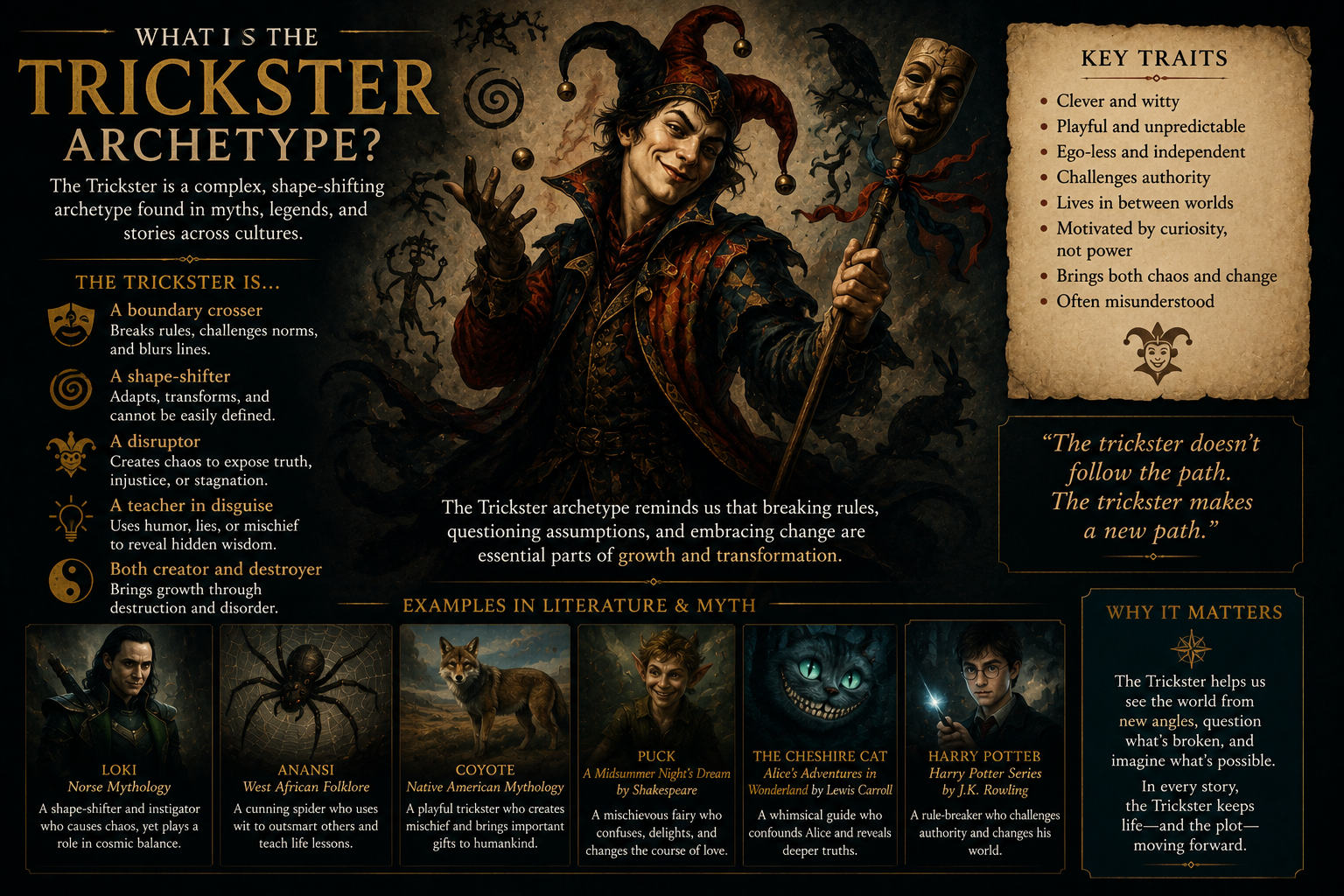
If a character lies, jokes, breaks rules, or tricks others to expose the truth, you may be looking at a trickster. This guide answers What Is the Trickster Archetype? and shows why this character type matters in stories, myths, and plays.
In this Guide
Use this quick map to find what you need.
- Simple definition
- Why the trickster matters
- Common traits
- Famous examples
- How to analyze a trickster
- Books to read
- FAQ
What Is the Trickster Archetype? A Simple Definition
A trickster is a character who uses cleverness to challenge rules, fool others, or upset the normal order.
When students ask, What Is the Trickster Archetype?, the easiest answer is this: it is a repeated character pattern found across stories. A trickster often bends the truth, changes shape, plays jokes, or tricks people in power.
The trickster is not always evil. Some tricksters help others by exposing lies. Others cause chaos for fun. That mix makes them hard to trust and fun to study.
An archetype is a pattern that appears again and again in literature. The trickster archetype appears in myths, fairy tales, drama, novels, and modern fantasy.
What Is the Trickster Archetype? Why It Matters in Literature
The trickster matters because this character often reveals what a society fears, hides, or refuses to question.
A good answer to What Is the Trickster Archetype? should explain more than behavior. Tricksters do not only play pranks. They test the world of the story.
They may expose a proud king, fool a greedy person, or break a rule that no one else dares to touch. In doing so, they show cracks in the system.
That is why tricksters often appear when a story needs change. They push characters out of comfort and make hidden truths easier to see.
For more background on trickster stories across cultures, see Britannica’s overview of trickster tales.
What Is the Trickster Archetype? Common Traits to Look For
Tricksters are different in each story, but they often share a few clear signs.
If you remember one answer to What Is the Trickster Archetype?, remember this: tricksters use wit as power. They may not be the strongest character, but they know how to outsmart others.
Common signs include disguise, jokes, lies, riddles, and sudden reversals. A trickster may cross boundaries between human and animal, rich and poor, or order and chaos.
Tricksters also create tension. Readers may laugh at them, but they can also cause real harm. That uneasy feeling is part of their role.
When you read, notice how other characters react to the trickster. Fear, anger, and confusion can show how much power the trickster has.
What Is the Trickster Archetype? Famous Examples
Many well-known stories use tricksters to bring humor, conflict, and surprise.
Puck in William Shakespeare’s A Midsummer Night’s Dream is a classic trickster. He uses magic to confuse the lovers, and his mistakes turn the play into a comic mess.
Shakespeare often used clever characters to expose foolish behavior. You can learn more about him through the Poetry Foundation’s Shakespeare page.
Loki from Norse myth is another famous example. He can help the gods, but he also betrays them. That makes him a risky and unstable figure.
Anansi, the spider from West African and Caribbean folklore, often wins through wit. His stories show how a smaller figure can beat stronger enemies through clever plans.
Odysseus in Homer’s The Odyssey also has trickster traits. He survives by using disguise and strategy, especially when he fools the Cyclops Polyphemus.
What Is the Trickster Archetype? How to Analyze It
A strong analysis looks at what the trickster changes in the story.
When you ask What Is the Trickster Archetype? during reading, do not stop at “this character is sneaky.” Ask what the trick reveals.
Does the trickster expose a lie? Does the prank show that a leader is weak? Or, does the character’s chaos lead to growth?
Also look for symbols linked to the trickster. Masks, doors, mirrors, animals, and magic objects may point to hidden meanings. If you need help with that skill, read this guide on how to find symbolism in a story.
Practical tip: Each time the trickster appears, write down what rule gets broken and what truth comes out. That simple note can turn into a strong paragraph for class.
Books That Help You Understand the Trickster Archetype
These books include trickster figures or characters with strong trickster traits.
- The Odyssey by Homer
- A Midsummer Night’s Dream by William Shakespeare
- Anansi Boys by Neil Gaiman
These are not affiliate links, just useful titles to explore.
FAQ: What Is the Trickster Archetype?
Here are quick answers to common student questions.
What Is the Trickster Archetype? in simple words?
It is a character type that uses tricks, jokes, or clever plans to challenge rules and reveal truth.
Is a trickster always a villain?
No. A trickster can help or harm. Many tricksters do both, which makes them complex.
Why do authors use tricksters?
Authors use tricksters to create conflict, question authority, and show hidden problems in a story’s world.
What is a good example of a trickster in literature?
Puck from A Midsummer Night’s Dream is a strong example because he causes confusion through mischief and magic.
Key Takeaway
The trickster is more than a comic troublemaker.
What Is the Trickster Archetype? It is a clever rule-breaker who shakes up the story and helps readers see what others miss.












