You find the old charger in a drawer, or hear the kettle click, and suddenly remember a whole version of yourself: the person who once did the same small thing every day until, without ceremony, you stopped.
The Prompt
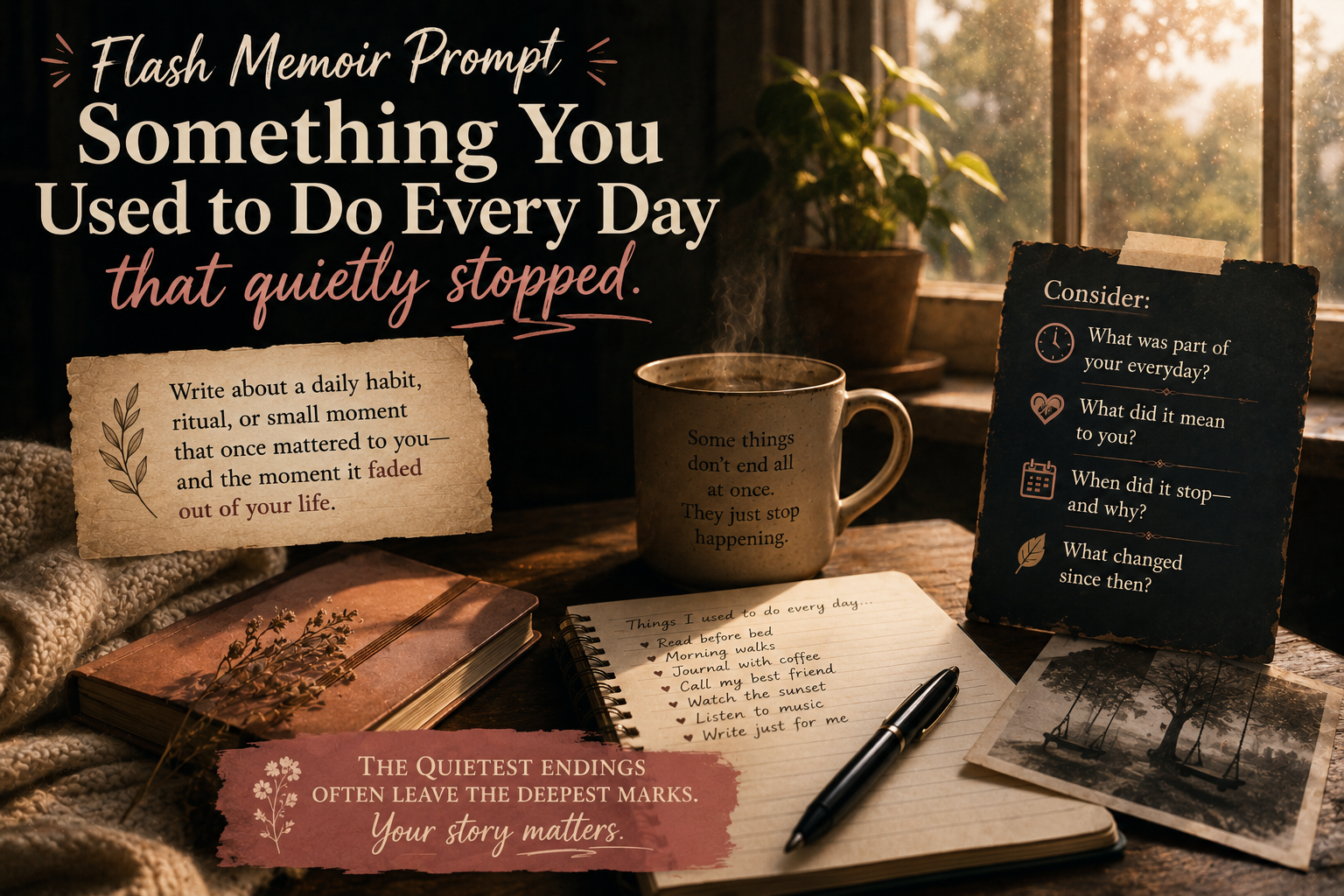
Write about something you used to do every day that quietly stopped.
This flash memoir prompt about something you used to do every day invites you to notice the small routines that shaped a season of your life. It might be a phone call, a walk, a lunch packed in a certain way, a game on the bus, or the habit of checking the window before bed.
The quiet part matters. This is not about a dramatic ending. It is about the kind of change you only see later. One day was the last day, but no one knew it at the time.
Why This Memory Matters
Daily habits can tell the truth about who we were. They show what we needed, what we feared, who we loved, and how we made it through our days.
You may write about something childish that faded as you grew up. Maybe you stopped sleeping with the hallway light on. Maybe you stopped drawing stars in the margins of your notes. Maybe you stopped waiting for someone to call because, at some point, waiting became too heavy.
You may also write about a habit that belonged to a relationship. A good morning text. A ride to school. A shared snack after practice. A certain seat at the dinner table. When the habit stopped, the relationship may have changed too, even if no one said it out loud.
That is why this flash memoir prompt something used do every day can lead to a strong piece of writing. A small routine can hold a larger story. The trick is to stay close to the moment instead of trying to explain your whole life at once.
If you enjoy looking closely at meaning in small details, you may also like this guide on how to annotate literature. The same skill helps in memoir: mark what stands out, then ask why it stayed with you.
How to Approach This Prompt
Begin with the object or action, not the explanation. Put your reader in the room with you.
Instead of starting with, “I used to be really close to my grandmother,” try starting with the phone cord twisted around your finger. Start with the smell of toast in her kitchen. Start with the way the call always ended with the same sentence.
Narrow the memory to one scene. Pick one ordinary day when the habit still existed. Do not rush to the last time yet. Let us see the routine while it was still normal.
For example, if you used to write in a diary every night, choose one night. Where were you sitting? What pen did you use? Were you hiding the notebook under your pillow? Was your handwriting neat at first, then tired by the end?
After you write what you noticed, you can move toward what it meant. This order helps the memory feel alive. The meaning will land better if the reader has already touched the scene through your details.
You might also think about tone. Is this memory funny now? Sad? Tender? A little embarrassing? If you want help naming that feeling, this explanation of tone vs. mood in literature can help you think about the emotional effect of your own writing.
Try not to force a big lesson. The strongest ending may be simple: you noticed the habit was gone, and you missed the person you had been when it still mattered.
A Quick Example
Every morning in seventh grade, I checked the mailbox before school, even though the mail never came that early. I was waiting for a letter from my father, who had moved two states away and promised he would write. The mailbox was cold in winter and hot in May. I remember the metal handle sticking to my fingers and the hollow sound when I pulled the door open. Most days there was nothing inside except dust and a curled grocery flyer from the day before. I stopped checking sometime that spring. I do not remember deciding to stop. I only remember walking past it one morning with my backpack bouncing against my hip and realizing, halfway to the bus stop, that I had not looked.
Try It Yourself
Set a timer for ten minutes and write the first version quickly. Choose one habit that belonged to a clear part of your life. It can be small. In fact, small may work better.
Use this flash memoir prompt something used do every day as a doorway into one scene. Write the daily action first. Let the emotion arrive later. If you get stuck, finish this sentence: “I did it every day until one day I didn’t, and I didn’t notice because…”
You do not need to solve the memory. You only need to notice it honestly. The quiet stopping may be the whole point.
Want More Flash Memoir Prompts?
If this prompt opened a memory, keep going. Short prompts can help you build a steady writing practice without pressure. Explore all 365 prompts in The Memory Trigger: 365 Flash Memoir Writing Prompts.