


A simple explanation of the most important symbols and images in the text.
The symbols in The Alchemist help readers see Santiago’s trip as more than a search for buried gold. Each key image points to a deeper lesson about dreams and self-knowledge.
Paulo Coelho uses simple objects, places, and natural forces to show how a person learns to trust a calling. That is why the novel works so well for class discussion and essays.
In this Guide
Use this quick map to follow the main ideas in the post.
- Why symbolism matters in the novel
- The desert, the pyramids, and the treasure
- The sheep, the stones, and the alchemist
- The wind, the sun, and the oasis
- How to write about the symbols
- FAQ and key takeaway
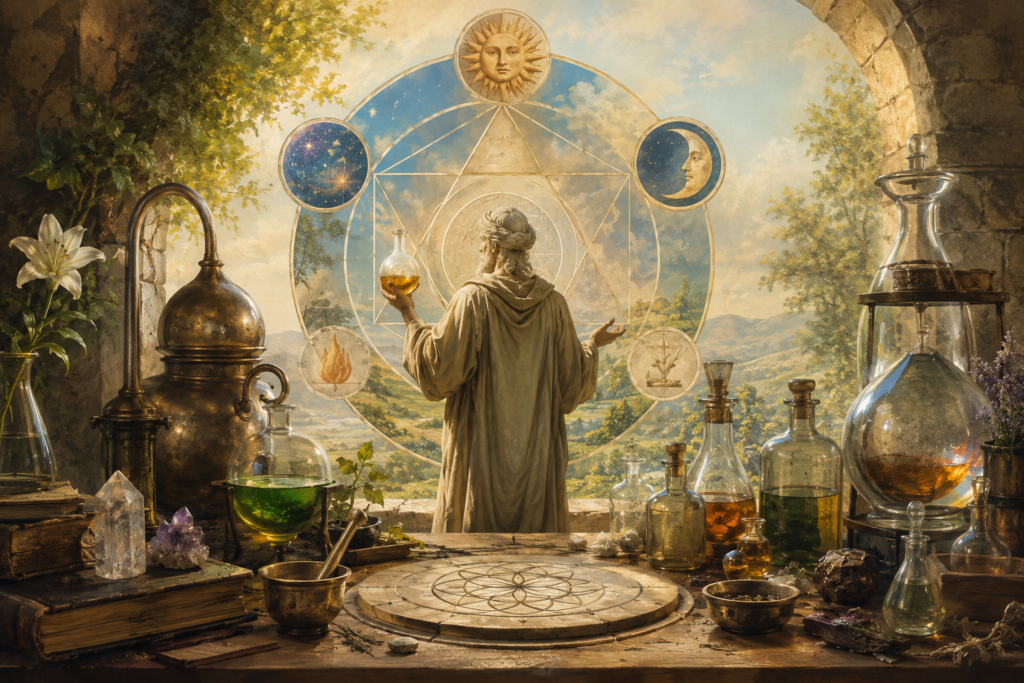
Why Symbols in The Alchemist Matter
Symbols turn Santiago’s journey into a lesson about how people grow.
The best symbols in The Alchemist are easy to picture but rich in meaning. A desert is not just a desert. A treasure is not just gold.
Coelho links ordinary images to big themes like purpose, faith, and courage. If you need a quick refresher, see our guide on how to find symbolism in a story.
The Desert: One of the Key Symbols in The Alchemist
The desert represents struggle, silence, and spiritual growth.
And the desert is harsh. It can kill people who do not respect it. Yet it also teaches Santiago to slow down, watch closely, and listen.
In the desert, Santiago learns that the world speaks through signs. This connects to the theme that wisdom often comes through hardship.
The desert also strips life down to what matters. Santiago cannot hide behind comfort there. He has to face fear and trust his Personal Legend.
The Pyramids and Treasure: Symbols in The Alchemist That Point Home
The pyramids and treasure show that a dream can lead you away from home so you can see home clearly.
At first, the pyramids seem like the goal. They are far away, mysterious, and tied to Santiago’s dream of treasure.
By the end, the real treasure sits near the ruined church where Santiago began. These symbols in The Alchemist suggest that the journey changes the traveler more than the prize does.
This is much like the green light in F. Scott Fitzgerald’s The Great Gatsby. The object seems to promise a dream, but its real meaning has more to do with longing and illusion.
The Shepherd and the Sheep
Santiago’s life as a shepherd shows the pull of comfort and routine.
The sheep trust Santiago, but they do not seek much beyond food and rest. They represent a safe life without a larger dream.
Santiago cares for the sheep, yet he knows he wants more. His choice to sell them marks the start of his inner change.
The theme is clear: safety has value, but it can also make life small.
Urim and Thummim: Small Signs with Big Meaning
The black and white stones symbolize guidance when Santiago feels lost.
Melchizedek gives Santiago Urim and Thummim to help him make choices. The stones show that help exists, but they are not meant to replace courage.
Santiago must learn to read omens without becoming passive. The theme here is that signs can guide a person, but the person still has to act.
The Wind and the Sun as Symbols in The Alchemist
The sun and wind show that all parts of creation are connected.
The wind symbolizes change. It moves across borders and carries voices, dust, and life. When Santiago speaks with the wind, he learns that nature is not separate from him.
The sun suggests wisdom and power. It helps Santiago understand that love is part of the Soul of the World.
The novel is not a strict allegory, but it often feels close to one. For more context on that form, see Britannica’s entry on allegory in art and literature.
The Alchemical Library Course
Unlock the symbolic language of alchemy — from ancient philosophy to Jungian psychology — and learn to read one of history’s most fascinating traditions of transformation with clarity and confidence.

The Oasis: Safety and Love
The oasis represents rest, but it also tests Santiago’s commitment to his dream.
At the oasis, Santiago finds safety after the danger of the desert. He also meets Fatima, whose love matters deeply to him.
The oasis could become a reason to stop. Yet Fatima does not ask Santiago to give up his Personal Legend. Their love supports growth rather than fear.
This symbol connects to one of the novel’s main themes: true love does not trap a person. It gives that person courage.
The Alchemist as a Symbol of the Teacher
The alchemist himself represents wisdom that pushes a student to act.
He does not solve every problem for Santiago. He guides him, tests him, and refuses to make the path too easy.
In that way, he is like Athena in The Odyssey. A wise guide can help the hero, but the hero must still make the hard choices.
The alchemist also shows that knowledge is not only found in books. It must be lived.
How to Write About Symbols in The Alchemist
A strong paragraph about symbolism starts with a concrete image and ends with theme.
When you write about symbols in The Alchemist, pick one symbol and ask what it teaches Santiago. Then connect that lesson to the novel’s larger message.
- Name the symbol and a clear moment from the plot.
- Explain how that moment reveals a theme.
For more help, you can review our full lesson on finding symbolism in fiction. You can also use our RapidReads Press symbolism study guide to plan a cleaner essay response.
Books That Pair Well with The Alchemist
These books also use simple stories to explore deep spiritual questions.
- Siddhartha by Hermann Hesse
- The Little Prince by Antoine de Saint-Exupéry
Both pair well with Coelho’s novel because they focus on travel, wisdom, and the search for meaning.
Helpful Outside Context
A little author background can make the novel easier to understand.
For a reliable overview of Paulo Coelho’s life and work, see Britannica’s biography of Paulo Coelho.
FAQ About Symbols in The Alchemist
Here are short answers to common student questions.
What are the most important symbols in The Alchemist?
The most important symbols in The Alchemist include the desert, the pyramids, the treasure, Urim and Thummim, the wind, and the oasis.
What does the treasure symbolize?
The treasure symbolizes Santiago’s dream, but it also shows that the journey to reach a dream can reveal what matters most.
What does the desert symbolize?
The desert symbolizes hardship and spiritual growth. It teaches Santiago patience, awareness, and trust.
Is The Alchemist an allegory?
It has strong allegorical elements, but it is best read as a symbolic quest story. Santiago’s trip reflects the inner journey toward purpose.
Key Takeaway
The novel’s symbols matter because they turn a simple adventure into a story about faith, courage, and self-discovery.
The best way to understand symbols in The Alchemist is to connect each image to Santiago’s growth. If a symbol changes how he sees the world, it likely points to one of the novel’s biggest themes. ✨












