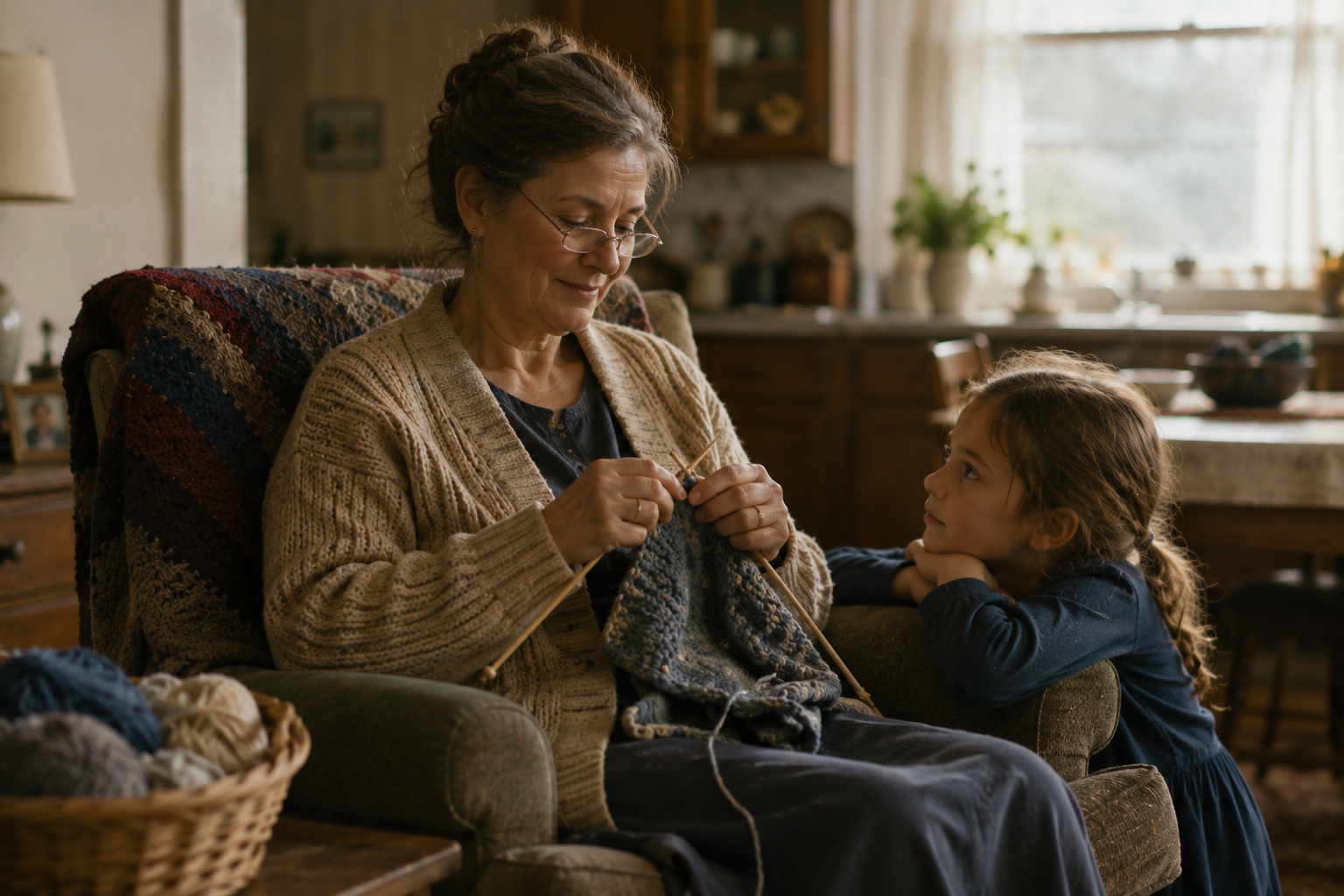
A small family gesture can hold more meaning than a speech, especially when you remember the exact moment you finally understood it.
Maybe your father tapped the steering wheel whenever he was worried. Maybe your grandmother pressed her hand to her chest before she answered the phone. Maybe your sibling rolled their eyes in a way that was half joke, half warning. This flash memoir prompt gesture one family members made invites you to look closely at a motion you saw again and again until it became part of that person’s language.
The memory may seem tiny at first. That is what makes it useful. A repeated gesture often carries habit, mood, history, and love without needing much explanation.
The Prompt
Write about a gesture one of your family members made so often it became part of how you understood them.
This prompt asks you to begin with the body instead of a big life event. A hand wave. A sigh. A raised eyebrow. A thumb rubbed across a coffee mug. These are small details, but they can open a clear door into memory.
A flash memoir prompt gesture one family members made works because it gives you something concrete to hold. You do not have to explain your whole family. You only have to notice one repeated action and follow it into one honest scene.
Why This Memory Matters
Families often teach us how to read people before we have words for what we are reading. We learn when someone is tired, angry, proud, sad, or trying not to cry. Sometimes we learn from what they say. Often we learn from what they do with their hands, face, shoulders, or eyes.
A gesture can become a private signal. Your mother smoothing the tablecloth might have meant guests were coming, but it also might have meant she wanted the house to look peaceful even when it was not. Your uncle clearing his throat before speaking might have told everyone he was about to make a joke, or avoid a feeling.
This kind of memory matters because it shows character through action. If you are a student learning how to write about people, this is close to the skill used when you analyze characters in literature. You look at what someone does, then ask what it reveals.
The difference in memoir is that you were there. You noticed the gesture as a child, teenager, or adult. Your understanding of it may have changed over time. That shift can become the emotional center of the piece.
How to Approach This Prompt
Start with the physical detail. Do not begin by saying, “My grandfather was a nervous man,” or “My sister always cared about me.” Let the reader see the gesture first.
For example, you might write, “Before my aunt said anything serious, she took off her glasses and folded them into her palm.” That one sentence gives you a place to begin. It also gives your memory a visual anchor.
Next, narrow the memory to one scene. Choose one kitchen, one car ride, one hospital room, one front porch. You can mention that the gesture happened often, but the piece will feel stronger if you show it happening once.
Write what you noticed before you explain what it meant. If your brother cracked his knuckles before every hard conversation, describe the sound. Describe where you were standing. Describe whether you looked at him or looked away.
Try not to tell the whole family story at once. This is flash memoir, so the power comes from focus. One gesture can suggest years of history if you choose the right moment.
If you like to mark up memories the way students mark up a text, you may find it helpful to borrow a few ideas from how to annotate literature. Circle the sensory detail in your draft. Underline the moment your understanding changes. Notice where the emotion appears without being named.
One simple way to begin is with this sentence: “I knew something about them by the way they always…” Then finish the line with the gesture. After that, move straight into a scene where you saw it clearly.


A Quick Example
My father always rubbed his thumb along the edge of his wedding ring when he was trying to stay calm. I noticed it most in the principal’s office after I got caught skipping biology. He sat beside me in his work shirt, smelling like sawdust and rain, while the principal explained consequences. My father did not interrupt. He just turned that ring slowly, like he was winding a small machine inside himself. I waited for anger. Instead, in the truck, he said, “You scared your mother.” His thumb was still moving. Years later, I understood the gesture differently. It was not weakness. It was the place he put all the words he did not trust himself to say.
Try It Yourself
Set a timer for ten minutes and write about one repeated family gesture. Keep the piece close to one memory. Let the motion appear early, then return to it near the end.
You might write about a gesture that comforted you, irritated you, embarrassed you, or confused you. The feeling does not have to be simple. In fact, the best memories often carry mixed emotions.
If nothing comes to mind right away, think about hands. Think about what someone did while waiting, listening, cooking, driving, or pretending everything was fine. The body often remembers what the mind tries to skip.
This flash memoir prompt gesture one family members made is a chance to write about someone without turning them into a lesson. Let the gesture stay human. Let it be strange, tender, funny, or hard to explain.
Want More Flash Memoir Prompts?
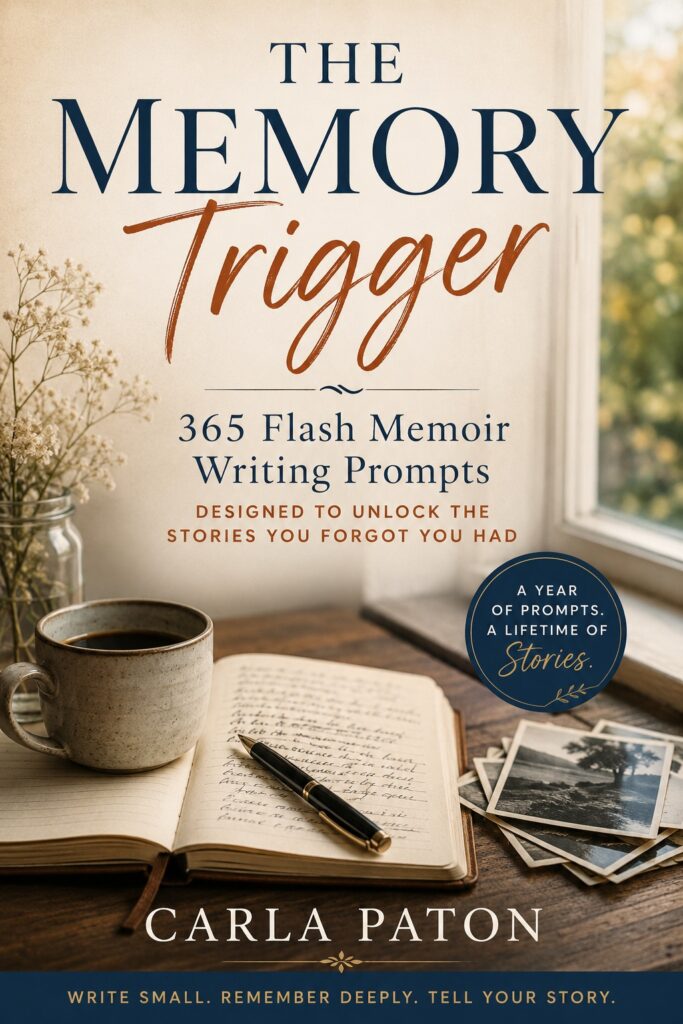
If this prompt helped you find a small doorway into a larger memory, keep going. Explore all 365 prompts in The Memory Trigger: 365 Flash Memoir Writing Prompts.