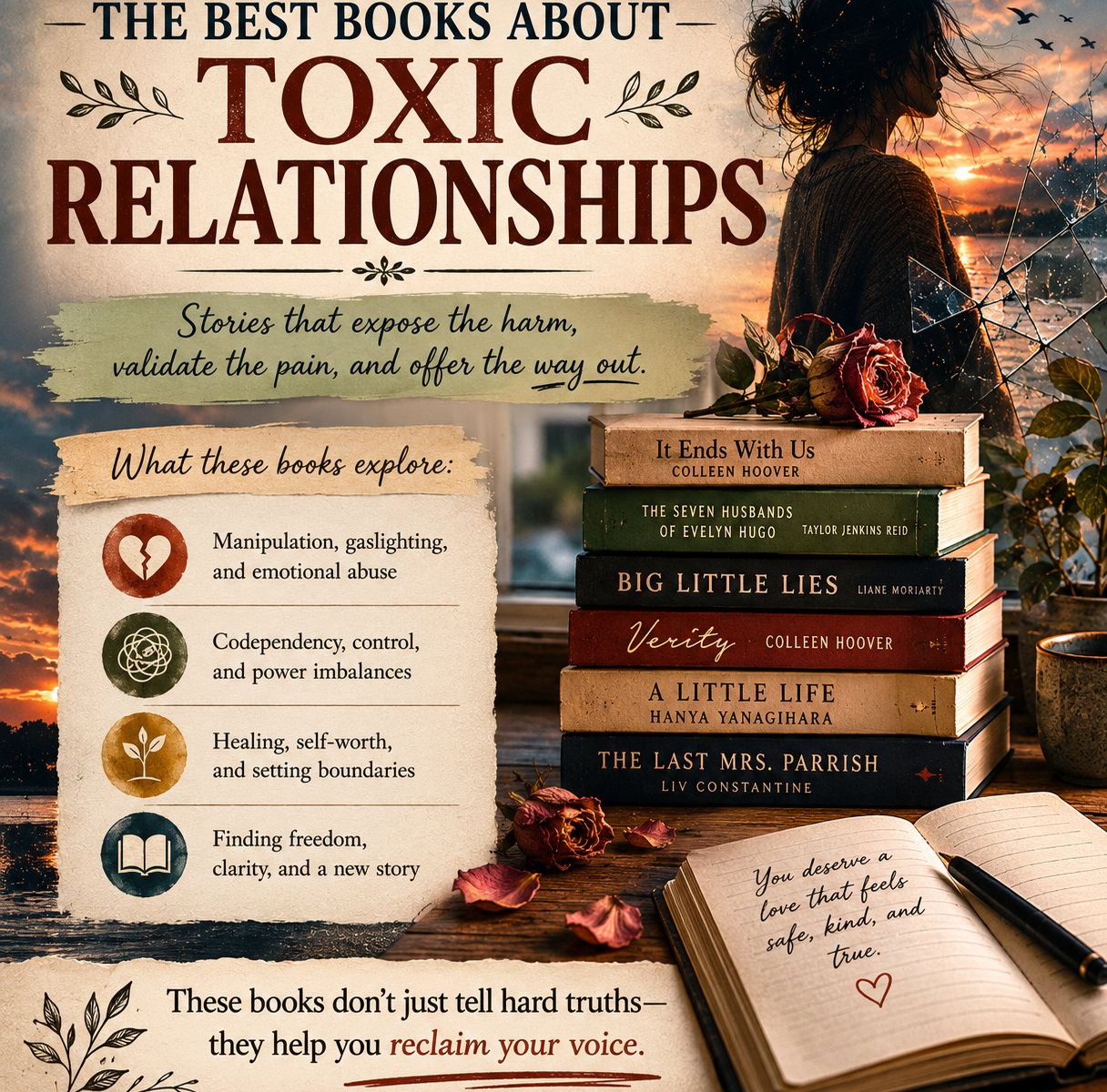

Books like Toxic Relationships explore love that harms, traps, or changes people in painful ways. These stories can be hard to read, but they also help us understand power, obsession, fear, and self-worth.
In this guide, we’ll look at why readers are drawn to these books, what themes show up often, and which titles are worth reading for school or personal study.
In this Guide
- What makes these stories feel so intense
- Best books with toxic relationship themes
- Key symbols and themes to watch for
- How tone and mood shape the reading experience
- FAQ about toxic relationships in literature
What Makes Books Like Toxic Relationships So Powerful?
These stories show love when it becomes control, fear, or obsession.
Books Like Toxic Relationships often pull readers in because the emotions feel extreme. Characters may confuse pain with passion. They may stay in harmful bonds because they want love, safety, status, or escape.
In literature, toxic relationships are not always romantic. They can appear between parents and children, friends, rivals, or social groups. The key idea is imbalance.
One person may hold more power. One person may use guilt, silence, charm, or fear to keep control. That tension creates strong conflict, which is why these stories often feel so dramatic.
For students, these books are useful because they raise big questions. What does love cost? When does loyalty become harm? Can a person heal after control or betrayal?
Best Books Like Toxic Relationships to Read and Study
These works show harmful bonds in clear, memorable ways.
If you want Books Like Toxic Relationships, start with classic and modern stories that focus on power, obsession, and emotional damage.
Wuthering Heights by Emily Brontë
Wuthering Heights is one of the most famous novels about destructive love. Heathcliff and Catherine share a passionate bond, but it also causes deep pain for everyone around them.
Their relationship is full of pride, revenge, and longing. It shows how love can turn bitter when people care more about possession than peace.
For more background, you can read Britannica’s overview of Wuthering Heights.
Jane Eyre by Charlotte Brontë
Jane Eyre offers a more hopeful view of love, but it still includes secrecy and control. Jane must decide if she can keep her self-respect while loving Mr. Rochester.
This makes the novel a strong choice for students who want to compare unhealthy desire with moral growth. Jane’s strength comes from her ability to leave when staying would hurt her soul.
The Great Gatsby by F. Scott Fitzgerald
Gatsby’s love for Daisy is built on memory, fantasy, and status. He does not fully love Daisy as she is. He loves what she represents.
This creates a quiet form of toxicity. The damage comes from illusion, class pressure, and the belief that the past can be rebuilt.
Gone Girl by Gillian Flynn
Gone Girl gives a dark modern look at marriage, image, and control. Nick and Amy’s relationship is full of lies and performance.
This book is not always taught in school, but it is useful for studying unreliable narration. It asks how well we can ever know a couple from the outside.
Books Like Toxic Relationships in Classic Literature
Classic literature often uses troubled love to reveal social rules and hidden fears.
Many Books Like Toxic Relationships are classics because they show how private pain connects to public pressure. Marriage, money, gender roles, and family honor often shape the harm.
In Othello by William Shakespeare, jealousy destroys trust. Othello’s love for Desdemona becomes twisted by fear and manipulation. Iago poisons the relationship by planting doubt.
In Anna Karenina by Leo Tolstoy, love clashes with society’s rules. Anna’s choices bring passion, but also isolation. The novel asks whether a person can survive when desire cuts them off from every support.
And in Rebecca by Daphne du Maurier, the toxic force is partly a memory. The second Mrs. de Winter feels haunted by Rebecca, even after Rebecca is dead. The relationship between the living and the past becomes a trap.
Common Themes in Books Like Toxic Relationships
These stories repeat certain ideas because toxic bonds often follow patterns.
Books Like Toxic Relationships often explore control. One character may decide what another person can know, say, or do. This can appear as romance, but the goal is power.
Another common theme is obsession. A character may treat love like ownership. Instead of asking, “What does this person need?” they ask, “How can I keep them?”
Identity is also important. Toxic relationships can make characters lose sight of who they are. They may change their values, hide their feelings, or accept blame that does not belong to them.
Some stories focus on escape. A character may need to leave a person, a house, a town, or a version of the self. That journey can become the heart of the book.
If you are studying this topic in real life as well as literature, the National Domestic Violence Hotline’s page on emotional abuse gives clear information about harmful patterns.
Symbols That Often Appear in Books Like Toxic Relationships
Symbols help writers show harm without stating it directly.
In Books Like Toxic Relationships, houses often matter. A house may look safe, but feel cold, locked, or haunted. In Wuthering Heights, the setting reflects rage and emotional storm.
Weather can also signal danger. Storms, fog, and heat often match a character’s inner stress. These details help the reader feel the pressure before the conflict is spoken.
Mirrors are another common symbol. They can show split identity or self-doubt. A character may not recognize who they have become inside a harmful bond.
Letters and secrets also play a major role. Hidden messages, missing facts, and private journals can show how truth gets controlled.
How Tone and Mood Shape Books Like Toxic Relationships
The feeling of the story often tells us how safe or unsafe a relationship is.
Books Like Toxic Relationships often use tense, dark, or uneasy moods. A scene may seem romantic on the surface, but the mood can make the reader feel that something is wrong.
Tone also matters. A narrator might sound bitter, dreamy, angry, or numb. That voice can reveal how the character has been shaped by love, fear, or betrayal.
If you want a clear review of this idea, read our guide to tone vs. mood in literature. It can help you explain why a scene feels romantic, scary, or trapped.
For AP Literature or college essays, this is a strong angle. You can connect tone and mood to theme, character change, and conflict.
Recommended Books to Read Next
These titles are strong picks if you want stories about love, control, and emotional conflict.
- Wuthering Heights by Emily Brontë
- Jane Eyre by Charlotte Brontë
- Rebecca by Daphne du Maurier
Each book gives a different view of toxic love. One centers on revenge, one on self-respect, and one on fear shaped by memory.
How to Write About Books Like Toxic Relationships in an Essay
A strong essay does more than call a relationship “toxic.”
When you write about Books Like Toxic Relationships, explain how the harm works. Is it based on jealousy, control, class, fear, or silence?
Use clear evidence from the text. Look for repeated symbols, shifts in tone, and choices that change a character’s sense of self.
You can also compare two relationships in the same book. For example, in Jane Eyre, Jane’s bond with Rochester can be compared with her bond with St. John. Both test her freedom in different ways.
End your essay by linking the relationship to the larger theme. A toxic bond often reveals what the novel believes about love, power, and identity.
FAQ About Books Like Toxic Relationships
These quick answers can help with reading, studying, or choosing a book.
What are Books Like Toxic Relationships?
They are books that show harmful bonds between characters. These bonds may include control, obsession, jealousy, fear, or emotional damage.
Are toxic relationship books always romantic?
No. They can focus on family, friendship, rivalry, or social power. The main issue is harm caused by an unequal or controlling bond.
Why do teachers assign books with toxic relationships?
These books help students study conflict, theme, symbolism, and character growth. They also raise questions about power and choice.
Is Wuthering Heights a toxic love story?
Yes. Heathcliff and Catherine’s bond is intense, but it also leads to cruelty, revenge, and pain across generations.
How can I analyze tone in these books?
Pay attention to the narrator’s attitude and the feeling of each scene. Our guide on how tone and mood work can help.
Key Takeaway
Books Like Toxic Relationships matter because they show what happens when love turns into control, fear, or obsession. The best of these stories do not just shock us. They help us see why self-respect, truth, and freedom matter in every kind of relationship.