Best Gothic Hero’s Journey Stories to Read and Study

Gothic Hero's Journey

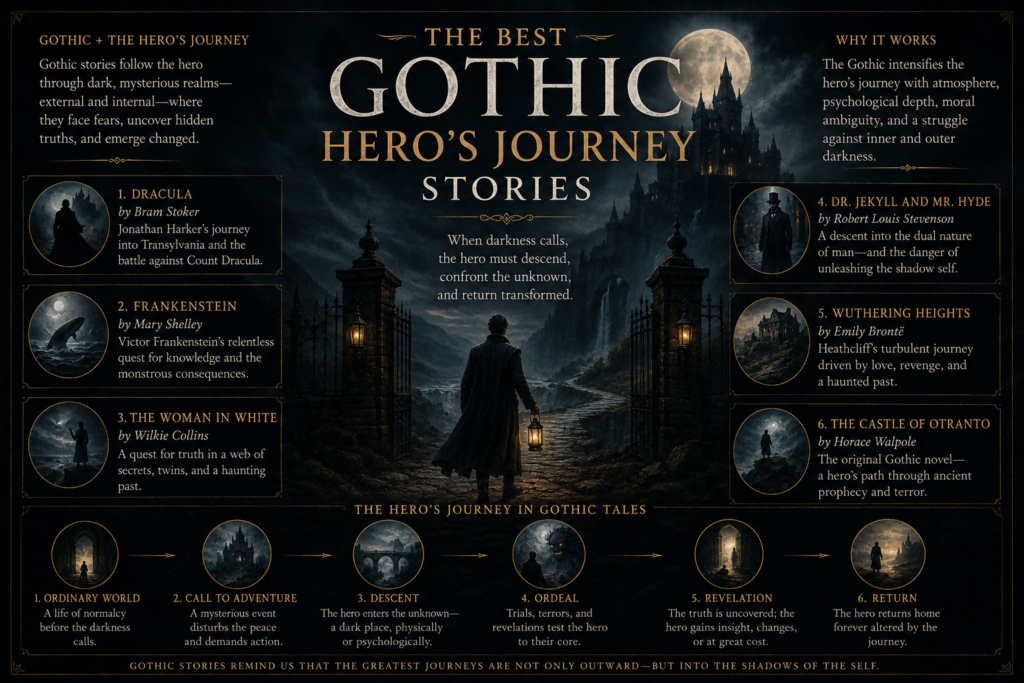
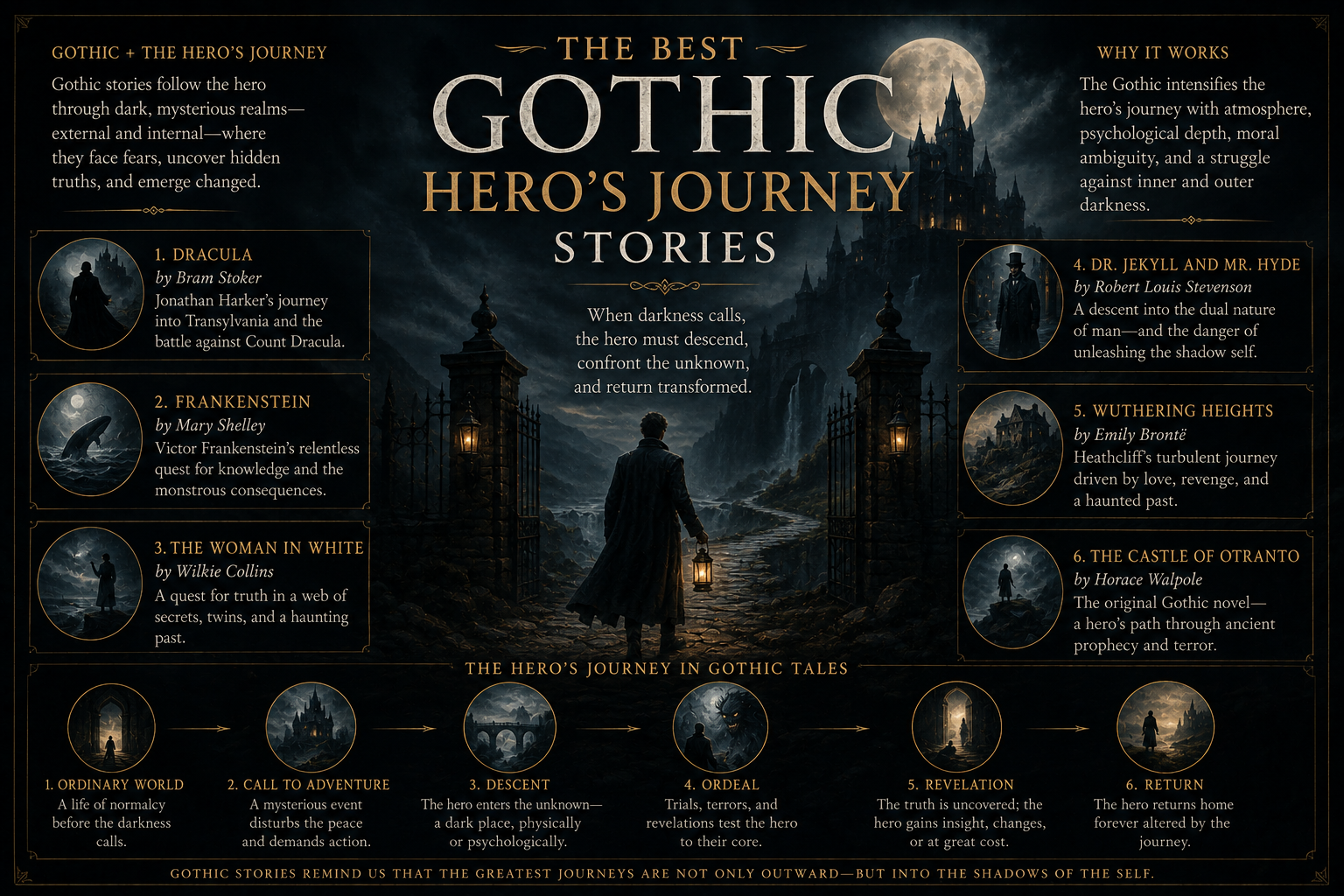
The Best Gothic Hero’s Journey Stories mix dark settings with deep inner change. These stories send characters into fear, mystery, and danger, but the real battle often happens inside the hero.

For students, this blend is powerful because it makes classic literature feel tense and personal. A haunted house or ruined castle can reveal more about a character than a speech ever could.

In this Guide

  • What makes Gothic hero journeys different
  • Key books and examples to read
  • Major symbols and themes
  • How to study these stories for class
  • FAQs about Gothic hero journeys
Gothic Hero's Journey

What Makes the Best Gothic Hero’s Journey Stories Different?

Gothic hero journeys turn the usual adventure story into a darker test of the soul.

In a classic hero’s journey, a character leaves home, faces danger, gains wisdom, and returns changed. In Gothic fiction, that path is less clear. The hero may enter a castle, a mansion, a lab, or a ruined family estate.

The danger is not only outside. It may be guilt, desire, family secrets, or fear of the unknown.

The Best Gothic Hero’s Journey Stories often ask one key question: What happens when a person faces the truth they tried to hide?

This is why Gothic stories work so well in literature classes. They connect plot with character growth. If you want help with that skill, read this guide on how to analyze characters in literature.

Best Gothic Hero’s Journey Stories to Read First

These classic works show how fear can shape a hero’s path.

Frankenstein by Mary Shelley is one of the most important Gothic hero journey stories. Victor Frankenstein seeks knowledge, but his quest leads to horror. His creation also takes a painful journey as he searches for love and meaning.

What makes the novel so rich is its double journey. Victor wants power. The Creature wants belonging. Both are changed by rejection and loss.

Jane Eyre by Charlotte Brontë may not seem like a Gothic quest at first, but it fits the pattern well. Jane moves from Gateshead to Lowood to Thornfield, and each place tests her courage.

Thornfield Hall is the Gothic center of the novel. Its locked rooms and strange sounds reflect secrets in the house. Jane’s real journey is toward self-respect.

Dracula by Bram Stoker turns the hero’s journey into a group struggle. Jonathan Harker travels into danger, but the fight against Dracula becomes shared. The novel uses letters and journals to build fear and suspense.

When students search for the Best Gothic Hero’s Journey Stories, these titles are strong starting points because they balance action with inner conflict.

More Gothic Examples Worth Knowing

Not every Gothic hero wins in a simple way.

Wuthering Heights by Emily Brontë gives readers a darker form of the journey. Heathcliff rises from outsider to powerful figure, but his path is ruled by pain. His story shows how revenge can trap a person instead of free them.

Rebecca by Daphne du Maurier follows a young narrator into the shadow of another woman’s memory. Manderley feels beautiful and unsafe at the same time. The heroine must learn how much of her fear comes from the house and how much comes from her own doubt.

The Strange Case of Dr. Jekyll and Mr. Hyde by Robert Louis Stevenson uses the hero’s journey in a twisted way. Dr. Jekyll crosses a moral line and meets the darkest part of himself. His story warns that hidden desires can grow stronger when denied.

These Best Gothic Hero’s Journey Stories remind readers that a journey does not always lead to peace. Sometimes it leads to truth, and truth can be hard to face.

Symbols and Themes in the Best Gothic Hero’s Journey Stories

Gothic stories use objects and places to show what characters fear most.

One common symbol is the house. A mansion, castle, or locked room often stands for the mind. Hidden rooms suggest hidden truths. Broken walls suggest broken families.

Dark weather is another key symbol. Storms, fog, and cold landscapes make the world feel unsafe. They also reflect the hero’s confusion.

Mirrors and doubles matter too. In Frankenstein, Victor and the Creature reflect each other. In Dr. Jekyll and Mr. Hyde, the double becomes literal.

The Best Gothic Hero’s Journey Stories often explore guilt, identity, and the fear of change. These themes make the genre more than scary. They make it human.

Why Gothic Hero Journeys Still Matter

Modern readers still connect with Gothic stories because fear has not gone away.

Students may not live in castles, but they know what it means to feel trapped. They know what it means to face pressure, secrets, and hard choices.

The Best Gothic Hero’s Journey Stories give shape to those feelings. They turn anxiety into plot. They turn inner conflict into setting.

This is why Gothic fiction keeps returning in books, film, and television. The genre gives us dark spaces where difficult emotions can be seen.

For more background on the genre, see Britannica’s overview of the Gothic novel. For a key Gothic writer, visit the Poetry Foundation page on Edgar Allan Poe.

How to Read the Best Gothic Hero’s Journey Stories for Class

To study these stories well, focus on how the setting shapes the hero.

Ask what place the hero enters. Is it a house, a lab, a school, or a foreign land? Then ask what fear that place brings out.

Track the hero’s choices. Gothic heroes often fail because they ignore warnings or hide the truth. Those choices matter more than the scares.

Watch for moments of self-knowledge. A Gothic hero may not defeat a monster, but they may learn what the monster means.

If you are writing an essay, connect the setting to the character’s change. This is a strong way to build a clear literary argument.

These books are easy to find and useful for class study.

  • Frankenstein by Mary Shelley
  • Jane Eyre by Charlotte Brontë
  • Dracula by Bram Stoker

Each one offers a different kind of Gothic journey. Together, they show why the Best Gothic Hero’s Journey Stories remain important in literary culture.

FAQs About the Best Gothic Hero’s Journey Stories

What is a Gothic hero’s journey?

It is a story where a character enters a dark or mysterious world and faces both danger and inner conflict. The journey often reveals hidden fear, guilt, or truth.

Are the Best Gothic Hero’s Journey Stories always horror stories?

No. Some are scary, but many focus more on suspense, secrets, and emotion. Jane Eyre is a good example.

Why do Gothic stories use old houses so often?

Old houses suggest history, memory, and hidden pain. They often reflect the mind of the hero or the secrets of a family.

Which Gothic hero journey is best for students?

Frankenstein is a strong choice because it is short enough for class study and rich in themes. It also raises big questions about science and responsibility.

Key Takeaway

The Best Gothic Hero’s Journey Stories show that the hardest quest is often the one inside the self. These stories use haunted places, dark symbols, and troubled heroes to explore fear, truth, and change.

That is why they still matter. They make readers ask what we hide, what we seek, and what we become when we face the dark. 🕯️
Books About Literary Monsters: Why Fiction’s Creatures Still Haunt Us

Books about literary monsters

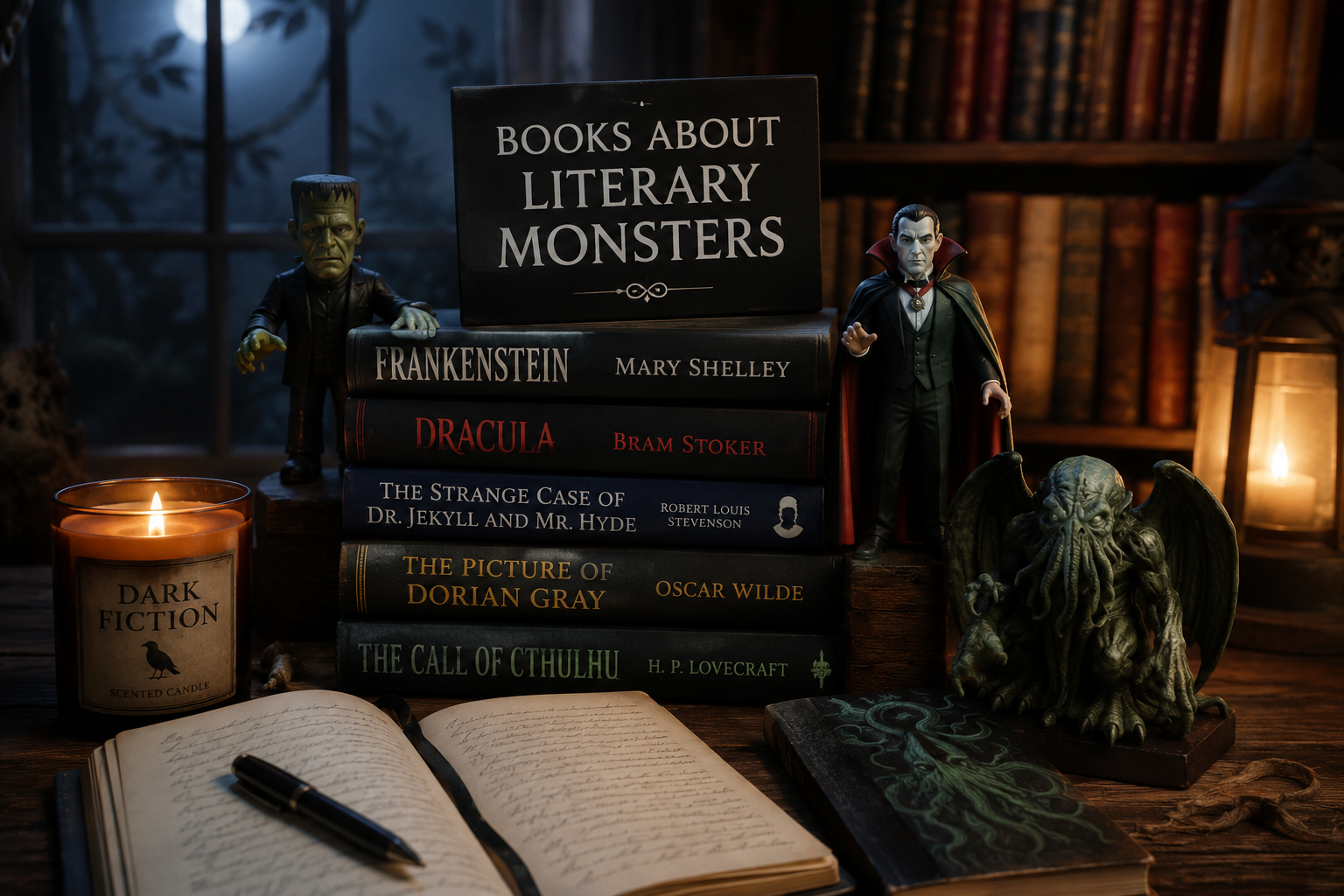
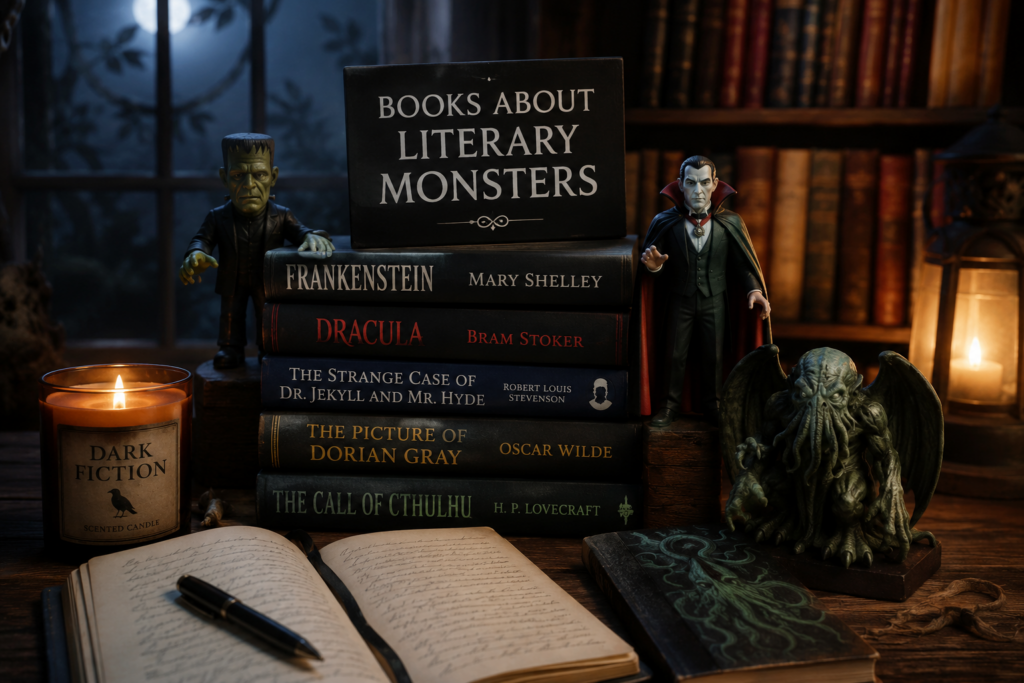
Books About Literary Monsters help us face fear, guilt, power, and loneliness through unforgettable creatures. These stories are not just scary. They ask deep questions about what makes someone human.

From Frankenstein to Dracula, literary monsters have shaped classrooms, film, and pop culture for generations.

In this Guide

  • What makes literary monsters so powerful
  • Classic monster books students should know
  • Recommended books to read next
  • Major themes and symbols
  • How to read monster stories in class
  • FAQs about literary monsters
  • Key takeaway
Books about literary monsters

What Makes Books About Literary Monsters So Powerful?

Great monster stories turn fear into meaning.

Books About Literary Monsters often use creatures to show what people hide. A monster can stand for anger, shame, illness, greed, or social fear.

That is why these stories last. The creature may look strange, but the problem behind it often feels very human.

Mary Shelley’s creature in Frankenstein is a strong example. He is frightening, but he is also lonely. Readers begin to ask if the real monster is the creature or the society that rejects him.

This is what makes literary monsters different from simple horror villains. They do not only scare us. They make us think.

Classic Books About Literary Monsters Students Should Know

Many famous monster stories began as serious works of literature.

Books About Literary Monsters appear in many periods of literary history. Some come from ancient epics. Others come from Gothic novels or modern fiction.

Frankenstein by Mary Shelley is one of the most important examples. Published in 1818, it explores science, ambition, family, and the pain of rejection. You can learn more about the novel’s background through Britannica’s overview of Frankenstein.

Dracula by Bram Stoker gives readers a vampire who stands for fear of disease, desire, and the unknown. Count Dracula is not just a monster. He is a force that threatens the safe world of the characters.

The Strange Case of Dr. Jekyll and Mr. Hyde by Robert Louis Stevenson explores the monster inside the self. Mr. Hyde shows what can happen when hidden desires break free.

Beowulf also belongs in this conversation. Grendel is a monster, but he is not random. He reflects violence, exile, and the fear of a world outside human order.

Best Books About Literary Monsters to Read Next

These books are strong choices for students, book clubs, and curious readers.

If you want to build a shelf of Books About Literary Monsters, start with works that give the creature emotional weight. A good monster story should leave you with questions after the final page.

Here are a few useful titles to search for on Amazon or at your local library:

  • Frankenstein by Mary Shelley
  • Dracula by Bram Stoker
  • Grendel by John Gardner

Grendel is especially useful for students who know Beowulf. John Gardner retells the old story from the monster’s point of view. This shift makes readers question who gets called a monster and why.

For poetry lovers, monster themes can also appear in shorter works through images of death, isolation, or the unknown. If you want to practice close reading, this guide to New Criticism and Emily Dickinson shows how to focus on language, form, and meaning.

Themes in Books About Literary Monsters

Monster stories often reveal what a culture fears most.

One major theme is isolation. Frankenstein’s creature becomes violent after he is denied love and friendship. His pain grows because no one accepts him.

Another key theme is double identity. Dr. Jekyll and Mr. Hyde show that a person can have a public self and a hidden self. The monster becomes a symbol of what society asks people to repress.

Power is also central to many monster tales. Victor Frankenstein wants to control life itself. Dracula wants control over bodies, homes, and blood. These stories warn readers about power without care.

In Books About Literary Monsters, fear often points to a deeper conflict. The monster may stand for class anxiety, gender roles, race, science, death, or moral guilt.

Why Monsters Are Symbols, Not Just Creatures

A literary monster usually means more than it seems to mean.

A vampire may symbolize desire or corruption. A ghost may symbolize guilt. A beast may symbolize human violence.

This is why teachers often ask students to look beyond the plot. The question is not only, “What does the monster do?” The better question is, “What fear does the monster reveal?”

For example, Dracula enters homes and disrupts families. That makes him a symbol of invasion. He crosses borders, changes bodies, and breaks social rules.

Frankenstein’s creature has a different meaning. He shows the danger of creating life without love or duty. He also shows how cruelty can shape a person.

How to Read Books About Literary Monsters in Class

Strong close reading can turn a scary story into a rich literary study.

When you read Books About Literary Monsters, start with the creature’s first appearance. Notice how the author describes its body, voice, movement, and setting.

Then ask who tells the story. A monster may look different based on the narrator’s fear or bias. In Frankenstein, the creature speaks for himself, which changes how we judge him.

Pay close attention to repeated images. Blood, darkness, mirrors, scars, and doors often matter in monster fiction. These details can reveal the story’s deeper pattern.

Why Books About Literary Monsters Still Matter Today

Modern readers still need monster stories because fear has not gone away.

Our fears change over time, but the pattern remains. People still worry about technology, identity, illness, isolation, and power.

That is why Books About Literary Monsters still feel fresh. They let readers face hard ideas through story. A monster gives fear a shape, which makes it easier to examine.

These books also teach empathy. Sometimes the monster is dangerous. Sometimes the monster is wounded. The best stories force readers to hold both truths at once.

FAQs About Books About Literary Monsters

What are Books About Literary Monsters?

Books About Literary Monsters are works of fiction that use creatures, villains, or strange beings to explore deeper ideas. They often focus on fear, identity, guilt, or society.

Is Frankenstein’s creature a monster or a victim?

He is both. He commits violent acts, but he is also rejected and abandoned. That tension makes the novel powerful.

Why do teachers assign monster stories?

Teachers assign them because they are rich in symbols and themes. They help students study character, setting, narration, and social fear.

Are literary monsters always supernatural?

No. Some are human. Mr. Hyde, for example, is monstrous because he reveals the dark side of Dr. Jekyll.

What is the best monster book to start with?

Frankenstein is a strong starting point. It is famous, readable, and full of ideas that still matter.

Key Takeaway

Books About Literary Monsters endure because they make fear meaningful.

The best monster stories do more than shock us. They ask what society rejects, what people hide, and what it means to be human.

When you read these books, do not stop at the creature. Look at the world that created it. That is where the real story often begins.

error

Enjoy this article? Please spread the word :)

Follow by Email
BLUESKY
fb-share-icon
Reddit
LinkedIn
Share
RSS