A brief, warm writing invitation for remembering a parent’s hands through one focused scene, sensory detail, and emotional truth.
You may remember your parent’s hands before you remember their face in a certain room. The way they gripped a steering wheel. The way they folded a dish towel. The way one thumb tapped against a coffee mug while they thought about bills, weather, or what to make for dinner.
Today’s flash memoir prompt, parent’s hands and what they usually did, invites you to begin with a small physical detail. Hands can carry work, worry, love, habit, patience, and exhaustion. They can tell a story before anyone speaks.
The Prompt
Write about a parent’s hands and what they were usually doing.
This prompt can unlock a meaningful memory because it does not ask you to explain your whole relationship with a parent. It asks you to notice one part of them closely. That smaller focus can make the writing feel less overwhelming and more honest.
Maybe your father’s hands were always fixing something that squeaked, leaked, or leaned. Maybe your mother’s hands were always counting change, brushing crumbs into her palm, pulling weeds, or smoothing your hair before you walked into school. Maybe the hands you remember were restless. Maybe they were still only when your parent slept.
A detail like that can open a door. Once you write what the hands did, you may begin to understand what those actions meant to you.
Why This Memory Matters
Parents often become symbols in memory. We say they were strict, tired, funny, distant, gentle, or difficult. Those words may be true, but they can feel flat on the page. A scene gives the reader something to see.
Hands are useful because they show a person in action. A parent’s hands might reveal care through packed lunches, ironed shirts, repaired toys, or medicine measured into a spoon. They might reveal stress through clenched fists, bitten nails, rubbed temples, or fingers that never stopped moving.
This flash memoir prompt parent’s hands what they usually did can also lead to mixed feelings. You may remember a hand that comforted you and corrected you. You may remember tenderness beside impatience. Real memoir often lives in that space, where one memory holds more than one truth.
If you are a student learning how to notice character through action, this kind of memory is also useful practice. In literature, characters are often revealed through what they do with their bodies, not through a direct label. You can see a similar idea in this guide on how to analyze characters in literature, where small actions can point to deeper traits.
Your parent’s hands may tell you something about the home you grew up in. They may remind you of money, work, food, prayer, illness, chores, music, or silence. The point is not to make the memory neat. The point is to let it become specific.


How to Approach This Prompt
Begin with one physical detail. Do not start by explaining your parent’s whole personality. Start with the hands themselves.
Ask yourself what you saw most often. Were the hands cracked from work? Soft from lotion? Stained with ink, soil, paint, flour, grease, or nicotine? Did they move quickly or slowly? Did they rest in a lap, grip a tool, hold a cigarette, shuffle papers, or reach for your shoulder?
Then narrow the memory to one scene. Choose one kitchen table, one car ride, one porch, one morning before school, or one evening after work. A flash memoir piece works best when it stays close to a single moment.
Write what you noticed before you explain what it meant. For example, instead of starting with “My mom was always worried,” you might write, “My mom pressed her thumb into the corner of the envelope before she opened it.” That action lets the reader feel the worry.
You do not need to tell the whole story at once. If the memory has pain in it, stay with what is safe enough to write today. If the memory is warm, do not rush to turn it into a lesson. Let the hands do the work.
If you like to mark details before drafting, you might try a simple note-taking habit. Circle the strongest image, underline the action, and put a star beside the emotion. These same skills can help when you annotate literature, because close reading and close remembering both depend on careful attention.
A Quick Example
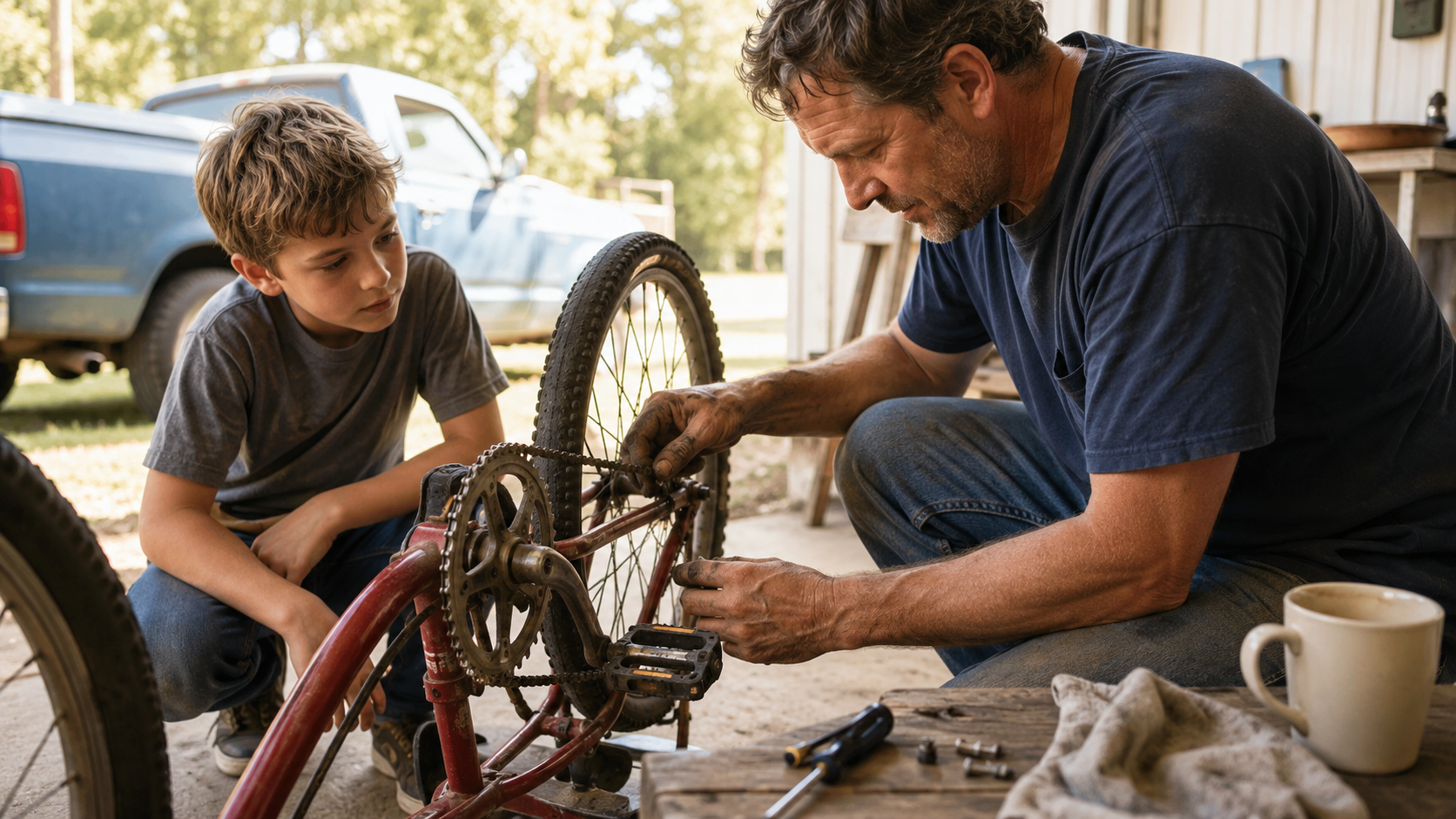
My dad’s hands were usually inside something broken. A toaster. A screen door. The engine of the old blue truck that sighed before it started. On Saturday mornings, he sat at the kitchen table with a screwdriver, tiny screws lined up beside his coffee cup like little pills. His hands were broad, with dark half-moons under the nails no soap could reach. I used to think he fixed things because he liked machines. Later, I wondered if fixing was the only way he knew how to stay close to us. When my bike chain slipped, I carried it to him without asking. He turned it upside down, spun the pedal once, and said, “Let’s see.” That was his love language, though none of us called it that then.
Try It Yourself
Set a timer for ten minutes and write from the prompt without stopping to polish the sentences. Focus on one parent or parent figure. If more than one memory appears, choose the one with the clearest image.
Use the first sentence to put the hands in motion. Try something like, “My mother’s hands were always…” or “I remember my father’s hands best when…” Then follow the action. Let the scene show you where it wants to go.
You may end with a feeling, but you do not have to explain everything. A strong flash memoir can close on one image: a hand on a doorknob, a palm dusted with flour, fingers curled around a set of keys, a thumb wiping dirt from your cheek.
This flash memoir prompt parent’s hands what they usually did is simple on purpose. It gives you a small doorway into a larger life. Step through slowly and write what you can still see.
Want More Flash Memoir Prompts?
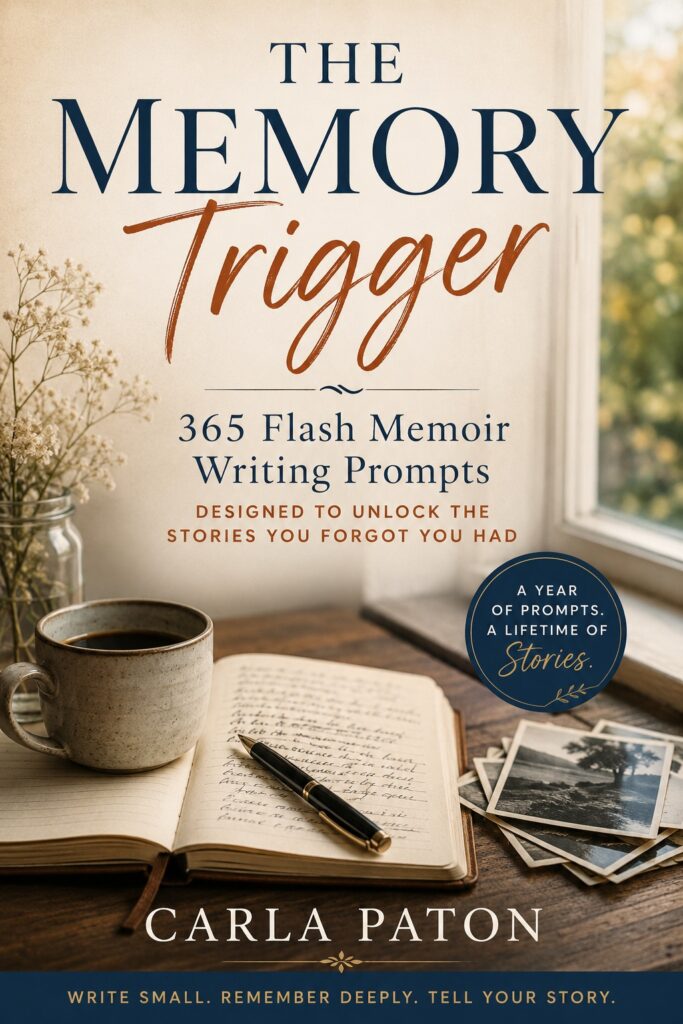
If one small detail helped you find a memory, keep going. Explore all 365 prompts in The Memory Trigger: 365 Flash Memoir Writing Prompts.