The Mentor Archetype in Fiction

Mentor archetype

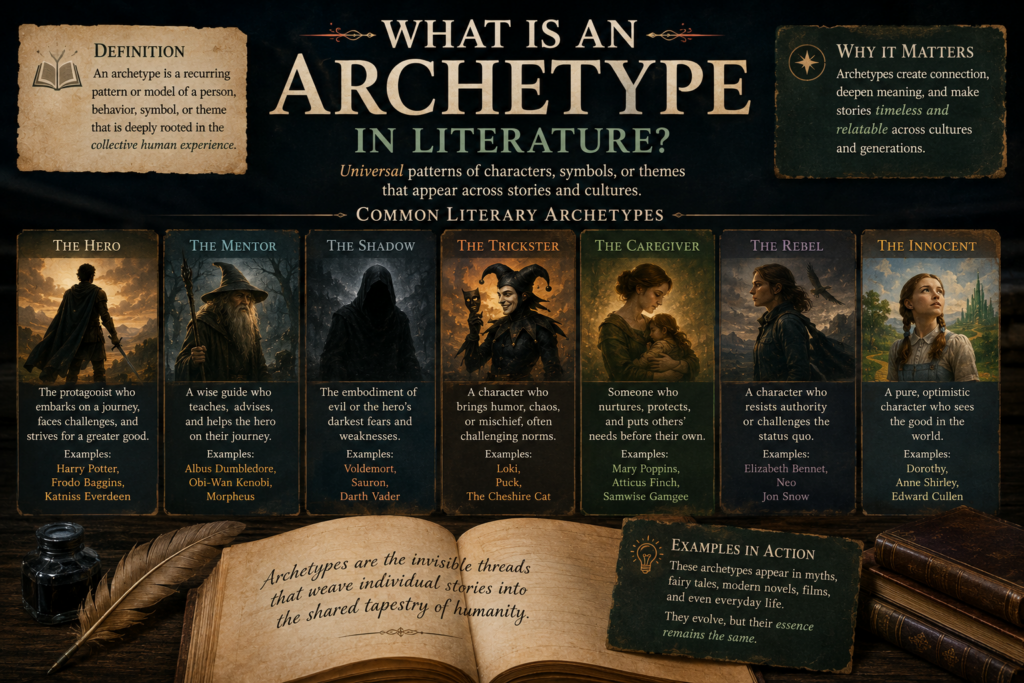
The Mentor Archetype in Fiction is one of the easiest character patterns to spot once you know what to look for. This guide explains how mentors work, why they matter, and how students can write about them with more confidence.

In this Guide

Use this guide to understand the mentor’s role in stories and how to study it in class.

  • What the mentor archetype means
  • Why mentors matter in fiction
  • Common traits of mentor characters
  • Famous literary examples
  • How to analyze mentors in essays
  • Books that show strong mentor figures
  • FAQ
Mentor archetype

What Is The Mentor Archetype in Fiction?

A mentor is a guide who helps the main character grow.

At its core, The Mentor Archetype in Fiction is a character pattern. The mentor teaches, warns, trains, or inspires the hero. This character often knows more than the hero does, but the mentor cannot finish the journey for them.

Mentors may be teachers, elders, friends, family members, or even magical figures. They give the hero tools, advice, courage, or moral support.

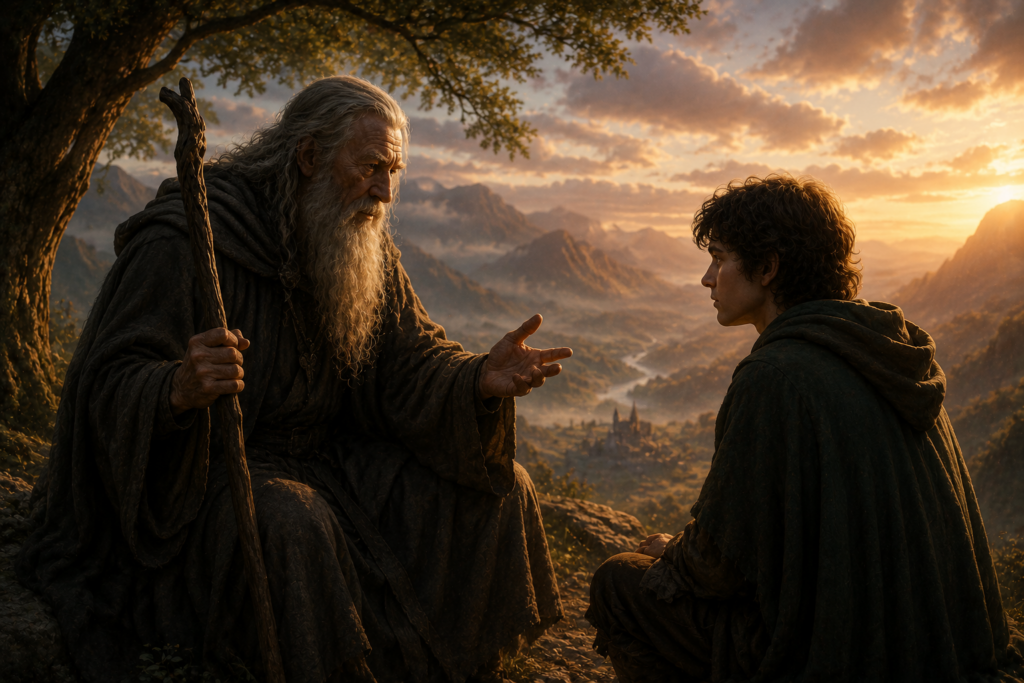
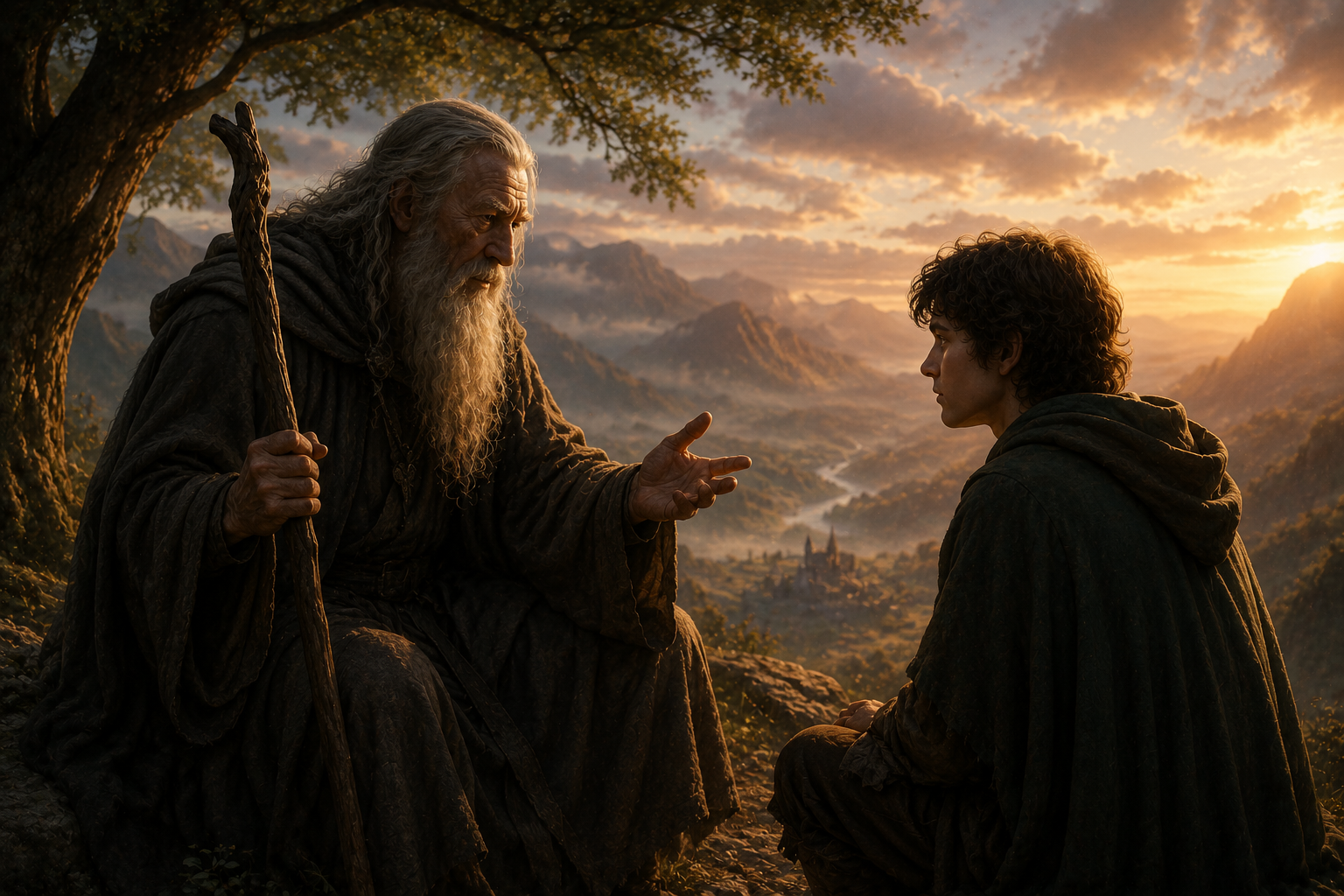
Think of Gandalf in The Hobbit by J.R.R. Tolkien. He pushes Bilbo out of his safe life and into a much larger world. Gandalf does not solve every problem, but he helps Bilbo become braver.

Why The Mentor Archetype in Fiction Matters

Mentors help reveal what the hero must learn.

The Mentor Archetype in Fiction matters because stories are often about change. A hero starts with a flaw, fear, or lack of knowledge. The mentor points toward a better path.

This role can also make the story feel deeper. A mentor may carry old wisdom, past pain, or a strong moral code. Through the mentor, the author can show what the world values.

In To Kill a Mockingbird by Harper Lee, Atticus Finch acts as a mentor to Scout. He teaches her to think about justice and empathy. His lessons shape how she sees the world.

Mentors also create tension. If the hero listens too much, they may never become independent. If they ignore the mentor, they may suffer for it.

Common Traits of The Mentor Archetype in Fiction

Mentor characters often share clear traits, even when they look very different.

The Mentor Archetype in Fiction usually has knowledge that the hero lacks. This knowledge may come from age, experience, study, or past failure.

A mentor often gives the hero a gift. The gift might be a weapon, a book, a clue, or a piece of advice. In many stories, that gift becomes important later.

Mentors also set limits. They do not always rescue the hero. A strong mentor knows the hero must face danger alone at some point.

Many mentors disappear, fail, or die before the ending. This can sound harsh, but it has a purpose. The hero must step forward without the mentor’s protection.

Dumbledore in the Harry Potter series offers advice and protection, but Harry must still face the final challenge himself. The mentor guides the path, but the hero must walk it.

Famous Examples of The Mentor Archetype in Fiction

Famous mentors help us see how flexible this archetype can be.

Seeing The Mentor Archetype in Fiction across different books can help students compare stories. Not every mentor is kind, and not every mentor is always right.

In The Odyssey, Athena helps Odysseus and Telemachus. She uses wisdom, disguise, and divine power. Her role shows that mentors can guide both action and identity.

You can learn more about Homer and this ancient epic through the Poetry Foundation’s page on Homer.

In The Hunger Games by Suzanne Collins, Haymitch mentors Katniss and Peeta. He is flawed and often bitter, but he knows how the Games work. His advice helps them survive a brutal system.

In The Lion, the Witch and the Wardrobe by C.S. Lewis, Aslan serves as a spiritual and moral guide. He helps the children understand courage, sacrifice, and loyalty.

These examples show that mentors do not all act the same way. Some are gentle. Some are strict. And some are mysterious. What they share is a role in the hero’s growth.

How to Analyze The Mentor Archetype in Fiction

A strong analysis looks at what the mentor does and what the hero learns.

When you analyze The Mentor Archetype in Fiction, do not stop at “this character gives advice.” Ask how that advice changes the story.

Start with the mentor’s purpose. What does this character teach the hero? Does the mentor help the hero face fear, understand truth, or make a moral choice?

Next, look at the mentor’s limits. A mentor may be wise, but they may also hide information or make mistakes. This can make the character more human.

Then ask how the hero changes after contact with the mentor. If the hero becomes more brave, honest, or independent, the mentor has helped shape the character arc.

Symbols can also deepen mentor scenes. A staff, book, sword, cloak, or letter may carry meaning. If you want help with that skill, read this guide on how to find symbolism in a story.

The Mentor Archetype in Fiction and the Hero’s Journey

A mentor often appears near the start of a hero’s adventure.

The Mentor Archetype in Fiction connects closely to the hero’s journey, a story pattern linked with Joseph Campbell. In this pattern, the hero leaves home, faces trials, and returns changed.

The mentor may appear after the call to adventure. This is the moment when the hero is asked to leave a normal life. The mentor helps the hero cross into the unknown.

For more background, you can read Britannica’s overview of Joseph Campbell.

Still, not every story follows this pattern exactly. Some modern books twist the mentor role. A mentor may betray the hero, refuse to help, or teach the wrong lesson.

These twists can make essays more interesting. If a mentor breaks the usual pattern, ask why the author made that choice.

How Students Can Write About Mentor Characters

A clear essay needs a clear claim about the mentor’s role.

Do not write only that a mentor “helps the main character.” That is too broad. Try to explain what kind of help the mentor gives and why it matters.

Here is a stronger claim: “Gandalf acts as a mentor because he pushes Bilbo to discover courage that Bilbo does not yet see in himself.”

This claim works because it links the mentor to the hero’s growth. It also gives you something to prove with scenes from the book.

When you choose evidence, look for key moments. Find scenes where the mentor gives advice, challenges the hero, or leaves the hero to act alone.

Good analysis also notices change. Ask what the hero believes before the mentor’s lesson and what the hero understands after it.

Relevant Books You Can Find on Amazon

These books offer strong examples of mentor figures for school reading or personal study.

  • The Hobbit by J.R.R. Tolkien: Gandalf helps Bilbo leave comfort behind and discover courage.
  • The Odyssey by Homer: Athena guides Odysseus and Telemachus through danger, pride, and growth.

These titles are useful for students because they show mentors in very different worlds. One is a fantasy quest. The other is an ancient epic.

FAQ About Mentor Characters

These quick answers can help you review the main ideas.

What is a mentor archetype?

A mentor archetype is a common character type who guides the hero. This character often teaches lessons, gives advice, or helps the hero prepare for a challenge.

Does a mentor have to be old?

No. Many mentors are older, but age is not required. A mentor only needs to offer guidance that helps another character grow.

Can a mentor be wrong?

Yes. Some mentors make mistakes or hide the truth. This can create conflict and make the story more complex.

Why do mentors often disappear from the story?

Mentors often leave so the hero must act alone. This helps prove that the hero has learned and changed.

Key Takeaway

Mentors matter because they help reveal the hero’s path.

The Mentor Archetype in Fiction is more than a wise teacher figure. A strong mentor pushes the hero toward change, and that change is often the heart of the story.
What Is the Trickster Archetype? A Beginner-Friendly Guide

Trickster archetype
Trickster archetype

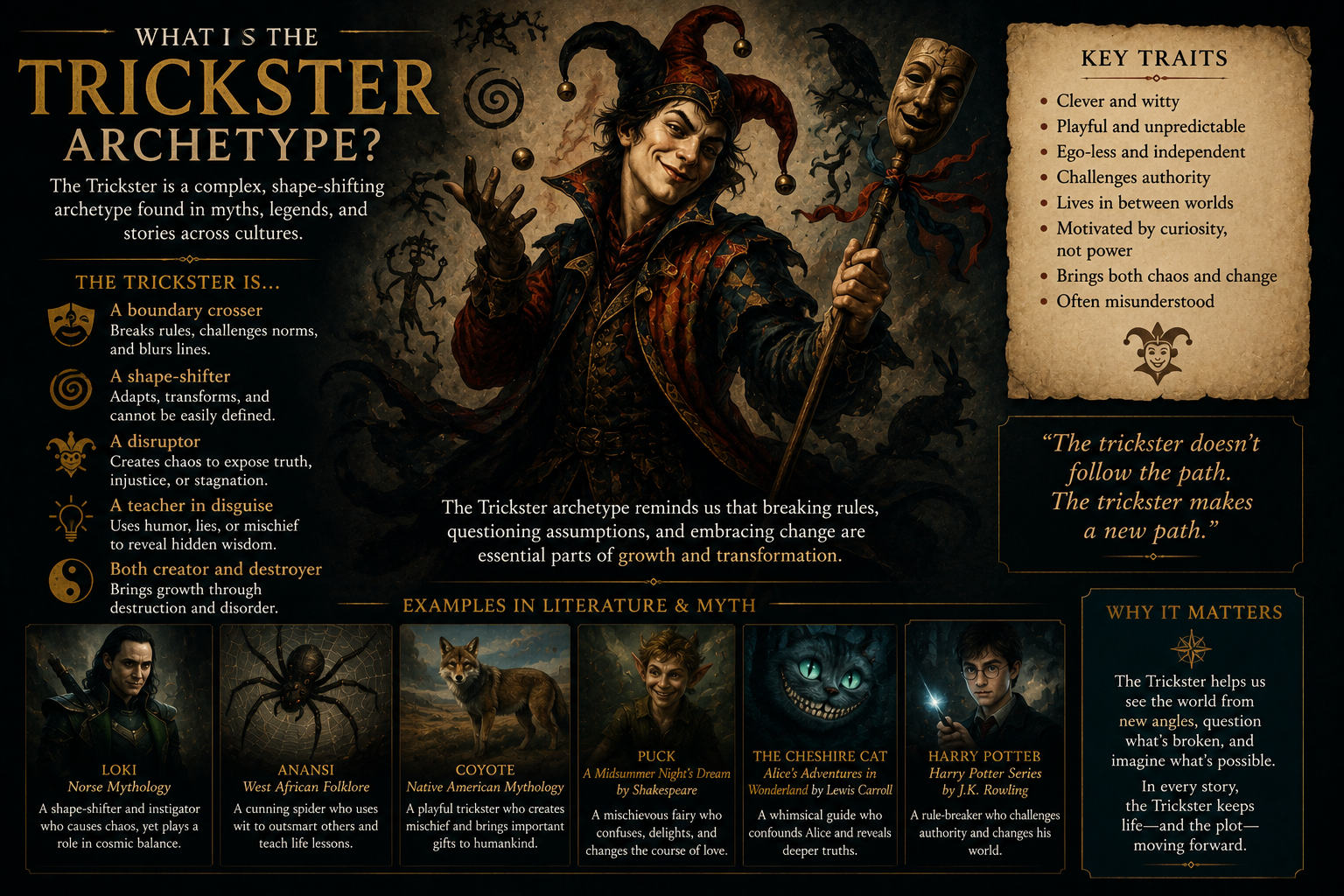
If a character lies, jokes, breaks rules, or tricks others to expose the truth, you may be looking at a trickster. This guide answers What Is the Trickster Archetype? and shows why this character type matters in stories, myths, and plays.

In this Guide

Use this quick map to find what you need.

What Is the Trickster Archetype? A Simple Definition

A trickster is a character who uses cleverness to challenge rules, fool others, or upset the normal order.

When students ask, What Is the Trickster Archetype?, the easiest answer is this: it is a repeated character pattern found across stories. A trickster often bends the truth, changes shape, plays jokes, or tricks people in power.

The trickster is not always evil. Some tricksters help others by exposing lies. Others cause chaos for fun. That mix makes them hard to trust and fun to study.

An archetype is a pattern that appears again and again in literature. The trickster archetype appears in myths, fairy tales, drama, novels, and modern fantasy.

What Is the Trickster Archetype? Why It Matters in Literature

The trickster matters because this character often reveals what a society fears, hides, or refuses to question.

A good answer to What Is the Trickster Archetype? should explain more than behavior. Tricksters do not only play pranks. They test the world of the story.

They may expose a proud king, fool a greedy person, or break a rule that no one else dares to touch. In doing so, they show cracks in the system.

That is why tricksters often appear when a story needs change. They push characters out of comfort and make hidden truths easier to see.

For more background on trickster stories across cultures, see Britannica’s overview of trickster tales.

What Is the Trickster Archetype? Common Traits to Look For

Tricksters are different in each story, but they often share a few clear signs.

If you remember one answer to What Is the Trickster Archetype?, remember this: tricksters use wit as power. They may not be the strongest character, but they know how to outsmart others.

Common signs include disguise, jokes, lies, riddles, and sudden reversals. A trickster may cross boundaries between human and animal, rich and poor, or order and chaos.

Tricksters also create tension. Readers may laugh at them, but they can also cause real harm. That uneasy feeling is part of their role.

When you read, notice how other characters react to the trickster. Fear, anger, and confusion can show how much power the trickster has.

What Is the Trickster Archetype? Famous Examples

Many well-known stories use tricksters to bring humor, conflict, and surprise.

Puck in William Shakespeare’s A Midsummer Night’s Dream is a classic trickster. He uses magic to confuse the lovers, and his mistakes turn the play into a comic mess.

Shakespeare often used clever characters to expose foolish behavior. You can learn more about him through the Poetry Foundation’s Shakespeare page.

Loki from Norse myth is another famous example. He can help the gods, but he also betrays them. That makes him a risky and unstable figure.

Anansi, the spider from West African and Caribbean folklore, often wins through wit. His stories show how a smaller figure can beat stronger enemies through clever plans.

Odysseus in Homer’s The Odyssey also has trickster traits. He survives by using disguise and strategy, especially when he fools the Cyclops Polyphemus.

What Is the Trickster Archetype? How to Analyze It

A strong analysis looks at what the trickster changes in the story.

When you ask What Is the Trickster Archetype? during reading, do not stop at “this character is sneaky.” Ask what the trick reveals.

Does the trickster expose a lie? Does the prank show that a leader is weak? Or, does the character’s chaos lead to growth?

Also look for symbols linked to the trickster. Masks, doors, mirrors, animals, and magic objects may point to hidden meanings. If you need help with that skill, read this guide on how to find symbolism in a story.

Practical tip: Each time the trickster appears, write down what rule gets broken and what truth comes out. That simple note can turn into a strong paragraph for class.

Books That Help You Understand the Trickster Archetype

These books include trickster figures or characters with strong trickster traits.

  • The Odyssey by Homer
  • A Midsummer Night’s Dream by William Shakespeare
  • Anansi Boys by Neil Gaiman

These are not affiliate links, just useful titles to explore.

FAQ: What Is the Trickster Archetype?

Here are quick answers to common student questions.

What Is the Trickster Archetype? in simple words?

It is a character type that uses tricks, jokes, or clever plans to challenge rules and reveal truth.

Is a trickster always a villain?

No. A trickster can help or harm. Many tricksters do both, which makes them complex.

Why do authors use tricksters?

Authors use tricksters to create conflict, question authority, and show hidden problems in a story’s world.

What is a good example of a trickster in literature?

Puck from A Midsummer Night’s Dream is a strong example because he causes confusion through mischief and magic.

Key Takeaway

The trickster is more than a comic troublemaker.

What Is the Trickster Archetype? It is a clever rule-breaker who shakes up the story and helps readers see what others miss.

Common Character Archetypes in Fiction: A Student Guide

character archetypes

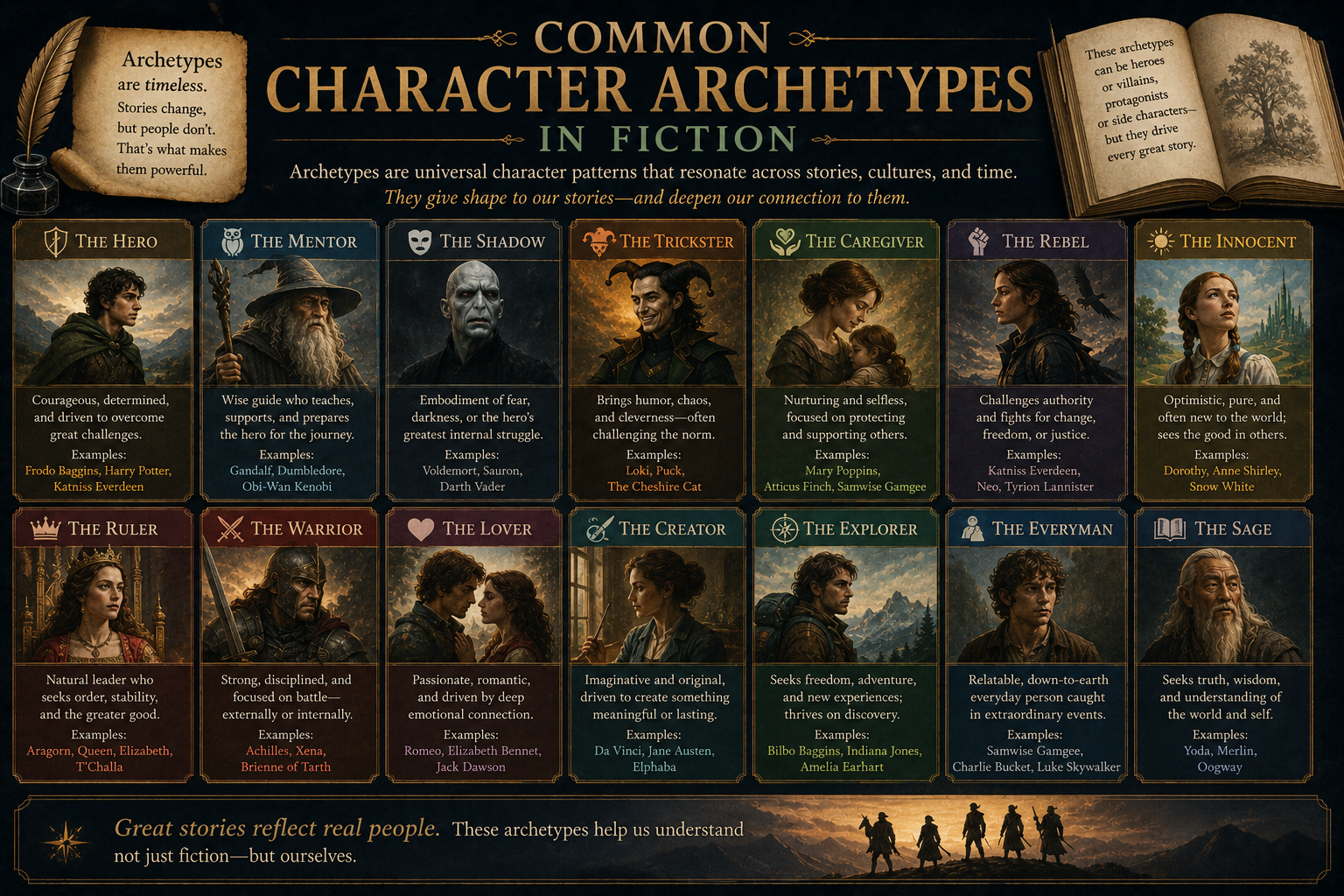
Characters often feel familiar because writers use patterns readers know. Common Character Archetypes in Fiction help us understand those patterns, from brave heroes to wise mentors.

For students, archetypes make reading easier and essays stronger. Once you spot the role a character plays, you can see more clearly how the story works.

In this Guide

  • Why character archetypes matter
  • The most common archetypes students should know
  • How archetypes differ from stereotypes
  • How to analyze archetypes in literature
  • Book suggestions with strong archetypes
  • FAQ and key takeaway
character archetypes

Why Common Character Archetypes in Fiction Matter

Archetypes help readers see the deeper shape of a story.

Common Character Archetypes in Fiction are repeated character types that appear across books, myths, plays, and films. They are not copies of the same person. They are familiar roles with new details in each story.

For example, many stories have a hero who faces danger and grows through hardship. Odysseus in The Odyssey, Harry Potter in Harry Potter and the Sorcerer’s Stone, and Katniss Everdeen in The Hunger Games all fit this pattern in different ways.

When you learn Common Character Archetypes in Fiction, you can ask better questions. What does this character want? What role do they play? How do they help reveal the theme?

Common Character Archetypes in Fiction Students Should Know

These archetypes appear often in classic and modern literature.

The Hero

The hero is the character who faces the main challenge. This person may be brave, scared, unsure, or flawed.

In The Hobbit, Bilbo Baggins starts as a quiet homebody. By the end, he has gained courage and wisdom. His heroism grows slowly, which makes his journey feel real.

The Mentor

The mentor guides the hero. This character often gives advice, training, or moral support.

Gandalf in The Lord of the Rings is a classic mentor. He helps others see what they must do, but he does not solve every problem for them.

The Shadow

The shadow is the dark force that opposes the hero. This may be a villain, a fear, or a hidden part of the hero’s own nature.

In Macbeth, Macbeth becomes his own shadow in many ways. His ambition turns against him, and the real enemy grows inside his mind.

The Innocent

The innocent sees the world with trust or hope. This character often shows what is pure, fragile, or worth protecting.

Scout Finch in To Kill a Mockingbird begins with a child’s view of justice. Her innocence helps readers see the cruelty and unfairness around her more clearly.

The Outsider

The outsider does not fit easily into society. This character may feel rejected, misunderstood, or trapped.

Victor Frankenstein’s creature in Frankenstein is a strong example. He is feared before he is understood, which turns his pain into anger.

Most Common Character Archetypes in Fiction are flexible. A character can fit more than one archetype, or they may change roles as the story develops.

How Common Character Archetypes in Fiction Differ from Stereotypes

Archetypes have depth, while stereotypes often feel flat.

A stereotype is a shallow idea about a type of person. It usually lacks real thought or growth.

An archetype is broader and more useful. It gives the writer a starting point, but the character still needs a clear voice, motive, and struggle.

Think of Jane Eyre from Jane Eyre. She can be seen as an outsider, but she is not simple. She is moral, angry, loyal, and independent. That complexity keeps her from feeling like a stereotype.

As you read, treat Common Character Archetypes in Fiction as clues, not final answers. The best characters often surprise us.

How to Analyze Common Character Archetypes in Fiction

A strong analysis connects the archetype to the story’s meaning.

Do not stop at “this character is a hero.” That is only the first step. Ask what kind of hero the character is and why that matters.

  1. Choose one important character.
  2. Name the archetype that fits best.
  3. Find a scene that proves your idea.
  4. Explain how the archetype connects to theme.

For example, Atticus Finch in To Kill a Mockingbird can be read as a mentor. He teaches Scout how to think about courage, justice, and empathy.

A strong essay about Common Character Archetypes in Fiction should use evidence. Quote or describe a key scene, then explain how that scene shows the character’s role.

Archetypes also connect with symbols. If a character carries an object, enters a special place, or repeats a key action, that detail may add meaning. For help with that skill, read this guide on how to find symbolism in a story.

Common Character Archetypes in Fiction and Theme

Archetypes often point readers toward the message of a story.

Theme is the deeper idea a work explores. It may deal with power, love, guilt, freedom, or growing up.

In The Great Gatsby, Jay Gatsby can be seen as a dreamer. His dream gives him purpose, but it also blinds him. Through Gatsby, the novel questions the American Dream and the cost of wanting too much.

In Romeo and Juliet, the lovers are not just young people in love. They fit the archetype of star-crossed lovers, which helps show how family hate can destroy innocent lives.

This is why Common Character Archetypes in Fiction are useful in AP Literature and college essays. They help you move from plot summary to deeper meaning.

Common Character Archetypes in Fiction in Classic and Modern Books

Old and new stories often share the same character patterns.

Myths, fairy tales, novels, and plays all use archetypes. The details change with time, but the basic roles still speak to readers.

The study of archetypes is often linked to psychologist Carl Jung. You can read more about him at Britannica’s Carl Jung biography.

Poetry also uses archetypal figures, such as the speaker as wanderer, lover, witness, or prophet. The Poetry Foundation is a helpful place to explore literary terms and examples.

When you notice Common Character Archetypes in Fiction, you start to see how stories talk to each other across time.

Books with Strong Character Archetypes

These books are useful for students who want clear examples of archetypes.

  • The Odyssey by Homer
  • The Hobbit by J.R.R. Tolkien

Both books are often available through libraries, school reading lists, and major booksellers such as Amazon. They give readers strong examples of heroes, mentors, monsters, and tests of character.

Practical Takeaways for Students

Archetypes can help you read with more confidence.

If you feel stuck during a reading assignment, look at the character roles. Ask who guides, who tempts, who changes, and who resists change.

When you write about Common Character Archetypes in Fiction, avoid vague claims. Use a scene, explain the character’s role, and connect that role to theme.

You can also pair archetype analysis with symbols, setting, and conflict. This gives your essay more depth without making it harder to understand.

FAQ About Common Character Archetypes in Fiction

These quick answers can help with class discussion and essays.

What are character archetypes?

Character archetypes are familiar character roles that appear across many stories. Examples include the hero, mentor, outsider, and shadow.

Why do writers use archetypes?

Writers use archetypes because they help readers understand a character’s role quickly. A good writer still adds fresh details and inner conflict.

Can one character fit more than one archetype?

Yes. A character can be a hero and an outsider, or a mentor and a flawed guide. Complex characters often shift roles as the story changes.

Are archetypes the same as symbols?

No. An archetype is usually a repeated character role or pattern. A symbol is an object, place, or detail that carries deeper meaning.

How can archetypes improve my literature essay?

They help you move beyond plot summary. You can explain how a character’s role supports the theme, conflict, or message of the work.

Key Takeaway

Common Character Archetypes in Fiction are tools for deeper reading. When you spot a familiar role and connect it to theme, you understand the story with more clarity.

What Is an Archetype in Literature? A Beginner-Friendly Guide

literary archetype
literary archetype

What Is an Archetype in Literature? It is a common pattern, character type, story idea, or symbol that appears again and again across books and cultures.

Once you know how archetypes work, many stories become easier to understand. You start to see why certain heroes, villains, journeys, and lessons feel familiar.

In this Guide

What Is an Archetype in Literature?

Archetypes are story patterns that readers recognize fast.

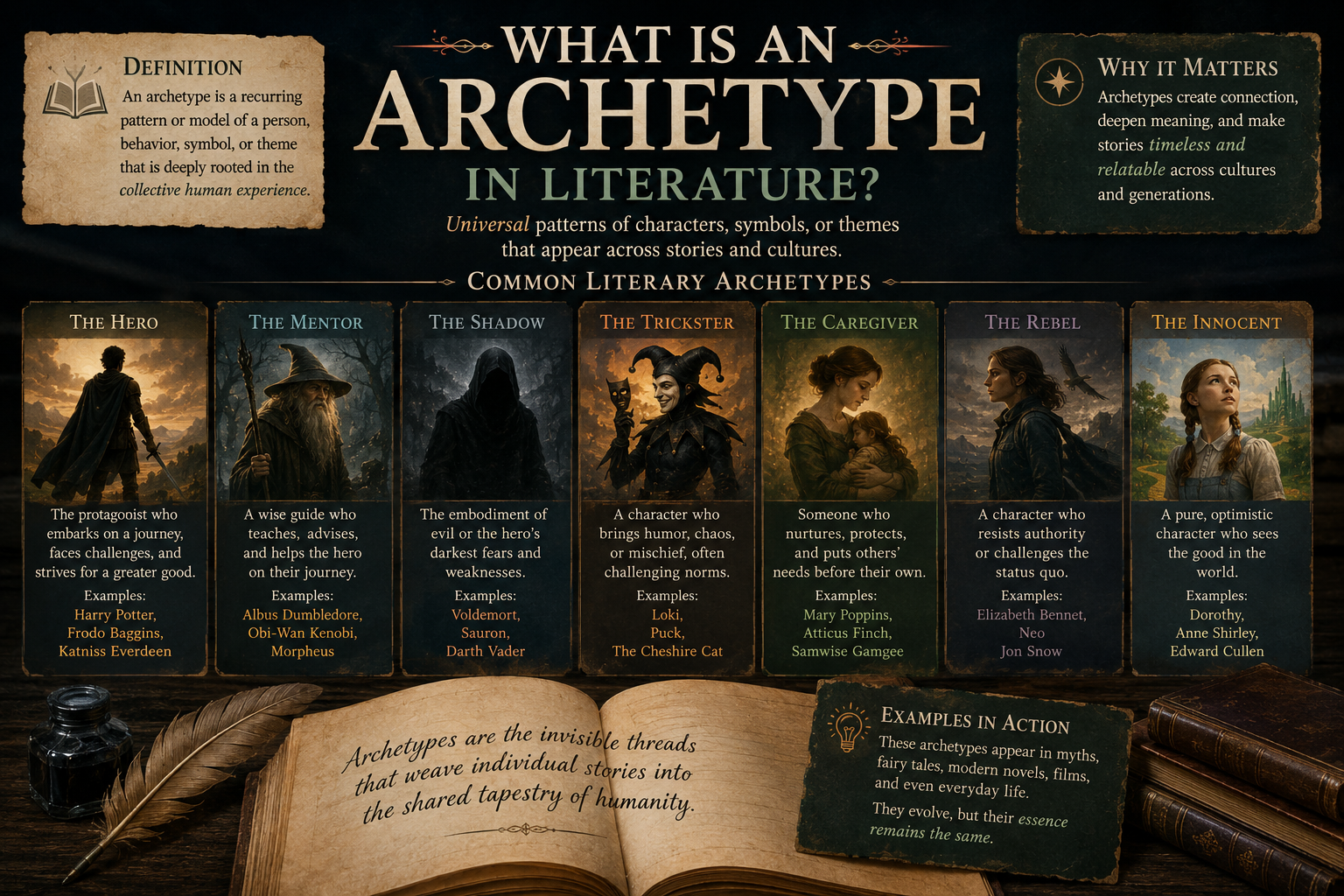
So, What Is an Archetype in Literature? It is a repeated model that shows up in many stories. It can be a type of character, a plot pattern, a setting, or a symbol.

For example, the “hero” is an archetype. So is the “mentor,” the “quest,” and the “dark forest.” These ideas appear in myths, fairy tales, novels, plays, and films.

An archetype is not the same as a cliché. A cliché feels overused or lazy. An archetype feels familiar because it connects to deep human fears, hopes, and choices.

What Is an Archetype in Literature? Why It Matters

Archetypes help stories speak to readers across time and place.

When you ask, What Is an Archetype in Literature? you are really asking why some stories feel universal. Archetypes help answer that.

They give readers a quick way into a story. If a wise older figure appears, we may expect guidance. If a young hero leaves home, we may expect growth and danger.

Archetypes also help writers build meaning. A character may follow an archetype at first, then break away from it. That change can reveal a theme.

For literary analysis, archetypes can help you explain how a text connects to larger ideas. Love, fear, power, sacrifice, and identity often appear through familiar patterns.

What Is an Archetype in Literature? Common Types

Most archetypes fit into a few broad groups.

What Is an Archetype in Literature? It can be more than one thing. A novel may use character archetypes, plot archetypes, and symbolic archetypes at the same time.

Character Archetypes

A character archetype is a familiar role in a story.

The hero faces a major challenge. The mentor gives wisdom. The villain blocks the hero’s goal. The trickster causes trouble and exposes truth.

In Harry Potter, Harry is the hero, Dumbledore is a mentor, and Voldemort is the villain. These roles are easy to spot, but each character still has unique traits.

Plot Archetypes

A plot archetype is a common story path.

The quest is one of the most famous. A character leaves home, faces tests, and returns changed. You can see this in The Odyssey, The Lord of the Rings, and many adventure stories.

Another plot archetype is the fall. A character loses power or innocence because of pride, greed, or a poor choice. Shakespeare’s tragedies often use this pattern.

Symbolic Archetypes

A symbolic archetype is an image or place with a shared meaning.

Light often suggests truth or hope. Darkness may suggest fear or confusion. Water can suggest rebirth, change, or danger.

If you want help with this part, read our guide on how to find symbolism in a story. Symbolic archetypes often work closely with symbols.

Famous Examples of Archetypes in Literature

Well-known books make archetypes easier to see.

In The Odyssey by Homer, Odysseus follows the quest archetype. He wants to return home, but he must face monsters, temptation, and loss before he gets there.

In Cinderella, the main character fits the innocent hero archetype. She suffers unfair treatment, but she stays kind and gains a new life.

In Romeo and Juliet, the lovers fit the star-crossed lovers archetype. Their love is real, but family conflict and fate push them toward tragedy.

In The Hunger Games, Katniss Everdeen fits the reluctant hero archetype. She does not seek fame or power. She acts because she wants to protect her sister.

These examples show why What Is an Archetype in Literature? is such a useful question. It helps readers compare stories that may seem very different at first.

How to Spot Archetypes While You Read

A simple question can help you find archetypes fast.

Ask yourself: “Have I seen this kind of character, journey, or image before?” If the answer is yes, you may have found an archetype.

Look for repeated roles. Is there a guide, a rebel, a ruler, or an outsider? Then ask what that role adds to the story.

Look at the main conflict too. Is the character on a quest? Are they tempted? Do they face a fall from power? These patterns often point to archetypes.

Pay close attention to places and objects. A garden, desert, storm, or road may carry archetypal meaning. For more help, use this guide to spot symbols in fiction.

Once you know What Is an Archetype in Literature? you can move beyond naming it. The stronger analysis explains why the author uses it.

Archetype vs. Stereotype: What Is the Difference?

These two ideas can look alike, but they are not the same.

An archetype is a broad story pattern with deep meaning. It can be complex and flexible.

A stereotype is a flat or unfair idea about a person or group. It often reduces people to one trait.

For example, a “wise mentor” can be an archetype if the character has depth. But if the character only exists to give advice and has no inner life, the role may feel flat.

Books to Explore Archetypes

These books can help you see archetypes in action.

  • The Odyssey by Homer
  • Mythology by Edith Hamilton
  • The Hero with a Thousand Faces by Joseph Campbell

Joseph Campbell’s book is more advanced, but it is famous for its ideas about the hero’s journey. For background on archetypes, you can also read Britannica’s overview of archetype in literature.

For poetry and myth-based reading, the Poetry Foundation is also a strong source.

FAQ: What Is an Archetype in Literature?

What Is an Archetype in Literature?

An archetype is a common character type, plot pattern, symbol, or idea that appears in many stories. It feels familiar because readers have seen it before in other texts.

What is a simple example of an archetype?

The hero is a simple example. Heroes often face danger, make hard choices, and grow through struggle.

Is an archetype the same as a theme?

No. An archetype is a pattern or role. A theme is the message or big idea the story explores.

Why do authors use archetypes?

Authors use archetypes because they help readers connect to a story quickly. They also help build meaning and deepen conflict.

How can I write about archetypes in an essay?

Name the archetype, give evidence from the text, then explain what it reveals about the character, conflict, or theme.

Key Takeaway

What Is an Archetype in Literature? It is a familiar story pattern that helps readers understand characters, plots, symbols, and themes. When you spot one, do not stop there. Ask what the author does with it and why it matters.