Symbols in The Alchemist: What They Mean and Why They Matter

Alchemist Symbols

A simple explanation of the most important symbols and images in the text.

The symbols in The Alchemist help readers see Santiago’s trip as more than a search for buried gold. Each key image points to a deeper lesson about dreams and self-knowledge.

Paulo Coelho uses simple objects, places, and natural forces to show how a person learns to trust a calling. That is why the novel works so well for class discussion and essays.

In this Guide

Use this quick map to follow the main ideas in the post.

  • Why symbolism matters in the novel
  • The desert, the pyramids, and the treasure
  • The sheep, the stones, and the alchemist
  • The wind, the sun, and the oasis
  • How to write about the symbols
  • FAQ and key takeaway
Alchemist Symbols

Why Symbols in The Alchemist Matter

Symbols turn Santiago’s journey into a lesson about how people grow.

The best symbols in The Alchemist are easy to picture but rich in meaning. A desert is not just a desert. A treasure is not just gold.

Coelho links ordinary images to big themes like purpose, faith, and courage. If you need a quick refresher, see our guide on how to find symbolism in a story.

The Desert: One of the Key Symbols in The Alchemist

The desert represents struggle, silence, and spiritual growth.

And the desert is harsh. It can kill people who do not respect it. Yet it also teaches Santiago to slow down, watch closely, and listen.

In the desert, Santiago learns that the world speaks through signs. This connects to the theme that wisdom often comes through hardship.

The desert also strips life down to what matters. Santiago cannot hide behind comfort there. He has to face fear and trust his Personal Legend.

The Pyramids and Treasure: Symbols in The Alchemist That Point Home

The pyramids and treasure show that a dream can lead you away from home so you can see home clearly.

At first, the pyramids seem like the goal. They are far away, mysterious, and tied to Santiago’s dream of treasure.

By the end, the real treasure sits near the ruined church where Santiago began. These symbols in The Alchemist suggest that the journey changes the traveler more than the prize does.

This is much like the green light in F. Scott Fitzgerald’s The Great Gatsby. The object seems to promise a dream, but its real meaning has more to do with longing and illusion.

The Shepherd and the Sheep

Santiago’s life as a shepherd shows the pull of comfort and routine.

The sheep trust Santiago, but they do not seek much beyond food and rest. They represent a safe life without a larger dream.

Santiago cares for the sheep, yet he knows he wants more. His choice to sell them marks the start of his inner change.

The theme is clear: safety has value, but it can also make life small.

Urim and Thummim: Small Signs with Big Meaning

The black and white stones symbolize guidance when Santiago feels lost.

Melchizedek gives Santiago Urim and Thummim to help him make choices. The stones show that help exists, but they are not meant to replace courage.

Santiago must learn to read omens without becoming passive. The theme here is that signs can guide a person, but the person still has to act.

The Wind and the Sun as Symbols in The Alchemist

The sun and wind show that all parts of creation are connected.

The wind symbolizes change. It moves across borders and carries voices, dust, and life. When Santiago speaks with the wind, he learns that nature is not separate from him.

The sun suggests wisdom and power. It helps Santiago understand that love is part of the Soul of the World.

The novel is not a strict allegory, but it often feels close to one. For more context on that form, see Britannica’s entry on allegory in art and literature.

The Alchemical Library Course

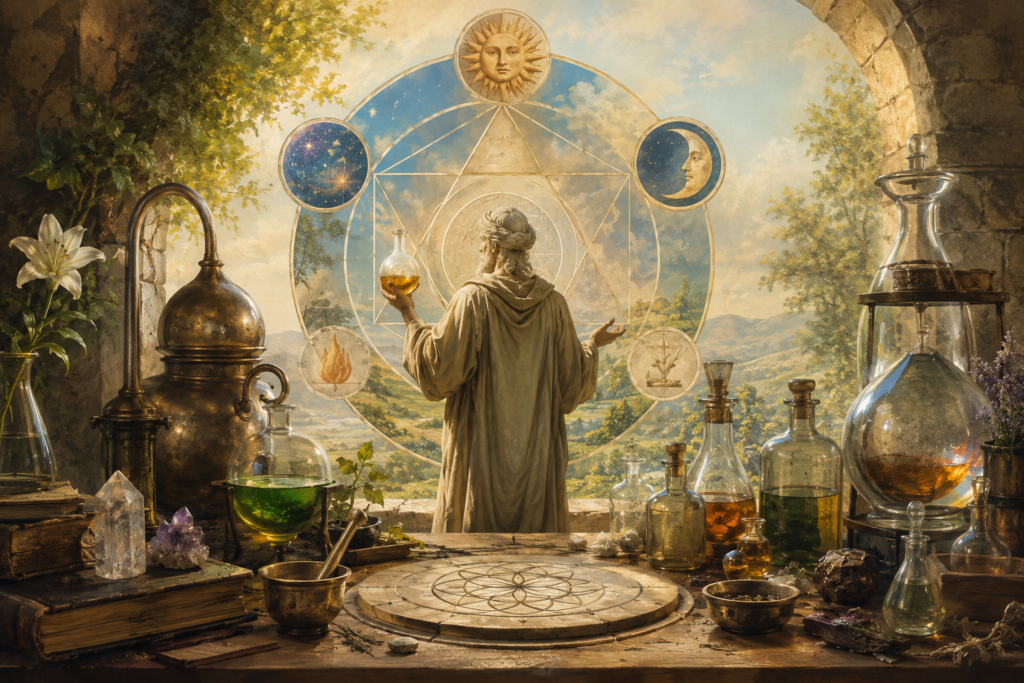
Unlock the symbolic language of alchemy — from ancient philosophy to Jungian psychology — and learn to read one of history’s most fascinating traditions of transformation with clarity and confidence.

The Oasis: Safety and Love

The oasis represents rest, but it also tests Santiago’s commitment to his dream.

At the oasis, Santiago finds safety after the danger of the desert. He also meets Fatima, whose love matters deeply to him.

The oasis could become a reason to stop. Yet Fatima does not ask Santiago to give up his Personal Legend. Their love supports growth rather than fear.

This symbol connects to one of the novel’s main themes: true love does not trap a person. It gives that person courage.

The Alchemist as a Symbol of the Teacher

The alchemist himself represents wisdom that pushes a student to act.

He does not solve every problem for Santiago. He guides him, tests him, and refuses to make the path too easy.

In that way, he is like Athena in The Odyssey. A wise guide can help the hero, but the hero must still make the hard choices.

The alchemist also shows that knowledge is not only found in books. It must be lived.

How to Write About Symbols in The Alchemist

A strong paragraph about symbolism starts with a concrete image and ends with theme.

When you write about symbols in The Alchemist, pick one symbol and ask what it teaches Santiago. Then connect that lesson to the novel’s larger message.

  • Name the symbol and a clear moment from the plot.
  • Explain how that moment reveals a theme.

For more help, you can review our full lesson on finding symbolism in fiction. You can also use our RapidReads Press symbolism study guide to plan a cleaner essay response.

Books That Pair Well with The Alchemist

These books also use simple stories to explore deep spiritual questions.

  • Siddhartha by Hermann Hesse
  • The Little Prince by Antoine de Saint-Exupéry

Both pair well with Coelho’s novel because they focus on travel, wisdom, and the search for meaning.

Helpful Outside Context

A little author background can make the novel easier to understand.

For a reliable overview of Paulo Coelho’s life and work, see Britannica’s biography of Paulo Coelho.

FAQ About Symbols in The Alchemist

Here are short answers to common student questions.

What are the most important symbols in The Alchemist?

The most important symbols in The Alchemist include the desert, the pyramids, the treasure, Urim and Thummim, the wind, and the oasis.

What does the treasure symbolize?

The treasure symbolizes Santiago’s dream, but it also shows that the journey to reach a dream can reveal what matters most.

What does the desert symbolize?

The desert symbolizes hardship and spiritual growth. It teaches Santiago patience, awareness, and trust.

Is The Alchemist an allegory?

It has strong allegorical elements, but it is best read as a symbolic quest story. Santiago’s trip reflects the inner journey toward purpose.

Key Takeaway

The novel’s symbols matter because they turn a simple adventure into a story about faith, courage, and self-discovery.

The best way to understand symbols in The Alchemist is to connect each image to Santiago’s growth. If a symbol changes how he sees the world, it likely points to one of the novel’s biggest themes. ✨


Best Psychological Water Symbolism: How Water Reveals the Mind in Literature

Psychological Water Symbolism

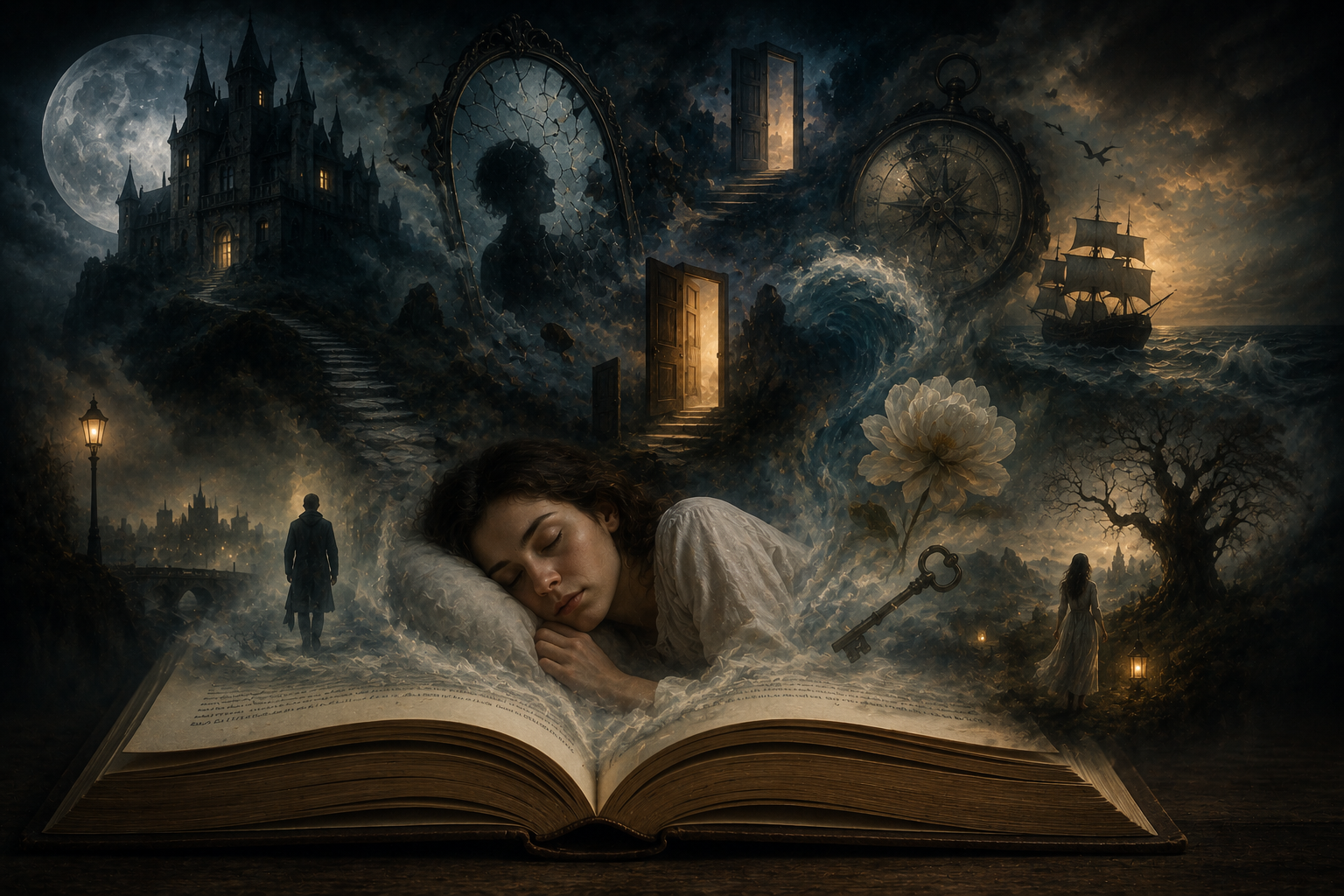
Best Psychological Water Symbolism helps readers see how water can show fear, guilt, freedom, memory, and hidden desire. In many stories, water is not just a setting. It becomes a mirror for the character’s inner life.

When you understand this symbol, scenes with rivers, rain, oceans, and baths start to feel deeper. You can spot what a character feels, even when they cannot say it out loud.

In this Guide

  • What psychological water symbolism means
  • Why writers use water to show the mind
  • Best Psychological Water Symbolism in famous literature
  • Common meanings of water in stories
  • Recommended books to read
  • How to analyze water symbolism
  • FAQs
  • Key takeaway

What Is Best Psychological Water Symbolism?

Water often shows what is happening inside a character’s mind.

Best Psychological Water Symbolism means the strongest uses of water as a sign of emotion, memory, trauma, or change. A calm lake may suggest peace. A stormy sea may suggest panic or loss of control.

Water can also show the unconscious mind. This means thoughts and feelings buried below the surface. A character may stand near water when they face something they do not fully understand.

This symbol works because water is always changing. It can heal, hide, clean, drown, or carry someone away. That makes it a powerful tool for writers.

Why Water Connects So Strongly to the Mind

Water feels emotional because people link it with birth, danger, tears, and survival.

In literature, water often stands between two states of life. A character may enter water and come out changed. They may cross a river and leave an old self behind.

Water also has depth. What sits on the surface is not always the full truth. This makes water a strong image for secrets, guilt, and hidden pain.

If you want a simple way to practice this skill, read our guide on how to find symbolism in a story. It can help you notice repeated images and connect them to theme.

Best Psychological Water Symbolism in Famous Literature

Many classic works use water to show inner conflict.

In Shakespeare’s Hamlet, Ophelia’s drowning is one of the most famous water scenes in literature. Her death connects water with grief, silence, and emotional collapse. The water seems peaceful, but the meaning is tragic.

In Kate Chopin’s The Awakening, the sea stands for freedom and danger. Edna feels drawn to the ocean because it gives her a sense of self. Yet the same water also becomes linked to escape and death.

In Toni Morrison’s Beloved, water often connects to birth, memory, and trauma. The past does not stay still. It moves like water through the lives of the characters.

Best Psychological Water Symbolism often appears when a character cannot speak directly about pain. The image says what the character cannot.

Best Psychological Water Symbolism and Guilt

Water often appears when characters want to wash away guilt.

In Shakespeare’s Macbeth, blood and water create a powerful contrast. Macbeth hopes water can clean his hands after murder. But his guilt cannot be washed away so easily.

Lady Macbeth later tries to rub imagined blood from her hands. The scene shows that guilt lives in the mind, not just on the body. Water fails because the damage is moral and psychological.

This is a key part of Best Psychological Water Symbolism. Water can suggest cleansing, but it can also show that true cleansing is impossible.

Best Psychological Water Symbolism and Rebirth

Water can also mark a new beginning.

In many stories, a character enters water before a major change. This can feel like a baptism. The old self goes under, and a new self rises.

Sometimes this rebirth is hopeful. Other times, it is painful. A river crossing may show that a character has passed a point of no return.

In Mark Twain’s Adventures of Huckleberry Finn, the Mississippi River offers Huck a kind of freedom. The river gives him space to think outside the rules of society. Still, it does not remove danger from his world.

Water as Fear, Death, and the Unknown

Water can be beautiful and terrifying at the same time.

The ocean is often tied to the unknown because it is wide, deep, and hard to control. Writers use it to show fear of death, fear of desire, or fear of losing the self.

In Samuel Taylor Coleridge’s The Rime of the Ancient Mariner, the sea becomes a place of guilt and punishment. The mariner is trapped by water, yet he cannot drink it. You can read the poem at the Poetry Foundation.

This kind of scene shows why Best Psychological Water Symbolism works so well. Water can trap a character inside their own fear.

Water as Memory and Trauma

Water often returns when the past refuses to stay buried.

Memory does not move in a straight line. It comes back in waves. That is why water is a strong symbol for trauma, grief, and family history.

In Beloved, Morrison uses water imagery to connect pain, birth, and memory. The symbol feels physical because trauma lives in the body as well as the mind.

In this sense, Best Psychological Water Symbolism is not only about what water means. It is about how water moves through a story and changes the mood.

Common Themes in Best Psychological Water Symbolism

Water can carry many meanings, but the context matters most.

One common theme is cleansing. A character may wash, bathe, or stand in rain because they want relief. The scene may show healing, or it may show that healing has not come yet.

Another theme is loss of control. Floods, storms, and rough seas often show fear or emotional chaos. The water becomes a force the character cannot master.

A third theme is hidden truth. Deep water can suggest secrets below the surface. A quiet pond may seem calm, but it may hide danger.

For more background on symbolism as a literary idea, Britannica offers a useful overview of symbolism in literature and art.

Recommended Books with Strong Water Symbolism

These books are useful if you want to study Best Psychological Water Symbolism in a clear way.

The Awakening by Kate Chopin

This short novel uses the sea to explore freedom, desire, and identity. It is one of the best choices for students who want to study water as a psychological symbol.

Beloved by Toni Morrison

This novel uses water to connect memory, trauma, birth, and survival. It is more complex, but it gives readers a rich example of symbolism tied to history and pain.

Macbeth by William Shakespeare

This play shows how water can fail as a symbol of cleansing. Macbeth’s guilt is too deep for water to remove.

How to Analyze Best Psychological Water Symbolism

Start with the scene itself. Ask where the water appears and what the character feels at that moment.

Then look at the type of water. Rain, rivers, baths, oceans, and floods do not always mean the same thing. A quiet river may suggest escape, while a storm may suggest inner panic.

Next, watch for change. Does the character enter the water, avoid it, cross it, or drown in it? The action matters as much as the image.

You can also ask what the water cannot do. If water fails to clean, heal, or save, the writer may be showing deep guilt or lasting trauma.

If you need help with this process, use our step-by-step article on finding symbolism in fiction.

Best Psychological Water Symbolism in Student Essays

Water symbolism can make a strong essay topic because it connects image, character, and theme.

A good thesis should not say only that water “means emotion.” That is too broad. Instead, explain what kind of emotion the water reveals and how it shapes the character’s journey.

For example, an essay on The Awakening might argue that the sea shows Edna’s desire for freedom, but also the danger of a world that gives her few choices.

An essay on Macbeth might argue that water shows the limits of physical cleansing when the real stain is guilt.

Strong essays about Best Psychological Water Symbolism focus on details. Quote the scene, explain the image, and connect it to the larger theme.

FAQs About Best Psychological Water Symbolism

What does water usually symbolize in literature?

Water often symbolizes emotion, cleansing, danger, memory, or change. The exact meaning depends on the scene and the character.

Why is water linked to psychology?

Water has depth, movement, and mystery. These traits make it a strong symbol for the unconscious mind and hidden feelings.

Can water symbolize both life and death?

Yes. Water can give life, but it can also drown. That tension makes it one of literature’s most flexible symbols.

What is a good book for studying water symbolism?

The Awakening by Kate Chopin is a strong choice. The sea plays a major role in the main character’s inner life.

How do I write about water symbolism without being too vague?

Focus on the exact scene. Explain what kind of water appears, what the character feels, and how the image connects to the theme.

Key Takeaway

Best Psychological Water Symbolism shows how water can reveal the parts of a character that words may hide. It can suggest guilt, fear, freedom, memory, or change.

The next time you see rain, rivers, oceans, or baths in a story, slow down. The water may be telling you what the character’s mind cannot say. 🌊

Books Every Dreams and Symbolism Reader Should Know

dreams and symbolism

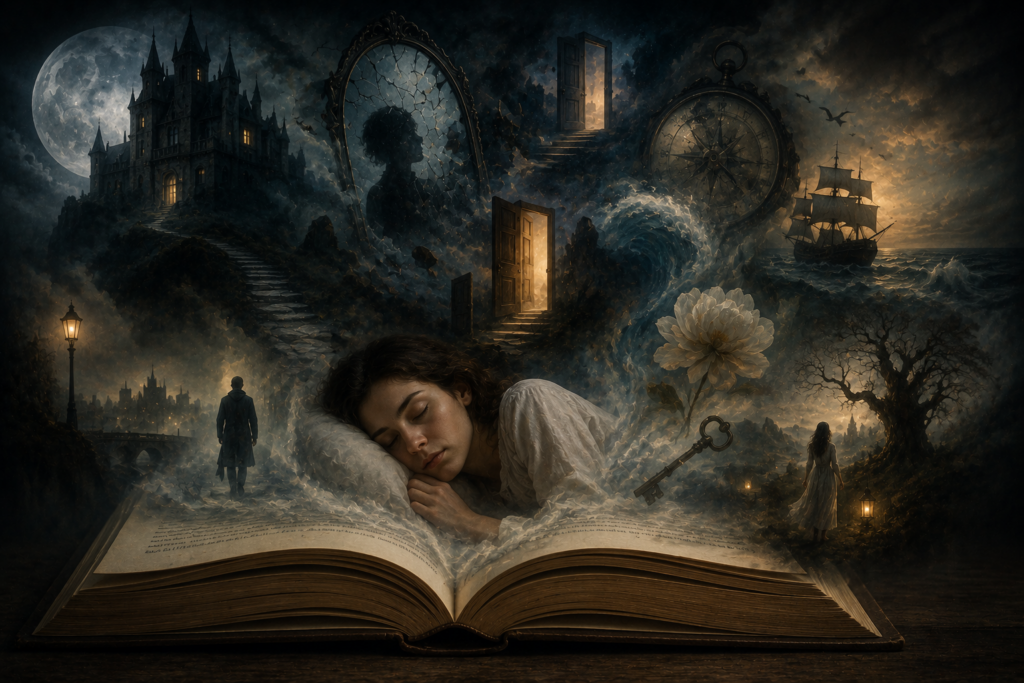
Some stories feel powerful because they speak in images, dreams, colors, and objects. This guide to Books Every Dreams and Symbolism helps students spot deeper meaning in literature without feeling lost.

Dreams and symbols can turn a simple scene into a clue about fear, hope, guilt, or change. Once you learn what to notice, many classic books become easier to understand.

In this Guide

  • What dreams and symbolism mean in literature
  • Books Every Dreams and Symbolism Reader Should Study
  • Famous examples from novels, plays, and poems
  • Recommended books for students
  • Common themes linked to dreams and symbols
  • FAQs and key takeaway

What Books Every Dreams and Symbolism Reader Should Understand

Dreams and symbols help writers show what characters may not say out loud.

In literature, a dream often reveals hidden fear, desire, or guilt. It may not be “real” in the plot, but it can still tell the truth about a character’s mind.

A symbol is an object, place, color, action, or image that means more than itself. A storm may show chaos. A locked door may suggest secrets. A bird may suggest freedom or escape.

This is why Books Every Dreams and Symbolism students study often feel layered. The surface story matters, but the hidden meaning gives the work its force.

If you want a simple method, read this guide on how to find symbolism in a story.

Why Books Every Dreams and Symbolism Matter in Literature

Symbols make stories richer without long explanations.

Writers use symbols because readers feel images before they explain them. A green light, a red room, or a strange dream can stay in your mind long after the plot fades.

Dreams can also break normal rules. They let a story move into memory, fear, or fantasy. This can show a truth that plain dialogue cannot.

For students, Books Every Dreams and Symbolism can improve close reading. You learn to ask better questions, such as “Why this image?” or “Why does this dream appear here?”

Famous Examples in Books Every Dreams and Symbolism Readers Love

Classic literature often uses symbols that seem small at first but grow in meaning.

In The Great Gatsby by F. Scott Fitzgerald, the green light is one of the most famous symbols in American literature. It stands for Gatsby’s dream, but it also points to the danger of chasing an ideal that may never come true.

Within Macbeth by William Shakespeare, dreams and visions show guilt and fear. Macbeth sees a dagger before he kills King Duncan. Lady Macbeth later imagines blood on her hands. These images reveal moral collapse.

In Alice’s Adventures in Wonderland by Lewis Carroll, dream logic shapes the whole story. Alice moves through a strange world where size, rules, and language shift. The dream setting helps explore identity and childhood confusion.

In Beloved by Toni Morrison, haunting images and memories show trauma. The novel uses symbols to make the past feel present, painful, and impossible to ignore.

Recommended Books Every Dreams and Symbolism Students Should Read

These books offer strong examples of dreams, symbols, and hidden meaning.

The Great Gatsby by F. Scott Fitzgerald

This novel is a strong choice for AP Literature and college classes. Its symbols include the green light, the valley of ashes, and Gatsby’s mansion.

The book asks a sharp question: What happens when a dream becomes more important than reality?

Alice’s Adventures in Wonderland by Lewis Carroll

This is one of the clearest examples of dream structure in fiction. The story feels playful, but it also raises questions about growth, logic, and identity.

Students can study how nonsense can still carry meaning.

Beloved by Toni Morrison

This novel uses memory, haunting, and symbols to explore pain after slavery. It is emotionally difficult, but it is one of the most important books in American literature.

Readers can look at the house, the ghost, and the character Beloved as symbols of trauma and history.

Common Themes in Books Every Dreams and Symbolism Readers Study

Dreams and symbols often connect to major themes in literature.

Desire is one of the most common themes. A dream may show what a character wants most, even if that wish is unsafe or impossible.

Guilt often appears through visions, stains, ghosts, or repeated images. In Macbeth, blood becomes a symbol of guilt that cannot be washed away.

Identity also appears in dream-like stories. When a character changes size, sees a double, or enters a strange place, the story may ask who that person really is.

Freedom can appear through birds, open roads, water, or windows. But the meaning depends on the story. A window may suggest escape in one book and loneliness in another.

For more practice, use this student-friendly guide to spot symbols in fiction.

How to Read Books Every Dreams and Symbolism Without Overthinking

You do not need to find secret meaning in every object.

Start with patterns. If an image appears once, it may be simple detail. If it appears many times, changes, or appears at a key moment, it may be symbolic.

Ask what the symbol does in the story. Does it create fear? Does it reveal a wish? Does it point to a conflict?

Context matters most. A rose can suggest love, but it can also suggest pain, beauty, secrecy, or death. The story decides the meaning.

Dreams, Symbols, and Literary Culture

Dreams and symbols are not just classroom topics. They shape how readers talk about books.

Fans still debate Gatsby’s green light because it means more than one thing. Shakespeare’s dream-like scenes still feel fresh because they reflect fear and ambition.

Many cultures also treat dreams as messages, warnings, or spiritual signs. Literature draws on these beliefs to make stories feel deep and mysterious.

For a broader look at dreams, Britannica offers a helpful overview of dreams as a sleep experience. For poetry terms, the Poetry Foundation has a useful glossary entry on symbol.

Books Every Dreams and Symbolism: Quick Student Tips

Good literary analysis starts with careful attention.

Mark repeated images as you read. Note where dreams appear and what happens right before or after them.

Look for contrast. A bright image in a dark scene may carry special meaning. A calm dream before violence may create tension.

Connect symbols to theme, not just plot. Instead of saying “the green light is important,” explain how it shows Gatsby’s hope and his failure to see Daisy clearly.

FAQs About Books Every Dreams and Symbolism

What does symbolism mean in literature?

Symbolism means that an object, image, place, or action stands for a larger idea. The meaning depends on the story and how the writer uses it.

Why do authors use dreams in books?

Authors use dreams to reveal fear, guilt, memory, or desire. Dreams can show what a character hides from others or even from themselves.

What are good Books Every Dreams and Symbolism students can start with?

Start with The Great Gatsby, Alice’s Adventures in Wonderland, and Macbeth. Each one gives clear examples of symbols or dream-like scenes.

How can I tell if something is a symbol?

Look for repetition, strong detail, and connection to theme. If an image keeps returning at key moments, it may be a symbol.

Can a symbol have more than one meaning?

Yes. Strong symbols often carry more than one meaning. The best answer uses evidence from the text.

Key Takeaway

Books Every Dreams and Symbolism readers study can make literature feel more alive. Dreams reveal hidden truths, while symbols turn simple details into lasting meaning.

When you read with care, you start to see how writers build deeper stories from images, patterns, and silence. That is where some of literature’s strongest power lives.

error

Enjoy this article? Please spread the word :)

Follow by Email
BLUESKY
fb-share-icon
Reddit
LinkedIn
Share
RSS