

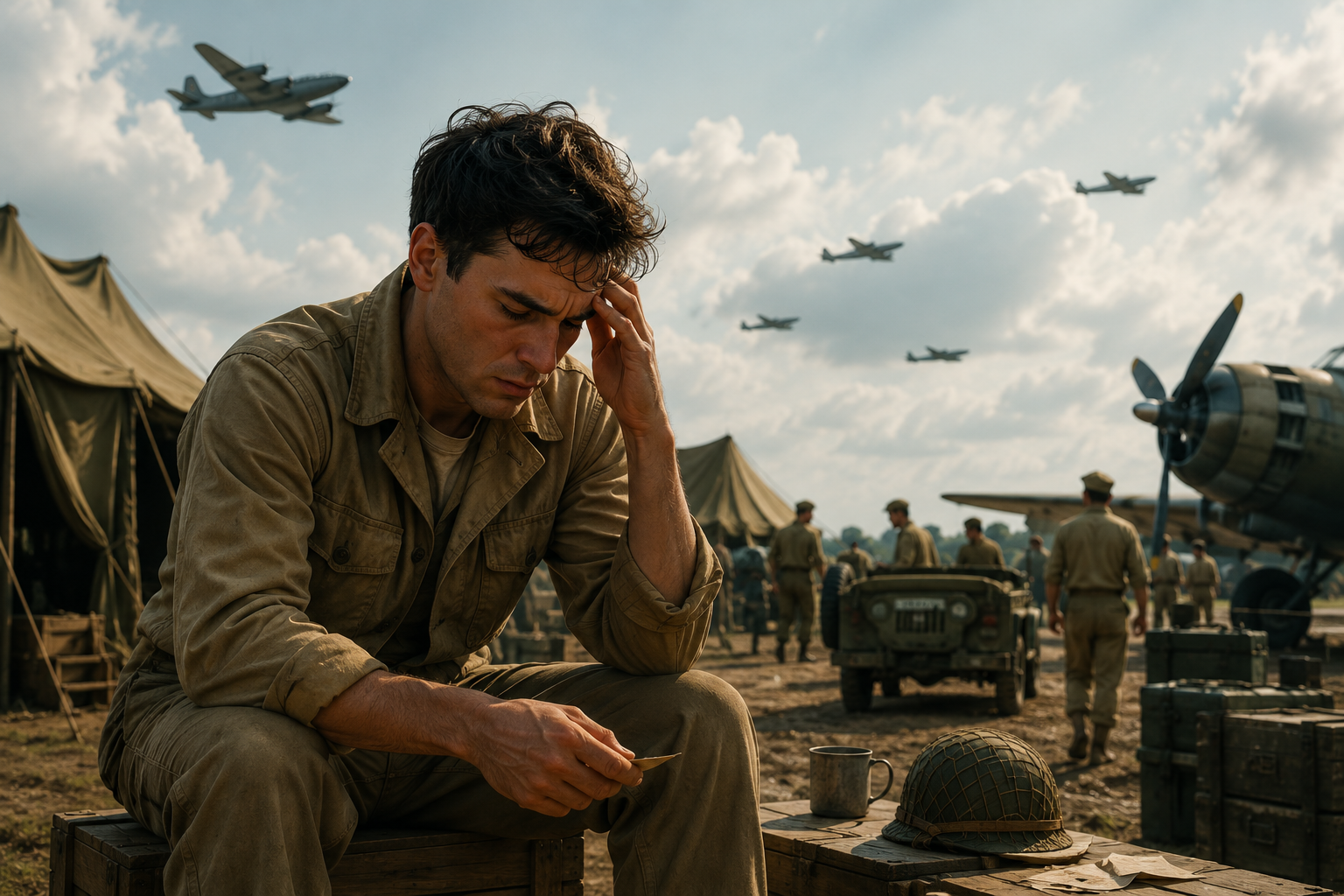
The themes in Catch-22 can feel funny at first, then darker as the novel moves on. Joseph Heller uses war, strange rules, and sharp satire to ask what happens when people get trapped inside systems that no longer care about human life.
In this Guide
Use these sections to track the novel’s biggest ideas as you read.
- War as absurd theater
- Bureaucracy and trap logic
- Fear and survival under pressure
- Symbolism in the novel
- Why the book still matters
- Books for more context
- FAQ
Themes in Catch-22: War as Absurd Theater
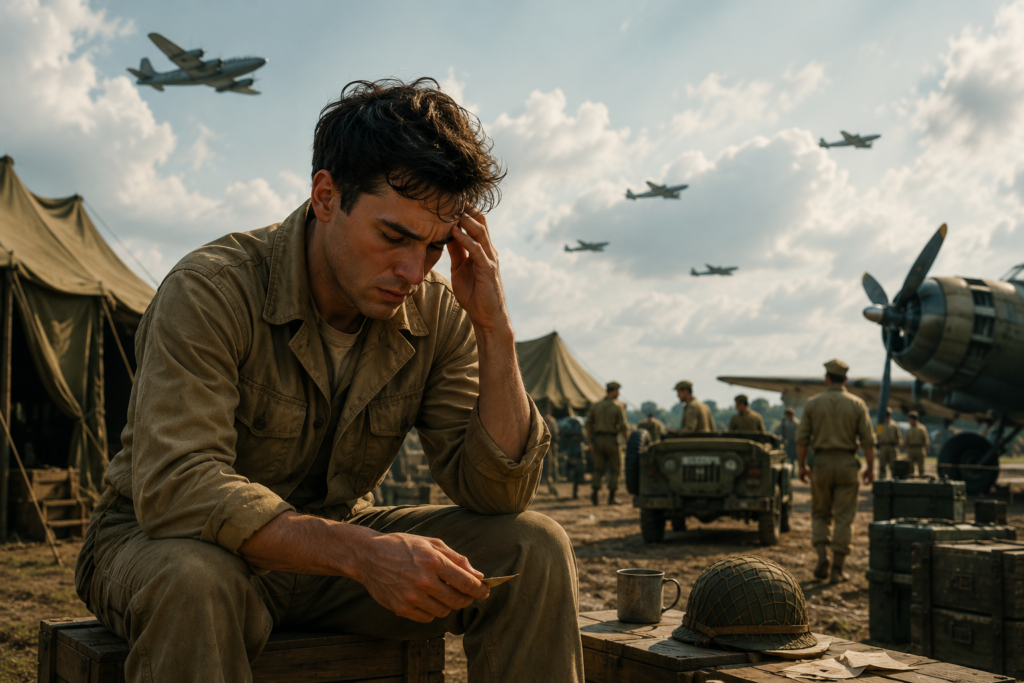
Heller presents war as confusing, cruel, and often ridiculous.
This is one of the sharpest themes in Catch-22 because the novel refuses to treat war as noble or neat. The men fly dangerous missions, but the leaders often care more about promotion than safety.
Yossarian wants to live. That simple wish puts him at odds with a military system that calls fear a weakness, even when fear makes sense.
The humor matters. Heller uses jokes to show how strange the world has become. A scene may seem silly, but the danger behind it is real.
Kurt Vonnegut does something similar in Slaughterhouse-Five. Both novels use absurd situations to show that war can break normal ideas of order and meaning.
Themes in Catch-22: Bureaucracy and Trap Logic
The famous catch is a rule that traps people by pretending to offer a choice.
Among the themes in Catch-22, bureaucracy may be the most famous. A soldier can be grounded if he is insane, but if he asks to be grounded, that request proves he is sane.
That logic makes escape impossible. The rule protects the system, not the person.
Heller shows how official language can hide cruelty. Orders sound proper, but they often erase basic moral sense.
This theme fits well beside Franz Kafka’s The Trial. In both works, people face systems that speak with authority but make little human sense.
Themes in Catch-22: Fear and Survival Under Pressure
Yossarian’s fear is not a flaw. It is part of his moral vision.
These themes in Catch-22 become personal through Yossarian’s fight to stay alive. He does not want medals or praise. He wants the right to stop risking his life for leaders who keep raising the number of missions.
The novel asks a hard question: is it cowardly to refuse death, or is it honest?
Yossarian’s fear also helps him see the truth. He understands that patriotic language can be used to pressure people into silence.
In Tim O’Brien’s The Things They Carried, fear also shapes how soldiers act and remember. Both books show that courage is more complex than brave talk.
Moral Responsibility in a Broken System
The novel asks whether a person can stay decent inside an indecent machine.
Catch-22 is full of people who follow rules without asking what those rules do. Some officers act as if paperwork matters more than pain.
Yossarian is not perfect, but he keeps asking moral questions. That matters because the system around him rewards people who stop asking.
Milo Minderbinder is one of the clearest examples. His business empire turns everything into profit, even when people suffer.
This is where the book’s satire cuts deep. Heller does not just mock foolish people. He shows how ambition can crush conscience.
How the Themes in Catch-22 Work Through Symbolism
Objects, repeated phrases, and strange scenes help the novel’s deeper ideas stand out.
The themes in Catch-22 often appear through symbols, not speeches. The rule of Catch-22 itself becomes a symbol of any system that traps people with circular logic.
The hospital can also be read as a symbol. It is a place where soldiers may escape combat for a short time, but even there, the war’s pressure remains close.
Yossarian’s missions are more than plot events. Each new mission count shows how a goal can become cruel when power has no limit.
If you want help with this skill, see our guide on how to find symbolism in a story. It can help you connect small details to larger themes.


















Why the Themes in Catch-22 Still Matter
The novel still speaks to students because its conflicts are not limited to World War II.
Many readers know what it feels like to face rules that make no sense. Heller turns that feeling into a full moral and comic world.
The book also warns us about language. When leaders use polished words to excuse harm, people must learn to listen closely.
For background on the novel and its place in American literature, read this Britannica overview of Catch-22. For wider World War II context, the National WWII Museum is also useful.
How to Write About This Novel in Class
A strong essay connects a theme to a pattern in the text.
Do not just say that the novel is about war or absurdity. Show how Heller builds that idea through scenes, dialogue, and repeated rules.
For example, you might trace how mission counts rise across the novel. That pattern proves that danger grows because leaders keep changing the terms.
You can also write about tone. The book’s comic style makes the horror feel even sharper because laughter and fear sit close together.
For extra support, pair this post with our student-friendly literature study resources.
Relevant Books to Search on Amazon or at Your Library
These books can help you build context for essays or class discussion.
- Catch-22 by Joseph Heller
- Slaughterhouse-Five by Kurt Vonnegut
FAQ
Here are quick answers to common student questions about the novel.
What is the main theme of Catch-22?
The main theme is the absurd cruelty of systems that protect themselves instead of people. The novel shows this through war, rules, and military power.
Why is the phrase Catch-22 important?
It names a trap where every option leads back to the same problem. In the novel, it shows how logic can be twisted to control people.
Is Catch-22 anti-war?
Yes, but it is also more than that. It attacks the mindset that treats human life as a tool for power or profit.
Why is the novel so funny if it is about serious topics?
Heller uses humor to reveal horror. The jokes make the madness easier to see, not less serious.
Key Takeaway
Catch-22 uses absurd humor to expose a serious truth: when systems value rules over people, survival itself can become an act of resistance.












