A brief writing invitation for remembering the last ordinary thing you shared with a parent before age changed the way you saw them.
Maybe you did not know it was the last time. You were carrying groceries together, walking through an airport, painting a fence, or sitting in the front seat while your parent drove too fast and knew every shortcut.
Then, later, something shifted. They stopped climbing ladders. They handed you the keys. They asked you to read the small print. This flash memoir prompt last time something parent before old age became visible asks you to return to that earlier scene, when your parent still seemed like the stronger one.

The Prompt
Write about the last time you did something with a parent before they became older.
This prompt can unlock a memory you may have passed over because it seemed normal at the time. The day itself may not have announced anything. There may have been no hospital room, no dramatic talk, no clear goodbye to who your parent had been.
That is what gives the memory power. Often, we notice change only after it has already happened. A flash memoir prompt about the last time you did something with a parent before age changed them can help you study the small evidence: a hand on a steering wheel, a laugh across a table, a parent carrying something you would later carry for them.
Why This Memory Matters
This kind of story often lives in the space between childhood and adulthood. Even if you were already grown, your parent may still have felt fixed in your mind. Capable. Busy. Hard to impress. Hard to imagine as fragile.
Then one memory, when viewed from years later, becomes a hinge. Maybe it was the last hike before their knees started to fail. Maybe it was the last road trip before night driving became too much. Maybe it was the last time they lifted a grandchild, danced at a wedding, or stood at the grill like the whole backyard depended on them.
The story is not only about age. It is about what you did not know you were losing. It is about the moment before the roles began to tilt.
When you write this memory, try not to turn your parent into a symbol too quickly. Let them be a person first. If they complained, include that. If they were stubborn, proud, silly, or distracted, let that stay in the scene. A real parent on the page will feel more honest than a perfect one.
If you want a helpful way to think about your parent as a person in the story, you might borrow tools from literature. This guide on how to analyze characters in literature can help you notice habits, contradictions, and choices without flattening someone into one simple role.
How to Approach This Prompt
Begin with one physical detail. Do not start by explaining your whole relationship. Start with your father’s work boots by the back door. Start with your mother’s sunglasses on the dashboard. Start with the paper cup of gas station coffee your parent balanced between their knees.
Then narrow the memory to one scene. A scene gives the reader a place to stand. Instead of covering a decade of decline, choose the afternoon at the lake, the grocery run after church, or the last time your parent helped you move a couch.
Write what you noticed before you explain what it meant. At the time, maybe you noticed your parent’s quick walk, their joke, their impatience, or the way they waved away help. Years later, you may see that memory differently. Let both versions exist.
You can use this simple starting line if you need one: “The last time I remember my parent seeming young was when…” Then move right into action.
Keep the first draft small. You do not have to tell the whole story of illness, aging, family duty, or grief. This flash memoir prompt last time something parent before age changed the family works best when you stay close to one moment and let the meaning rise from the details.
If marking up memories helps you think, you may enjoy using the same habits readers use with books. This guide on how to annotate literature can also work for memoir drafts. Circle the strongest image. Underline the sentence that feels most true. Ask what the scene is really about.
A Quick Example
The last time my mother seemed young to me was at the garden center in April. She lifted two bags of potting soil into the cart before I could stop her. “Don’t fuss,” she said, wiping her hands on her jeans. She had dirt under one thumbnail and a blue sweatshirt tied around her waist. I was thirty-two, with my own mortgage and my own gray hairs starting, but beside her I still felt like a child sent to fetch the marigolds. We argued over tomato plants. She wanted the tall ones. I wanted the cheap ones. She won, of course. Three summers later, I would kneel in her yard and plant everything myself while she watched from a folding chair. But that day she pushed the cart, fast and crooked, like she had somewhere important to be.
Try It Yourself
Set a timer for ten minutes and write the scene as plainly as you can. Choose one shared action: driving, cooking, shopping, fixing, walking, waiting. Let the memory stay ordinary.
If emotion arrives, let it in, but do not force a big ending. You might close on an object, a gesture, or a line of dialogue. The quietest ending may be the one that stays with the reader.
This flash memoir prompt last time something parent before they became old may bring up tenderness, regret, gratitude, or surprise. You do not need to solve those feelings today. Just put one true moment on the page.
Want More Flash Memoir Prompts?
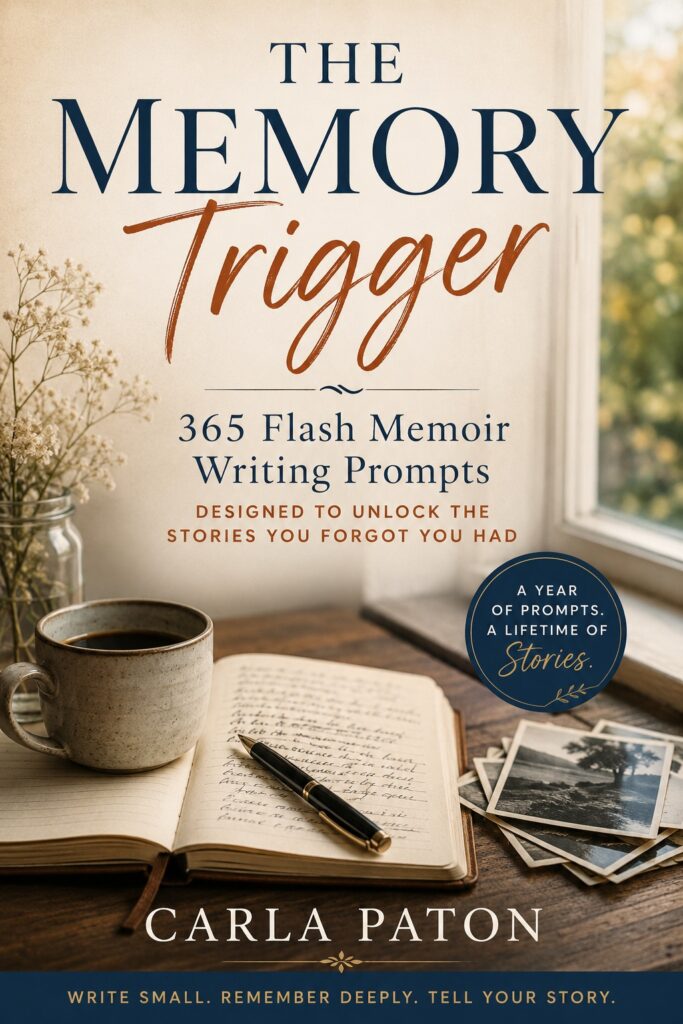
If this prompt helped you remember one clear scene, keep going. Short prompts can open doors you did not know were still there. Explore all 365 prompts in The Memory Trigger: 365 Flash Memoir Writing Prompts.