


Flash Memoir Prompt: Piece of Clothing from Your Childhood that You Remember with Unusual Clarity

flash memoir prompt childhood

You can forget whole vacations and still remember the scratchy collar of one childhood shirt, the one you hated, loved, or wore until someone quietly took it away. This flash memoir prompt about a piece of clothing from childhood you remember with unusual clarity invites you to begin with fabric, fit, color, and the small emotional truth stitched into one memory.

flash memoir prompt childhood

The Prompt

Write about a piece of clothing from your childhood that you remember with unusual clarity.

It might be a winter coat, a school uniform, a pair of shoes, a hand-me-down dress, a sports jersey, or pajamas with faded cartoon characters. The item does not need to be dramatic. In fact, the most ordinary clothes often hold the strongest memories.

This kind of prompt works because clothing sits close to the body. You may remember how it felt before you remember why it mattered. Tight sleeves, missing buttons, stiff denim, or the smell of laundry soap can bring back a whole scene.

Why This Memory Matters

A flash memoir prompt about a piece of clothing from childhood you remember with unusual clarity can uncover more than a description of an outfit. It may reveal how you wanted to be seen, how money felt in your family, what made you feel proud, or what made you feel different from other kids.

Clothing can carry a surprising amount of meaning. A shirt might remind you of the first day you felt brave. A coat might bring back embarrassment because it was too small, too bright, or passed down from someone else. A pair of shoes might hold the memory of running away from a bully or walking into a new school.

Try not to rush toward the “lesson” of the memory. Let the clothing do some of the work. If you are interested in how objects carry deeper meaning, you might enjoy this guide on how to find symbolism in a story. The same idea can help in memoir. A real object can become a symbol without you forcing it.

The piece of clothing may also show a younger version of you at a very exact moment. Maybe you were trying to look grown up. Maybe you wanted to disappear. Maybe you felt beautiful for five minutes before someone made a comment.

That is where the memoir begins.

How to Approach This Prompt

Start with one physical detail. Do not begin with your whole childhood or a long explanation of your family. Begin with the hem, the zipper, the knees worn thin, or the tag that scratched your neck.

Then narrow the memory to one scene. Where are you wearing it? Who is there? What is happening in the room, hallway, playground, church, kitchen, or car?

You might write one sentence like this: “The red sweater had three white buttons, and I kept rubbing the middle one with my thumb while I waited for my name to be called.” That sentence gives you a place to stand. From there, you can notice more.

Write what you saw and felt before you explain what it meant. Memoir often gets stronger when the reader can enter the moment with you. If you want a practical way to slow down and notice details, the same habits used to annotate literature can help you study your own memory. Circle the object. Ask what repeats. Notice what feels charged.

You do not need to tell the whole story of your parents, your school years, or your sense of style. Give yourself permission to stay with one piece of clothing and one clear moment. The smaller the frame, the more room there is for feeling.

If the memory feels silly at first, keep going. A sparkly belt, a superhero cape, or a pair of jelly sandals may lead to something tender. Childhood clothing often holds the gap between who we were and who we hoped others would think we were.

The Flash Memoirist
previous arrow
next arrow

A Quick Example

The yellow raincoat was too shiny. I remember that most. It made a squeaking sound when I walked, like I was announcing myself to the whole second-grade hallway. My mother loved it because it had a hood and big silver snaps. I hated it because Melissa Crane said I looked like a crossing guard. That afternoon, it rained hard enough to flood the curb. Everyone else stood under the awning, waiting for rides. I walked straight into the rain and snapped every snap shut. For once, I liked how loud the coat was. Water slid off my sleeves in perfect beads. My socks were soaked, but the rest of me stayed dry. I did not tell my mother she had been right.

Try It Yourself

Set a timer for ten minutes and write about one piece of clothing from childhood that still feels clear in your mind. Describe it first as an object. Then place yourself inside one scene where you wore it.

If you get stuck, ask simple questions. Who gave it to you? Did you choose it or was it chosen for you? Did you feel proud, awkward, protected, or exposed? What did someone say about it?

Let the memory stay small. You are not writing a full autobiography. You are catching one bright scrap of the past and holding it long enough to see what it still carries.

This flash memoir prompt piece clothing childhood remember unusual search may have brought you here for a quick writing exercise, but it can become a surprisingly rich page. Follow the fabric. Trust the detail.

Want More Flash Memoir Prompts?

If this prompt helped you remember one clear object from childhood, keep going. Small memories often open larger doors when you give them quiet attention. Explore all 365 prompts in The Memory Trigger: 365 Flash Memoir Writing Prompts.
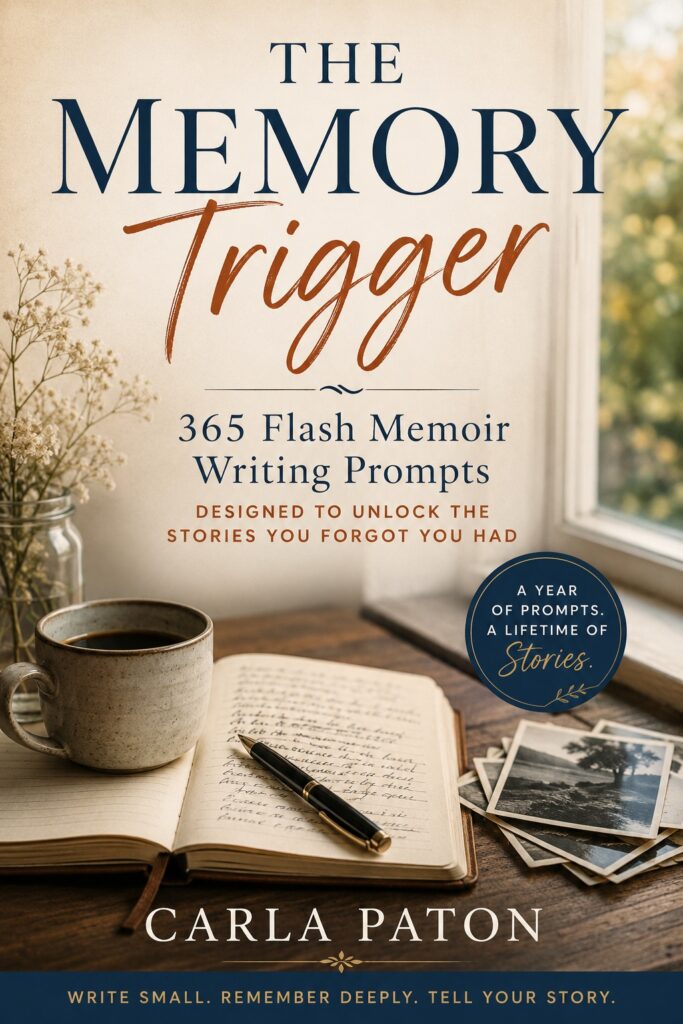

The Memory Trigger

Flash Memoir Prompt: Last Time You Felt Like a Child

Rapid Reads Press

A brief, tender writing invitation about the last time you felt small, safe, silly, scared, or suddenly young again.

Maybe it happened in a grocery store when you reached for the cereal you loved as a kid. Maybe it came over you during a storm, when thunder made you want to call someone older and wiser. Or maybe you felt it while laughing too hard over something completely ridiculous, the kind of laugh that makes you forget your age for a minute.

This flash memoir prompt last time felt like child asks you to notice one of those moments when adulthood loosened its grip. It does not have to be dramatic. In fact, the smaller the scene, the more honest it may become.

childhood prompt

The Prompt

Write about the last time you felt like a child.

This prompt can open a memory because feeling like a child is rarely about age alone. It may be about needing comfort. It may be about wonder. It may be about shame, joy, fear, play, or wanting someone else to take charge for a little while.

When you write from this prompt, try not to rush toward the meaning. Stay with the moment first. What room were you in? What did your hands do? What sound made you feel younger than you are?

Why This Memory Matters

Childhood does not fully disappear. It follows us in habits, cravings, jokes, fears, and soft spots we may not understand until they rise up again.

The last time you felt like a child might reveal a need you rarely admit. Maybe you wanted your mother’s soup when you were sick. Maybe you felt helpless while filling out a confusing form. Maybe you stood in front of a teacher, boss, doctor, or parent and felt your voice shrink.

It could also be a happy memory. You might have felt childlike while sledding, dancing in the kitchen, opening a gift, or walking into a library and smelling old paper. If you want to sharpen the way you notice small details, you might enjoy this guide on how to annotate literature, since close reading can also train you to read your own memories with care.

This kind of memory matters because it shows the meeting point between who you were and who you are now. A flash memoir prompt last time felt like child can help you write about that meeting point without turning it into a long life story.

How to Approach This Prompt

Begin with one physical detail. Choose something your body remembers before your mind explains it.

Maybe your knees were tucked under your chin. Maybe your face burned. Maybe you held a mug with both hands. Maybe you wanted to hide behind someone taller.

Once you find that detail, narrow the memory to one scene. Do not try to cover your whole childhood or explain your entire family history. Stay inside ten minutes, or even two.

Write what you noticed before you write what it meant. For example, instead of starting with “I felt vulnerable,” begin with the coat sleeve you pulled over your hand. Instead of “I was happy,” begin with the way you ran across wet grass in your socks.

You can also pay attention to tone. A memory like this might feel funny on the surface but sad underneath, or tender at first and then sharp. If you want help naming that difference, this simple explanation of tone vs. mood in literature may help you think about the feeling your scene creates.

One clear way to begin is with this sentence: “The last time I felt like a child, I was…” Then name the place. Keep going from there.

A Quick Example

The last time I felt like a child, I was sitting on the paper-covered table at urgent care with my shoes dangling above the floor. I am forty-one, but the crinkle of that paper made me feel eight. The nurse asked when the pain started, and I looked at my husband before I answered, as if he might know better than I did. My throat hurt more from trying not to cry than from being sick. When the doctor said it was only an infection, I nodded like a good student. In the car, I asked if we could stop for a milkshake. I meant it as a joke, but when he said yes, I felt such relief that I turned my face toward the window.

Try It Yourself

Set a timer for ten minutes and write from the prompt without planning the ending. Focus on the moment when you first noticed the feeling. Did it arrive as comfort, panic, delight, or embarrassment?

If the memory feels too big, choose one object from the scene. Write about the blanket, the cereal box, the hospital bracelet, the sidewalk chalk, or the phone in your hand. Let that object carry you into the truth of the moment.

You do not need to explain everything. A strong flash memoir often leaves a little space around the memory. Trust the scene. Trust the detail. Let the childlike feeling show itself through what you saw, said, wanted, or could not say.

This flash memoir prompt last time felt like child works best when you are honest about the exact kind of smallness you felt. Small can mean safe. Small can mean powerless. Small can mean full of wonder. Let your memory decide.

Want More Flash Memoir Prompts?

If this prompt helped you find a scene worth saving, keep going with short, focused memories. Explore all 365 prompts in The Memory Trigger: 365 Flash Memoir Writing Prompts.

The Memory Trigger
error

Enjoy this article? Please spread the word :)

Follow by Email
BLUESKY
fb-share-icon
Reddit
LinkedIn
Share
RSS







