Ethan Frome literary analysis essay: Step-by-Step Guide

Ethan Frome essay

An Ethan Frome literary analysis essay asks you to look past the sad plot and study how Edith Wharton builds meaning. This guide will help you shape a clear claim and support it with strong evidence.

In this Guide

Use these sections to move from a blank page to a focused draft.

  • What your essay should do
  • How to choose an angle
  • Topic ideas that work well
  • Thesis statement examples
  • Evidence worth using
  • Essay structure tips
  • Common mistakes to avoid
  • Helpful books and FAQ
Ethan Frome essay

What an Ethan Frome literary analysis essay should do

A literary analysis explains how a text works, not just what happens.

Your Ethan Frome literary analysis essay should make an argument about Wharton’s choices. You might study setting, symbolism, irony, narration, or character conflict.

A plot summary says Ethan lives in Starkfield and feels trapped. Analysis asks how the frozen setting helps readers feel that trap.

If you need a bigger refresher on essay structure, start with this guide to writing a literary analysis essay.

Choosing a strong angle for your Ethan Frome literary analysis essay

Your angle is the main lens for the whole paper.

For an Ethan Frome literary analysis essay, avoid a thesis like Ethan is sad. That is true, but it does not give you much to prove.

Try a sharper angle: Wharton uses winter imagery to show that social pressure can become a kind of prison.

This is like how the green light in The Great Gatsby points to desire and distance. A symbol becomes useful when it carries a deeper idea.

Topic Ideas That Lead to Better Analysis

The best topics are narrow enough to prove in a few pages.

  • Setting as conflict: Study Starkfield as more than a background. Ask how the cold shapes Ethan’s choices.
  • The pickle dish: Explore how one broken object reveals tension between marriage, desire, and duty.
  • Silence and repression: Show how characters fail to say what they feel.
  • The frame narrator: Analyze why Wharton lets an outsider tell Ethan’s story.
  • The sled ride: Explain how the final ride twists romance into horror.

Pick a topic that lets you talk about Wharton’s craft. A paper about craft will feel more like analysis and less like summary.

Thesis Examples for an Ethan Frome literary analysis essay

A good thesis should state a claim that someone could debate.

Use these examples as starting points, then adjust them to fit your class prompt.

  • Setting thesis: In Ethan Frome, Wharton uses Starkfield’s harsh winter landscape to show how emotional isolation can harden into fate.
  • Symbolism thesis: The broken pickle dish reveals the fragile nature of Ethan’s home life and exposes the damage caused by hidden desire.
  • Character thesis: Ethan’s tragedy comes less from one bad choice than from his habit of letting fear speak for him.
  • Narration thesis: Wharton’s frame narrator turns Ethan into a local mystery, which makes the novel feel like both a confession and a warning.

Notice that each thesis links a literary choice to a larger meaning. That is the heart of strong analysis.

Evidence to Use in Your Ethan Frome literary analysis essay

Evidence should come from moments where Wharton’s craft is easy to see.

A strong Ethan Frome literary analysis essay uses short quotations and explains how each phrase supports the thesis.

  • Winter imagery: Look for descriptions of snow, cold, darkness, and silence.
  • The Frome farmhouse: Study how the house reflects Ethan’s emotional life.
  • Mattie’s red scarf: Note how color stands out in a bleak setting.
  • Zeena’s presence: Track how illness, control, and fear shape the home.
  • The ending: Study the bitter irony of Ethan and Mattie’s survival.

You can read a short author overview at Britannica’s Edith Wharton page. For public domain access to the novel, see Project Gutenberg’s edition of Ethan Frome.

How to Organize Your Ethan Frome literary analysis essay

Structure helps your reader follow your claim from start to finish.

If your Ethan Frome literary analysis essay feels messy, plan each body paragraph before you draft.

  1. Introduction: Name the author, title, and main issue. End with your thesis.
  2. Body paragraph 1: Start with a topic sentence that supports the thesis.
  3. Text evidence: Use a short quote or clear scene reference.
  4. Analysis: Explain how Wharton’s words create meaning.
  5. Conclusion: Return to the thesis and show why it matters.

For a full planning model, revisit our literary analysis essay walkthrough.

How to Explain Evidence Without Summarizing

Good analysis slows down and studies the author’s choices.

Do not drop a quote and move on. After each quote, ask what a word, image, contrast, or symbol reveals.

For example, if you write about Starkfield’s cold, do not stop at the town is harsh. Explain how the cold mirrors Ethan’s emotional paralysis.

This method also works in other novels. In Lord of the Flies, the conch is not just an object. It shows the rise and fall of order.

Common Mistakes to Avoid

Most weak essays have the same problem: they retell the story instead of studying it.

  • Too much plot: Only include plot details that serve your claim.
  • Vague thesis: Avoid broad claims about sadness, love, or fate.
  • Long quotes: Use short pieces of evidence and explain them well.
  • No craft words: Mention setting, imagery, irony, tone, and symbolism when they fit.
  • Weak conclusion: Do more than repeat the thesis. Show the final insight.

A precise essay does not need to cover the whole novel. It needs to prove one smart idea well.

Use a Toolkit to Build Your Essay Faster

The right template can save time and lower stress.

If you want guided planning pages, thesis frames, paragraph builders, and revision checklists, the Literary Analysis Essay Toolkit was made for this exact task.

It can help you move from a rough idea to a clear outline before you write the full draft.

Helpful Books to Search For

These books can help you understand Wharton and improve your analysis skills.

  • Ethan Frome by Edith Wharton
  • The Cambridge Introduction to Edith Wharton by Pamela Knights

You can search for these titles on Amazon, at your school library, or through a public library catalog.

FAQ: Ethan Frome literary analysis essay

These quick answers can help if you still feel stuck.

What is the best topic for an Ethan Frome literary analysis essay?

Setting is often a strong choice because Starkfield shapes the mood, conflict, and theme of the novel.

Can I write about symbolism in Ethan Frome?

Yes. The pickle dish, the color red, winter imagery, and the sled ride all work well for symbolism analysis.

How long should the thesis be?

One clear sentence is usually enough. It should name the literary choice and explain its deeper meaning.

Should I include plot summary?

Use only brief summary when your reader needs context. Spend most of the essay on analysis.

Key Takeaway

A strong essay on Ethan Frome does not try to cover everything. It makes one clear claim about Wharton’s craft and proves it with careful evidence.


Symbols in The Red Badge of Courage: What They Mean and Why They Matter

red badge of courage themes

A simple explanation of the most important symbols and images in the text.

The symbols in The Red Badge of Courage help readers see Henry Fleming’s fear, pride, and changing idea of bravery. Stephen Crane uses simple images, like wounds, colors, nature, and battle noise, to show what Henry cannot always say out loud.

In this Guide

red badge of courage themes

Why symbols in The Red Badge of Courage matter

Crane uses symbols to make war feel personal, not just historical.

Henry does not fully understand himself at the start of the novel. He wants to be brave, but he also fears pain, shame, and death.

The symbols in The Red Badge of Courage let us track his growth. A wound can mean honor, but it can also reveal Henry’s need for approval.

This is why the novel works well for AP Literature and college essays. Its symbols often point to larger themes like courage, self-deception, and the gap between fantasy and real life.

If you need help with the basic method, start with this guide on how to find symbolism in a story.

Main symbols in The Red Badge of Courage

The most important symbols show Henry’s confused view of courage.

The red badge

The main symbols in The Red Badge of Courage begin with the title image. A “red badge” means a wound from battle.

To Henry, a wound first feels like proof. He thinks an injury would show that he has faced danger and earned respect.

The problem is that Henry wants the sign of courage before he has truly earned courage. He wants the look of heroism, not the pain or duty behind it.

This makes the red badge a symbol of **honor and insecurity**. Henry wants others to see him as brave because he does not yet feel brave inside.

Henry’s head wound

Henry later gets hurt, but not in a noble charge. A panicked soldier hits him in the head.

This wound looks like a battle mark, but its real meaning is more complex. It hides Henry’s shame from others, yet it also reminds readers that appearance can be false.

Crane uses this moment to ask a sharp question: Is courage about what others see, or what a person knows about himself?

The tattered soldier

The tattered soldier is weak, hurt, and honest. He has suffered in battle, and his body shows it.

To Henry, the tattered soldier becomes a painful mirror. Henry has run from battle, while this man has truly faced it.

His suffering makes Henry feel guilt. The soldier symbolizes **real sacrifice**, not the heroic image Henry wants.

Jim Conklin’s death

Jim’s death is one of the most serious scenes in the novel. It strips away Henry’s romantic ideas about war.

Jim does not die like a perfect storybook hero. His death is painful, strange, and lonely.

For Henry, Jim becomes a symbol of the real cost of war. Courage is no longer just a dream about glory. It is tied to fear, loss, and loyalty.

Nature and color symbols in The Red Badge of Courage

Nature often feels calm while humans destroy each other.

Crane often shows nature as distant from human suffering. The sun rises, the trees stand, and the world moves on while soldiers panic and die.

These symbols in The Red Badge of Courage make war seem small against the larger world. That can feel cold, but it also fits Crane’s style.

Crane is often linked to literary naturalism. In naturalist writing, people face forces they cannot fully control. You can read more about Crane’s life and work at Britannica.

The forest

The forest gives Henry a place to escape after he runs. At first, it seems peaceful.

Yet the forest does not solve his fear. It only gives him space to think, panic, and create excuses.

The forest can symbolize **escape**, but it also shows Henry’s isolation. He is away from battle, but not free from shame.

The corpse in the chapel-like place

Henry finds a dead soldier in a quiet, shaded area. The scene feels almost holy, but the corpse makes it disturbing.

This image breaks Henry’s false peace. Nature may look calm, but death is still present.

The corpse shows that Henry cannot hide from war’s truth. Even the quiet places carry fear.

Red

Red appears through wounds, battle, and the title itself. It stands for blood, pain, and the public mark of combat.

Red can also suggest Henry’s desire for honor. He wants a red badge because he thinks it will give him a new identity.

That double meaning is important. Red means both glory and suffering.

Smoke and fog

Battle scenes often feel unclear. Smoke, noise, and confusion block Henry’s view.

This matters because Henry’s mind is unclear too. He cannot always tell if he is brave, cowardly, selfish, or loyal.

Smoke becomes a symbol of **confusion in war**. It also reflects Henry’s moral uncertainty.

From Idea to Novel Blueprint

How symbols in The Red Badge of Courage build theme

The symbols matter because they connect Henry’s private fear to the novel’s big ideas.

One major theme is that courage is not simple. At first, Henry treats courage like a prize he can wear.

By the end, he learns that courage comes from action, not image. He cannot just look brave. He must face fear and keep his place with the group.

The red badge, the tattered soldier, and the battle smoke all support this idea. They show how hard it is to know what true bravery looks like.

Another key theme is self-deception. Henry often tells himself stories to feel better. He tries to turn fear into wisdom and retreat into strategy.

Crane’s symbols expose those lies. Like the green light in The Great Gatsby, the red badge carries both hope and illusion. Like the scarlet letter in Hawthorne’s novel, it is a public sign that holds private pain.

You can read the public domain text of The Red Badge of Courage at Project Gutenberg if you want to check scenes closely.

How to Study symbols in The Red Badge of Courage

Good symbolism notes connect an image to a theme, not just a definition.

Do not write only that red means blood. Ask what blood means to Henry in that scene.

At one moment, it may mean honor. At another, it may mean fear or shame.

Use this simple pattern for a strong paragraph:

  • Name the symbol.
  • Explain where it appears.
  • Connect it to a theme.
  • Show how Henry reacts to it.

For example, Henry’s head wound looks like proof of bravery, but readers know it came from confusion. That gap supports the theme of appearance versus truth.

For more practice, try our symbolism reading strategy before you write your next essay.

For a quick classroom or study tool, you can also use our symbolism study resource to track images, meanings, and themes as you read.

Relevant Books to Search on Amazon or at Your Library

These books can help you study Crane and the novel with more context.

  • The Red Badge of Courage by Stephen Crane
  • Stephen Crane: A Life of Fire by Paul Sorrentino

FAQ: symbols in The Red Badge of Courage

What are the most important symbols in The Red Badge of Courage?

The strongest symbols in The Red Badge of Courage include the red badge, Henry’s head wound, the tattered soldier, Jim’s death, nature, red color imagery, and battle smoke.

What does the red badge symbolize?

It symbolizes a battle wound, but it also shows Henry’s desire for honor. He wants proof that he is brave before he fully understands bravery.

Why is nature important in the novel?

Nature often stays calm while soldiers suffer. This shows how small human fear can seem in a large, indifferent world.

How does symbolism show Henry’s growth?

Henry begins by caring about how courage looks. By the end, he has a deeper sense of duty and action.

Key Takeaway

The best symbols in The Red Badge of Courage show that courage is not a costume or a wound. True bravery grows when Henry faces fear, sees war clearly, and stops chasing a perfect heroic image.

Themes in A Separate Peace: A Student-Friendly Guide

A Separate Peace themes

The themes in A Separate Peace help students see why John Knowles’s novel still feels intense and personal. The book may seem quiet at first, but its ideas about envy, guilt, war, and growing up give it real emotional power.

This guide breaks those ideas into clear parts so you can discuss the novel with more confidence in class or in an essay.

In this Guide

  • Why the novel’s themes matter
  • Friendship and rivalry
  • Guilt and responsibility
  • War and peace
  • Loss of innocence
  • Identity and self-deception
  • Essay tips, book suggestions, and FAQ
A Separate Peace themes

Why the themes in A Separate Peace matter

Knowles uses a boarding school story to explore deep emotional conflict.

A Separate Peace takes place at Devon School during World War II. Yet much of the real battle happens inside Gene Forrester.

That is why the themes in A Separate Peace are so useful for literary analysis. The novel connects private feelings with larger historical fear.

Students should notice how Gene’s memory shapes the story. He does not just tell us what happened. He tries to understand what it meant.

For background on the author, you can read this short overview from Britannica’s John Knowles biography.

Themes in A Separate Peace: friendship and rivalry

The friendship between Gene and Finny is warm, painful, and unstable.

At first, Gene admires Finny. Finny is athletic, bold, and charming. He seems free in a way Gene is not.

But admiration starts to mix with envy. Gene begins to believe Finny wants to compete with him, even when Finny may not think that way at all.

This theme matters because the novel shows how friendship can turn dark when one person feels insecure. Gene’s jealousy says more about Gene than about Finny.

The tree scene shows this conflict most clearly. Gene’s action causes Finny’s fall, but the deeper cause is Gene’s confused fear of being less special.

Students often compare this to other stories about close friendship and rivalry, such as Shakespeare’s Othello, where envy twists how one character sees another. In both works, false ideas become dangerous.

Guilt and responsibility

Gene’s guilt drives much of the novel’s emotional force.

After Finny falls, Gene keeps trying to decide what kind of person he is. Did he mean to hurt Finny? Was it an accident? Can he ever tell the whole truth?

The novel does not give easy answers. That is one reason the themes in A Separate Peace work well for essays. Knowles leaves room for debate.

Gene’s guilt does not appear only in words. It appears in silence, avoidance, and fear. He wants forgiveness, but he also wants to protect himself.

This theme connects to a larger question: Can a person be responsible for harm even when the truth feels unclear? The novel pushes readers to sit with that question.

If you plan to write about guilt in the novel, this guide on how to write a literary analysis essay can help you turn ideas into a strong thesis.

Themes in A Separate Peace: war and inner conflict

World War II shapes the setting, but Gene’s inner war shapes the plot.

The boys at Devon live in the shadow of a global conflict. They know enlistment, danger, and adulthood wait for them.

Finny tries to create a private peace away from that fear. His games, jokes, and made-up rules help the boys escape the outside world for a while.

Yet the novel suggests that war is not only a public event. Gene carries conflict inside himself. His jealousy and fear become a private battlefield.

This is one of the central themes in A Separate Peace: the real enemy may come from within. Gene later says that wars can grow from something rooted in the human heart.

That idea makes the title more meaningful. A “separate peace” is not just a break from World War II. It is the peace Gene searches for within himself.

Loss of innocence

The novel shows how young people lose simple beliefs about themselves and others.

Before Finny’s fall, Devon can seem like a protected place. The summer session feels bright and almost dreamlike.

After the accident, that feeling changes. Gene can no longer pretend that life is simple or safe.

Finny also loses innocence. He must face pain, limits, and betrayal. His belief in friendship is shaken by what happened at the tree.

Loss of innocence is common in coming-of-age novels. In To Kill a Mockingbird, Scout learns that society can be cruel and unfair. In A Separate Peace, Gene learns that cruelty can also come from inside the self.

This makes the themes in A Separate Peace feel personal. The novel is not only about history. It is about the hard moment when a young person sees the truth more clearly.

From Idea to Novel Blueprint

Identity and self-deception

Gene struggles to know who he is because he lies to himself.

Gene wants to see himself as decent and loyal. Yet his actions make that image hard to keep.

Instead of facing his feelings, he often creates stories in his mind. He tells himself Finny is his rival. He tells himself certain truths are impossible to say.

Self-deception is one of the most important themes in A Separate Peace because it affects the whole narration. Gene tells the story years later, but he is still sorting through old pain.

Finny also has a form of self-deception. He refuses to accept the war at first. This denial may seem childish, but it also shows how badly he needs safety and trust.

Both boys protect themselves with false beliefs. The tragedy comes when those beliefs break.

Nature, setting, and symbols

Devon School becomes a symbol of memory, youth, and hidden danger.

The tree is the most famous symbol in the novel. It represents fear, testing, friendship, and the turning point in Gene’s life.

The rivers also matter. The Devon River feels calm and familiar, while the Naguamsett River feels muddy and unsettling. These settings reflect Gene’s movement from innocence toward moral confusion.

Knowles uses these places to support the themes in A Separate Peace without over-explaining them. The setting helps us feel what Gene cannot always say.

When you write about symbols, connect them to a bigger idea. Do not stop at “the tree is important.” Ask what the tree reveals about guilt, fear, or lost innocence.

How to write about themes in A Separate Peace

A strong theme essay should make an arguable claim, not just name a topic.

For example, “guilt is a theme” is too broad. A stronger claim might say, “Knowles presents guilt as a force that changes how Gene remembers friendship, even years later.”

Use short quotes and explain them closely. Focus on how Gene thinks, what he avoids, and how his view of Finny changes.

You can also compare a theme across the novel. Track Gene before the fall, after the fall, and years later as an adult narrator.

For more help with thesis statements and evidence, visit this step-by-step guide to writing a literary analysis essay.

If you want a ready study tool, you can also check out our student literature guide resources for extra support.

If you want more novels with similar ideas, these books pair well with A Separate Peace:

  • Lord of the Flies by William Golding
  • The Catcher in the Rye by J. D. Salinger
  • All Quiet on the Western Front by Erich Maria Remarque

For a wider look at World War II literature, the Poetry Foundation’s World War II poets collection offers helpful context.

FAQ about themes in A Separate Peace

What is the main theme of A Separate Peace?

The main theme is the struggle to find peace within the self. Gene’s greatest conflict comes from envy, guilt, and fear.

How does friendship work as a theme?

Friendship in the novel is both loving and painful. Gene cares for Finny, but his insecurity damages their bond.

Why is war important if most of the story happens at school?

World War II creates pressure outside Devon. It also mirrors Gene’s private conflict with himself.

What does Finny represent?

Finny often represents innocence, freedom, and trust. His fall marks a loss of those qualities for both boys.

What is a good essay topic for this novel?

You could argue that Gene’s memory reveals how guilt shapes identity long after the event itself has passed.

Key takeaway

The themes in A Separate Peace show that growing up often means facing uncomfortable truths. Gene’s story reminds us that peace is not just found in the world around us. It must also be won inside the self.

Jane Eyre Summary and Analysis for Students

Jane Eyre Summary

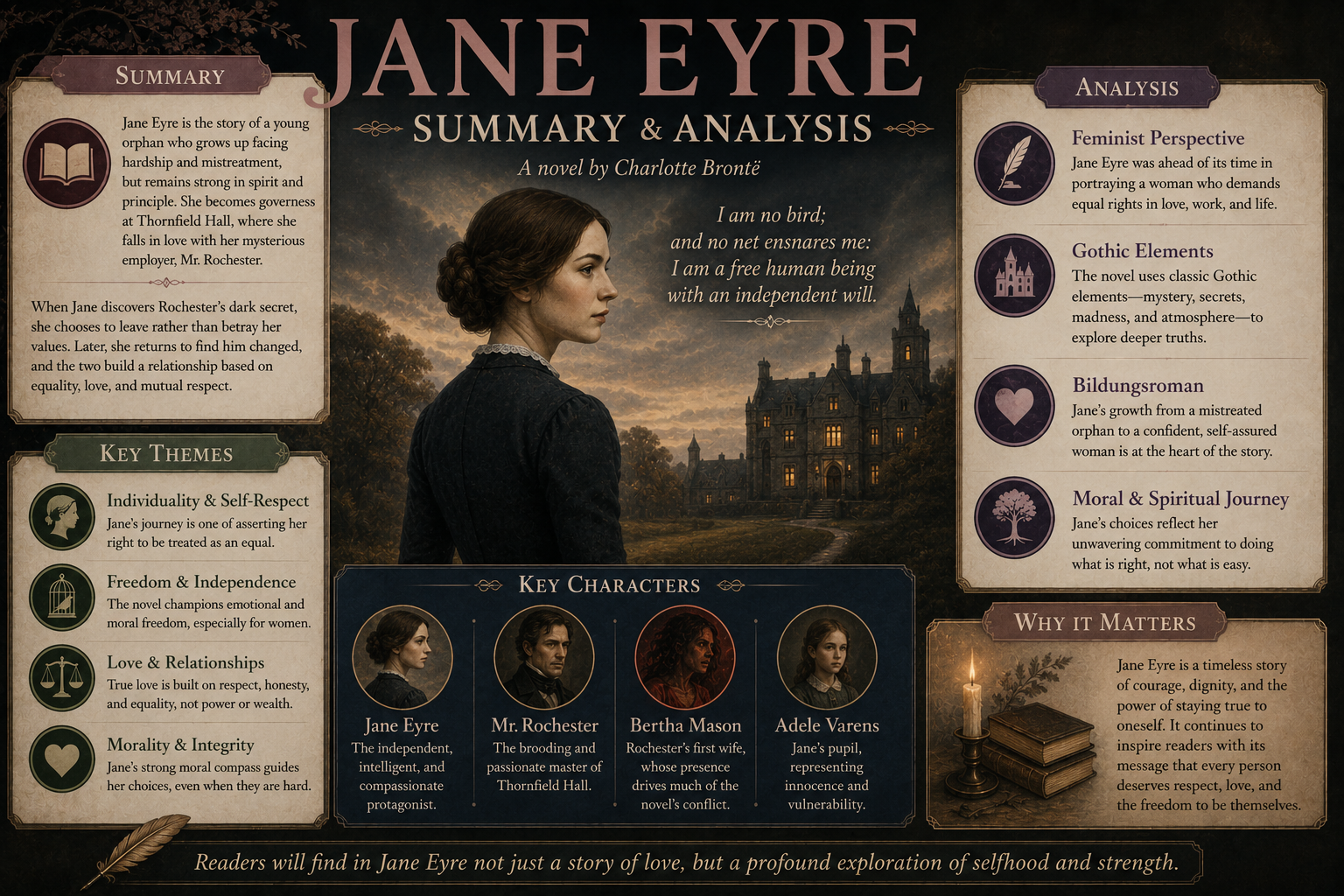
Jane Eyre is one of the most important novels of the Victorian age. This Jane Eyre summary and analysis gives students a clear path through the plot, structure, conflicts, and deeper meaning.

Charlotte Brontë tells a story about a young woman who wants love, faith, and freedom without losing herself.

In this Guide

Use this guide as a map before class, essays, or exams.

  • Quick overview
  • Plot summary by major stage
  • Structure and point of view
  • Main conflicts
  • Themes, symbols, and meaning
  • Helpful books and FAQ
Jane Eyre Summary

Jane Eyre summary and analysis: quick overview

The novel follows Jane from a harsh childhood to a hard-won adult life.

Jane is an orphan raised by cruel relatives at Gateshead. She later goes to Lowood School, becomes a governess at Thornfield Hall, and falls in love with Mr. Rochester.

This Jane Eyre summary and analysis matters because the novel is not just a romance. It is also a story about self-respect, moral choice, and the right to speak.

For a short reference overview, see Britannica on Jane Eyre.

Jane Eyre summary and analysis: plot by major stages

Brontë builds Jane’s life in clear stages, and each place tests her in a new way.

Gateshead: Jane learns she is unwanted

Jane lives with her aunt, Mrs. Reed, and her cousins. They treat her as a burden, not a child with feelings.

The red-room scene is one of the novel’s key moments. Jane is locked in the room where her uncle died, and her fear shows how trapped she feels.

Lowood: Jane learns discipline and loss

At Lowood School, Jane meets Helen Burns, a gentle girl with deep faith. Helen teaches Jane patience, but her death also shows the cruelty of neglect.

Mr. Brocklehurst uses religion to control the girls. Brontë criticizes this false form of faith.

Thornfield: Jane finds love and danger

Jane becomes a governess at Thornfield Hall. She meets Mr. Rochester, who treats her as an equal in conversation.

They fall in love, but the wedding stops when Jane learns Rochester already has a wife, Bertha Mason, hidden in the attic. Jane leaves because she will not become his mistress.

Moor House: Jane faces a different kind of trap

Jane is rescued by the Rivers family, who later turn out to be her cousins. St. John Rivers asks Jane to marry him and serve as a missionary wife.

His offer is respectable, but it has no love. Jane refuses because it would crush her spirit.

Ferndean: Jane returns by choice

Jane later returns to Rochester after a fire destroys Thornfield. Bertha dies in the fire, and Rochester loses his sight and one hand.

Jane marries him only after they can meet on more equal ground. Use this Jane Eyre summary and analysis to notice that Jane’s happy ending depends on freedom, not surrender.

How Jane Eyre is structured

The novel has a life-story shape that helps readers track Jane’s growth.

Jane Eyre is a first-person novel. Jane tells her own story as an adult, so we see both her childhood feelings and her mature judgment.

A Jane Eyre summary and analysis should also note that the book is a Bildungsroman, or coming-of-age novel. Like Great Expectations by Charles Dickens, it follows a young person through pain, mistakes, and self-knowledge.

The setting changes as Jane changes. Gateshead shows rejection, Lowood shows discipline, Thornfield shows desire, and Ferndean shows chosen love.

If you want to study Brontë’s word choices more closely, this guide to close reading in literature can help.

Main conflicts in Jane Eyre

The novel’s conflicts are personal, social, and moral.

Jane versus society is one major conflict. Jane is poor, female, and often powerless, but she refuses to accept shame as her proper place.

Jane versus herself is just as important. She wants love, but she also knows that love without respect can destroy her.

Jane versus Rochester creates the central romantic tension. Rochester loves Jane, but he tries to hide the truth about Bertha, which makes their first union morally wrong.

Jane versus St. John tests her in another way. St. John offers duty without passion, while Rochester offers passion that must be purified by honesty.

Themes in Jane Eyre summary and analysis

Brontë uses Jane’s story to ask what a person needs in order to live with dignity.

Independence and self-respect

Jane’s strongest trait is her sense of inner worth. She has little money or status, but she believes her soul is equal to anyone else’s.

For students, Jane Eyre summary and analysis often begins with this point. Jane does not reject love. She rejects love that demands the loss of self.

Love and equality

Jane and Rochester’s best moments come when they speak honestly. Their worst moments come when power is uneven.

Like Elizabeth Bennet in Pride and Prejudice, Jane must judge whether a man’s love respects her mind as well as her heart.

Religion and moral choice

The novel offers different forms of faith. Helen Burns shows patient faith, Mr. Brocklehurst shows cruel hypocrisy, and St. John shows duty without warmth.

Jane’s faith is tied to conscience. She leaves Rochester because she believes love must answer to moral truth.

Class and gender

Jane lives in a world where class shapes every chance she has. As a governess, she is educated but not rich, so she stands between social groups.

Brontë also shows how women had narrow choices. Jane wants work, love, and respect, not a life chosen for her by others.

Symbols and Gothic elements

The novel uses dark, strange, and intense images to reveal hidden fears.

The red-room stands for childhood trauma and social punishment. Jane is treated as if her anger is a crime.

Thornfield Hall stands for mystery and buried truth. The house looks grand, but it hides pain in its upper rooms.

Fire often marks passion, danger, and change. It destroys Thornfield, but it also clears the way for a more honest life.

These Gothic touches connect Jane Eyre to novels like Wuthering Heights, where setting and emotion feel closely linked.

Literary meaning and why Jane Eyre still matters

Jane’s story still feels modern because she fights for a voice.

This Jane Eyre summary and analysis also shows why the novel is more than a love story. Jane’s final happiness comes because she chooses it from a place of strength.

The famous line about Jane being no bird captures the heart of the book. She refuses to be caged by gender, class, fear, or romance.

To learn more about Charlotte Brontë as a writer, see the Poetry Foundation biography of Charlotte Brontë.

For more study support, our student literature guides can help you review major novels with clearer notes.

Helpful books for Jane Eyre study

These books are useful for students who want more context or a reliable edition.

  • Jane Eyre by Charlotte Brontë, Penguin Classics edition
  • The Madwoman in the Attic by Sandra M. Gilbert and Susan Gubar

You can look for these through a school library, local bookstore, or Amazon Books.

FAQ: Jane Eyre summary and analysis

Here are quick answers to common student questions.

What should a Jane Eyre summary and analysis include?

It should cover Jane’s life stages, her conflicts, major themes, key symbols, and the meaning of her final choice.

What is the main message of Jane Eyre?

The novel argues that love must include equality, honesty, and self-respect.

Why does Jane leave Rochester?

Jane leaves because Rochester is already married. She loves him, but she will not betray her conscience.

Is Jane Eyre a feminist novel?

Many readers see it that way because Jane demands dignity, work, and moral freedom in a world that limits women.

Key Takeaway

A strong Jane Eyre summary and analysis should show how Jane moves from isolation to self-command. The novel’s power comes from one clear idea: Jane wants love, but never at the cost of her soul.

Themes in Jane Eyre: A Student-Friendly Guide

Jane Eyre Themes

A clear guide to the major ideas, conflicts, and meanings students should notice in Jane Eyre.

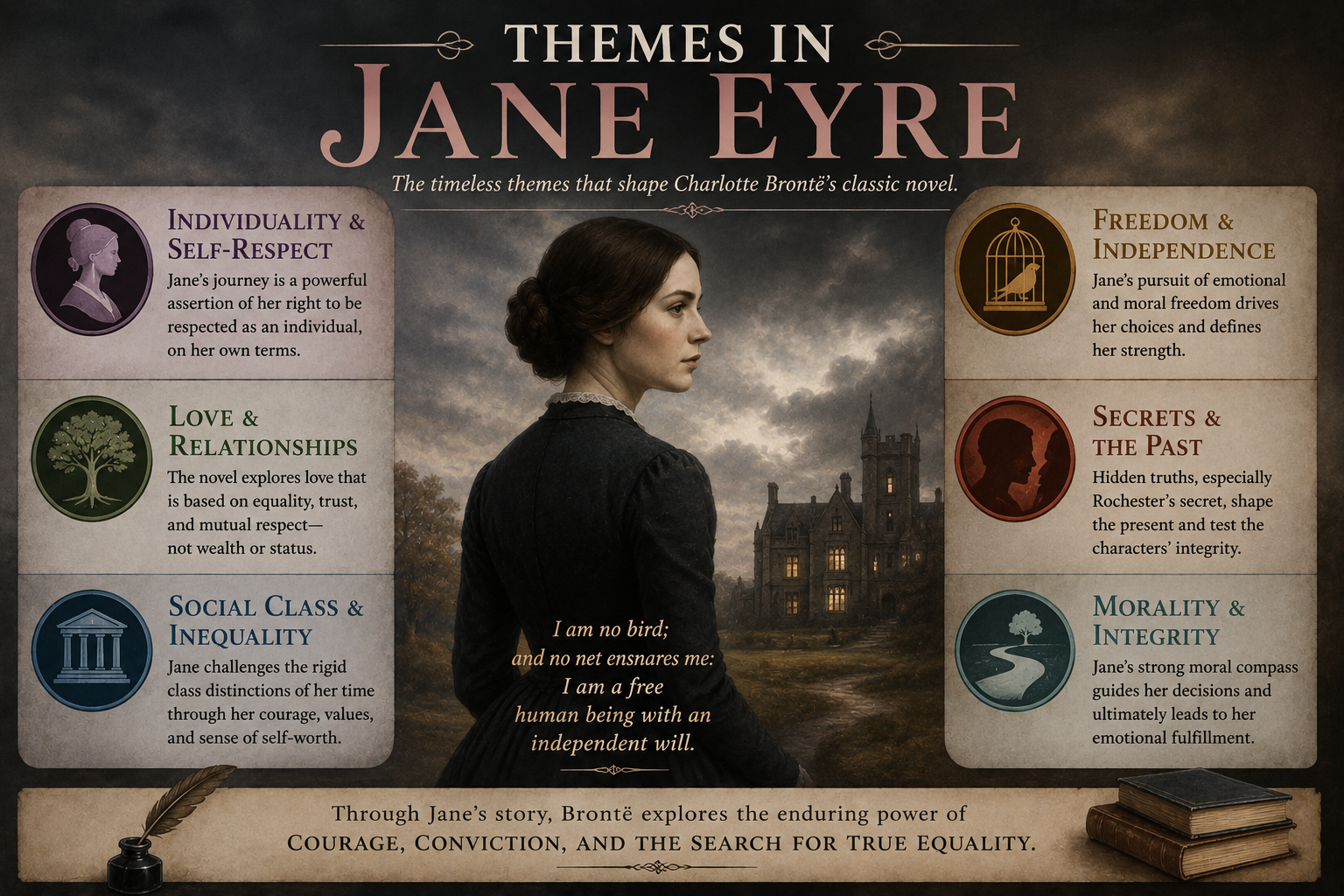
The themes in Jane Eyre help explain why Charlotte Brontë’s novel still matters in English classes today. The book is not just a love story. It is also about self-respect, power, faith, and the search for a true home.

In this Guide

Jane Eyre Themes

Why the themes in Jane Eyre matter

Brontë uses Jane’s life to ask what a person needs in order to live with dignity.

The main themes in Jane Eyre grow from Jane’s biggest conflicts. She wants love, but she will not give up her values to get it. She wants safety, but she also wants freedom.

That balance makes the novel useful for high school, AP Literature, and college essays. You can connect almost every major scene to one question: How does Jane protect her inner self in a world that tries to control her?

One reason students remember the themes in Jane Eyre is that Jane changes without losing her core beliefs. Like Elizabeth Bennet in Pride and Prejudice, she learns about love while also learning what she will not accept.

Themes in Jane Eyre: Independence and Self-Respect

Jane’s strongest desire is not wealth or romance. It is the right to live as her own person.

From the start, Jane knows what it feels like to have no power. At Gateshead, Mrs. Reed and John Reed treat her as less than family. At Lowood, harsh rules and public shame teach Jane how cruel authority can be.

Yet Jane does not become passive. She speaks the truth when she can, even when the cost is high. Her famous moral strength starts in childhood.

This is one of the most important themes in Jane Eyre because Jane’s independence shapes every major choice. She leaves Thornfield after Rochester asks her to live against her conscience. She refuses St. John Rivers because his plan would make her useful but unhappy.

Jane’s self-respect is not loud pride. It is moral independence. She would rather be alone than live as someone else’s possession.

Love and Equality

Brontë presents love as powerful, but never enough by itself.

Jane loves Rochester, and their bond is one of the novel’s central forces. Still, the novel tests that love through secrets, power, and social rank.

Among the major themes in Jane Eyre, love and equality are closely linked. Jane cannot accept a relationship where Rochester has all the control. His wealth, age, and social position place him above her at first.

Jane’s choice to leave Thornfield proves that she values equal love over emotional comfort. She does not stop loving Rochester. She chooses to protect her soul.

By the end, their relationship changes. Jane has family, money, and freedom. Rochester has lost some of his power and must depend on her. This shift matters because Brontë suggests that true love needs mutual respect.

Social Class and Gender Limits

Jane lives in a world where birth and money decide how people are treated.

As a poor orphan, Jane has few options. She becomes a governess, which places her in a strange middle position. She is educated, but not wealthy. She works in a rich home, but she is not fully part of its class.

This makes Thornfield tense. Jane can speak with Rochester as an intellectual equal, but society sees her as beneath him. Blanche Ingram shows the opposite problem. She has status, but little real feeling.

Gender also limits Jane. Victorian women were often expected to depend on men. Jane resists that role. She wants work, thought, movement, and choice.

For more background on Charlotte Brontë and the world that shaped the novel, see Britannica’s overview of Charlotte Brontë.

Religion and Moral Choice

Religion in the novel is not simple. Brontë shows both harmful faith and healing faith.

Mr. Brocklehurst uses religion to control children and shame the poor. His faith looks holy, but his actions are cruel and selfish.

Helen Burns offers a different model. She teaches patience, forgiveness, and spiritual peace. Jane admires Helen, but she does not fully copy her. Jane still believes injustice should be named.

St. John Rivers gives another version of faith. He is disciplined and brave, but he is cold. He wants Jane to marry him for duty, not love.

These themes in Jane Eyre show that Brontë values spiritual integrity over empty rule-following. Jane’s faith helps her choose what is right, but it does not erase her need for human love.

Appearance, Identity, and Inner Worth

Many characters judge by appearance, but the novel asks readers to look deeper.

Jane is often described as plain. Rochester is not shown as a perfect romantic hero either. Brontë avoids the idea that beauty equals goodness.

Blanche Ingram looks like the ideal match for Rochester, but her values are shallow. Jane has less social shine, yet she has honesty, intelligence, and courage.

This theme works well in essays because it connects to point of view. Since Jane tells her own story, readers see her inner world. We learn that identity is not just what others see. It is what a person knows to be true inside.

Home, Belonging, and Freedom

Jane spends much of the novel searching for a place where she can belong without losing herself.

Gateshead is a house, but it is not a home. Lowood gives Jane education and friendship, but it also brings suffering. Thornfield offers love, but it hides a secret that makes it unsafe.

Moor House gives Jane family and stability. Still, St. John’s control threatens her freedom. Ferndean, near the end, becomes the closest thing to a true home because Jane can love Rochester as an equal.

This theme matters because home in the novel is not just a building. It is a place where Jane’s body, mind, and conscience can rest.

Symbols that support themes in Jane Eyre

Brontë uses setting, weather, and repeated images to deepen the novel’s meaning.

Symbols make the themes in Jane Eyre easier to see. The red-room at Gateshead shows fear, punishment, and isolation. Fire often connects to passion, anger, or life. Ice and cold often mark emotional distance.

Thornfield itself becomes a symbol of hidden truth. Its beauty covers a locked secret, much like Rochester’s charm covers his past.

If you want help spotting patterns like these, read our guide on how to find symbolism in a story. It can help you turn symbols into stronger essay points.

You can also use the British Library’s article on Jane Eyre and 19th-century women for context on gender and society.

How to write about the themes in Jane Eyre

A strong essay should not just name a theme. It should explain how Brontë builds that idea through conflict and character choice.

For example, do not only say that independence is important. Show how Jane’s choices at Gateshead, Thornfield, and Moor House prove that she values self-respect over comfort.

Try this sentence frame:

Brontë develops the theme of [idea] by showing how Jane [choice or conflict], which reveals [larger meaning].

You can also connect theme to symbol. The red-room shows Jane’s early powerlessness, while Ferndean shows a quieter form of freedom. This kind of pattern helps an essay feel focused.

For more support, you can explore our Jane Eyre study resources as you plan your notes.

Helpful books for students

If you want a print copy or a study-friendly edition, look for these titles through Amazon, a local bookstore, or your school library:

  • Jane Eyre by Charlotte Brontë
  • The Madwoman in the Attic by Sandra M. Gilbert and Susan Gubar

The first gives you the full novel. The second is more advanced, but it is useful for college-level study of gender and power.

FAQ: Themes in Jane Eyre

What are the main themes in Jane Eyre?

The main themes in Jane Eyre include independence, love, class, gender, religion, identity, and belonging.

What is the most important theme in the novel?

Independence may be the most important theme because nearly every major choice Jane makes protects her self-respect.

How does Jane Eyre show feminism?

The novel shows feminism through Jane’s demand for equality, work, thought, and moral choice in a society that limits women.

Why does Jane leave Rochester?

Jane leaves because staying would break her conscience. She loves Rochester, but she will not give up her moral freedom.

How do symbols connect to theme?

Symbols like the red-room, fire, and Thornfield turn abstract ideas into concrete images. They help readers see fear, passion, and hidden truth.

Key Takeaway

The themes in Jane Eyre all point to one clear idea: real love and real faith must respect the self. Jane’s journey matters because she gains belonging without surrendering her freedom.

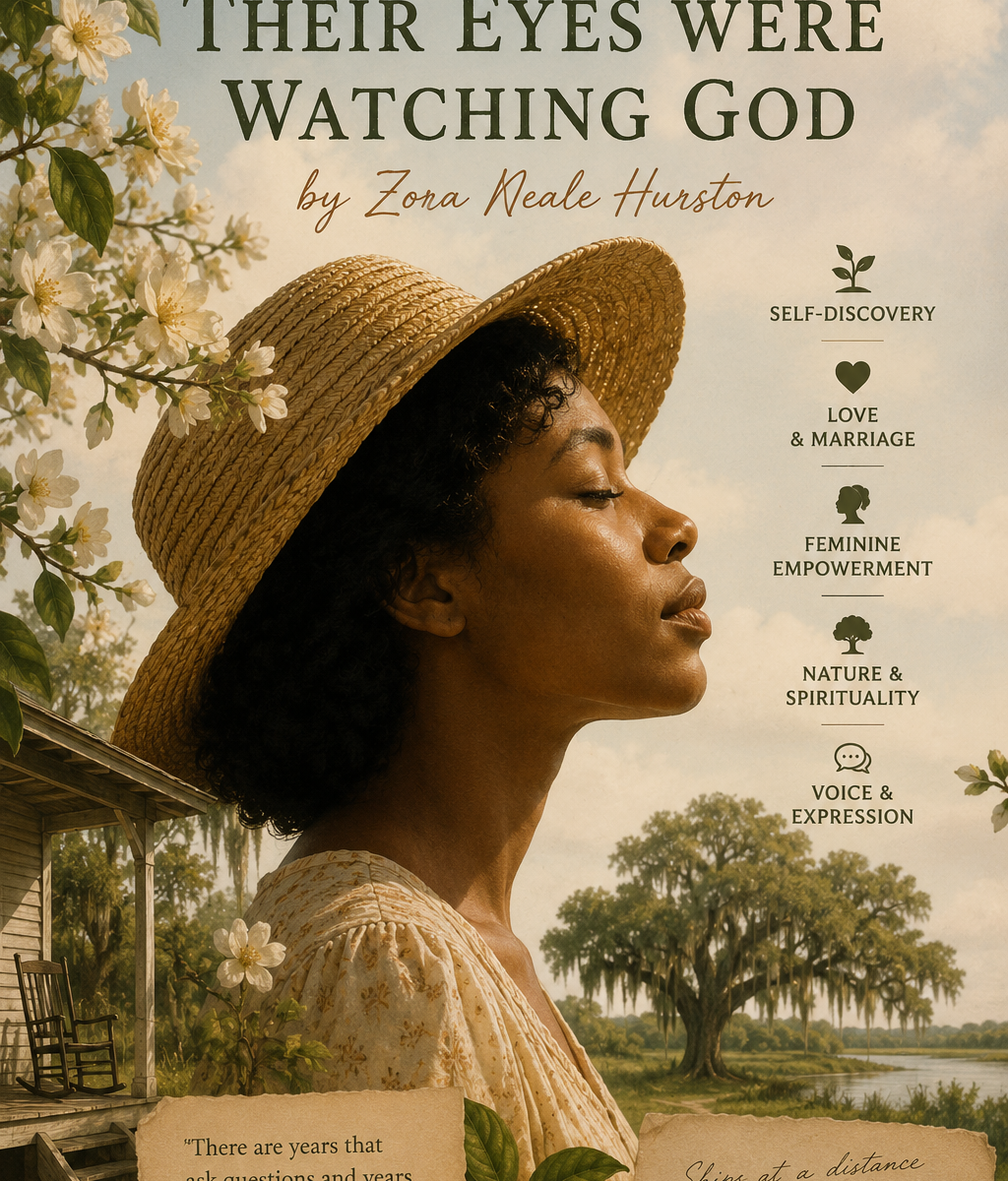
Themes in Their Eyes Were Watching God: A Student-Friendly Guide

Their Eyes Were Watching God Themes

Zora Neale Hurston’s novel follows Janie Crawford as she searches for love, voice, and a life that feels like her own. The themes in Their Eyes Were Watching God help students see why Janie’s story still matters in classrooms today.

In this Guide

Use this guide to focus your reading and prepare for class discussion.

Their Eyes Were Watching God Themes

Why the themes in Their Eyes Were Watching God Matter

The novel is not just about what happens to Janie. It is about what she learns as she moves through love, pain, and freedom.

The themes in Their Eyes Were Watching God show how hard it can be to find yourself when others keep trying to define you. Janie’s life is shaped by family pressure, marriage, gossip, race, and gender roles.

Hurston also writes with deep respect for Black Southern speech and culture. You can learn more about her life and work through Britannica’s profile of Zora Neale Hurston.

Major themes in Their Eyes Were Watching God

These are the main ideas students should track as they read the novel.

Self-discovery and voice

Janie’s biggest journey is the search for her own voice. At first, other people speak for her or decide what her life should mean.

Logan Killicks sees her as labor. Jody Starks sees her as a symbol of his power. Tea Cake gives her more space to speak, but Janie still must learn to stand on her own.

This theme is clear at the end when Janie tells her story to Pheoby. Her voice becomes proof that she survived and grew.

Love and control

Love and power are often tied together in the novel. Hurston asks whether love can be real if one person tries to control the other.

Janie’s first marriage gives her safety but no joy. Her second marriage gives her status but takes away freedom. With Tea Cake, love feels more alive, but it is not perfect.

A useful comparison is Jane Eyre by Charlotte Brontë. Like Janie, Jane wants love, but she also wants respect and self-rule.

Gender roles and power

Janie lives in a world where men often expect women to stay quiet. Jody makes this clear when he keeps Janie off the porch and away from public talk.

The porch becomes more than a place. It shows who has a voice and who gets pushed aside.

Janie’s growth comes when she stops living only by other people’s rules. She does not reject love, but she refuses to disappear inside it.

Race, community, and judgment

The novel shows Black community life with humor, beauty, conflict, and pressure. Eatonville is a place of pride, but it is also full of gossip and judgment.

People watch Janie closely because she does not always fit what they expect. Her return in overalls shocks the town because they judge her before they hear her story.

This is one reason the frame story matters. Janie’s own account pushes back against the town’s narrow view of her life.

Nature, God, and fate

Nature is powerful in the novel. The pear tree, the mule, the horizon, and the hurricane all point to forces larger than daily life.

The hurricane is one of the clearest examples. It reminds readers that human plans can be broken by forces no one can control.

The title itself points to this idea. During the storm, the characters look toward God because they know human power has limits.

Symbols That Support the themes in Their Eyes Were Watching God

Hurston’s symbols help turn ideas into images students can remember.

The pear tree represents Janie’s early dream of love. She sees beauty, union, and desire in the natural world.

The horizon stands for possibility. Janie keeps reaching toward a life that feels wider than the one others choose for her.

The mule shows burden and mistreatment. It connects to the way people, especially women, can be used by others.

These symbols make the themes in Their Eyes Were Watching God easier to trace. If you want more help with this skill, read our guide on how to find symbolism in a story.

How Hurston’s Style Builds Meaning

The way Hurston tells the story is just as important as the plot.

Hurston uses a frame story, which means Janie tells her past from a later point in her life. This gives Janie control over her own story.

The novel also shifts between poetic narration and spoken dialogue. This mix helps readers hear both Janie’s inner life and the life of her community.

For context on the wider literary movement around Hurston’s era, see Poetry Foundation’s introduction to the Harlem Renaissance.

How to Write About themes in Their Eyes Were Watching God

A strong essay should connect a theme to Janie’s growth, not just name the theme.

When you write about themes in Their Eyes Were Watching God, start with a clear claim. For example, you might argue that Janie’s voice becomes stronger each time she leaves a life that limits her.

Then use key scenes. Good choices include Janie under the pear tree, Jody silencing her in the store, the hurricane, and Janie’s final talk with Pheoby.

You can also connect theme and symbol. The horizon works well because it follows Janie’s desire for freedom across the novel. For extra practice, use this symbolism reading strategy as you gather evidence.

Related Books Students May Find Helpful

These books can help you compare voice, identity, and freedom across different works.

  • Their Eyes Were Watching God by Zora Neale Hurston
  • Jane Eyre by Charlotte Brontë
  • The Color Purple by Alice Walker

FAQ About themes in Their Eyes Were Watching God

These quick answers can help with review before a quiz or essay.

What are the main themes in Their Eyes Were Watching God?

The main themes include self-discovery, voice, love, power, gender roles, race, community, nature, and fate.

Why is Janie’s voice important?

Janie’s voice shows her growth. By telling her own story, she claims the meaning of her life.

What does the pear tree symbolize?

The pear tree symbolizes Janie’s dream of love, beauty, and emotional connection.

How does the hurricane connect to the title?

The hurricane shows that people are not fully in control. In that moment, the characters look toward God and face the power of nature.

Is Tea Cake the answer to Janie’s search?

Not fully. Tea Cake helps Janie experience a freer kind of love, but Janie’s final strength comes from within herself.

Key Takeaway

Janie’s story is about more than romance. The deepest themes in Their Eyes Were Watching God show a woman learning to speak, choose, and live as herself.

error

Enjoy this article? Please spread the word :)

Follow by Email
BLUESKY
fb-share-icon
Reddit
LinkedIn
Share
RSS