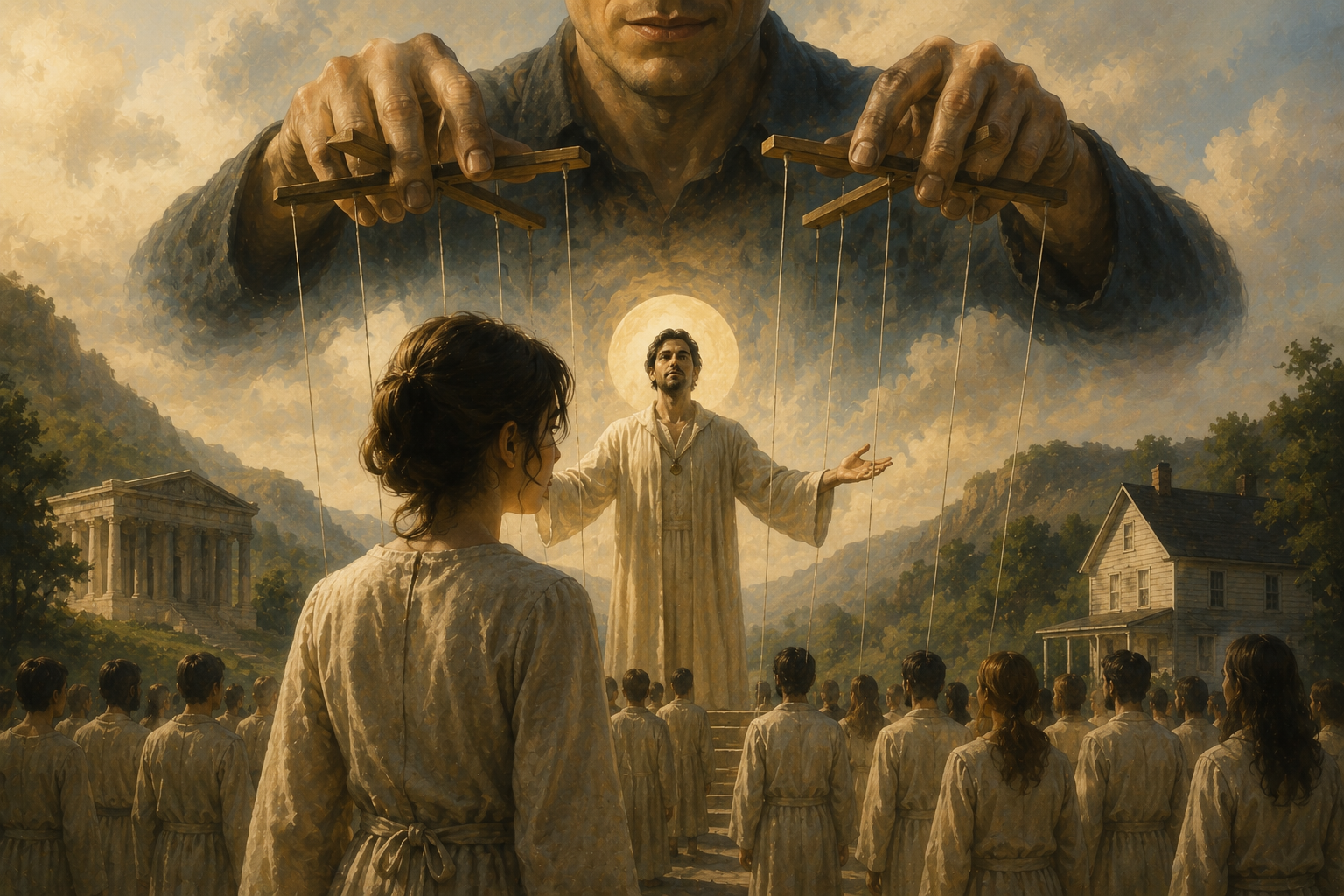
The best classic cults and manipulation stories show how people can lose their freedom without noticing at first. These books and plays are not just dark or strange, they reveal how fear, loyalty, and pressure can change a whole group.
For students, these works are rich choices for essays because they connect character, theme, symbolism, and history in clear ways.
In this Guide
- Why cults and manipulation matter in classic literature
- Best classic cults and manipulation books to read first
- Common themes in these works
- Symbols that reveal control
- How to study these texts for class
- FAQs
Why Best Classic Cults and Manipulation Stories Still Matter
These stories help us see how control can look normal from the inside.
The best classic cults and manipulation stories often begin with ordinary people. A town, a school, a family, or a nation starts to follow a belief system that no one is allowed to question.
That is what makes these works so powerful. They do not always need monsters. The danger comes from people who obey rules, repeat slogans, or fear being cast out.
In literature, cult-like control can appear in many forms. It may come from a leader, a government, a religious group, or even a crowd. The key idea is the same: people give up their judgment because the group seems stronger than the self.
Best Classic Cults and Manipulation Books to Read First
These works are strong starting points for students who want clear themes and powerful examples.
A strong best classic cults and manipulation reading path often starts with George Orwell’s 1984. In the novel, the Party controls language, memory, privacy, and love. Big Brother becomes more than a leader. He becomes a symbol of total power.
Arthur Miller’s The Crucible is another key text. The play is set during the Salem witch trials, but it also reflects fear during the Red Scare. People accuse others to save themselves, and the whole town becomes trapped by panic.
Shirley Jackson’s “The Lottery” is short, but it hits hard. The villagers follow a violent tradition because it has always existed. No one can explain it well, yet they still obey.
William Golding’s Lord of the Flies also fits this topic. The boys form a violent group around fear, status, and ritual. Jack does not need truth to lead. He needs emotion.
Amazon Books: Classic Titles Worth Reading
If you want to build a strong literature list, these books are easy to find on Amazon, in libraries, or through school reading programs.
- 1984 by George Orwell
- The Crucible by Arthur Miller
Both texts work well for essays about power, fear, mass belief, and moral choice.
Common Themes in Best Classic Cults and Manipulation Literature
These stories often ask one sharp question: why do people obey harmful systems?
One major theme in the best classic cults and manipulation works is fear. Fear makes characters doubt themselves. It also makes them turn against others.
In The Crucible, fear spreads through accusation. A person can be ruined by a lie, so people lie first to protect themselves.
Another major theme is identity. Cult-like systems often erase the individual. In 1984, Winston’s private thoughts are treated as crimes. The Party wants to control not only what people do, but what they believe is true.
Group loyalty is also central. In “The Lottery,” villagers follow the crowd even when the result is cruel. Jackson shows how tradition can become dangerous when people stop asking why it exists.
Common Symbols in Best Classic Cults and Manipulation Stories
Symbols in these works often turn simple objects into signs of control.
In the best classic cults and manipulation stories, symbols help readers see hidden power. A symbol may look ordinary, but it carries deep fear or pressure.
In 1984, Big Brother’s face is everywhere. His image stands for constant watchfulness. Even when he is not present, people feel watched.
In “The Lottery,” the black box is a key symbol. It is old, worn, and treated with respect. It shows how people can worship tradition even when that tradition harms them.
In Lord of the Flies, the painted faces become masks. The boys use them to hide shame. Once hidden, they act with more cruelty.
These symbols matter because they make manipulation visible. They show how power works through objects, rituals, and repeated images.
How Leaders Manipulate in Classic Literature
Manipulative leaders often use simple tricks that feel familiar.
They create enemies. They repeat slogans. They punish doubt. They make the group feel chosen or threatened.
In Animal Farm, Napoleon changes the rules while claiming to protect the farm. The animals are too tired, scared, or confused to resist. Language becomes a weapon.
In Lord of the Flies, Jack uses fear of the beast to gain control. He offers safety, but his version of safety requires obedience.
This is why the best classic cults and manipulation texts still feel current. They show that control does not always begin with force. Sometimes it begins with a promise.
How to Study Best Classic Cults and Manipulation for Class
These works become easier to analyze when you track patterns as you read.
When you study the best classic cults and manipulation literature, pay attention to repeated words, rules, punishments, and public rituals. These details often reveal the system of control.
It also helps to mark moments when a character doubts the group. Doubt is often the first sign of inner freedom.
If you want a simple method, use this guide on how to take notes while reading a novel. It can help you track symbols, character shifts, and theme evidence without feeling lost.
For essay writing, connect each example to a bigger idea. Do not just say a leader is cruel. Explain how that leader gains trust, spreads fear, or controls truth.
Historical Context That Helps
Many of these works reflect real fears from history.
1984 is often read as a warning about totalitarian power. For a clear overview of that idea, Britannica’s entry on totalitarianism is a helpful resource.
The Crucible connects to the Salem witch trials and to political fear in Miller’s own time. Britannica’s overview of the Salem witch trials gives useful background for students.
Context can deepen your reading, but the human questions still matter most. Why do people join in? Why do they stay silent? What does it cost to resist?
Why These Stories Work So Well for Essays
The topic gives students a clear path from plot to theme.
The best classic cults and manipulation stories are useful for essays because they have visible patterns. You can study leaders, victims, symbols, rules, and turning points.
They also invite strong thesis statements. For example, you might argue that Orwell shows language as the main tool of control. You might argue that Jackson presents tradition as dangerous when it lacks moral thought.
Good essays on this topic should avoid simple claims like “power is bad.” A stronger claim explains how power spreads and why people accept it.
FAQ: Best Classic Cults and Manipulation in Literature
What makes the best classic cults and manipulation stories so powerful?
They show how people can accept harmful systems. That makes the danger feel real, not distant.
Is 1984 about a cult?
Not in the usual sense, but it uses cult-like control. The Party demands total loyalty, controls truth, and turns Big Brother into a figure of worship.
Why is “The Lottery” often linked to manipulation?
The villagers follow a deadly ritual because of tradition and group pressure. No one wants to stand apart from the crowd.
What should I track while reading these works?
Track rules, repeated phrases, symbols, fear tactics, and moments when characters choose silence or resistance.
Key Takeaway
The best classic cults and manipulation stories are not only about strange groups or cruel leaders. They are about how fear, language, and loyalty can shape what people believe.
Great literature asks us to notice those patterns before they become normal. That is why these classics still matter in the classroom and beyond. 📚