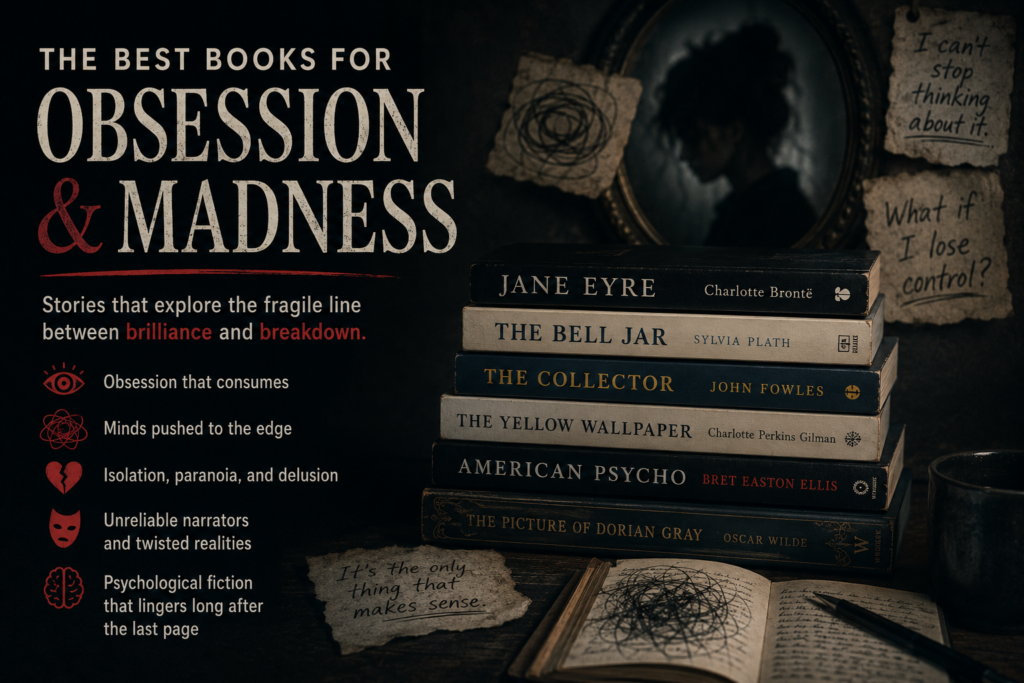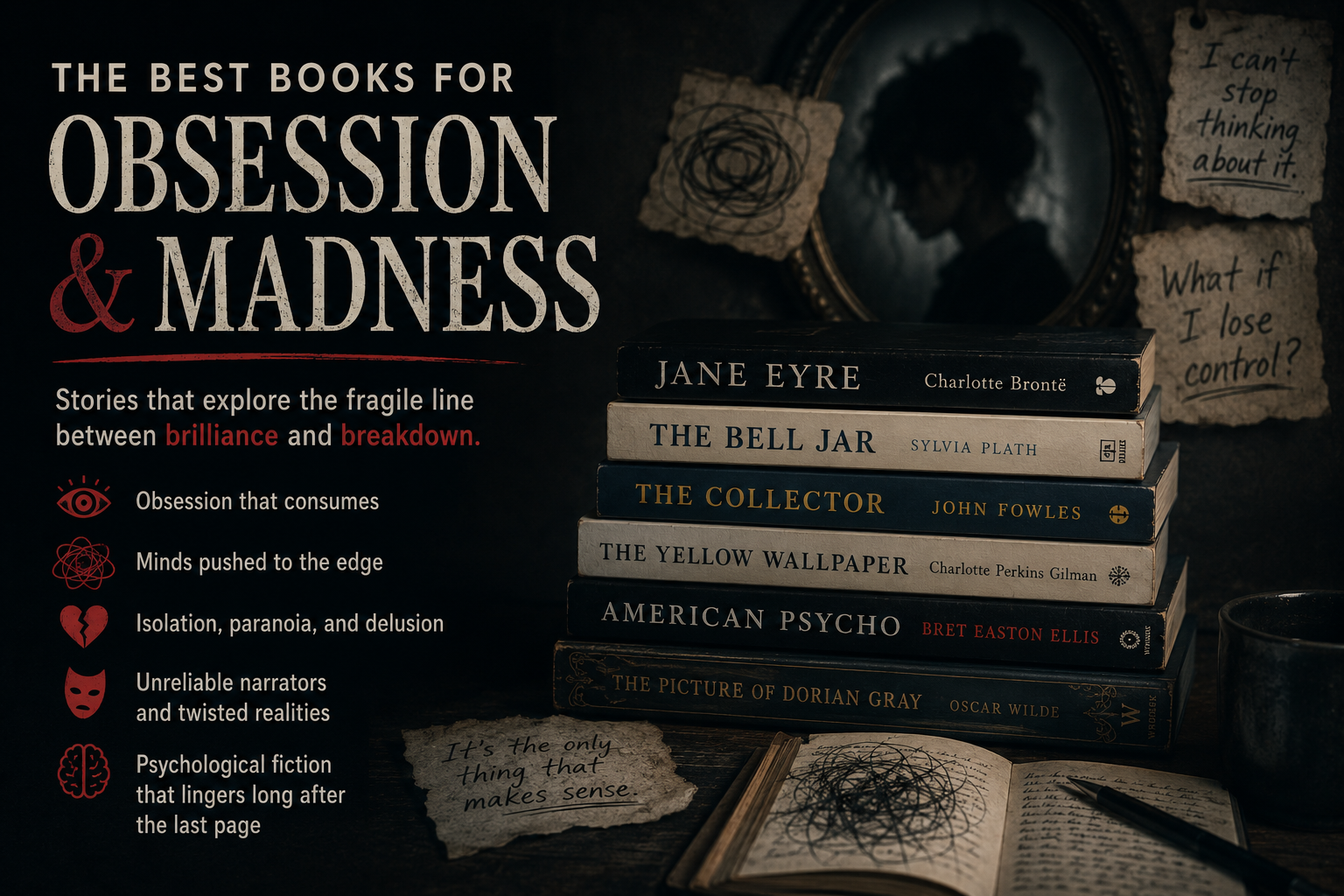
Best Books for Obsession and Madness: Dark Reads that Stay with You

Best Books for Obsession and Madness

The Best Books for Obsession and Madness show what happens when desire, fear, or guilt takes over a person’s mind. These stories are intense, but they also help readers think about power, love, art, and the fragile line between control and chaos.

In this Guide

Best Books for Obsession and Madness

Why the Best Books for Obsession and Madness Grip Readers

Stories about obsession feel powerful because they show emotions pushed to the edge.

A character may want love, fame, revenge, or truth. At first, the goal may seem normal. Then it grows too large and begins to damage the character’s life.

Madness in literature is not always simple. It can show fear, grief, guilt, or social pressure. In many books, readers must ask if a character is truly losing touch with reality or if the world around them is broken.

The Best Books for Obsession and Madness often make us uneasy because they reflect real human fears. What if we want something too much? What if our thoughts become a trap?

Best Books for Obsession and Madness in Classic Literature

Classic literature gives us some of the most famous examples of minds under pressure.

“The Tell-Tale Heart” by Edgar Allan Poe is one of the clearest stories about guilt and mental collapse. The narrator insists he is sane, but his actions prove the opposite. His obsession with the old man’s eye leads to murder, panic, and confession.

Poe’s work is central to this topic because he often wrote about fear, death, and unstable minds. You can read more about his poetry and legacy at the Poetry Foundation.

Macbeth by William Shakespeare is another key text. Macbeth becomes obsessed with power after he hears a prophecy. His mind fills with fear, blood, and suspicion. Lady Macbeth also breaks under the weight of guilt.

Frankenstein by Mary Shelley shows obsession through science and creation. Victor Frankenstein wants to conquer death, but his dream turns into horror. His refusal to take care of what he creates leads to pain for everyone around him.

These works remain part of the Best Books for Obsession and Madness because they show how one fixed idea can destroy a life.

Modern Best Books for Obsession and Madness

Modern novels often place obsession in daily life, which can make it feel even more real.

The Secret History by Donna Tartt follows a group of college students drawn into beauty, pride, and moral decay. Their obsession with ancient Greek ideas leads them away from normal limits. The novel asks how smart people can justify terrible choices.

Rebecca by Daphne du Maurier is a haunting novel about memory and jealousy. The dead Rebecca controls the house of Manderley even after death. The new Mrs. de Winter feels trapped by a woman she never met.

Gone Girl by Gillian Flynn gives a modern view of obsession inside marriage, media, and image. The novel shows how control can hide behind charm. It also asks how much of a public story is true.

The Best Books for Obsession and Madness do not always need ghosts or castles. Sometimes the most frightening place is a home, a classroom, or a relationship.

How the Best Books for Obsession and Madness Use Symbols

Symbols help readers see what a character cannot say out loud.

In “The Tell-Tale Heart,” the old man’s eye becomes a symbol of fear and fixation. The beating heart becomes a symbol of guilt. The narrator hears it because his mind will not let him escape what he has done.

In Macbeth, blood is the most famous symbol. At first, it shows violence. Later, it shows guilt that cannot be washed away. Lady Macbeth’s hand-washing scene makes this idea clear.

In Rebecca, Manderley is more than a house. It is a symbol of memory, class, and control. The setting keeps Rebecca’s power alive.

If you want help with this skill, read our guide on how to find symbolism in a story. It can help you spot patterns in objects, colors, places, and repeated images.

The Best Books for Obsession and Madness often use symbols that grow darker as the story moves forward.

Major Themes in Books About Obsession and Madness

These stories often return to a few deep questions about human nature.

Guilt is one of the most common themes. Characters may try to hide what they have done, but their minds bring the truth back.

Power also plays a major role. Macbeth wants a crown. Victor Frankenstein wants power over life. Their need for control leads to loss.

Identity is another key theme. Characters may not know who they are once obsession takes hold. They may lie so much that the lie becomes part of them.

Some of these books also connect to Gothic literature, a genre full of mystery, fear, strange settings, and dark emotion. For background, see Britannica’s guide to the Gothic novel.

These titles are strong choices if you want to read more in this dark literary area.

  • Frankenstein by Mary Shelley: A classic novel about ambition, science, and moral responsibility.
  • The Secret History by Donna Tartt: A literary mystery about beauty, pride, and obsession in a college setting.

Both books fit well with the Best Books for Obsession and Madness because they show smart characters who lose control of their choices.

Why Students Should Study the Best Books for Obsession and Madness

These books are useful for essays because they give clear conflicts and strong symbols.

For AP Literature or college classes, they also offer rich character studies. You can write about point of view, unreliable narration, setting, theme, or moral choice.

The Best Books for Obsession and Madness also help students build close reading skills. A small detail, like a sound or object, may reveal a character’s hidden fear.

When you read, ask simple questions. What does the character want? What line do they cross? What symbol shows that their mind has changed?

FAQs About the Best Books for Obsession and Madness

What are the Best Books for Obsession and Madness for beginners?

Start with “The Tell-Tale Heart,” Macbeth, or Frankenstein. These works are famous, short enough to study closely, and full of strong symbols.

Why do authors write about madness?

Authors use madness to explore fear, guilt, grief, and pressure. It can show how a person breaks when they can no longer face the truth.

Is obsession always shown as evil in literature?

No. Obsession can begin as love, ambition, or curiosity. It becomes dangerous when it harms others or destroys the character’s sense of right and wrong.

What symbols often appear in stories about obsession?

Common symbols include eyes, blood, mirrors, houses, letters, and repeated sounds. These details often point to guilt, control, or fear.

Key Takeaway: Why These Dark Stories Matter

The Best Books for Obsession and Madness stay with us because they show how fragile the human mind can be. They remind us that one desire, one fear, or one secret can change everything.

For students, these books are more than dark stories. They are powerful tools for close reading, theme analysis, and deeper thought about human nature.
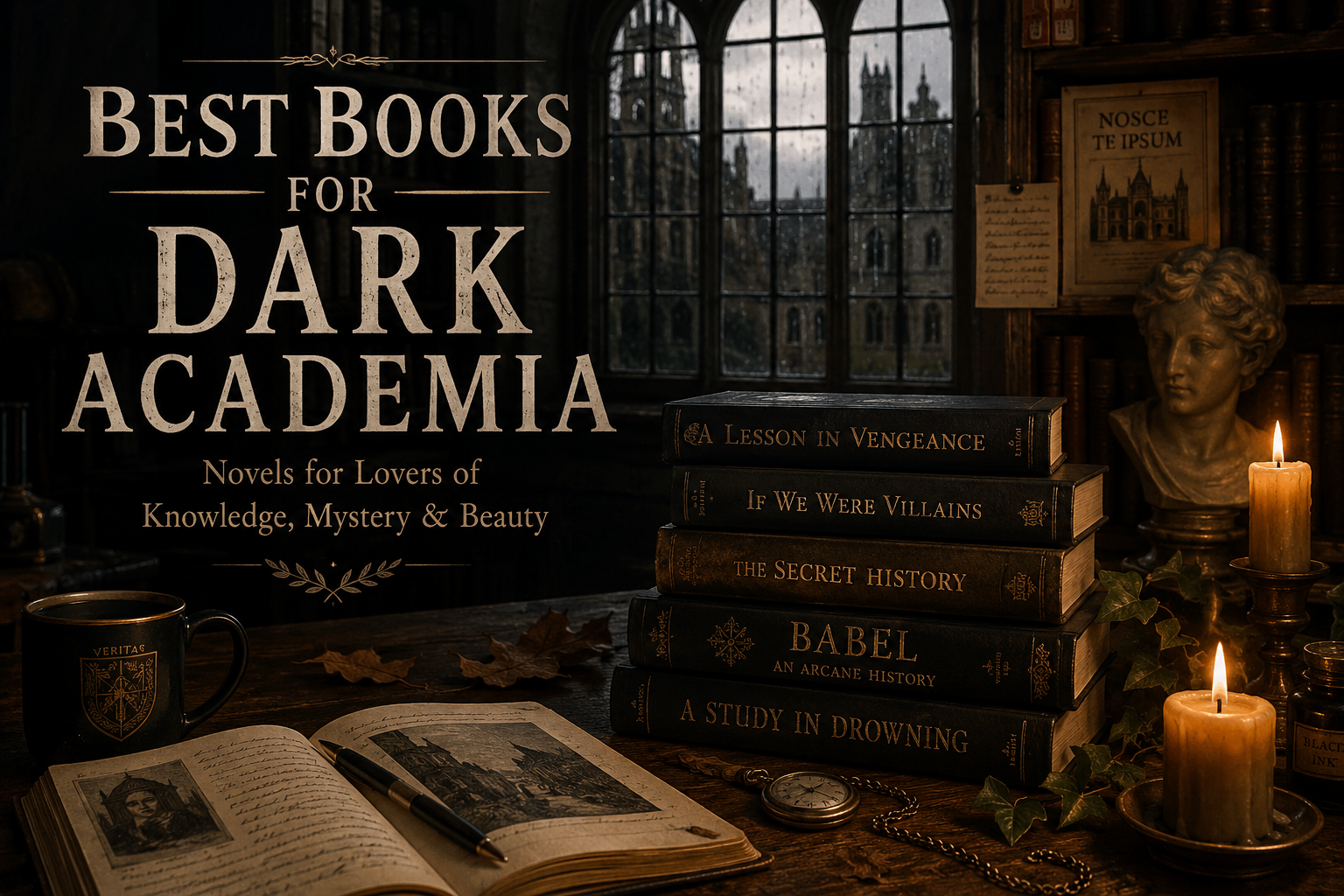
Best Books for Dark Academia

Dark Academia books
Dark Academia books

The Best Books for Dark Academia mix mystery, ambition, beauty, and danger. These stories often take place in schools, libraries, old houses, or elite circles where knowledge feels powerful and risky.

If you like candlelit study rooms, secret clubs, moral questions, and characters who want too much, this guide will help you find your next read.

In this Guide

  • What makes dark academia books so popular
  • Best Books for Dark Academia to read first
  • Major themes and symbols
  • Books worth buying or borrowing
  • How students can read dark academia well
  • FAQs

What Makes the Best Books for Dark Academia So Compelling?

Dark academia is about learning, but it is also about obsession.

The Best Books for Dark Academia often show smart characters who chase beauty, status, or truth. At first, their world looks polished. Soon, it starts to crack.

These books often include old campuses, Latin phrases, rare books, art, poetry, and hidden guilt. The setting matters because it makes learning feel grand, but also cold.

Dark academia also asks a hard question: What happens when intelligence is not matched by kindness?

Best Books for Dark Academia: Classic and Modern Picks

These books capture the mood of dark academia in different ways, from elite schools to haunted minds.

The Secret History by Donna Tartt

Many readers see The Secret History as the heart of dark academia. It follows a group of college students who study Greek classics under a strange and powerful professor.

The book explores beauty, guilt, and the danger of feeling above normal rules. It is one of the Best Books for Dark Academia because it turns scholarship into suspense.

If We Were Villains by M.L. Rio

This novel follows theater students who live and breathe Shakespeare. Their friendships are intense, and their roles begin to blur with real life.

The book is a strong choice for students who enjoy drama, rivalry, and literary clues. It also shows how art can shape identity in harmful ways.

Frankenstein by Mary Shelley

Frankenstein is not set in a modern university, but it fits the dark academia mood well. Victor Frankenstein wants knowledge so badly that he forgets his duty to others.

The novel warns readers about ambition without care. It is also a major work in Gothic literature, a tradition you can learn more about through Britannica’s overview of the Gothic novel.

The Picture of Dorian Gray by Oscar Wilde

This novel is full of art, beauty, style, and moral decay. Dorian wants to stay young while his portrait carries the damage of his choices.

It belongs with the Best Books for Dark Academia because it asks what people will trade for beauty and pleasure.

Jane Eyre by Charlotte Brontë

Jane Eyre has a strong Gothic mood, a mysterious house, and a heroine who values education and self-respect. Jane’s inner life matters as much as the plot.

The novel works well for students who want dark atmosphere but also moral strength.

Babel by R.F. Kuang

Babel is a modern dark academia novel about language, empire, and power. It takes place in Oxford and asks who benefits from elite education.

This book is a great pick for readers who want dark academia with sharp social criticism.

Major Themes in the Best Books for Dark Academia

Dark academia feels stylish, but its deepest power comes from its themes.

In the Best Books for Dark Academia, ambition often becomes dangerous. Characters want to be brilliant, rare, or admired. That desire can push them toward lies and harm.

Class is another major theme. Many dark academia stories show who gets access to elite schools, private libraries, and powerful mentors. The mood may feel romantic, but the system can be unfair.

Secrecy also plays a key role. Hidden rooms, private languages, and secret groups create suspense. They also show how knowledge can divide people.

For another look at wealth, image, and moral decline, read our Great Gatsby analysis. Gatsby is not a dark academia novel, but it shares the same interest in status and illusion.

Symbolism in the Best Books for Dark Academia

Symbols help dark academia feel rich, strange, and memorable.

Books and libraries often stand for power. They suggest wisdom, but they can also suggest control. A locked library may mean that knowledge is not open to everyone.

Old buildings often symbolize tradition. A stone campus or decaying mansion can look beautiful while hiding fear, guilt, or corruption.

Mirrors and portraits often show divided identity. In The Picture of Dorian Gray, the portrait becomes a symbol of the soul. It shows the truth that Dorian refuses to face.

Storms, fog, and candlelight also shape the mood. They make the world feel uncertain, which fits stories about secrets and guilt.

Books Worth Buying or Borrowing for a Dark Academia Shelf

If you want to start a small shelf, begin with books that show the range of the genre.

Here are a few strong choices you can find at many bookstores, libraries, or on Amazon without needing any special edition:

  • The Secret History by Donna Tartt
  • If We Were Villains by M.L. Rio

These titles are easy entry points because they have strong plots, literary references, and tense student groups.

How to Read the Best Books for Dark Academia in School

Dark academia books are fun to read, but they also reward close attention.

When you read the Best Books for Dark Academia, track what the main character wants. Then ask what they are willing to risk to get it.

Pay attention to setting. A classroom, library, or old house is never just a backdrop. It often reflects power, fear, or desire.

Notice references to art, poetry, and myth. These allusions can reveal what the characters admire. They can also show how characters use culture to excuse bad choices.

If you study poetry with dark academia themes, the Poetry Foundation’s page on T.S. Eliot is a helpful place to start. Eliot’s work often explores decay, memory, and modern anxiety.

Why the Best Books for Dark Academia Still Matter

Dark academia is not just an aesthetic. It speaks to real fears about success, pressure, and belonging.

Students may connect with these stories because school can feel intense. Grades, image, talent, and social status can seem like everything.

The Best Books for Dark Academia remind readers that knowledge should not come at the cost of empathy. A brilliant mind can still make cruel choices.

That warning is part of what makes the genre last.

FAQs About the Best Books for Dark Academia

Here are quick answers to common questions about the genre.

What are the Best Books for Dark Academia for beginners?

The Best Books for Dark Academia for beginners include The Secret History, If We Were Villains, and Frankenstein. These books show the genre’s mood, themes, and moral questions clearly.

Is dark academia always set at a school?

No. Many dark academia stories take place at schools or universities, but the genre can also include old houses, museums, libraries, and artistic circles.

Why is Frankenstein considered dark academia?

Frankenstein fits because it focuses on dangerous knowledge, ambition, and isolation. Victor wants to master life itself, but he ignores the human cost.

Are dark academia books good for AP Literature?

Yes, many are useful for AP Literature because they deal with theme, symbolism, character flaws, and moral conflict. Classics like Frankenstein and Jane Eyre are especially strong choices.

Key Takeaway

The Best Books for Dark Academia are not only about old libraries and clever students. They show how beauty, learning, and ambition can become dangerous when people forget compassion.

If you want books with mood, mystery, and serious ideas, dark academia is a rich place to begin. 📚

error

Enjoy this article? Please spread the word :)

Follow by Email
BLUESKY
fb-share-icon
Reddit
LinkedIn
Share
RSS