A brief, steady writing invitation for exploring the moment a family secret was placed in your hands before you knew what to do with it.
Maybe you were standing in a kitchen while someone rinsed a coffee mug. Maybe you were in the back seat of a car, watching streetlights slide across the window. Or, maybe the secret arrived in a whisper, a warning, or a sentence that sounded casual until you felt your chest tighten.
Being told a family secret too young can change the room around you. One minute you are a child, a teenager, or simply someone who trusts the adults nearby. The next minute, you are holding information with weight. Today’s flash memoir prompt family secret told before ready is about that exact shift.
This is not a prompt about exposing anyone. It is about remembering what it felt like to know something before you had the language, maturity, or safety to understand it.

The Prompt
Write about a family secret you were told before you were ready to hold it.
This prompt can unlock a powerful memory because secrets often come with strange details. You may remember the wallpaper, the smell of dinner, the way someone lowered their voice, or how your own body reacted before your mind caught up.
A flash memoir does not need to explain the whole family history. In fact, it often works better when it stays close to one scene. The moment you were told may reveal more than a long summary ever could.
Why This Memory Matters
A family secret can make you feel older in an instant. It may teach you who was safe, who was complicated, and who carried pain behind ordinary habits.
This kind of memory matters because it often marks a change in how you saw your family. A parent may have become more human. A grandparent may have seemed less like a legend and more like a person with choices. A sibling, aunt, uncle, or cousin may have been pulled into a new light.
You do not have to decide who was right or wrong before you write. Start with what happened inside you. Did you feel proud to be trusted? Angry to be burdened? Confused because the secret explained something you had sensed for years?
When writing about this prompt, pay attention to tone. A secret told in a tired voice feels different from one told with drama or panic. If you want to think more about how emotional atmosphere works on the page, this guide to tone vs. mood in literature may help you shape the scene without overexplaining it.
The flash memoir prompt family secret told before ready asks you to notice the gap between information and readiness. That gap is where the memoir often lives.


How to Approach This Prompt
Begin with one physical detail.
Choose something small and real: a spoon left in a cereal bowl, your aunt’s red nails, the hot vinyl seat of a car, the hum of a refrigerator. Let that detail bring you into the scene before you explain the secret.
Then narrow the memory to the exact moment of being told. Do not try to write the entire family story. You can mention the secret without tracing every cause and consequence. The goal is to show what it felt like to receive it.
You might begin with a sentence like: “She told me while folding towels.” Or: “I remember the screen door banging shut before he said it.” Simple openings leave room for truth.
Write what you noticed first. Maybe the person telling you would not meet your eyes. Maybe they smiled in a way that did not match the words. Or, maybe they said, “You’re old enough to know,” even though you did not feel old enough at all.
After that, let yourself write the emotional truth. You can say, “I did not understand why I felt guilty.” You can say, “I wanted to give the secret back.” Or, you can say, “For years, I thought knowing meant I had to protect everyone.”
If the memory involves people who are hard to understand, it may help to think of them as complex characters rather than simple villains or heroes. This student-friendly guide on how to analyze characters in literature can also help memoir writers notice motives, contradictions, and change.
Be kind to yourself as you write. You can leave names out. You can change identifying details. And you can stop before the memory becomes too much. A flash memoir prompt family secret told before ready should give you a doorway, not push you through it too fast.
A Quick Example
My mother told me in the laundry room, which made it worse somehow. The dryer was thumping with jeans, and the air smelled like warm cotton and bleach. She was matching socks when she said my grandfather had another family before ours. She said it like she was telling me we were out of milk. I remember looking at the basket between us, all those white towels folded into neat squares. I was thirteen. And I wanted to ask if Grandma knew, but my mother shook her head before I spoke. “Don’t bring it up,” she said. After that, every Sunday dinner felt staged. Grandpa passed the rolls. Grandma poured tea. I sat there with a secret in my mouth, afraid it would fall out if anyone made me laugh.
Try It Yourself
Set a timer for ten minutes and write the scene as you remember it. Start with the room, the light, or the object closest to your hands. Let the secret enter the scene when it entered your life.
Do not worry about making the writing polished. You can revise later. For now, focus on the moment your understanding changed.
If the memory feels too sharp, write around it. Describe the weather, the clothes, the sound of the person’s voice. Sometimes the safest way into a difficult memory is through the edges.
When you finish, underline one sentence that feels true. That sentence may become the heart of a longer piece, or it may be enough on its own.
Want More Flash Memoir Prompts?
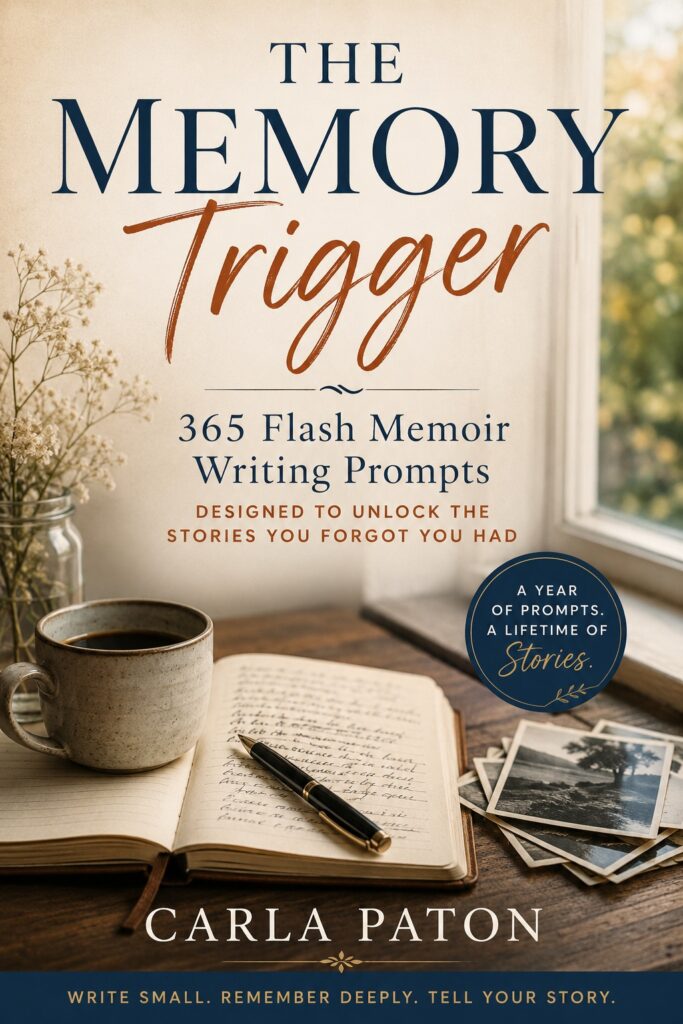
If this prompt opened a memory you want to keep exploring, you may enjoy a full year of short, focused writing invitations. Explore all 365 prompts in The Memory Trigger: 365 Flash Memoir Writing Prompts.