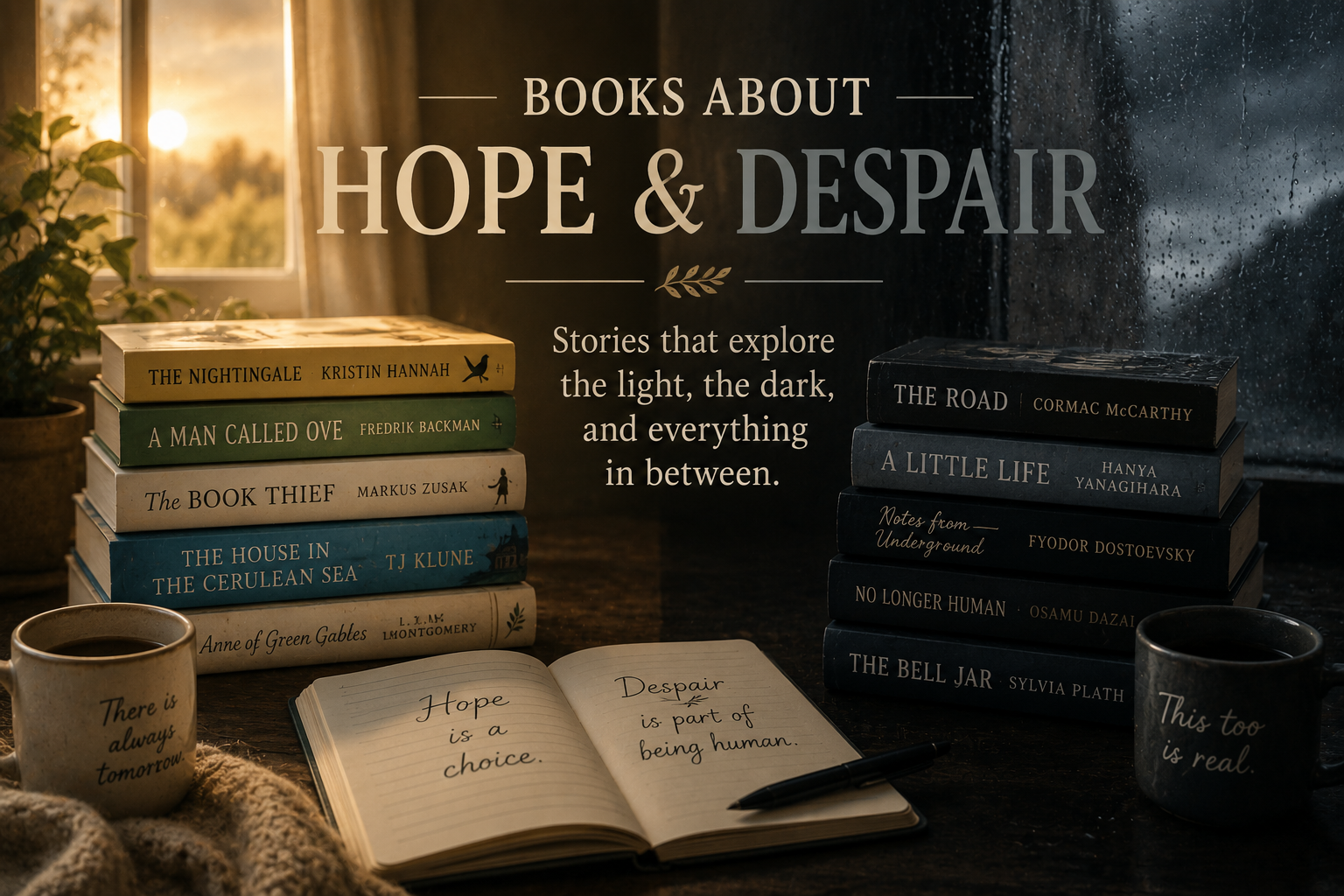
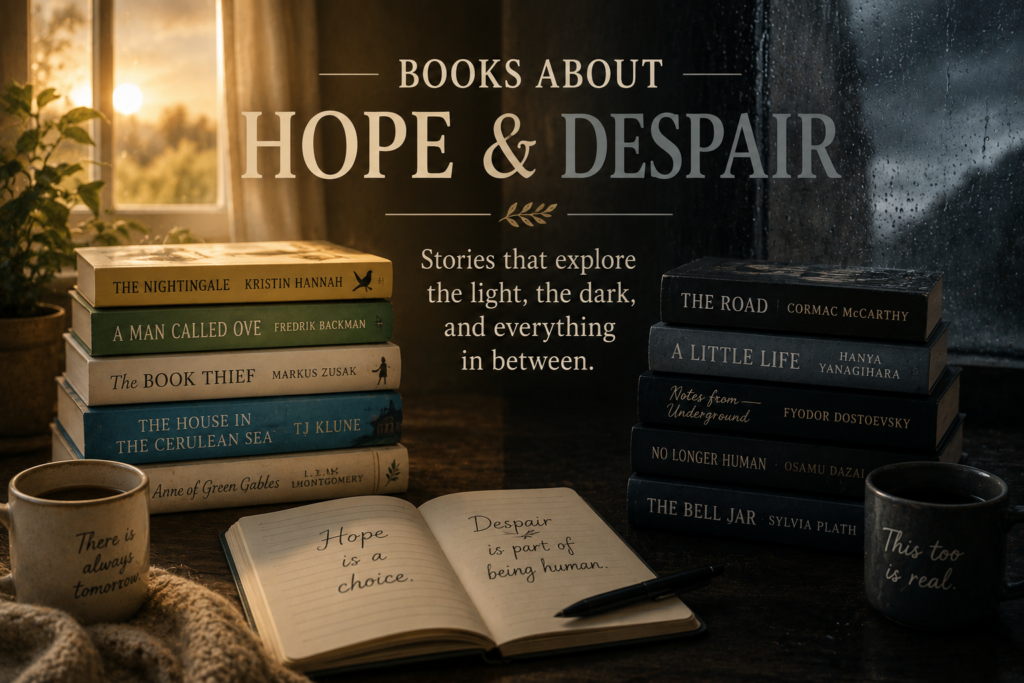
Books About Hope and Despair speak to some of the deepest parts of human life. These stories show how people survive pain, loss, fear, and doubt while still reaching for meaning.
For students, these books can make hard ideas easier to discuss. They also show why literature matters when life feels uncertain.
In this Guide
- Why these books matter
- Best books to read
- Major themes and symbols
- How authors balance hope and despair
- Tips for students
- FAQs
Why Books About Hope and Despair Matter
Stories about pain and survival help readers face hard truths without losing sight of light.
Books About Hope and Despair matter because they do not pretend life is simple. They show that joy and sorrow can exist at the same time.
In many great novels, hope is not loud or easy. It may look like one kind act, one memory, or one choice to keep going.
Despair often appears when characters feel trapped. They may face war, grief, poverty, illness, or a cruel society.
Yet the best works do more than show suffering. They ask what keeps people human when the world feels broken.
Best Books About Hope and Despair for Students
These works are strong choices for high school, AP Literature, and college readers.
Books About Hope and Despair often appear on school reading lists because they lead to rich class discussion. They also give students clear examples of theme, character change, and symbolism.
Night by Elie Wiesel
Night is one of the most powerful books about suffering in the 20th century. Wiesel writes about his experience during the Holocaust with clear and painful honesty.
The book shows deep despair, especially when faith and trust seem lost. Yet the act of telling the story becomes a form of hope.
Students can learn more about Wiesel through the Britannica biography of Elie Wiesel.
The Road by Cormac McCarthy
The Road follows a father and son as they move through a ruined world. The setting is bleak, cold, and dangerous.
Still, the bond between the father and son gives the novel its light. Their love becomes a small fire against a dark world.
A Tale of Two Cities by Charles Dickens
Dickens sets this novel during the French Revolution. The story is full of fear, revenge, and social unrest.
But the novel also shows sacrifice and moral courage. Sydney Carton’s final choice turns despair into a strange kind of hope.
The Book Thief by Markus Zusak
The Book Thief takes place in Nazi Germany and follows a girl named Liesel. Books, words, and friendship help her survive a violent time.
The narrator, Death, gives the novel a dark tone. Still, Liesel’s love of stories shows how language can protect the soul.
Common Themes in Books About Hope and Despair
These stories often return to the same big questions about pain, courage, and meaning.
One major theme in Books About Hope and Despair is survival. Characters must decide if life is worth fighting for when the world feels cruel.
Another theme is faith. This does not always mean religion. It can mean trust in people, love, memory, or justice.
Many books also explore moral choice. A character may not be able to fix the world, but they can choose how to act inside it.
In To Kill a Mockingbird, Atticus Finch does not win his case. Still, his choice to defend Tom Robinson becomes a hopeful act in a racist society.
In Jane Eyre, Jane faces loneliness and unfair treatment. Her hope comes from self-respect and the belief that her life has value.
Symbols in Books About Hope and Despair
Symbols help readers see hope and despair in concrete ways.
Books About Hope and Despair often use light and darkness. Light may stand for truth, safety, or faith. Darkness may suggest fear, loss, or moral confusion.
Fire is another common symbol. In The Road, the father tells the boy they are “carrying the fire.” This fire stands for goodness and human decency.
Birds can also suggest hope. Emily Dickinson’s famous poem “Hope is the thing with feathers” compares hope to a bird that keeps singing. You can read the poem at the Poetry Foundation.
Objects can carry deep meaning too. In The Book Thief, stolen books become signs of comfort, risk, and survival.
If you want to review terms like symbol, motif, and theme, see this helpful literary devices list.
How Authors Balance Hope and Despair
The strongest works do not make hope feel fake or despair feel endless.
Authors often place hope inside small moments. A meal, a promise, or a shared story can become powerful when life feels harsh.
This balance gives Books About Hope and Despair their emotional force. Readers feel the weight of loss, but they also see why people keep moving forward.
Writers may also use contrast. A violent scene may sit next to an act of kindness. A ruined setting may contain one sign of beauty.
This is why these books stay with readers. They do not give easy answers. They show that hope can survive even when it looks weak.
Recommended Books About Hope and Despair to Add to Your Shelf
These are useful choices for class, essays, or personal reading.
- Night by Elie Wiesel
- The Road by Cormac McCarthy
Both books are short enough for focused study, but deep enough for strong analysis. They are also rich in symbols, themes, and moral questions.
How to Read Books About Hope and Despair for Class
A smart reading plan can help students move past plot summary.
When you read Books About Hope and Despair, track moments where characters face a choice. Ask what they lose, what they protect, and what they still believe.
Pay close attention to repeated images. If light, fire, birds, roads, or books appear often, they may point to a larger theme.
Notice tone too. A sad book can still contain hope if the language shows care, beauty, or moral strength.
For essays, connect theme to evidence. Do not just say a book is hopeful or sad. Show how the author builds that feeling through setting, dialogue, symbols, and conflict.
You can also use this guide to literary devices to strengthen your analysis.
Why Students Connect With Books About Hope and Despair
These books feel personal because they reflect real fears and real strength.
Many students connect with Books About Hope and Despair because they show life without sugarcoating it. The characters struggle, fail, and doubt themselves.
At the same time, these stories remind readers that pain is not the whole story. A character can suffer and still grow.
That message can feel powerful in school, where students often face pressure, change, and questions about the future.
FAQs About Books About Hope and Despair
What are Books About Hope and Despair?
They are books that explore both suffering and the human need for meaning. They often show characters facing loss, fear, or injustice while still seeking light.
Why are these books taught in school?
They lead to strong discussions about theme, character, conflict, and symbolism. They also help students think about moral choices.
What is a good short book about hope and despair?
Night by Elie Wiesel is a strong choice. It is brief, but it raises deep questions about faith, memory, and survival.
Are these books always sad?
No. Many are sad, but they are not only sad. The best ones show how hope can exist even in painful conditions.
Key Takeaway
Books About Hope and Despair remind us that literature can face darkness without giving up on light.
Conclusion
Books About Hope and Despair help readers understand what people do when life feels broken. They show fear, grief, and loss, but they also show courage, love, and memory.
For students, these books are more than class texts. They are guides to some of the hardest questions humans ask.
Their lasting message is simple: hope does not erase despair, but it can help people endure it.