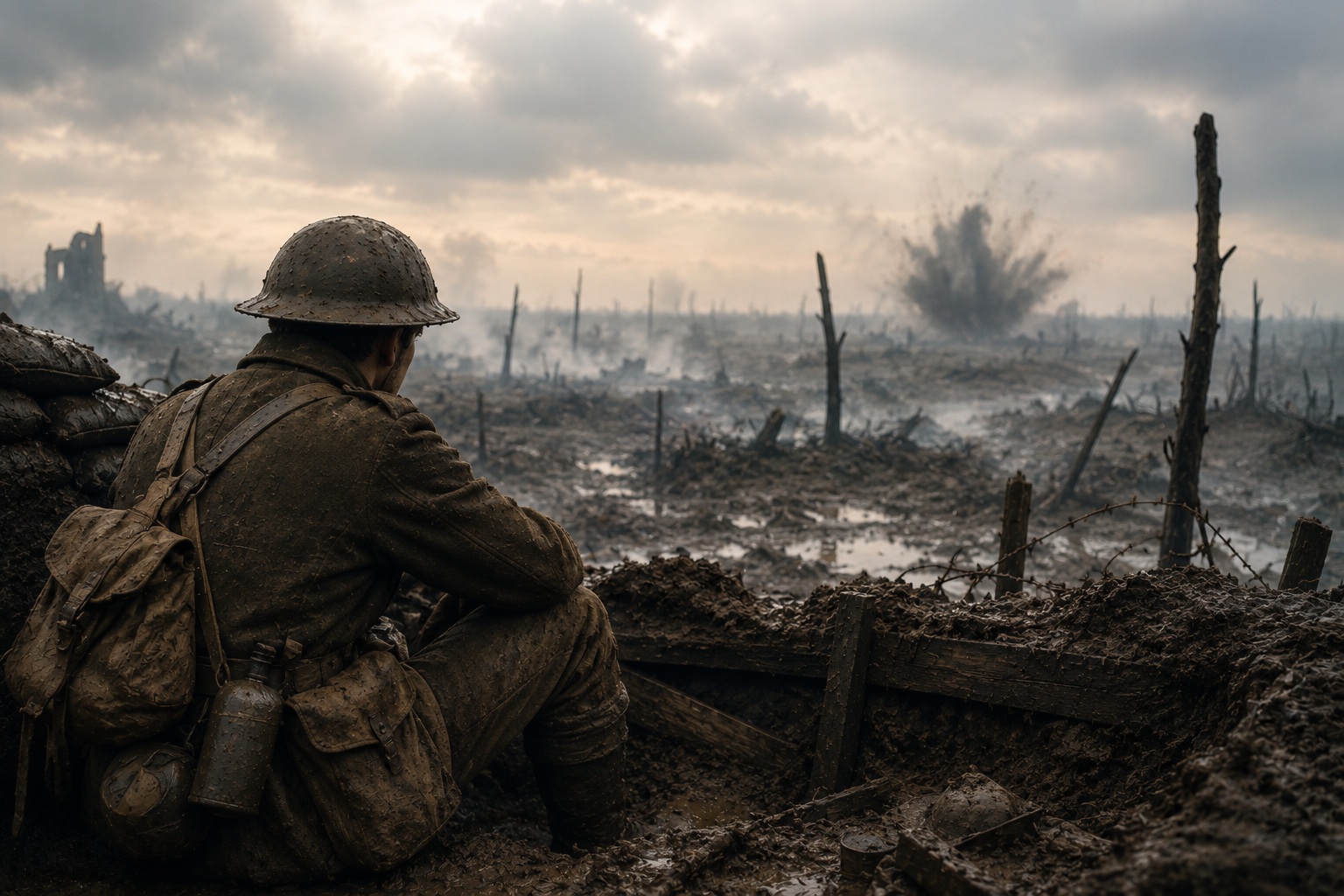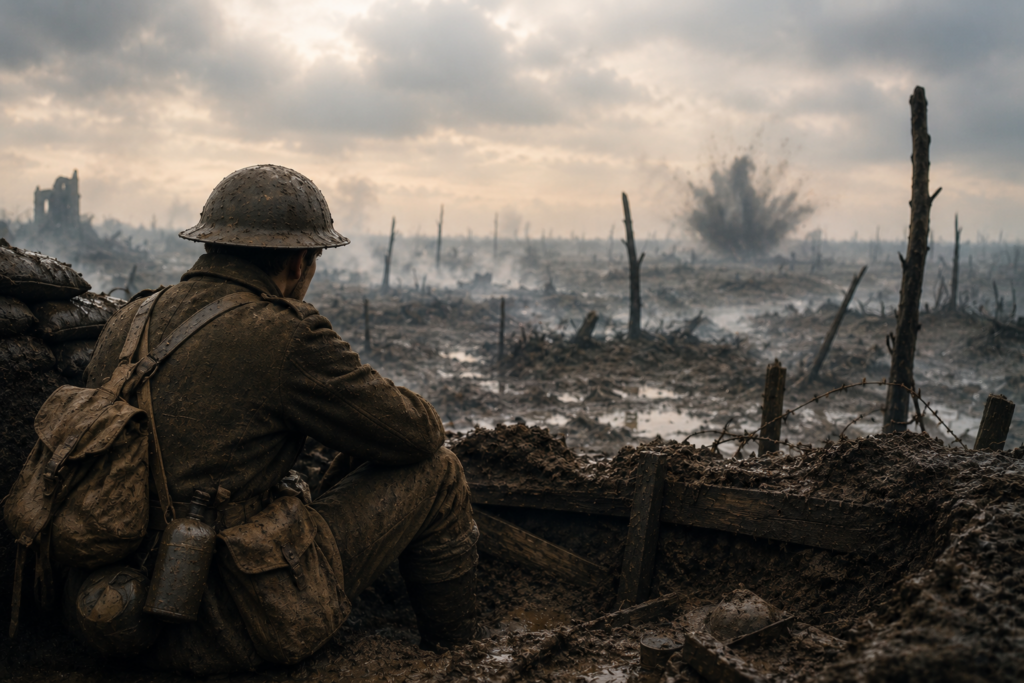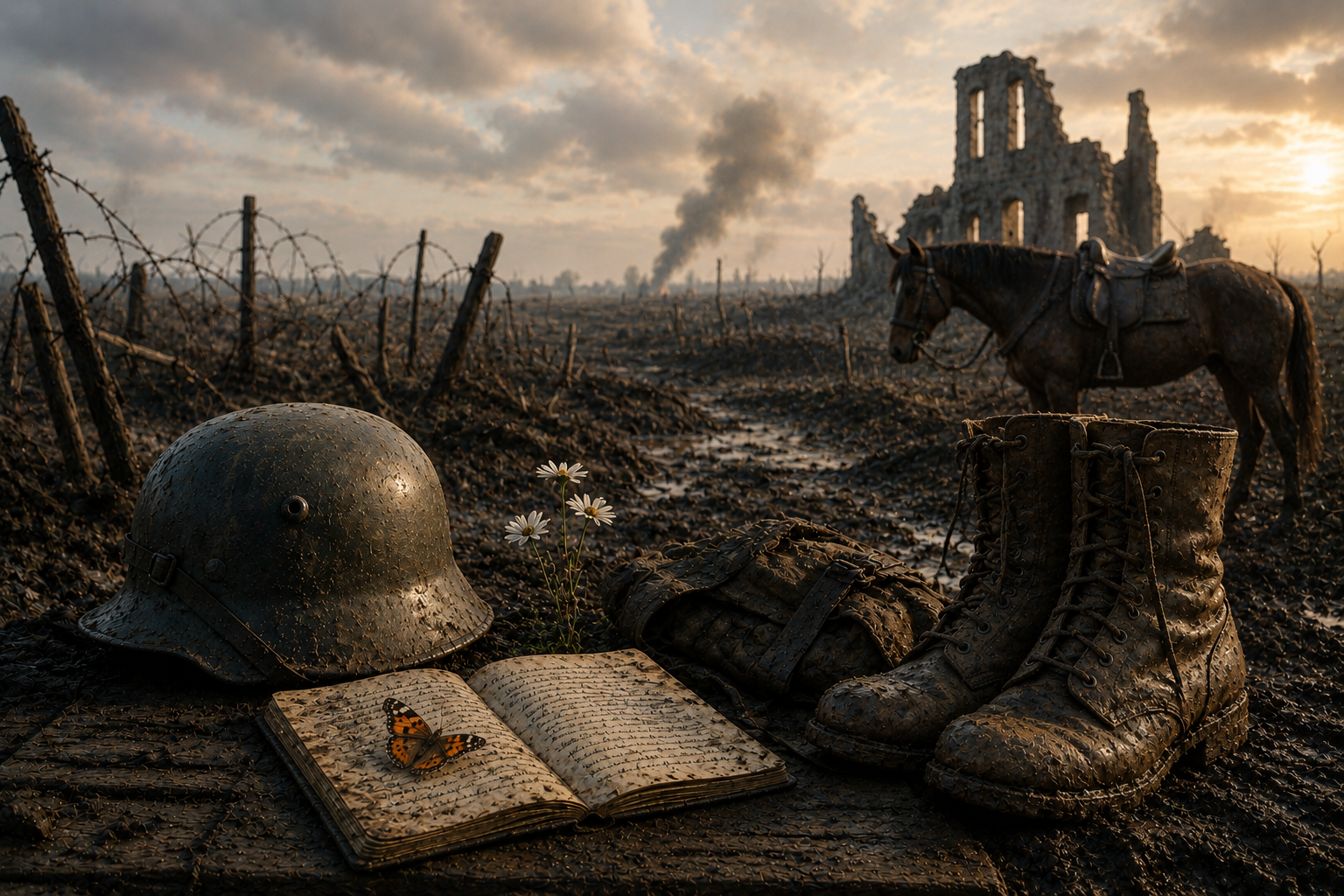
The symbols in All Quiet on the Western Front help show the true cost of World War I. Remarque uses boots, earth, uniforms, food, animals, and nature to reveal fear, loss, and the way war crushes young people.
This guide explains the main images in simple terms and connects each symbol to a theme you can use in class or in an essay.
In this Guide
- Why the symbols matter
- Major symbols in the novel
- Nature and quiet images
- How symbols connect to theme
- How to write about the symbols
- Books to read next
- FAQ
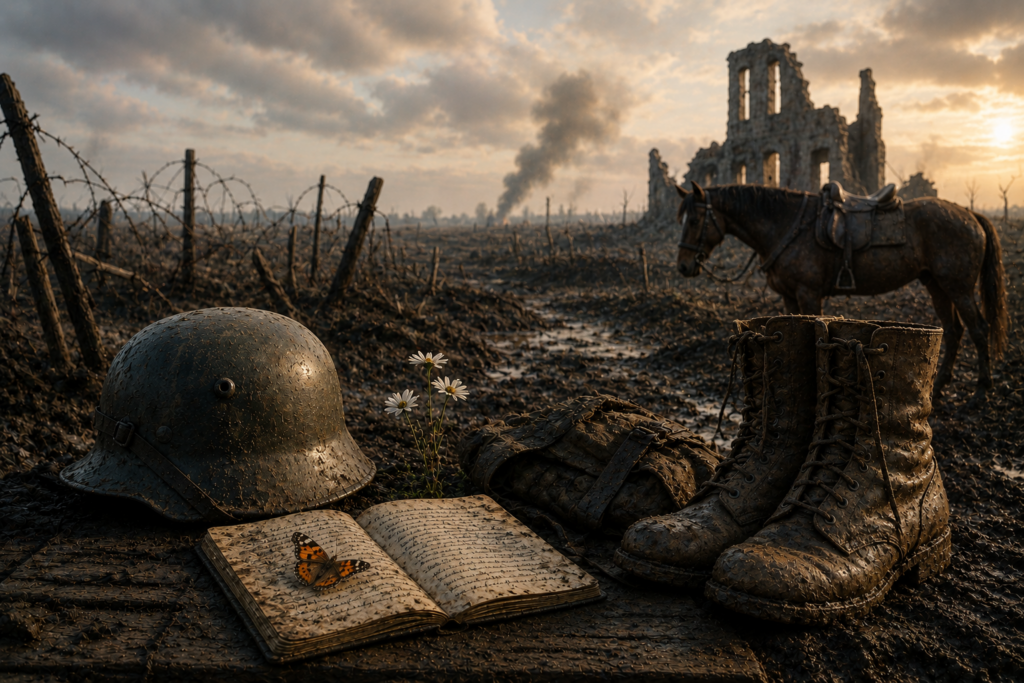
Why Symbols in All Quiet on the Western Front Matter
Remarque uses ordinary objects to show what war does to young men.
A symbol is something concrete that points to a deeper idea. If you want a quick refresher, read our guide on how to find symbolism in a story.
When you study symbols in All Quiet on the Western Front, notice how simple things change meaning. A pair of boots is not just a pair of boots. The earth is not just dirt. These images show the soldiers’ hunger, fear, and broken hope.
This is common in literature. In The Great Gatsby, the green light stands for desire and the future. In Lord of the Flies, the conch stands for order. Remarque uses symbols in a harsher way because his world is shaped by trench war.
For background on the author, you can read Britannica’s biography of Erich Maria Remarque.
Major Symbols in All Quiet on the Western Front
The biggest symbols in All Quiet on the Western Front are tied to survival, not romance or beauty.
Kemmerich’s Boots
Kemmerich’s boots are one of the clearest symbols in the novel. After Kemmerich dies, the boots pass to another soldier because good boots are rare at the front.
This moment feels cold, but that is the point. War has made the soldiers value practical survival over normal grief. The boots symbolize how war steals emotion and turns death into routine.
The boots also show how young men replace each other. One soldier dies, another wears his boots, and the war moves on.
The Earth
The earth is a place of safety for Paul and the other soldiers. In battle, they press their bodies into the ground to escape shells and gunfire.
At times, the earth feels almost like a mother. It covers them and protects them when human systems fail.
Yet this comfort is dark. The soldiers survive by crawling, hiding, and reacting like animals. The earth symbolizes both shelter and the loss of human dignity.
Uniforms
Uniforms make the soldiers look alike. They erase personal identity and turn boys into parts of a war machine.
Paul and his friends once had dreams, families, and school lessons. In uniform, they become bodies sent to the front.
This symbol connects to the theme of dehumanization. War does not care who a person is. It only asks what that person can endure.
Food
Food in the novel often means more than comfort. It stands for the body’s basic needs.
The soldiers think about meals because hunger is constant. In war, big ideas like honor and glory matter less than bread, soup, and rest.
Food also exposes the gap between war speeches and war life. Adults praise sacrifice, but the young soldiers just want to stay alive.
Horses
The wounded horses create one of the most painful scenes in the book. They suffer even though they do not understand the war.
The horses symbolize innocent victims. Their pain shows that war harms more than soldiers. It spreads suffering across every living thing near the battlefield.
Nature and Symbols in All Quiet on the Western Front
Nature often looks peaceful while human violence fills the world around it.
As one of the most important symbols in All Quiet on the Western Front, Nature creates a sharp contrast. Birds, trees, sky, and fields can suggest beauty, but they stand beside mud, blood, and fear.
This contrast makes the war feel even more wrong. The natural world continues while people destroy each other.
Butterflies and Fragile Beauty
Butterflies suggest beauty and fragile life. Near the end, Paul reaches toward a peaceful image in a world that has given him almost no peace.
The butterfly image matters because it is soft and delicate. It reminds us that Paul is still human, even after war has damaged him.
The Quiet Front
The title itself points to a bitter symbol. The report says all is quiet on the Western Front, yet Paul is dead.
This quiet does not mean peace. It means one more death is too common to count. The calm wording hides the horror beneath it.
How Symbols in All Quiet on the Western Front Connect to Theme
Symbols matter most when they help explain the novel’s larger message.
The symbols in All Quiet on the Western Front connect to Remarque’s antiwar themes. They show that war is not heroic. It is physical, cruel, and deeply wasteful.
| Symbol | What it means | Theme connection |
|---|---|---|
| Boots | Survival after death | War makes loss feel routine |
| Earth | Shelter and animal instinct | War strips away dignity |
| Uniforms | Loss of identity | War turns people into tools |
| Food | Basic need | Survival replaces idealism |
| Nature | Beauty beside violence | War works against life |
These symbols help readers see the main idea: the young soldiers lose more than their safety. They lose their youth, trust, and sense of belonging.













How to Write About Symbols in All Quiet on the Western Front
A strong symbolism paragraph should name the symbol, explain what it means, and connect it to a theme.
Try a sentence like this: Kemmerich’s boots symbolize the way war makes death feel ordinary, because the soldiers focus on who will use the boots next instead of on the loss of their friend.
This works because it uses a concrete detail and explains the deeper meaning. It does not just say the boots are important.
For more help, use our simple symbolism method before you write your essay.
For a cleaner study routine, pair this article with our symbolism note sheet.
Books to Search on Amazon
These books pair well with this symbolism guide. Search the titles on Amazon or check your school library.
- All Quiet on the Western Front by Erich Maria Remarque
- A Farewell to Arms by Ernest Hemingway
FAQ About Symbols in All Quiet on the Western Front
What are the most important symbols in All Quiet on the Western Front?
The most important symbols are Kemmerich’s boots, the earth, uniforms, food, horses, and nature. Each one shows a different part of war’s damage.
Why are symbols in All Quiet on the Western Front so bleak?
They are bleak because the novel is antiwar. Remarque wants readers to see war as wasteful, not noble.
What do Kemmerich’s boots symbolize?
The boots symbolize survival, emotional numbness, and the way soldiers replace one another after death.
What does nature symbolize in the novel?
Nature symbolizes beauty and life, but it also shows how strange war is. Peaceful images sit beside violence.
Key Takeaway
The symbols in All Quiet on the Western Front matter because they turn simple objects into powerful proof of the novel’s message: war destroys bodies, identity, and youth.