Flash Memoir Prompt: Argument You Witnessed Between Adults in Your Family as a Child

flash memoir prompt argument

A focused writing invitation for remembering an argument you witnessed between adults in your family as a child, through one clear scene, one sharp detail, and the emotions you were too young to name.

The room may have changed before anyone raised a voice. Maybe a fork stopped halfway to someone’s mouth. Maybe a door shut too hard. Maybe you were sitting on the carpet, pretending to watch TV while every part of you listened.

This flash memoir prompt about an argument witnessed between adults in your family asks you to return to a moment when childhood met adult conflict. You do not have to solve the argument. You do not have to judge anyone. You only have to remember what it felt like to be there.

flash memoir prompt argument

The Prompt

Write about an argument you witnessed between adults in your family as a child.

This prompt can unlock a powerful flash memoir because children often notice what adults think they are hiding. You may remember the sound of a voice, the smell of dinner burning, or the way someone looked away instead of answering.

A memory like this does not need a full family history behind it. In fact, it may work better if you stay with one moment. A flash memoir prompt about an argument witnessed between adults in your family becomes strongest when it focuses on what the child saw, heard, and misunderstood.

Why This Memory Matters

Family arguments can mark a child’s understanding of safety, loyalty, silence, and power. Even if the argument was ordinary to the adults, it may have felt huge to you. Children often measure danger by tone, posture, and what happens after the shouting stops.

This kind of memoir does not have to accuse anyone. It can simply tell the truth of a child’s view. Maybe you thought the argument was your fault. Maybe you learned which parent to avoid. Maybe you discovered that adults could be scared too.

Writing this scene may also show how your younger self made meaning from limited information. That gap between what happened and what you understood is often where the deepest memoir writing lives.

If you are practicing close observation, the same skill you might use to analyze characters in literature can help here. Notice action before explanation. What did each person do with their hands? Who moved closer? Who left the room? Those details can reveal more than a summary ever could.

How to Approach This Prompt

Begin with a physical detail. Choose one object, sound, or movement from the scene. It might be a cracked plate, a buzzing kitchen light, a suitcase by the door, or your own knees pulled under your chin.

Then narrow the memory to one scene. Do not try to explain every argument your family ever had. Stay inside a short stretch of time. Let the reader stand where you stood.

You might write the first draft in present tense, as if the child is living it now. For example: “I am under the dining room table. My father’s shoes are beside my mother’s bare feet.” This can help you stay close to the original feeling.

Write what you noticed before you explain what it meant. A child may not understand divorce, money trouble, jealousy, grief, or stress. The child may only know that someone’s voice has changed. Let that limited understanding guide the piece.

If you feel stuck, make a quick note map before drafting. Write down where you were, who was there, what you heard, and what you did with your body. This is close to the way readers annotate literature, except you are marking your own memory instead of a page.

Try not to rush toward the lesson. The emotional truth may be small. Maybe the scene explains why you dislike closed doors. Maybe it shows the first time you realized adults could say things they could not take back.

The Flash Memoirist
previous arrow
next arrow

A Quick Example

I was nine, sitting on the stairs with my spelling book open on my lap. The word was “separate,” and I kept writing the second “a” too close to the “r.” In the kitchen, my aunt said my mother’s name like it was something breakable. Then my grandfather slapped his palm on the table, and all the glasses jumped. No one knew I was there, or maybe they did and decided I was too small to count. I remember the smell of onions in the pan and my mother’s voice getting very quiet. That scared me more than the shouting. When my uncle came into the hall, he smiled at me like nothing had happened. I looked back at my paper and wrote “separate” five more times.

Try It Yourself

Give yourself ten minutes with this prompt. Start with the room, not the reason. Let the memory stay partial if that is how it comes back to you.

You may choose to write from the child’s point of view first, then add one or two lines from your adult self at the end. That contrast can create depth without forcing a neat conclusion.

A flash memoir prompt about an argument witnessed between adults in your family can bring up strong feelings, so write at a pace that feels safe. You can change names, skip details, or stop after one paragraph. The goal is not to expose everything. The goal is to catch one honest moment on the page.

Want More Flash Memoir Prompts?

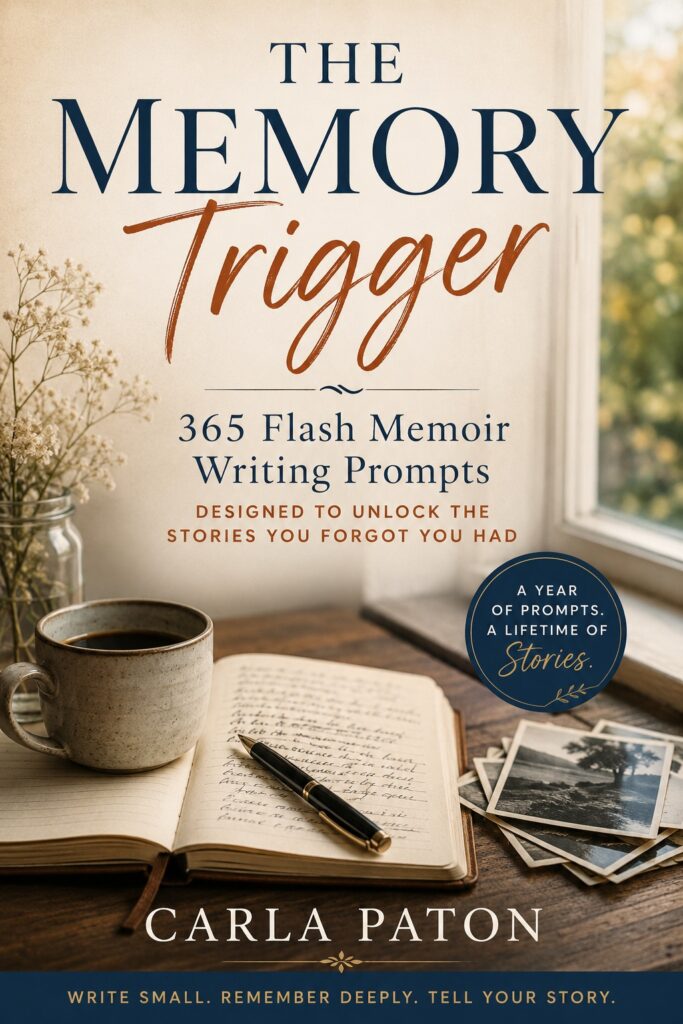
If this prompt helped you find a memory worth exploring, keep going with short, focused pieces. Explore all 365 prompts in The Memory Trigger: 365 Flash Memoir Writing Prompts.
The Memory Trigger

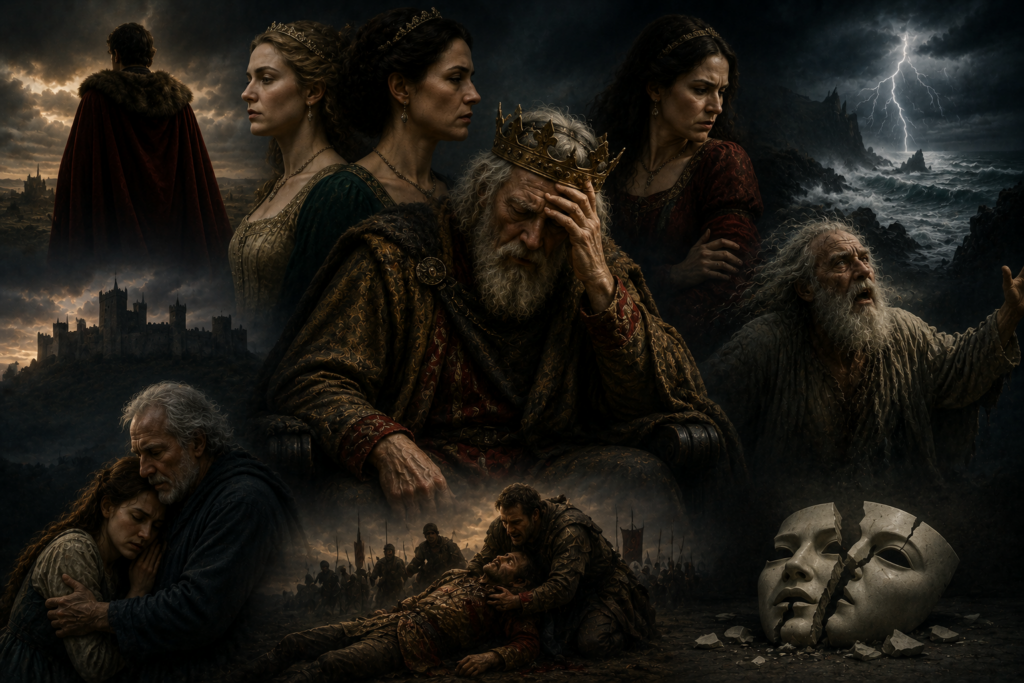
Themes in King Lear: A Student-Friendly Guide

King Lear Themes

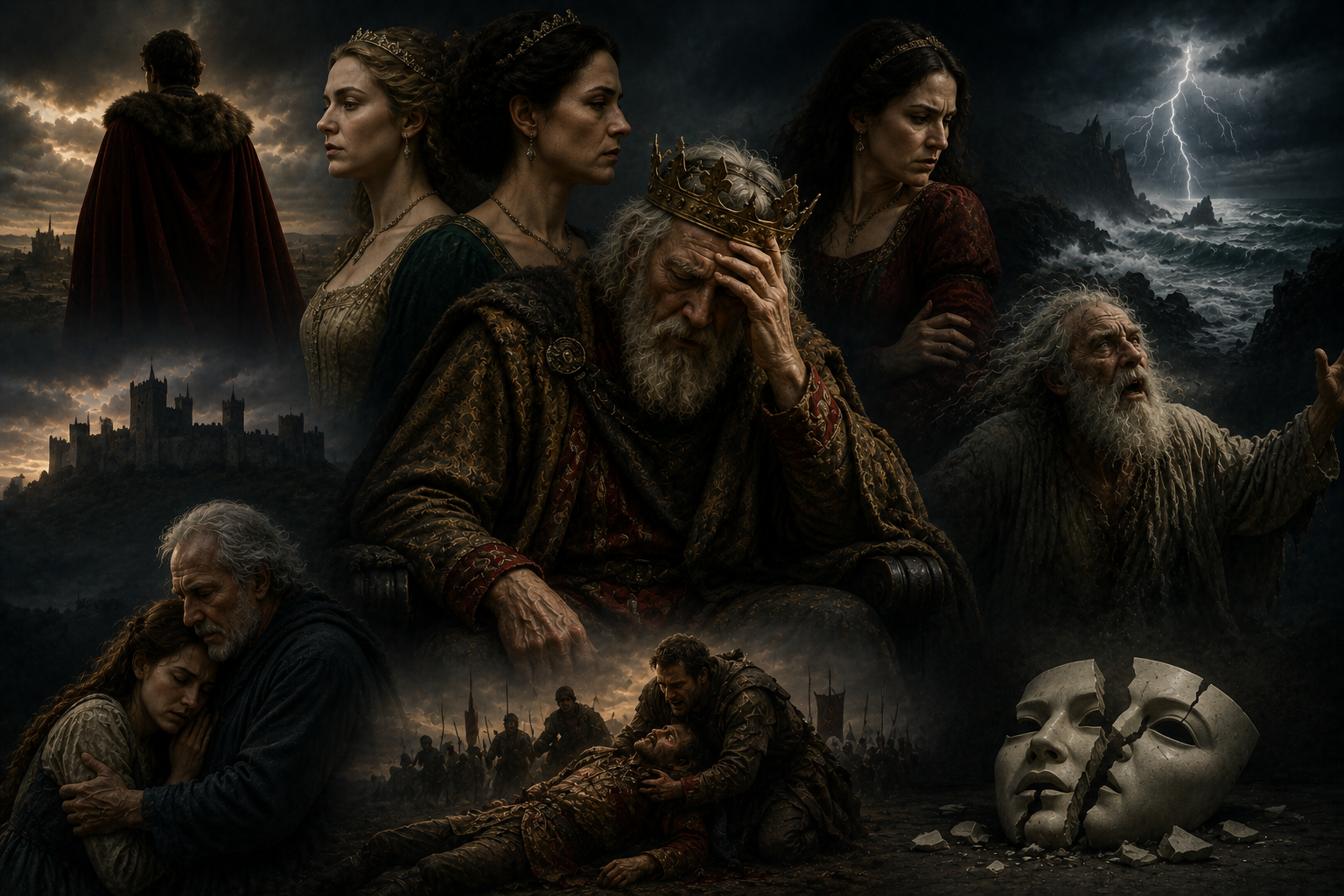
Shakespeare’s tragedy can feel huge at first, but the themes in King Lear make the play easier to understand. This guide breaks down the major ideas students should notice, with clear examples and study tips.

In this Guide

  • Why themes matter in the play
  • Power and authority
  • Family loyalty and betrayal
  • Madness and insight
  • Justice and suffering
  • Nature and order
  • Helpful books and FAQ
King Lear Themes

Why themes in King Lear Matter

The play is not only about one old king. It is about what happens when love, power, and truth fall apart.

The themes in King Lear help students see the deeper meaning behind the plot. Lear gives away his kingdom, trusts the wrong people, and loses almost everything.

That story may seem distant, but its questions still feel real. Who deserves power? Can family love survive pride? Does the world punish evil fairly?

If you need help connecting theme to character choices, this guide on how to analyze characters in literature can make your reading stronger.

Power and Authority: One of the Central Themes in King Lear

King Lear shows that power without wisdom can destroy a family and a nation.

Among the themes in King Lear, power is one of the most important. Lear begins the play as a king, but he wants to keep the honor of power while giving away the work of rule.

This choice creates chaos. Once Lear loses real control, Goneril and Regan no longer treat him with respect. His title means little without authority behind it.

Shakespeare asks students to think about what makes a good ruler. Is it age, rank, kindness, or judgment? Lear has the crown at first, but he lacks self-knowledge.

This theme also appears in Macbeth, where desire for power leads to fear and violence. In both plays, rule becomes dangerous when it serves pride instead of duty.

Family Loyalty and Betrayal in the Themes in King Lear

The play turns family love into a test, and almost everyone fails in some way.

This part of the themes in King Lear begins with Lear’s love test. He asks his daughters to prove their love with words before he divides the kingdom.

Goneril and Regan flatter him, but their love is false. Cordelia speaks honestly, yet Lear rejects her because her answer wounds his pride.

The Gloucester plot mirrors this conflict. Edmund betrays his father and brother, while Edgar stays loyal even after he is forced into exile.

These family conflicts make the play painful. Shakespeare shows that love based on performance is weak. Real loyalty may look quiet, but it lasts longer than praise.

Madness, Insight, and the Themes in King Lear

Lear loses his social power, but he starts to see the truth more clearly.

The themes in King Lear often work through opposites. Lear seems mad on the heath, yet his suffering helps him understand poverty, weakness, and human need.

Before his fall, Lear cares most about honor and obedience. After the storm, he sees that many people live without comfort or protection.

The Fool also matters here. He speaks in jokes, but his words reveal truth. In Shakespeare, the person who seems foolish often sees more than the powerful people around him.

This idea also appears in Hamlet. Hamlet’s strange behavior makes others doubt him, but it also helps him expose hidden corruption.

Justice and Suffering in the Themes in King Lear

The play asks a hard question: does the world make moral sense?

Justice is one of the darkest themes in King Lear. Good people suffer, cruel people gain power, and punishment does not always feel fair.

Gloucester is blinded after he helps Lear. Cordelia dies even though she is honest and kind. Lear suffers deeply before he learns the truth.

Students often expect tragedy to reward virtue in the end. King Lear refuses that comfort. It presents a world where goodness matters, even when it does not save a person from pain.

This is why the ending feels so powerful. The play does not give easy answers. It forces readers to sit with grief and moral shock.

Nature, Order, and Disorder

The storm outside reflects the broken order inside Lear’s world.

Nature appears in many forms throughout the play. Characters speak of storms, animals, age, and human weakness.

When Lear stands on the heath, the weather feels like more than background. The storm mirrors his mind and the disorder in the kingdom.

The play also questions what is natural in family life. Should children obey parents forever? Should parents earn respect through care? Shakespeare does not make these questions simple.

For a helpful overview of the play’s background, see Britannica’s entry on King Lear.

Blindness and Self-Knowledge

Many characters must lose something before they understand the truth.

Blindness is both literal and symbolic in the play. Gloucester cannot see Edmund’s lies until it is too late. After he is blinded, he understands who truly loves him.

Lear has the same kind of inner blindness. He cannot see Cordelia’s honesty at first. He mistakes loud praise for love.

This theme is common in tragedy. In Oedipus Rex, Oedipus also seeks truth but cannot see the truth about himself until the damage is done.

In King Lear, self-knowledge comes at a terrible cost. That cost is part of what makes the play so haunting.

How to Write About Themes in King Lear

A strong essay connects a theme to character choices, key scenes, and the ending.

When you write about themes in King Lear, do not just name the theme. Explain how Shakespeare builds it through conflict and change.

For example, if you write about power, start with Lear’s decision to divide the kingdom. Then show how that decision changes his family and weakens the state.

If you write about justice, focus on the ending. Ask why Cordelia’s death matters and what it suggests about suffering.

You can also use student-friendly literature study guides to review key scenes before you write.

Books That Pair Well with King Lear

These books can help if you want more context or a stronger essay.

  • King Lear by William Shakespeare, especially a student edition with notes
  • Shakespearean Tragedy by A. C. Bradley

You can look for these through Amazon, your school library, or a public library.

FAQ: themes in King Lear

What is the main theme of King Lear?

The main theme is the danger of pride and poor judgment. Lear’s need for praise causes his fall and harms the whole kingdom.

Why is family betrayal important in the play?

Family betrayal drives the plot. Goneril, Regan, and Edmund use trust for personal gain, while Cordelia and Edgar show quiet loyalty.

How does madness connect to wisdom?

Lear seems mad after he loses power, but his suffering helps him see truth. He becomes more human after he loses his pride.

Is there justice at the end of King Lear?

The ending gives only partial justice. Some evil characters are punished, but innocent people still suffer, which makes the tragedy feel harsh.

Key Takeaway

The themes in King Lear show a world where power can fail, love can be tested, and truth often arrives too late. That is why the play still feels urgent for students today.

error

Enjoy this article? Please spread the word :)

Follow by Email
BLUESKY
fb-share-icon
Reddit
LinkedIn
Share
RSS