A focused flash memoir prompt family member who left what the house felt like after can help you write one small scene about absence, rooms, silence, and the way a home changes when someone is suddenly gone.
The first sign may have been ordinary. Their shoes were missing from the doorway. Their coffee mug stayed clean in the cabinet. A bedroom door stood open when it used to stay shut. After someone leaves, the house can feel larger, colder, or strangely lighter. It may feel like everyone is speaking around an empty chair.
This prompt asks you to notice that shift. You do not have to explain the whole family story. You only need to return to one moment when the absence became real.

The Prompt
Write about the family member who left, and what the house felt like after.
This prompt can unlock a powerful memory because houses hold evidence. A missing coat on a hook can say more than a long explanation. A quiet hallway can carry anger, grief, relief, or confusion. When you write about the house, you give yourself a way into the feeling without having to name everything right away.
A flash memoir prompt family member who left what changed in the rooms, routines, and sounds of home can help you find a clear scene. Instead of writing a full history of the departure, start with what you saw, heard, touched, or avoided.
Why This Memory Matters
When a family member leaves, the story is rarely only about the person who went away. It is also about those who stayed. Who took over their chores? Who stopped talking at dinner? Who pretended nothing had changed?
The house may have shown the truth before anyone said it out loud. Maybe the television stayed on later because no one wanted quiet. Maybe your mother cleaned too much. Maybe your father kept the missing person’s room exactly the same. Maybe you felt guilty because part of you enjoyed the calm.
Memoir can hold mixed feelings. You can miss someone and feel angry at them. You can feel abandoned and still understand why they left years later. You can remember small signs that confused you as a child, then write them now with adult understanding.
This kind of memory also helps you study people on the page. If you are working on personal essays or reading memoirs for school, it can help to think about how people reveal themselves through action. The same skill appears when you analyze characters in literature. What someone says matters, but what they leave behind can matter just as much.


How to Approach This Prompt
Begin with a physical detail. Pick one place in the house where the leaving became noticeable. It might be the kitchen table, the garage, the front porch, a shared bedroom, or the laundry basket.
Then narrow the memory to one scene. Do not try to tell the entire story from the first argument to the final goodbye. Flash memoir works best when you choose a small moment and let it carry the weight.
You might start with a sentence like, “After my brother left, his cereal bowl stayed in the sink for three days.” Or, “The house sounded different without my grandmother’s slippers tapping down the hallway.” Let the object or sound lead you.
Write what you noticed before you explain what it meant. If you were ten years old, write from that ten-year-old view first. What did you misunderstand? What did adults whisper about? What did you pretend not to hear?
Try to avoid turning the piece into a report. You do not need to write, “This was a sad time for our family.” Instead, show the sadness through the room. Maybe nobody sat in the recliner. Maybe the dog kept waiting by the door. Maybe the mail stacked up on the counter because the person who opened it was gone.
Objects can become symbols in memoir, even when they are simple. If you notice that one item carries a larger meaning, you may find it helpful to read about how symbolism works in a story. A suitcase, an empty hook, or a closed door can do quiet emotional work.
A Quick Example
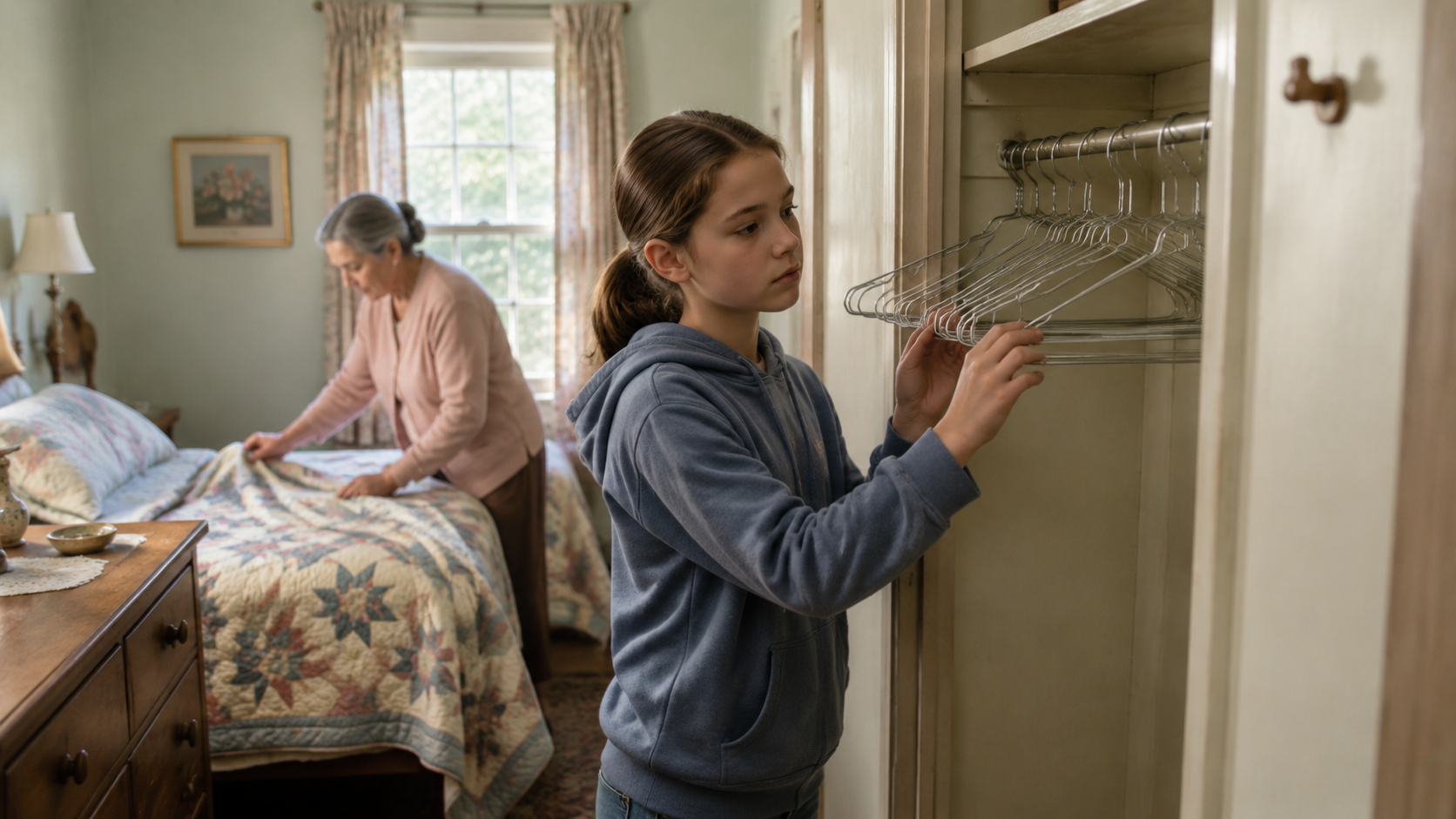
After my aunt moved out, the back room stopped smelling like hairspray and peppermint gum. Nobody said much about it. My grandmother folded the quilt on the bed every morning, even though no one slept there anymore. I was twelve, old enough to know something had gone wrong, young enough to think she might come back if we kept everything ready. One afternoon I opened the closet and saw only wire hangers, all facing the same direction. The sound they made when I pushed them apart felt too loud. That was when the house seemed to notice she was gone too. The room had not become empty all at once. It had been empty for weeks, waiting for me to admit it.
Try It Yourself
Set a timer for ten minutes and write about the first place in the house that changed after your family member left. Stay in one scene. Let the room speak before you explain the family situation.
If the memory feels tender, keep the writing small. Describe the chair, the hallway, the smell of dinner, or the missing voice. You can stop before the full story arrives. A flash memoir prompt family member who left what the house felt like after does not require a perfect ending. It only asks for one honest moment.
When you finish, read your piece once and underline the strongest detail. That detail may be the heart of the memory. You can build around it later, or you can let the short piece stand on its own.
Want More Flash Memoir Prompts?
If this prompt opened a memory you did not expect, keep going with short, focused writing sessions. Explore all 365 prompts in The Memory Trigger: 365 Flash Memoir Writing Prompts.