The table goes quiet, someone looks at you to smooth things over, and you feel the old assignment settle on your shoulders again. This flash memoir prompt role played family didn’t choose invites you to write about that inherited job through one focused memory, one clear detail, and one emotional truth.

The Prompt: Flash Memoir Prompt Role Played Family Didn’t Choose
Write about the role you played in your family that you didn’t choose.
This prompt can open a powerful memory because family roles often begin before we have words for them. Maybe you became the peacemaker, the helper, the quiet one, the funny one, the responsible one, or the child who never caused trouble.
You may not have been given the role out loud. No one may have said, “This is your job now.” Still, you learned it. You watched faces. You heard tones shift. You figured out what kept the house calm.
A flash memoir works well here because you do not have to explain your whole family history. You only need one moment when you felt the role clearly.
Why This Memory Matters
The role you played in your family may have shaped how you speak, listen, apologize, work, love, or stay silent. It may also reveal a version of you that had to grow up too fast or shrink down to keep the peace.
This kind of memory often lives in small scenes. A younger sibling crying in the hallway. A parent asking you to “be mature.” A holiday dinner where everyone waited for you to make a joke. A report card praised less for grades than for being “no trouble.”
Those small scenes matter because they show how identity forms inside ordinary rooms. A child learns who they are expected to be through repeated moments. Over time, that role can feel like personality, even when it began as survival.
If you study literature, you may notice the same pattern in fictional families. Characters often carry roles they never asked for. Looking at how a character’s behavior reveals pressure can sharpen your own memoir writing, too. If you want help seeing that pattern on the page, this guide on how to analyze characters in literature offers a useful lens.
For your own story, the goal is not to blame everyone or solve the past in one paragraph. The goal is to show one true moment. Let the reader feel what it was like to stand inside that role.


How to Approach This Prompt
Begin with a physical detail. Choose something you can see, touch, hear, or smell from the memory. A chipped mug. A bedroom door left open. The sound of dishes being stacked too hard. A school uniform still on your body while adults talked in the next room.
Then narrow the memory to one scene. Do not try to tell the whole story of your childhood. Pick one afternoon, one car ride, one family meal, or one conversation that shows the role you played.
Before you explain what it meant, write what you noticed. What did people do with their hands? Who looked at you? Who avoided your eyes? What did your body do before your mind caught up?
This can keep the writing honest. Instead of starting with “I was the responsible one,” you might begin with, “I counted the cash in my mother’s wallet while my brother kicked the cabinet under the sink.” The reader will understand the role through action.
You can also borrow a practice from close reading. When you annotate literature, you mark details before making a big claim. Try the same move with your memory. Mark the small details first. Let meaning arrive after.
If the memory feels heavy, give yourself a limit. Write for ten minutes. Stay with the scene, then stop. Flash memoir does not require you to reopen every door at once.
You might use this starting line: “In my family, I was the one who…” Then cross it out later if you want. Sometimes a plain sentence helps you enter the room.
A Quick Example
I was twelve when I learned how to count the silence between my parents. At dinner, my father cut his pork chop into smaller and smaller pieces. My mother kept asking if anyone wanted more rice, though the bowl was almost empty. My little sister swung her feet under the table and looked at me. That was my signal. I told the story about our math teacher’s wig slipping sideways during class. It had happened two weeks before, but I knew it still worked. My sister laughed first. Then my mother did. My father smiled without showing teeth. I felt proud for maybe five seconds. Then tired. No one had asked me to be funny, but everyone seemed relieved when I was.
Try It Yourself
Set a timer for ten or fifteen minutes and write from the prompt: Write about the role you played in your family that you didn’t choose.
Focus on one memory where the role became visible. You do not need a perfect ending. You do not need to forgive anyone or accuse anyone. Just show what happened and how it felt from inside your younger self.
If you get stuck, return to the body. Where were you sitting? What were you holding? Did your throat tighten, your stomach drop, or your face arrange itself into the expression everyone expected?
This flash memoir prompt role played family didn’t choose can lead to a quiet discovery. You may find grief there. You may find humor. You may find respect for the younger version of you who figured out how to get through the room.
When you finish, read the piece once and underline the sentence that feels most alive. That sentence may be the real beginning.
Want More Flash Memoir Prompts?
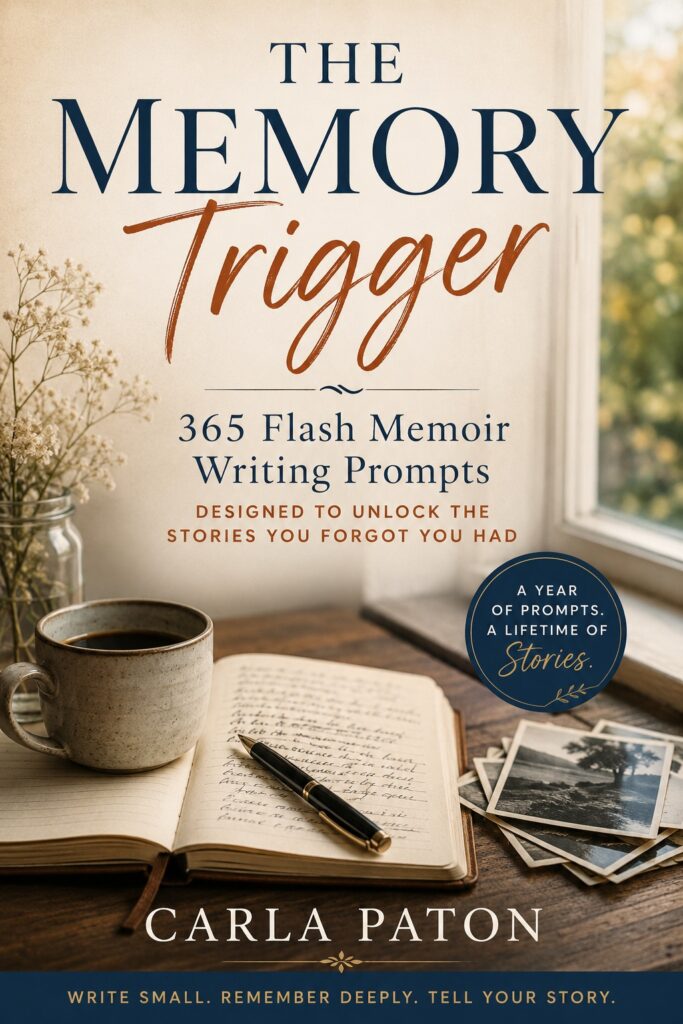
If this prompt helped you uncover a specific memory, keep going with short, focused writing sessions. Explore all 365 prompts in The Memory Trigger: 365 Flash Memoir Writing Prompts.