


Flash Memoir Prompt: Moment You Realized You and a Parent Were More Alike Than You’d Wanted to Admit

memoir prompt parent

You hear your own voice snap across the kitchen, and for one strange second, it sounds exactly like your mother or father. This flash memoir prompt moment realized parent more alike invites you to slow down inside that uneasy recognition and write one honest, focused memory.

memoir prompt parent

The Prompt

Write about the moment you realized you and a parent were more alike than you’d wanted to admit.

This prompt can open a powerful memory because it starts with resistance. Most of us carry at least one sentence inside us: “I’ll never be like that.” Then life gives us a mirror. Maybe it happens while you fold towels the same way your father did. Maybe you hear yourself use your mother’s exact warning tone. Maybe you notice your own stubborn silence at the dinner table.

A flash memoir does not need to explain your whole family history. It only needs one sharp moment where recognition arrives. That small scene can hold surprise, shame, tenderness, humor, or relief.

Why This Memory Matters

Realizing you resemble a parent can feel complicated. If the parent was loving, the likeness may feel sweet. If the relationship was painful, it may feel like something you want to push away. Most memories are somewhere in the middle.

This kind of story often uncovers the space between who you planned to become and who you actually became. You may have spent years trying to be calmer, softer, braver, neater, louder, or freer than a parent. Then one ordinary moment reveals that inheritance is not always dramatic. Sometimes it hides in a sigh, a habit, a look over the top of your glasses.

That is why this flash memoir prompt moment realized parent more alike can be useful for writers. It asks you to look at character, memory, and self-understanding in the same scene. If you enjoy studying how people are shaped by family, you might also like this guide on how to analyze characters in literature. The same skills we use to understand fictional people can help us understand ourselves with more care.

You do not have to decide whether the likeness is good or bad. Try to write the moment before you judge it. Let the reader feel the recognition with you.

How to Approach This Prompt

Begin with a physical detail. Do not start with “My parent and I are alike because…” Start with the thing that showed you. A slammed cabinet. A hand on a hip. A list written in block letters. A joke told too sharply. A quiet drive where neither of you apologized.

Narrow the memory to one scene. Choose one room, one conversation, or one small action. If you try to cover your whole relationship with that parent, the writing may become too broad. Flash memoir works best when it gives the reader a clear place to stand.

Write what you noticed before you explain what it meant. For example, describe your hand tightening around the steering wheel before you write about anger. Describe the silence after your child asked a question before you explain your fear. Let the scene do some of the work.

You might also pay attention to your younger self. What had you promised never to repeat? What bothered you most about that parent when you were a child? The answer may point you toward the right scene.

If you are writing for school or building a personal essay, annotation habits can help too. Mark the details in your draft that carry the most emotion. This simple practice is similar to how to annotate literature, except the text is your own memory.

Keep the ending small. You do not need to forgive, condemn, or solve the whole family pattern. You can end with the sound of your own voice in the room and the strange feeling of knowing where it came from.

The Flash Memoirist
previous arrow
next arrow

A Quick Example

I was helping my son find his missing soccer cleat, and I could feel my patience draining with every closet door he opened. “If you put things where they belong, you wouldn’t have this problem,” I said. The sentence came out clean and hard, like it had been stored in me for years. My father used to say the same thing when I lost library books, mittens, permission slips. I hated how small it made me feel. My son looked down at the floor, and I saw myself at nine years old, searching for something and wishing the adult nearby would just help. I found the cleat under the couch. I handed it to him and said, softer, “Let’s both try to remember next time.”

Try It Yourself

Set a timer for ten minutes and write the scene without stopping. Start with the sound, gesture, phrase, or habit that made you realize the resemblance. Stay close to the moment.

If the memory feels uncomfortable, let it be uncomfortable on the page. You are allowed to write with mixed feelings. You can love a parent and resent a pattern. You can reject a trait and still understand where it came from.

Use this flash memoir prompt moment realized parent more alike as a way to explore inheritance in a small, honest frame. The goal is not to blame yourself or your parent. The goal is to notice something true and give it shape.

Want More Flash Memoir Prompts?

Explore all 365 prompts in The Memory Trigger: 365 Flash Memoir Writing Prompts.
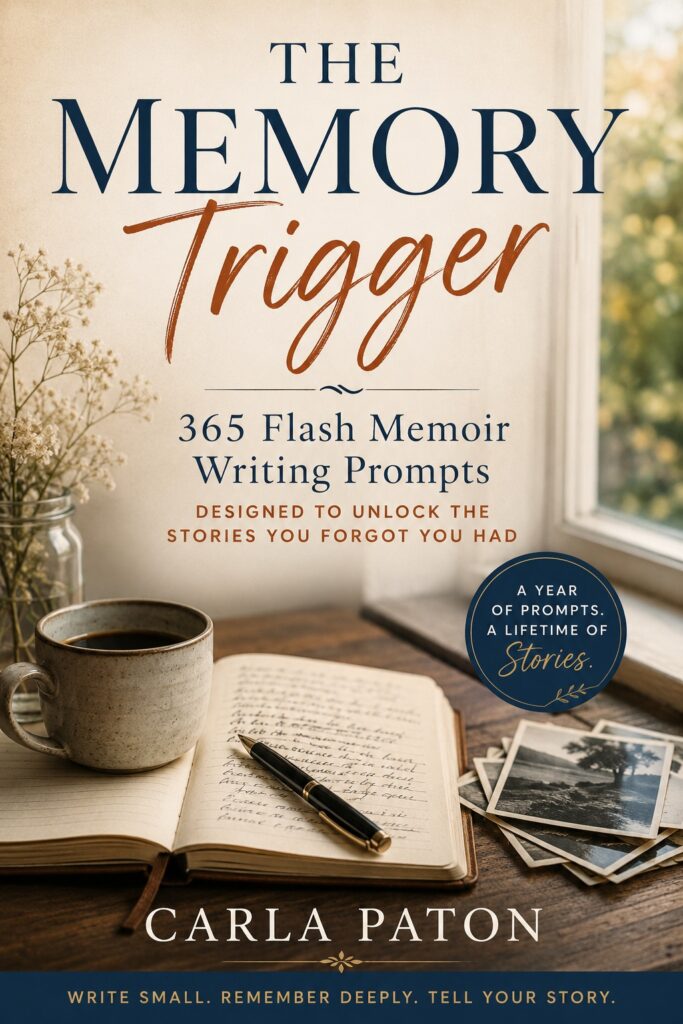
The Memory Trigger

Themes in The Road: A Student-Friendly Guide

The Road Themes
The Road Themes

The themes in The Road help students see why Cormac McCarthy’s novel feels so powerful and bleak. This guide explains the major ideas behind the father and son’s journey so you can discuss the book with more confidence.

In this Guide

Use this guide to review the main ideas, conflicts, and symbols in the novel.

  • Why themes matter in the novel
  • Major themes students should know
  • Love, survival, hope, morality, and faith
  • How to write about the novel in an essay
  • Helpful books and links
  • FAQ for quick review

Why the Themes in The Road Matter

McCarthy does not name the disaster that ruined the world. That choice shifts our focus away from the event and toward what people become after it.

When students study themes in The Road, they should look at choices. The father and son face hunger, fear, and danger, but the deeper question is moral: how do you stay human when the world no longer helps you?

The novel asks hard questions in simple scenes. A can of food, a fire, a stranger, or a safe place can carry deep meaning.

Major Themes in The Road

The novel’s biggest ideas center on what people protect when almost everything is gone.

The major themes in The Road include parental love, survival, moral choice, hope, faith, memory, and loss. These ideas overlap, so a strong essay should not treat them as separate boxes.

For example, the father’s love helps the boy survive. Yet that same love also makes the father fearful and harsh. McCarthy shows love as both a gift and a burden.

This makes the novel different from many adventure stories. The goal is not victory. The goal is to carry goodness forward, even in a world that seems empty.

Themes in The Road: Love and Fatherhood

The bond between the father and son is the emotional center of the novel.

The father lives for the boy. He searches for food, watches for danger, and teaches the boy how to survive. His love gives him purpose when there is little else left.

Still, the novel does not make fatherhood simple. The father protects the boy, but his fear can make him cold toward others. He often sees strangers as threats before he sees them as people.

The boy offers a different kind of love. He feels pity for others and wants to help. This creates tension between safety and compassion.

A useful comparison is Atticus and Scout in To Kill a Mockingbird. Both novels show how parents teach children right and wrong. In The Road, that lesson happens in a world with almost no rules left.

Themes in The Road: Survival and Moral Cost

Survival keeps the plot moving, but morality gives the struggle meaning.

One of the hardest themes in The Road is the cost of staying alive. The father must make fast choices, often with little information. If he trusts the wrong person, the boy may die.

McCarthy forces readers to ask if survival alone is enough. If a person lives but loses mercy, has that person truly survived?

The boy becomes the novel’s moral compass. He keeps asking whether they are still the good guys. That question matters because the ruined world has no courts, schools, or safe communities to confirm right and wrong.

This theme connects well to Lord of the Flies by William Golding. In both books, social order breaks down, and people reveal what they value under pressure.

Themes in The Road: Hope, Despair, and Fire

The phrase about carrying the fire is one of the novel’s clearest symbols of hope.

Fire can mean warmth, life, memory, and moral goodness. When the father tells the boy that they carry the fire, he means they carry something human inside them.

Hope in this novel is not cheerful. It is small and fragile. It looks like another step down the road, a shared meal, or a promise kept.

Despair is always near. The gray setting, ash-covered land, and empty towns make the world feel dead. Yet the boy’s kindness keeps a spark alive.

These themes in The Road show why the ending matters so much. The novel does not erase suffering, but it suggests that goodness can pass from one person to another.

Themes in The Road: Morality in a Broken World

The novel asks what goodness means when no one rewards it.

In a normal society, laws and customs shape behavior. In McCarthy’s world, those systems have collapsed. People must decide who they are without outside support.

The father often chooses caution. The boy often chooses mercy. Neither view is easy to dismiss because the world is truly dangerous.

That tension makes the novel strong for AP Literature essays. You can argue that McCarthy does not give one simple answer. He shows morality as a daily choice made under fear.

For help shaping that kind of claim, see our guide on how to write a literary analysis essay.

Faith, Doubt, and the Search for Meaning

Faith in the novel feels uncertain, but it never fully disappears.

The father sometimes speaks about the boy in sacred terms. He seems to see the boy as a reason to believe that meaning still exists.

At the same time, the ruined world makes faith difficult. The landscape offers little proof that justice or mercy rules human life.

This mix of belief and doubt is common in modern literature. Like King Lear, The Road shows people who suffer deeply and still search for meaning.

Students can read the novel as a spiritual test. The test is not whether the characters find easy answers. It is whether they can keep love and mercy alive without proof that the world will reward them.

Nature, Memory, and Loss

The dead landscape shows how deeply the world has been wounded.

Nature in The Road is not a peaceful escape. Trees fall, animals are rare, and the sky stays dark. The setting reminds readers that the loss is not only human.

Memory also carries pain. The father remembers the old world, including his wife and past comforts. Those memories can help him feel human, but they also sharpen his grief.

The boy has less memory of the world before. Because of that, he represents a possible future. He may carry the past forward, but he is not trapped inside it in the same way.

These themes in The Road connect setting to character. The gray world is not just background. It reflects sorrow, fear, and the fragile need for hope.

How to Write About themes in The Road

A strong theme essay should connect an idea to the author’s choices.

Do not just write, The Road is about survival. That is true, but it is too broad. Instead, explain what McCarthy says about survival.

A stronger claim might be: McCarthy shows that survival has little value unless people protect mercy and love. This claim gives you room to discuss the father, the boy, and the world around them.

Use short scenes as evidence. You might discuss their talks about being the good guys, the symbol of fire, the father’s fear of strangers, or the boy’s concern for people in need.

If you want a quick review tool, our student-friendly theme guide can help you organize notes before class or an essay draft.

For more writing support, review this literary analysis essay guide before you build your thesis.

Suggested Books for Further Reading

These books pair well with The Road because they explore survival, social collapse, or moral pressure.

  • The Road by Cormac McCarthy
  • Lord of the Flies by William Golding
  • Station Eleven by Emily St. John Mandel

You can find these through school libraries, local bookstores, or Amazon.

Helpful Links for Context

A little context can help you understand McCarthy’s style and place in American literature.

Use outside sources for background, but keep your essay focused on the novel’s language, scenes, and symbols.

FAQ: Themes in The Road

These quick answers can help you review before a quiz, class talk, or essay.

What are the main themes in The Road?

The main themes in The Road are love, survival, morality, hope, faith, memory, and loss. The father and son reveal these ideas through their choices.

What does carrying the fire mean?

Carrying the fire means keeping goodness alive. It stands for hope, love, and moral courage in a broken world.

Is The Road more hopeful or hopeless?

It is both. The world is dark and violent, but the boy’s compassion gives the story a small light of hope.

Why is the father and son relationship important?

Their bond gives the novel its heart. It shows how love can help people endure fear, hunger, and loss.

What is a good thesis about The Road?

A strong thesis should explain McCarthy’s message. For example, you could argue that the novel shows survival must include mercy, not just physical safety.

Key Takeaway

The novel’s meaning rests on one clear question: what should people protect when the world falls apart?

At the center of themes in The Road is the idea that love and goodness matter most when they are hardest to keep. McCarthy’s world is bleak, but the boy’s mercy keeps the fire alive. 🔥

error

Enjoy this article? Please spread the word :)

Follow by Email
BLUESKY
fb-share-icon
Reddit
LinkedIn
Share
RSS







