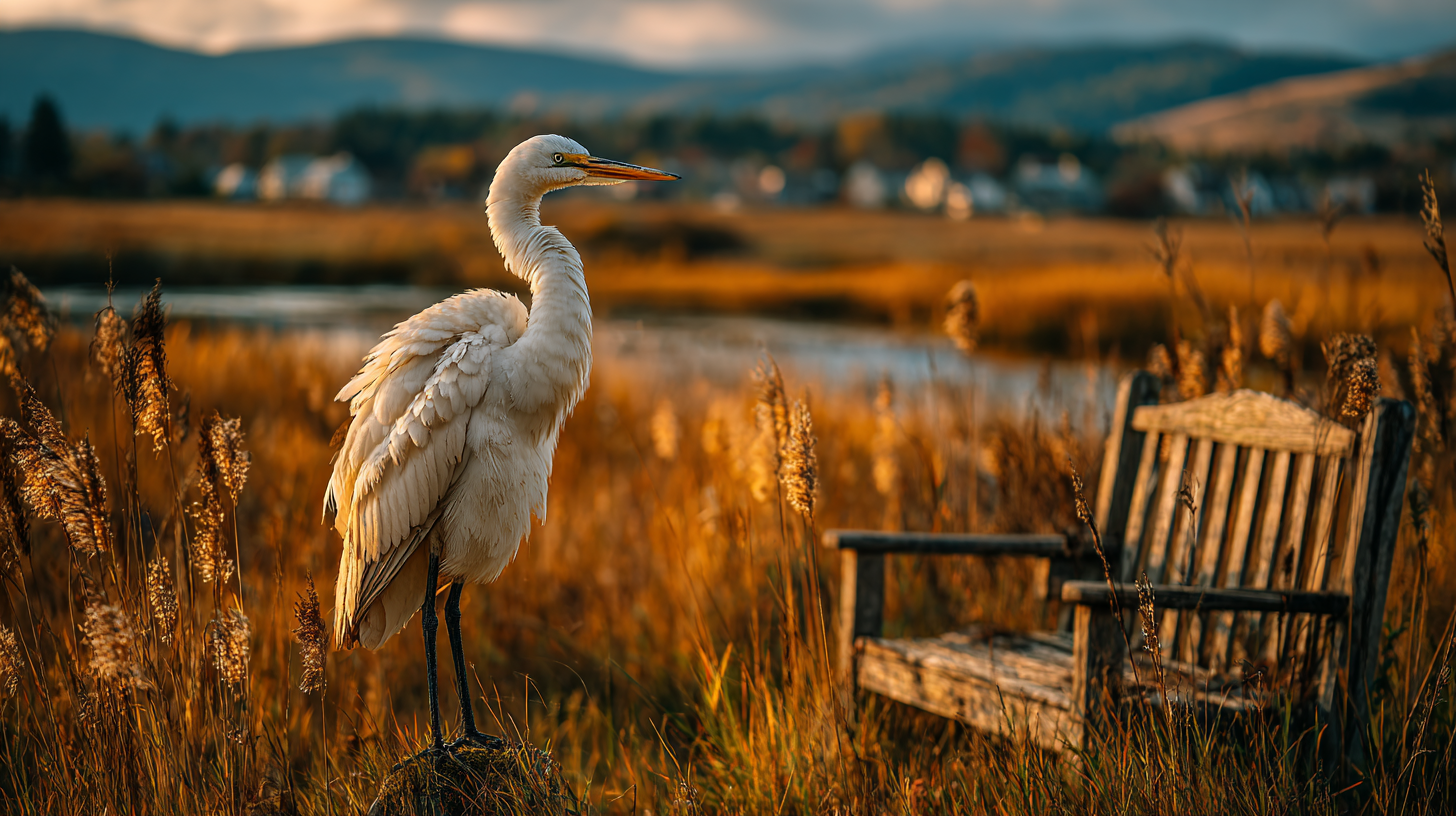
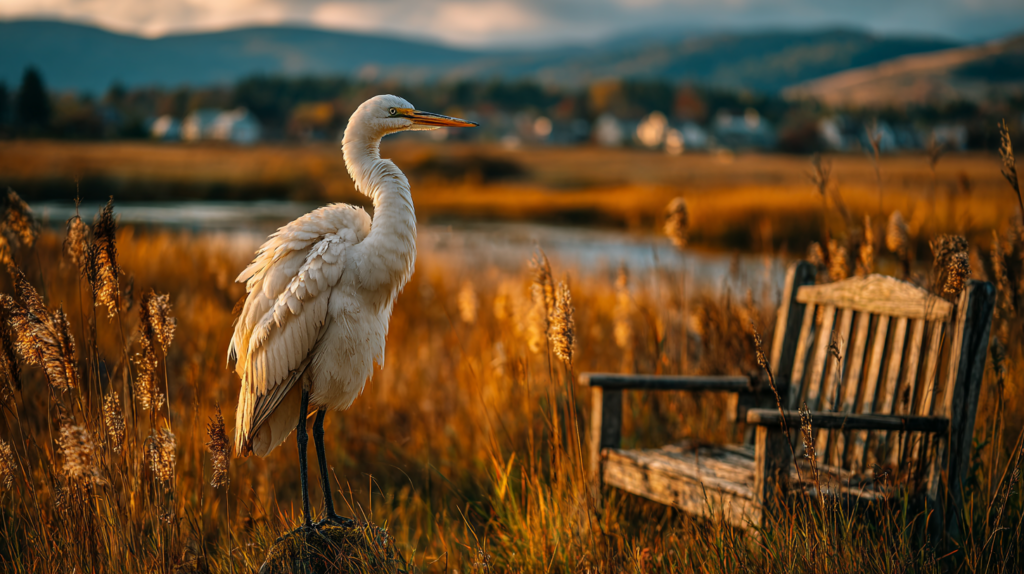
If you are looking for an ekphrasis poetry prompt that invites reflection, memory, and imagination, today’s image offers a rich place to begin. Picture a solitary white heron standing near an abandoned wooden chair in a field of golden grass. Mountains rise in the distance while the late afternoon sun casts long shadows across the landscape.
Ekphrastic poetry begins with close observation. The image becomes a doorway into emotion, story, symbolism, and personal insight. Whether you write free verse, formal poetry, or prose poetry, this scene provides many possible directions.
How to Approach This Ekphrasis Poetry Prompt
Before you begin writing, spend a few minutes studying the image. Notice the relationship between the bird and the chair. Ask yourself why the chair sits alone in the field. Consider who may have left it there and why the heron seems drawn to it.
An effective ekphrasis poetry prompt encourages curiosity rather than certainty. You do not need to explain the image. Instead, explore its possibilities.
You may find it helpful to review our guide on analyzing poetic imagery and meaning: https://rapidreadspress.com/how-to-analyze-poetry-step-by-step/
Writing Ideas for This Ekphrasis Poetry Prompt
The chair could symbolize absence, waiting, memory, or loss. The heron might represent patience, wisdom, solitude, or a messenger from another world.
Consider writing from one of these perspectives:
- The heron observing the chair.
- The former owner of the chair.
- A traveler discovering the scene years later.
- The chair itself telling its story.
- An observer who believes the bird is guarding a secret.
You might focus on sensory details. What does the grass sound like in the wind? How does the sunlight change the mood of the landscape? What memories does the scene awaken?
Literary Devices for This Ekphrasis Poetry Prompt
Strong ekphrastic poems often rely on imagery, symbolism, metaphor, and personification. The contrast between the living bird and the abandoned chair creates natural tension that can drive a poem forward.
If you would like a refresher on poetic techniques, see our guide to literary devices: https://rapidreadspress.com/literary-devices-in-poetry/
For additional information about ekphrastic poetry as a literary form, the Poetry Foundation provides an excellent overview of poetry and poetic traditions: https://www.poetryfoundation.org/
The Prompt
Study the image carefully.
Write a poem about the relationship between the heron and the empty chair. Do not explain where they came from. Instead, allow the reader to discover their connection through images, actions, and details.
Challenge yourself to leave one important question unanswered by the end of the poem.
Final Thoughts
This ekphrasis poetry prompt works well because it balances mystery with simplicity. The image contains only a few elements, yet each one invites interpretation. Sometimes the most powerful poems emerge from scenes that appear quiet at first glance.
Take your time with the image. Let the landscape speak before you begin writing. Then follow the thread of curiosity wherever it leads.