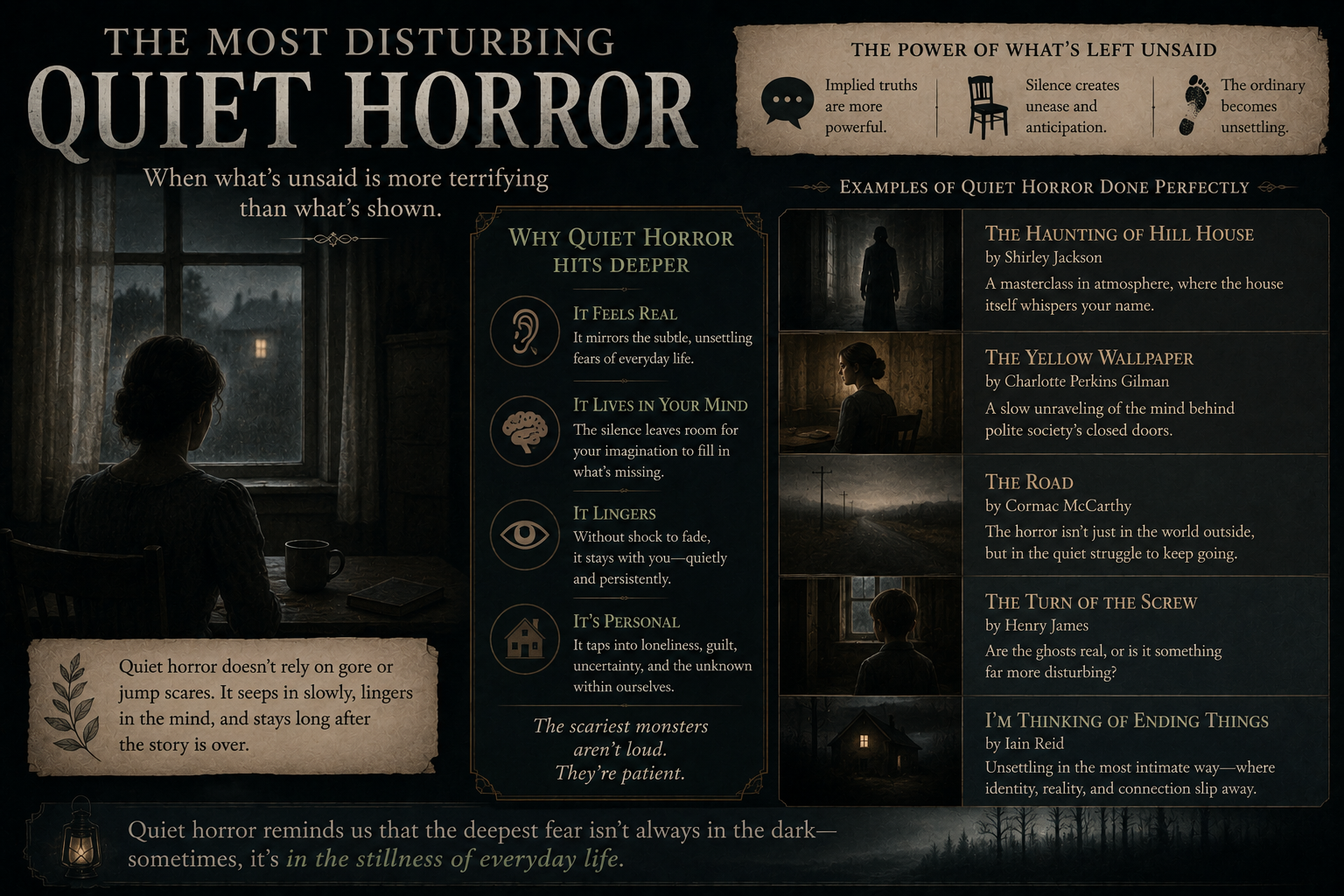
The Most Disturbing Quiet Horror does not always need blood, monsters, or loud scares. It works through silence, doubt, strange behavior, and the slow feeling that something is wrong.
This kind of horror stays with readers because it feels close to real life. A locked room, a cold look, or a normal house can become deeply frightening.
In this Guide
- What Quiet Horror Means
- Why the Most Disturbing Quiet Horror Feels So Powerful
- Famous Literary Examples
- Symbols and Themes in Quiet Horror
- Recommended Books
- FAQs
- Key Takeaway
What Is Quiet Horror?
Quiet horror uses mood, tension, and fear of the unknown instead of shock.
In loud horror, the scary thing may jump out. In quiet horror, the scary thing may never fully appear. The reader feels trapped in a question: What is really happening?
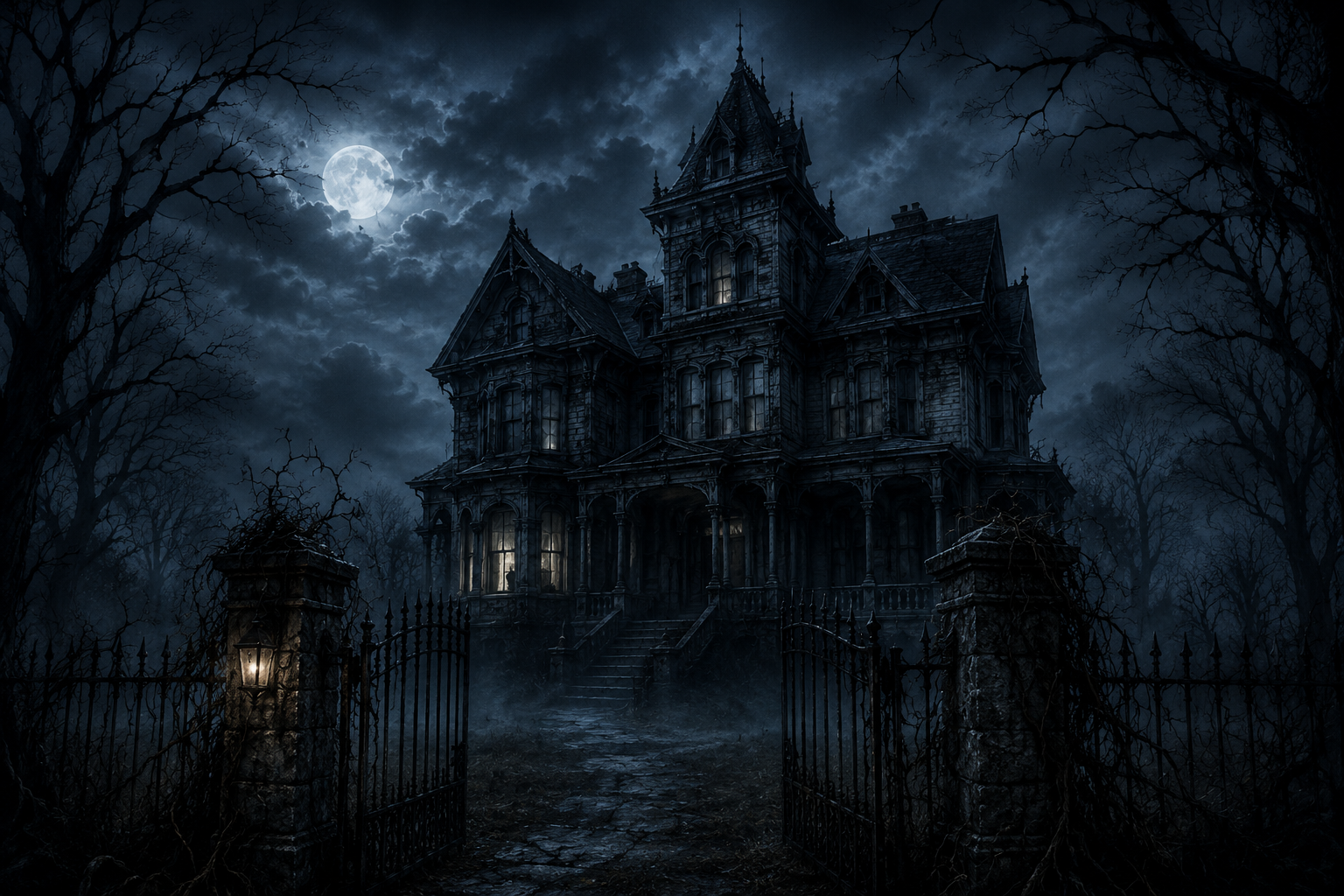
The Most Disturbing Quiet Horror often takes place in ordinary spaces. A family home, a school, a hotel, or a small town can seem safe at first. Then small details begin to change the mood.
A door stays locked. A character hears a sound at night. A kind person says something cruel in a calm voice. These moments feel small, but they build dread.
This style has deep roots in Gothic fiction. For helpful background, see Britannica’s overview of the Gothic novel.
Why the Most Disturbing Quiet Horror Feels So Powerful
The strongest fear often comes from what the story refuses to explain.
The Most Disturbing Quiet Horror works because the reader must fill in the gaps. A writer may not show the monster. Instead, the writer shows the fear that the monster creates.
This type of horror also feels personal. It often focuses on grief, guilt, shame, or family secrets. These fears do not vanish when the lights come on.
Quiet horror can also make readers question a narrator. Is the character truly in danger? Are they losing touch with reality? Or is the world around them more twisted than it looks?
That doubt is part of the fear. The reader cannot relax because the story never gives a simple answer.
Best Examples of Most Disturbing Quiet Horror in Literature
These works show how fear can grow through silence, mood, and slow pressure.
Shirley Jackson’s “The Lottery” is one of the clearest examples of quiet horror. The story begins with a normal town event. The people talk in simple, casual ways.
That calm tone makes the ending more awful. Jackson does not need a monster. The horror comes from tradition, group pressure, and ordinary people who accept violence.
Henry James’s The Turn of the Screw also fits the Most Disturbing Quiet Horror style. A governess believes two children are haunted. Yet the story never fully proves what she sees.
The fear comes from doubt. The reader must decide if ghosts are real or if the narrator has lost control.
Edgar Allan Poe’s “The Fall of the House of Usher” uses setting as a source of dread. The house feels sick, and the family inside feels tied to its decay.
Poe’s work is often loud in emotion, but his best horror also depends on atmosphere. You can read more about Poe through the Poetry Foundation’s Poe page.
Bram Stoker’s Dracula is often seen as a dramatic vampire novel, but it also has quiet horror. Letters, journals, closed doors, and hidden illness create fear before the vampire fully takes over.
For a deeper look at what Dracula represents, read our guide to Count Dracula as a symbol of fear and corruption.
The Most Disturbing Quiet Horror Often Hides in Normal Life
Everyday settings can make horror feel more real.
One reason the Most Disturbing Quiet Horror works so well is that it does not feel far away. It may start in a kitchen, a bedroom, or a quiet street.
These places should bring comfort. When a writer makes them feel unsafe, the reader feels a deeper kind of fear.
Shirley Jackson often used this method. Her homes can feel warm on the outside but cruel inside. Her towns may seem peaceful, but they hide strict rules and hidden violence.
This is why quiet horror fits so well in school and college literature classes. It invites close reading. A small word, object, or repeated image may hold the key to the whole story.
Symbols and Themes in Most Disturbing Quiet Horror
Quiet horror depends on symbols that seem simple at first.
One major symbol is the house. In many quiet horror stories, the house reflects the mind of a character. If the house is cracked, dark, or sealed off, it may show fear, guilt, or family damage.
Another common symbol is the locked room. It can stand for a secret that no one wants to face. It may also suggest trauma, power, or the past.
Illness is another key image. In Dracula, sickness can point to corruption, fear of desire, or fear of change. This is one reason vampire stories often feel more serious than simple monster tales.
If you want to explore that idea further, our article on Dracula and moral corruption can help connect horror to theme.
The Most Disturbing Quiet Horror also explores control. A character may feel watched, judged, or trapped by rules. The threat may be a ghost, but it may also be society itself.
That is what makes this genre feel mature. It turns fear into a question about how people live, what they hide, and what they obey.
Recommended Books for Fans of Most Disturbing Quiet Horror
These books are strong choices for students and general readers who want thoughtful fear.
- The Haunting of Hill House by Shirley Jackson: A chilling novel about a strange house and the fragile minds inside it.
- The Turn of the Screw by Henry James: A ghost story built on doubt, fear, and unclear truth.
Both books are easy to find through major booksellers, libraries, or classroom reading lists. They also reward slow reading, since much of the horror hides in tone and detail.
How to Read Quiet Horror in Class
Quiet horror becomes clearer when you track small patterns.
Watch for repeated objects. A window, key, letter, or mirror may seem minor at first. Later, it may reveal a major fear in the story.
Pay close attention to the narrator. Ask if the narrator sees clearly or if emotion changes the way they describe events.
Look at what characters do not say. Silence can matter as much as speech in the Most Disturbing Quiet Horror.
It also helps to ask one simple question: What does this story make normal? In many quiet horror works, the scariest thing is not the strange event. It is how calmly people accept it.
FAQs About Most Disturbing Quiet Horror
What does quiet horror mean?
Quiet horror is a style of horror that uses mood, tension, and mystery instead of shock. It often leaves the scariest parts partly hidden.
Why is the Most Disturbing Quiet Horror so effective?
It feels real because it often starts in normal places. The fear grows slowly, so readers have time to feel trapped by the story.
Is quiet horror the same as Gothic horror?
Not always, but they often overlap. Gothic horror uses old houses, secrets, madness, and decay, which also appear in many quiet horror stories.
What is a good quiet horror book for students?
The Haunting of Hill House by Shirley Jackson is a strong choice. It is scary, literary, and rich with symbols.
Does quiet horror need a monster?
No. Some of the best quiet horror has no clear monster. The fear may come from people, memory, guilt, or social pressure.
Key Takeaway
The Most Disturbing Quiet Horror haunts readers because it does not explain too much. It turns silence, doubt, and ordinary life into fear.
That is why these stories last. They do not just scare us for a moment. They make us wonder what may be hidden inside the places we trust most.