Books Like Cosmic Horror: Strange, Dark Reads for Curious Students

Cosmic Horror

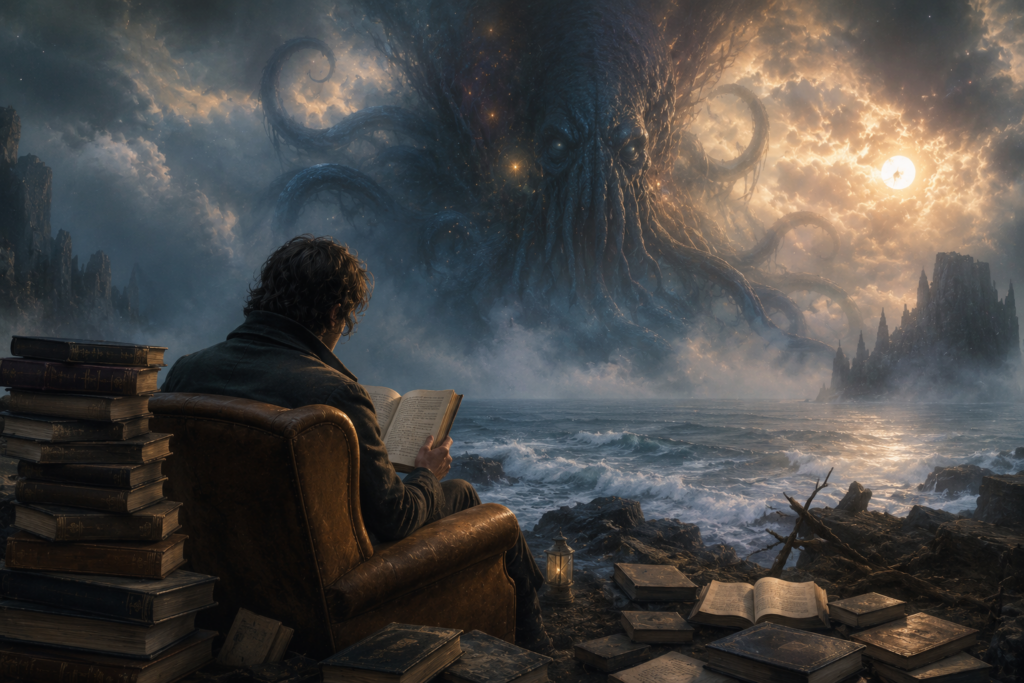
Books like Cosmic Horror appeal to readers who enjoy fear that feels huge, strange, and hard to explain. These stories do not just ask, “What is hiding in the dark?” They ask, “What if the universe does not care about us at all?”

If you like eerie settings, ancient secrets, and characters who face things beyond human understanding, this guide will help you find your next unsettling read.

In this Guide

Cosmic Horror

What Makes Cosmic Horror Different?

Cosmic horror is fear on a massive scale.

Most horror stories focus on threats we can understand. A vampire wants blood. A ghost wants revenge. A killer wants victims.

Cosmic horror is different because the danger often has no clear motive. The monster may not hate humans. It may not even notice them.

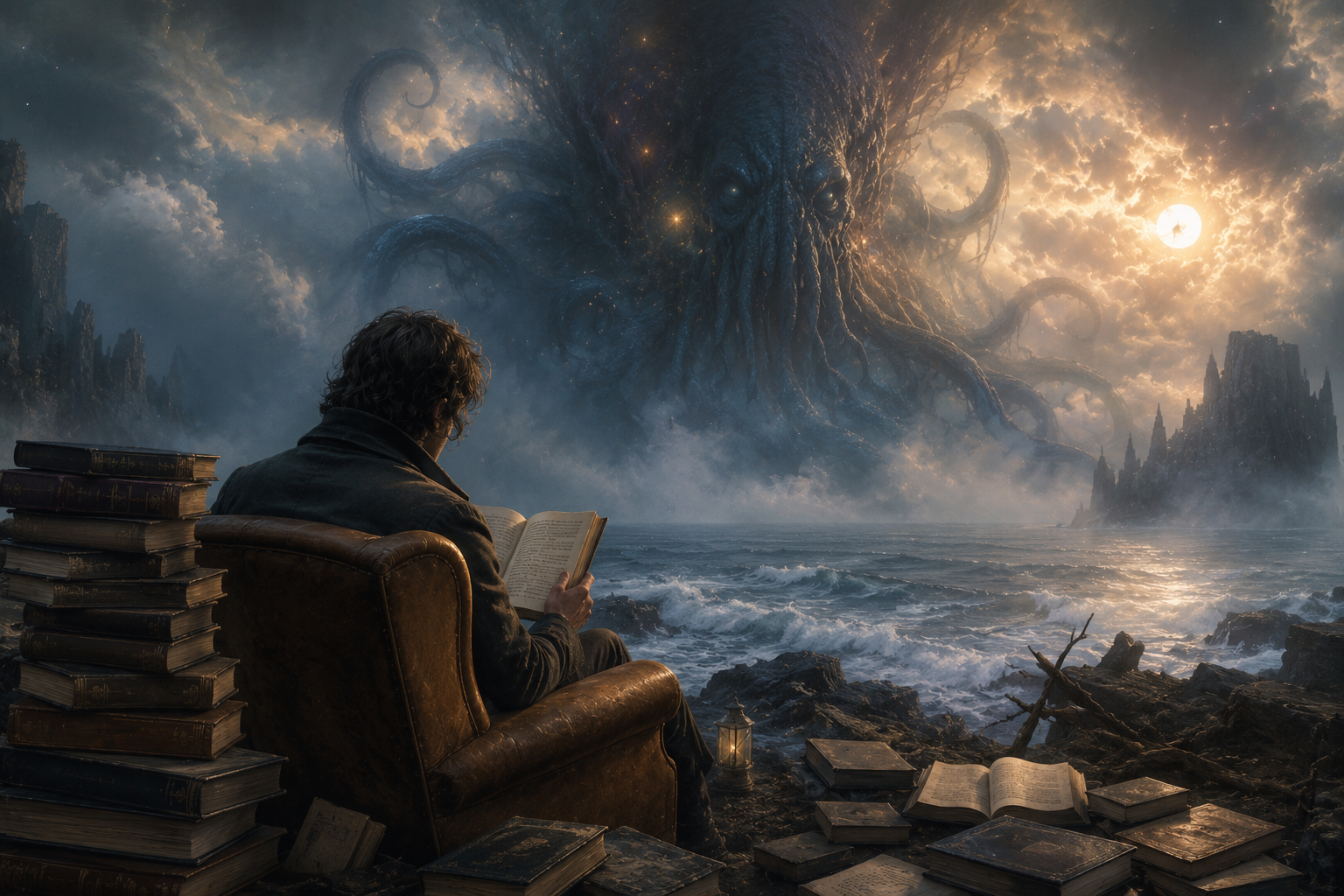
This type of horror often shows people facing ancient gods, strange worlds, or truths that break the mind. The scary part is not just death. It is the idea that human life may be small in a vast universe.

H. P. Lovecraft is often linked to this style. You can read more about his life and influence at Britannica’s overview of H. P. Lovecraft.

Why Books Like Cosmic Horror Still Matter

Books Like Cosmic Horror speak to fears that feel modern, even when the stories are old.

Students today live in a world shaped by science, space images, climate fear, and rapid change. Cosmic horror fits this mood because it explores what happens when knowledge does not bring comfort.

In many stories, characters search for answers. They study old books, decode strange signs, or visit forbidden places. The more they learn, the worse things become.

That idea can feel powerful in literature class. It turns the usual “knowledge is good” message upside down. In cosmic horror, some truths are too heavy to carry.

Books Like Cosmic Horror also connect to older Gothic works. For example, Dracula creates fear through corruption, secrecy, and invasion. If you are studying Gothic horror, this article on Count Dracula as a symbol of fear and corruption is a helpful companion read.

Best Books Like Cosmic Horror for Students

These books offer strange worlds, deep fear, and big questions about human limits.

Here are a few strong choices for readers who want Books Like Cosmic Horror without feeling lost on page one.

The Call of Cthulhu by H. P. Lovecraft

This short story is one of the most famous works of cosmic horror.

It follows clues about a strange cult and an ancient being named Cthulhu. The story builds fear through reports, dreams, and discoveries.

Lovecraft’s work is important to the genre, but readers should also know that his racism shaped parts of his writing. Many modern writers respond to his ideas while challenging his worldview.

Annihilation by Jeff VanderMeer

This novel feels like science fiction, horror, and mystery at the same time.

A group of scientists enters Area X, a strange zone where nature does not follow normal rules. The book is full of beauty, fear, and uncertainty.

It is a great pick for readers who want Books Like Cosmic Horror with a modern voice. The terror comes from not knowing what Area X is or what it wants.

The Fisherman by John Langan

This novel mixes grief, folklore, and cosmic dread.

Two men go fishing after personal loss, but their trip leads them toward a dark and ancient secret. The story grows from quiet sadness into something huge and terrifying.

It works well for readers who enjoy slow, layered horror. The emotional core makes the cosmic terror feel more personal.

Book Suggestions

If you want to build a small reading list, these are good places to start.

  • Annihilation by Jeff VanderMeer
  • The Fisherman by John Langan

Both books are easy to find through major booksellers, libraries, and classroom reading lists.

image-slider-with-thumbnail1.jpeg
PlayPause
previous arrow
next arrow
image-slider-with-thumbnail1.jpeg
image-slider-with-thumbnail3.jpeg
image-slider-with-thumbnail4.jpeg
ChatGPT Image Jun 27, 2026, 06_33_13 PM
ChatGPT Image Jun 27, 2026, 06_36_37 PM
ChatGPT Image Jun 27, 2026, 06_38_39 PM
ChatGPT Image Jun 27, 2026, 06_31_22 PM
image-slider-with-thumbnail7.jpeg
ChatGPT Image Jun 27, 2026, 06_29_43 PM
ChatGPT Image Jun 27, 2026, 06_27_44 PM
image-slider-with-thumbnail6.jpeg
ChatGPT Image Jun 27, 2026, 06_15_07 PM
image-slider-with-thumbnail5.jpeg
ChatGPT Image Jun 27, 2026, 06_22_43 PM
ChatGPT Image Jun 27, 2026, 06_25_37 PM
ChatGPT Image Jun 27, 2026, 06_19_43 PM
ChatGPT Image Jun 27, 2026, 06_12_00 PM
ChatGPT Image Jun 27, 2026, 06_08_50 PM
ChatGPT Image Jun 26, 2026, 04_54_23 PM
ChatGPT Image Jun 27, 2026, 05_53_51 PM
ChatGPT Image Jun 28, 2026, 08_35_55 AM
previous arrow
next arrow

Themes That Define Books Like Cosmic Horror

Books Like Cosmic Horror often use fear to explore what humans cannot control.

Human Smallness

One major theme is the small place of humans in the universe.

Characters often think they are in control at first. Then they meet forces that make human plans seem weak.

This theme can connect to astronomy, deep time, and the ocean. Space and the sea both remind us that much of existence is beyond us.

Dangerous Knowledge

Cosmic horror often treats knowledge as a threat.

A character may find an old text, hear a forbidden name, or see a hidden truth. After that, normal life becomes impossible.

This is why books, symbols, and languages matter so much in the genre. They are not just tools. They are doors.

The Unseen Monster

Many horror stories show the monster clearly. Cosmic horror often hides it.

The reader sees signs instead: strange dreams, broken bodies, odd weather, or people who lose their minds. The unknown becomes scarier than any clear image.

This style links cosmic horror to writers like Edgar Allan Poe, who often built fear through mood and mental pressure. You can explore Poe’s work through the Poetry Foundation’s Edgar Allan Poe page.

Symbols Common in Books Like Cosmic Horror

Cosmic horror uses symbols that suggest hidden worlds under normal life.

The ocean often stands for depth, mystery, and things buried far below human sight. In many stories, the sea feels alive or ancient.

Old books often stand for forbidden knowledge. They suggest that the past holds truths people were not meant to find.

Stars often stand for distance and cold truth. They make characters feel watched, exposed, or painfully small.

Ruins often stand for lost civilizations. They suggest that humans may not be the first intelligent beings on Earth, and may not be the last.

How to Read Books Like Cosmic Horror in Class

Books Like Cosmic Horror can be rich material for essays and class discussion.

Start by asking what the story says about human limits. Does the character fail because they are weak, or because the truth is too large for anyone?

Look closely at setting. Cosmic horror often makes places feel wrong. A house, town, forest, or coastline may seem normal at first, then slowly become strange.

Track what characters know and when they know it. Many stories build tension by giving readers pieces of a mystery. The final picture is often worse than expected.

You can also compare cosmic horror with Gothic horror. Gothic works like Dracula often fear moral decay and social danger. Cosmic horror fears the universe itself. For more on Gothic fear, see this discussion of Dracula and corruption.

Why Modern Writers Keep Returning to Cosmic Horror

Modern authors use cosmic horror because it fits many real fears.

Climate change can feel huge and hard to stop. Technology can make people feel watched or replaced. Space exploration reminds us that Earth is only a tiny part of existence.

Writers also use the genre to question old ideas. Some modern cosmic horror focuses on people Lovecraft ignored or harmed through racist ideas. These stories ask who gets to fear the unknown, and who has already lived with danger.

That is why Books Like Cosmic Horror are not just monster stories. At their best, they show how fear changes when culture changes.

FAQs About Books Like Cosmic Horror

What are Books Like Cosmic Horror usually about?

They are usually about humans facing forces too vast to understand. These forces may be ancient gods, alien worlds, or truths that break normal reality.

Is cosmic horror the same as Gothic horror?

No. Gothic horror often focuses on haunted places, family secrets, or moral corruption. Cosmic horror focuses on the fear that humans are small in an uncaring universe.

What is a good first cosmic horror book?

Annihilation by Jeff VanderMeer is a strong first choice. It is modern, strange, and easier to enter than many older cosmic horror texts.

Why is Lovecraft still discussed if his views were harmful?

Lovecraft shaped the genre, so his influence matters. Still, readers should study his work with care and pay attention to how modern writers challenge his racism.

Can cosmic horror be used in AP Literature essays?

Yes, if the text has enough depth. Focus on theme, symbolism, setting, and character response to fear.

Key Takeaway

Books Like Cosmic Horror matter because they turn fear into a question about existence.

They ask what happens when humans search for truth and find something too large to bear. For students, that makes the genre more than scary. It becomes a powerful way to study knowledge, fear, and the limits of human control.

Most Disturbing Quiet Horror: Books That Haunt Without Shouting

Quiet Horror Books
Quiet Horror Books

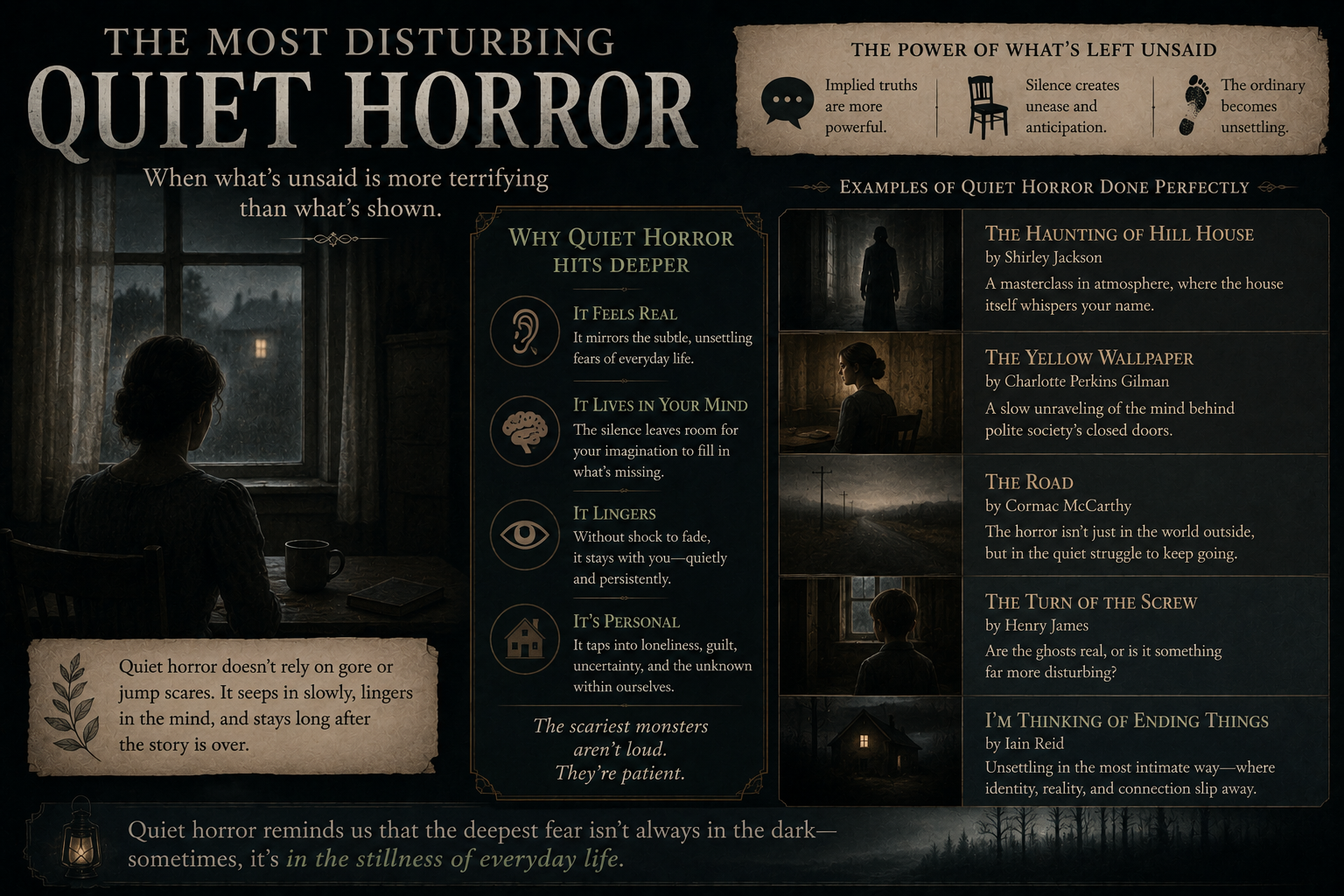
The Most Disturbing Quiet Horror does not always need blood, monsters, or loud scares. It works through silence, doubt, strange behavior, and the slow feeling that something is wrong.

This kind of horror stays with readers because it feels close to real life. A locked room, a cold look, or a normal house can become deeply frightening.

In this Guide

What Is Quiet Horror?

Quiet horror uses mood, tension, and fear of the unknown instead of shock.

In loud horror, the scary thing may jump out. In quiet horror, the scary thing may never fully appear. The reader feels trapped in a question: What is really happening?

The Most Disturbing Quiet Horror often takes place in ordinary spaces. A family home, a school, a hotel, or a small town can seem safe at first. Then small details begin to change the mood.

A door stays locked. A character hears a sound at night. A kind person says something cruel in a calm voice. These moments feel small, but they build dread.

This style has deep roots in Gothic fiction. For helpful background, see Britannica’s overview of the Gothic novel.

Why the Most Disturbing Quiet Horror Feels So Powerful

The strongest fear often comes from what the story refuses to explain.

The Most Disturbing Quiet Horror works because the reader must fill in the gaps. A writer may not show the monster. Instead, the writer shows the fear that the monster creates.

This type of horror also feels personal. It often focuses on grief, guilt, shame, or family secrets. These fears do not vanish when the lights come on.

Quiet horror can also make readers question a narrator. Is the character truly in danger? Are they losing touch with reality? Or is the world around them more twisted than it looks?

That doubt is part of the fear. The reader cannot relax because the story never gives a simple answer.

Best Examples of Most Disturbing Quiet Horror in Literature

These works show how fear can grow through silence, mood, and slow pressure.

Shirley Jackson’s “The Lottery” is one of the clearest examples of quiet horror. The story begins with a normal town event. The people talk in simple, casual ways.

That calm tone makes the ending more awful. Jackson does not need a monster. The horror comes from tradition, group pressure, and ordinary people who accept violence.

Henry James’s The Turn of the Screw also fits the Most Disturbing Quiet Horror style. A governess believes two children are haunted. Yet the story never fully proves what she sees.

The fear comes from doubt. The reader must decide if ghosts are real or if the narrator has lost control.

Edgar Allan Poe’s “The Fall of the House of Usher” uses setting as a source of dread. The house feels sick, and the family inside feels tied to its decay.

Poe’s work is often loud in emotion, but his best horror also depends on atmosphere. You can read more about Poe through the Poetry Foundation’s Poe page.

Bram Stoker’s Dracula is often seen as a dramatic vampire novel, but it also has quiet horror. Letters, journals, closed doors, and hidden illness create fear before the vampire fully takes over.

For a deeper look at what Dracula represents, read our guide to Count Dracula as a symbol of fear and corruption.

The Most Disturbing Quiet Horror Often Hides in Normal Life

Everyday settings can make horror feel more real.

One reason the Most Disturbing Quiet Horror works so well is that it does not feel far away. It may start in a kitchen, a bedroom, or a quiet street.

These places should bring comfort. When a writer makes them feel unsafe, the reader feels a deeper kind of fear.

Shirley Jackson often used this method. Her homes can feel warm on the outside but cruel inside. Her towns may seem peaceful, but they hide strict rules and hidden violence.

This is why quiet horror fits so well in school and college literature classes. It invites close reading. A small word, object, or repeated image may hold the key to the whole story.

Symbols and Themes in Most Disturbing Quiet Horror

Quiet horror depends on symbols that seem simple at first.

One major symbol is the house. In many quiet horror stories, the house reflects the mind of a character. If the house is cracked, dark, or sealed off, it may show fear, guilt, or family damage.

Another common symbol is the locked room. It can stand for a secret that no one wants to face. It may also suggest trauma, power, or the past.

Illness is another key image. In Dracula, sickness can point to corruption, fear of desire, or fear of change. This is one reason vampire stories often feel more serious than simple monster tales.

If you want to explore that idea further, our article on Dracula and moral corruption can help connect horror to theme.

The Most Disturbing Quiet Horror also explores control. A character may feel watched, judged, or trapped by rules. The threat may be a ghost, but it may also be society itself.

That is what makes this genre feel mature. It turns fear into a question about how people live, what they hide, and what they obey.

Recommended Books for Fans of Most Disturbing Quiet Horror

These books are strong choices for students and general readers who want thoughtful fear.

  • The Haunting of Hill House by Shirley Jackson: A chilling novel about a strange house and the fragile minds inside it.
  • The Turn of the Screw by Henry James: A ghost story built on doubt, fear, and unclear truth.

Both books are easy to find through major booksellers, libraries, or classroom reading lists. They also reward slow reading, since much of the horror hides in tone and detail.

How to Read Quiet Horror in Class

Quiet horror becomes clearer when you track small patterns.

Watch for repeated objects. A window, key, letter, or mirror may seem minor at first. Later, it may reveal a major fear in the story.

Pay close attention to the narrator. Ask if the narrator sees clearly or if emotion changes the way they describe events.

Look at what characters do not say. Silence can matter as much as speech in the Most Disturbing Quiet Horror.

It also helps to ask one simple question: What does this story make normal? In many quiet horror works, the scariest thing is not the strange event. It is how calmly people accept it.

FAQs About Most Disturbing Quiet Horror

What does quiet horror mean?

Quiet horror is a style of horror that uses mood, tension, and mystery instead of shock. It often leaves the scariest parts partly hidden.

Why is the Most Disturbing Quiet Horror so effective?

It feels real because it often starts in normal places. The fear grows slowly, so readers have time to feel trapped by the story.

Is quiet horror the same as Gothic horror?

Not always, but they often overlap. Gothic horror uses old houses, secrets, madness, and decay, which also appear in many quiet horror stories.

What is a good quiet horror book for students?

The Haunting of Hill House by Shirley Jackson is a strong choice. It is scary, literary, and rich with symbols.

Does quiet horror need a monster?

No. Some of the best quiet horror has no clear monster. The fear may come from people, memory, guilt, or social pressure.

Key Takeaway

The Most Disturbing Quiet Horror haunts readers because it does not explain too much. It turns silence, doubt, and ordinary life into fear.

That is why these stories last. They do not just scare us for a moment. They make us wonder what may be hidden inside the places we trust most.

Most Disturbing Haunted Houses

Most disturbing haunted houses

The Most Disturbing Haunted Houses in literature do more than scare us. They trap grief, guilt, secrets, and fear inside their walls.

These houses feel alive because they reflect the minds of the people who enter them. That is why haunted house stories still matter in classrooms, book clubs, and late-night reading sessions. 👻

Most disturbing haunted houses

In this Guide

Why the Most Disturbing Haunted Houses Stay With Us

A great haunted house is scary because it feels personal.

The Most Disturbing Haunted Houses do not rely only on ghosts. They use silence, locked rooms, strange noises, and family history to create dread.
In many stories, the house becomes a mirror. It shows what characters fear most, even when they refuse to say it out loud.

This is why haunted houses work so well in Gothic fiction. If you want a helpful way to read symbols like rooms, doors, and shadows, try this guide on how to read literature like a scholar.

Most Disturbing Haunted Houses in Classic Literature

Classic literature gave us some of the most famous cursed homes ever written.

One of the Most Disturbing Haunted Houses is Hill House in Shirley Jackson’s The Haunting of Hill House. The house is not just haunted. It seems to choose its victim.

Eleanor arrives at Hill House lonely and unsure of herself. The house feeds on that weakness. By the end, it is hard to tell where Eleanor’s mind ends and the house begins.

Edgar Allan Poe’s The Fall of the House of Usher offers another chilling example. The Usher home is cracked, decaying, and linked to a family that seems doomed from the start.

Poe makes the house feel like a body. Its collapse feels like the end of a family line. You can learn more about Poe’s life and literary importance from the Poetry Foundation.

Henry James also gives readers a deeply uneasy house in The Turn of the Screw. Bly is a large country estate, but its size makes it feel unsafe. The governess does not know whom to trust, and the house seems full of hidden threats.

These stories connect to the larger Gothic tradition. For background, see Britannica’s overview of Gothic fiction.

Modern Most Disturbing Haunted Houses Worth Reading

Modern haunted house stories often focus on trauma, memory, and identity.

Some Most Disturbing Haunted Houses are not ancient castles or ruined mansions. They can be family homes, rented rooms, or quiet places that look normal from the street.
Toni Morrison’s Beloved gives us 124, a house haunted by a painful past. The haunting is not just supernatural. It comes from slavery, loss, and the memories that refuse to fade.

In Daphne du Maurier’s Rebecca, Manderley is not a ghost house in the usual sense. Still, it is haunted by Rebecca’s presence. The new Mrs. de Winter feels judged by every room.

Silvia Moreno-Garcia’s Mexican Gothic offers a more recent example. High Place feels sick at its core. The house holds family control, greed, and decay inside its walls.

These homes prove that the Most Disturbing Haunted Houses do not need a sheet-covered ghost. They need pressure, fear, and secrets that will not stay buried.

What the Most Disturbing Haunted Houses Symbolize

Haunted houses often stand for problems people try to hide.

The Most Disturbing Haunted Houses are full of symbols. A locked door may point to shame. A broken window may suggest a damaged mind. A dark hallway may show fear of the unknown.

Many haunted houses also explore family guilt. In The Fall of the House of Usher, the house reflects a family that has turned inward for too long.

Other stories use the house to show isolation. Hill House traps Eleanor because she already feels cut off from the world. The building gives shape to her loneliness.

Some haunted houses reveal social violence. In Beloved, the haunting shows how history enters private life. The home is not safe because the past was never resolved.

When you read a haunted house story, ask what the house wants. Ask what it hides. Ask why the character stays.

These books are strong choices for students, Gothic fiction fans, and readers who want more than a quick scare.

  • The Haunting of Hill House by Shirley Jackson: A masterclass in fear, loneliness, and psychological horror.
  • Mexican Gothic by Silvia Moreno-Garcia: A rich modern Gothic novel about power, family secrets, and a house that feels infected.

You can search for these titles on Amazon, at your local library, or through your school library catalog.

How Students Can Read Haunted Houses Closely

A haunted house story rewards slow, careful reading.

To study the Most Disturbing Haunted Houses, pay attention to setting first. Notice how the author describes the air, the light, the doors, and the sounds.

Next, watch how the main character reacts to the house. Fear often tells us more about the character than the ghost does.

It also helps to track repeated details. If a room, stain, mirror, or staircase appears more than once, it probably matters.

For a stronger reading method, revisit this guide to reading literature like a scholar.

FAQs About the Most Disturbing Haunted Houses

Here are quick answers to common questions about haunted houses in literature.

What makes the Most Disturbing Haunted Houses so scary?

They connect the supernatural to real fears. Grief, guilt, abuse, and loneliness often make the house feel dangerous.

Is every haunted house story Gothic?

No, but many are. Gothic stories often use old homes, secrets, fear, and dark family history.

Why do writers make houses seem alive?

A living house can show a character’s inner world. It turns private fear into something readers can see.

What is the best haunted house novel to start with?

The Haunting of Hill House is a great starting point. It is short, tense, and rich with meaning.

Key Takeaway

The Most Disturbing Haunted Houses in literature are not scary only because of ghosts. They disturb us because they make fear feel familiar.

A haunted house can hold a family’s shame, a nation’s history, or one person’s deepest pain. That is what makes these stories last.

error

Enjoy this article? Please spread the word :)

Follow by Email
BLUESKY
fb-share-icon
Reddit
LinkedIn
Share
RSS