Literary Devices in Poetry: A Complete Guide

Literary Devices in Poetry

How to recognize the tools poets use to create meaning, emotion, and beauty

Poetry can sometimes feel confusing when you first read it. The language may seem strange, the lines may be short, and the meaning may not be obvious at first. Many students feel lost because poems do not always tell a clear story the way a novel does. But once you understand literary devices in poetry, poems become much easier to understand and much more enjoyable to read.

Poets use literary devices as tools. These tools help them create images, express emotions, and communicate ideas in powerful ways. When you learn to recognize these tools, you begin to see how a poem works instead of just guessing what it means.

Key idea: Literary devices are the tools poets use to create meaning.

In this guide, we will look at the most important literary devices in poetry, how to recognize them, and how they help you understand a poem more deeply.

In this Guide 📚

What are literary devices in poetry
Why poets use literary devices
Imagery
Metaphor
Simile
Symbolism
Personification
Sound devices
How literary devices create theme
How to analyze literary devices in poetry

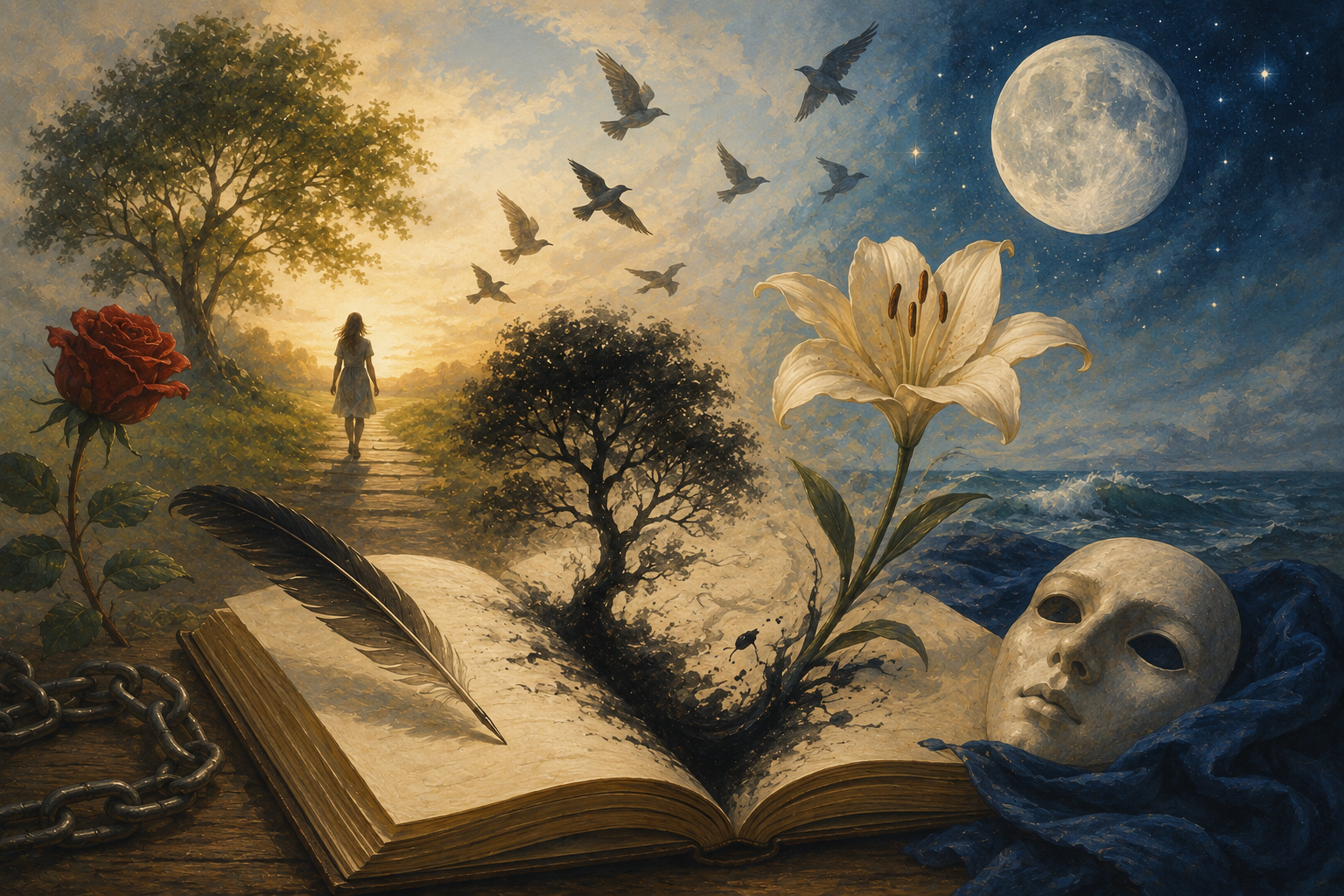
Literary Devices in Poetry
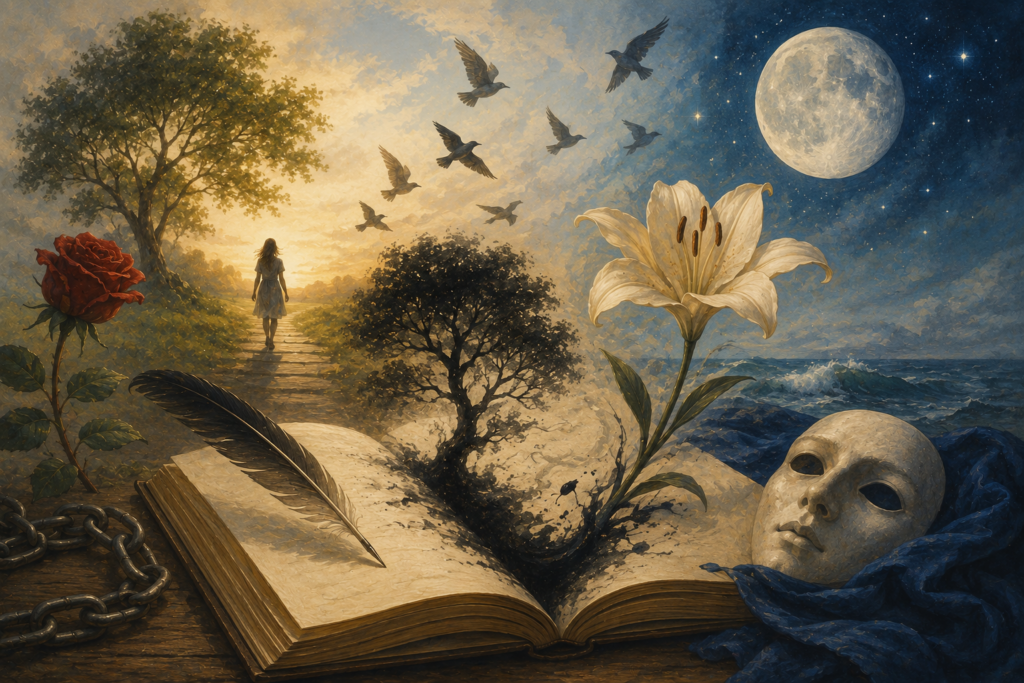
Image by Carla Paton

What Are Literary Devices in Poetry?

Literary devices in poetry are techniques that poets use to create meaning, emotion, and imagery. These devices include metaphor, simile, symbolism, imagery, personification, alliteration, and many others.

When poets write, they do not usually explain everything directly. Instead, they show ideas through language. Literary devices help them do this.

For example, instead of saying “I feel sad,” a poet might describe a dark sky, a cold wind, or a dying flower. These images help the reader feel the emotion rather than just read about it.

If you want a deeper introduction to reading literature, you can also read this guide on how to read literature like a scholar:
https://rapidreadspress.com/how-to-read-literature-like-a-scholar/

Why Do Poets Use Literary Devices?

Poets use literary devices because poetry is meant to be felt as well as understood. Literary devices help poets compress meaning into a small number of words.

A poem is usually short, so every word matters. Literary devices allow poets to say more with fewer words.
For example, in Emily Dickinson’s poem:
“Hope is the thing with feathers
That perches in the soul”

Dickinson does not define hope in a dictionary way. Instead, she uses a metaphor. She compares hope to a bird. This image helps the reader understand that hope is alive, gentle, and always present.

This is why literary devices in poetry are not decorations. They are the meaning.

For a step-by-step guide to poetry analysis, see:
https://rapidreadspress.com/how-to-analyze-poetry-step-by-step/

Imagery in Poetry

Imagery is one of the most important literary devices in poetry. Imagery is language that appeals to the senses. It helps the reader see, hear, feel, smell, or taste what is happening in the poem.

Consider these lines from William Wordsworth:
“I wandered lonely as a cloud
That floats on high o’er vales and hills”

This image helps us see the speaker floating above the landscape. The image also creates a feeling of calm and quiet.

When you look for imagery, ask yourself:
What do I see?
What do I hear?
What do I feel?

Imagery often helps reveal the tone and mood of a poem. If you want to better understand tone and mood, this guide will help:
https://rapidreadspress.com/tone-vs-mood-in-literature-whats-the-difference/

Metaphor and Simile

Metaphor and simile are comparisons. They show how two different things are similar.

A simile uses the words “like” or “as.”
A metaphor does not.

Example of simile from Robert Burns:
“O my Luve’s like a red, red rose”

Example of metaphor from Langston Hughes:
“Life is a broken-winged bird
That cannot fly”

These comparisons help readers understand ideas through images. Instead of explaining life in abstract terms, Hughes compares life to a bird that cannot fly. This creates a strong emotional image.

When you find a metaphor or simile, ask what the comparison is trying to show you.

Symbolism in Poetry

Symbolism is when an object represents a larger idea.

In Robert Frost’s poem “The Road Not Taken,” the road is not just a road. It represents life choices.

Symbols often represent ideas like:
Life
Death
Hope
Freedom
Time
Innocence

If you want to learn more about symbolism, you can read this guide:
https://rapidreadspress.com/how-to-find-symbolism-in-a-story/

Personification

Personification is when human qualities are given to animals, objects, or ideas.

Example from Emily Dickinson:
“Because I could not stop for Death –
He kindly stopped for me”

Death is described as a polite person. This changes how we think about death. Instead of something frightening, it becomes something calm and inevitable.

Personification helps poets turn abstract ideas into characters.

Sound Devices in Poetry

Poetry is meant to be heard as well as read. Sound devices are very important literary devices in poetry.

Common sound devices include:
Alliteration – repetition of beginning sounds
Assonance – repetition of vowel sounds
Consonance – repetition of consonant sounds
Rhyme – repetition of end sounds

Example of alliteration from Edgar Allan Poe:
“While I nodded, nearly napping”

The repetition of the “n” sound creates rhythm and mood.

Sound devices help create music in poetry, which affects how the poem feels.

Literary Devices in Poetry
Image by Carla Paton

How Literary Devices Create Theme

Literary devices are not just small techniques. They help create the theme of the poem.

Theme is the main idea or message of a poem. Poets develop theme through imagery, symbolism, metaphor, and other literary devices.

For example, in many poems, night may symbolize death or loneliness, while morning may symbolize hope or new beginnings.

If you want to learn more about theme, read:
https://rapidreadspress.com/how-to-identify-theme-in-literature/

How to Analyze Literary Devices in Poetry

When analyzing literary devices in poetry, follow this simple process:

First, read the poem slowly.
Second, look for imagery and comparisons.
Third, look for symbols.
Fourth, think about how these devices connect to the theme.

You can also use close reading strategies here:
https://rapidreadspress.com/what-is-close-reading-in-literature/

The meaning of a poem is often hidden inside its literary devices.

If you are writing about poetry in an essay, these resources may help:
https://rapidreadspress.com/product/literary-analysis-essay-examples/
https://rapidreadspress.com/product/the-literary-analysis-essay-toolkit/

Recommended Books on Poetry and Literary Devices 📚

How to Read a Poem by Terry Eagleton
Poetry Handbook by Mary Oliver
Perrine’s Literature: Structure, Sound, and Sense

AffiliateThese are excellent resources for understanding literary devices in poetry and learning how to analyze poems more confidently. (Affilate links)

More resources:
Poetry Foundation: https://www.poetryfoundation.org/learn/glossary-terms

Key Takeaway

Literary devices in poetry are the tools poets use to create meaning, emotion, and theme. When you learn to recognize imagery, metaphor, symbolism, personification, and sound devices, poetry becomes clearer and more meaningful. Instead of feeling confusing, poems begin to feel like puzzles that you know how to solve.

FAQ – Literary Devices in Poetry

What are literary devices in poetry?

Literary devices in poetry are techniques such as metaphor, simile, imagery, symbolism, and sound devices that poets use to create meaning and emotion.

What are the most common literary devices in poetry?

The most common literary devices in poetry include imagery, metaphor, simile, symbolism, personification, alliteration, and rhyme.

Why are literary devices important in poetry?

Literary devices are important because they help poets express complex ideas and emotions in a small number of words.

How do you identify literary devices in poetry?

Look for descriptive language, comparisons, repeated sounds, and objects that may represent larger ideas.

How to Analyze Poetry Step by Step

how to analyze poetry step by step

A Simple Guide to Understanding Poems One Line at a Time

Poetry can feel intimidating at first. Poems often compress ideas into a few lines, use unusual imagery, and leave important meanings unstated. Many readers enjoy poetry but wonder how to analyze poetry step by step in a clear and practical way.

The good news is that poetry analysis relies on the same skills used in close reading and literary interpretation. When you slow down and pay attention to language, patterns begin to appear.

Learning how to analyze poetry step by step means noticing details such as imagery, tone, structure, and repetition. These clues help reveal the poem’s deeper meaning.

If you’re new to close reading, you might first explore this guide:

👉 https://rapidreadspress.com/what-is-close-reading-in-literature/

That article explains the careful reading habits that make poetry analysis possible.

⭐ Key Takeaway

Learning how to analyze poetry step by step means paying attention to small details in language. Imagery, sound, structure, and repetition often reveal the poem’s central meaning.

📚 In This Guide

In this article you’ll learn:

  • How to analyze poetry step by step
  • What details scholars look for when reading poems
  • How imagery and sound shape meaning
  • A practical example using a public-domain poem
  • How poetry analysis connects to literary essays
how to analyze poetry step by step
Image by Carla Paton

Step 1: Read the Poem Slowly

A good way to begin how to analyze poetry step by step is to read the poem more than once.

The first reading helps you understand the general subject of the poem. The second reading allows you to notice details.

While reading, ask simple questions:

  • What seems to be happening?
  • Who is speaking?
  • What emotions appear in the poem?

Many scholars recommend reading poems aloud because the sound of the language often reveals meaning.

The Poetry Foundation provides helpful introductions to reading poetry carefully: https://www.poetryfoundation.org

📌Poetry often reveals its meaning through repetition, rhythm, and sound.

Step 2: Look for Imagery and Descriptive Language

Understanding how to analyze poetry step by step often begins with imagery.

Imagery refers to descriptions that appeal to the senses:

  • sight
  • sound
  • touch
  • smell
  • taste

Poets often use vivid images to communicate emotional ideas.

For example, winter imagery might suggest isolation, while spring imagery might symbolize renewal.

When reading a poem, underline or note words that create strong sensory impressions.

If you want to practice recording observations like these, this guide may help:

👉 https://rapidreadspress.com/how-to-annotate-literature/

Step 3: Notice Sound and Structure

Another important step in how to analyze poetry step by step involves paying attention to sound.

Poetry often uses sound devices such as:

Rhyme – similar ending sounds
Alliteration – repeated beginning sounds
Rhythm – patterns of stressed and unstressed syllables

These elements contribute to the poem’s mood and pacing.

Structure also matters. Poems may be organized into stanzas, repeated lines, or shifting perspectives.
Sometimes a structural change signals an important shift in meaning.
Step 4: Identify the Poem’s Central Idea

After observing imagery and sound, the next step in how to analyze poetry step by step is interpretation.

Ask yourself:

  • What idea or emotion does the poem explore?
  • What patterns repeat throughout the poem?
  • How do the images connect to each other?

At this point you begin forming a possible interpretation or thesis.

These insights often become the basis for a literary essay.

👉 If you want to see how interpretation turns into academic writing, read:

Example: Analyzing a Poem Step by Step

To see how to analyze poetry step by step, consider Robert Frost’s famous poem Stopping by Woods on a Snowy Evening (1923) (affiliate link).

“Whose woods these are I think I know.
His house is in the village though.”

A quick reading suggests a simple moment: a traveler pauses to observe snowy woods.

A closer reading reveals deeper ideas.

Imagery

The repeated references to snow and quiet woods create a calm, reflective atmosphere.

Tone

The speaker’s tone feels peaceful but slightly mysterious.

Theme

The poem may explore the tension between quiet reflection and human responsibilities, especially in the famous closing lines.

By moving through these steps—imagery, tone, and theme—we begin to understand the poem’s meaning.

📌A poem often reveals its meaning through patterns that appear across multiple lines.

How Poetry Analysis Connects to Literary Study

Learning how to analyze poetry step by step strengthens many literary skills.

The same methods used in poetry analysis appear in:

  • close reading
  • literary interpretation
  • research writing

For example, the careful observations you make while reading a poem may later become ideas for essays.

If you’re interested in the broader reading process, you may enjoy:

👉 https://rapidreadspress.com/how-to-read-literature-like-a-scholar/

📚 Books That Help Readers Understand Poetry

These books provide helpful guidance for readers learning poetry analysis (affiliate links).

How to Read Poetry Like a Professor — Thomas C. Foster
A widely used introduction explaining how imagery, symbolism, and poetic structure shape meaning.

How to Read Literature Like a Professor — Thomas C. Foster
Explains recurring literary patterns that often appear in poetry and fiction.

How to Read a Book — Mortimer Adler & Charles Van Doren
A classic guide to thoughtful reading and interpretation.

These books reinforce many of the habits involved in analyzing poetry step by step.

Conclusion: Poetry Rewards Slow Reading

Once readers learn how to analyze poetry step by step, poems become less mysterious and more engaging.

Instead of feeling obscure, the poem begins to reveal patterns in its imagery, sound, and structure.

The process simply requires patience and curiosity. By noticing details, readers gradually uncover the ideas hidden within the poem.

FAQ — How to Analyze Poetry Step by Step

What is the first step in analyzing poetry?

The first step is reading the poem slowly and more than once. Repeated readings help reveal patterns that may not be obvious initially.

What should I look for when analyzing a poem?

Readers often examine imagery, sound devices, tone, structure, and repeated language.

Do I need to understand every word in a poem?

No. Poetry often leaves room for interpretation. Focus on patterns and impressions rather than trying to solve every line immediately.

Why do teachers ask students to analyze poetry?

Poetry analysis develops close reading skills and encourages readers to interpret how language creates meaning.