

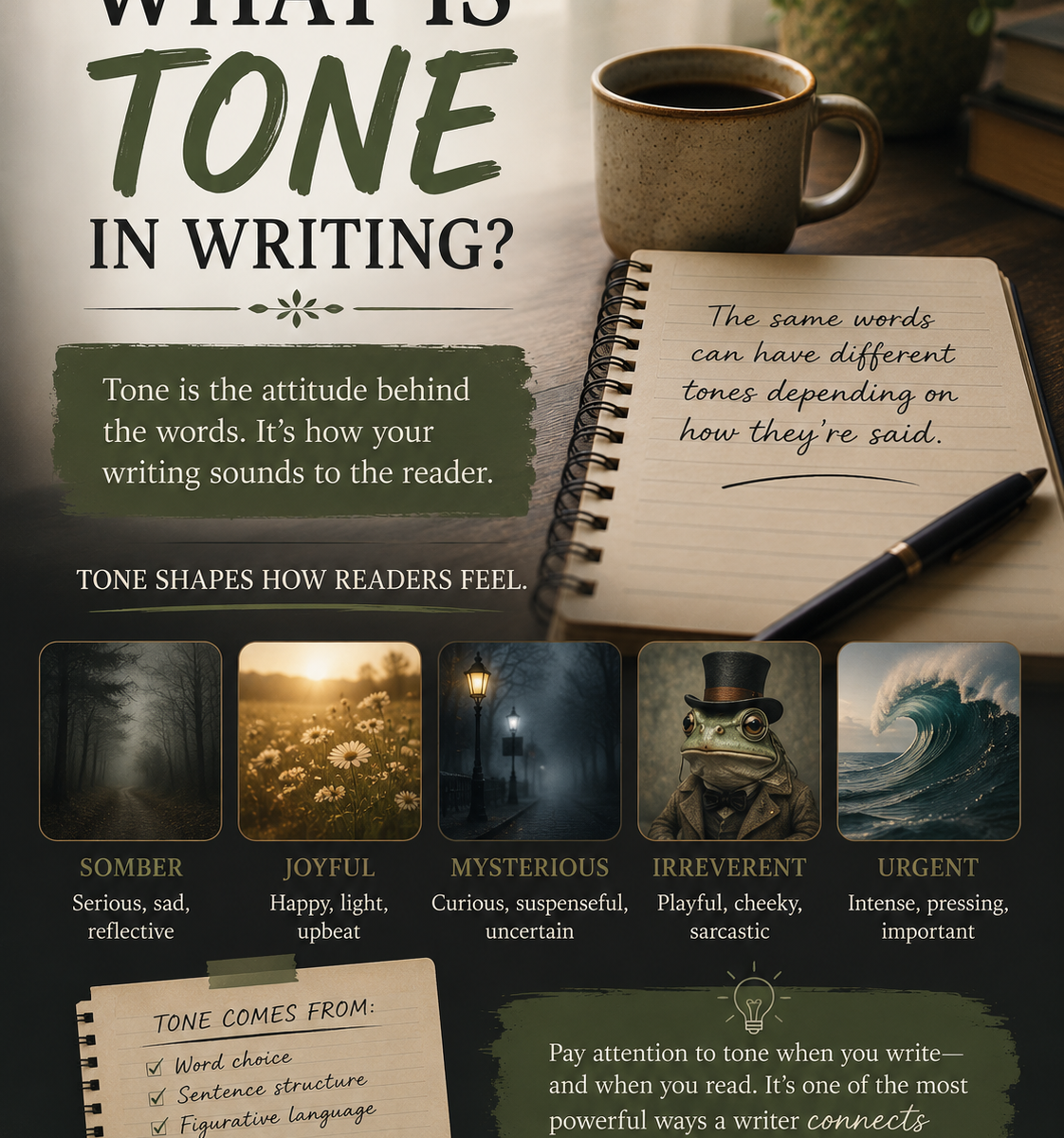
What Is Tone in Writing? It is the attitude a writer shows toward a subject, character, or audience.
Tone helps readers hear the “voice” behind the words. It can make a story feel serious, playful, angry, hopeful, or cold.
In this Guide
- What Is Tone in Writing?
- Why tone matters in literature
- Examples of tone in famous books
- Tone vs. mood
- How to spot tone while reading
- Helpful books to read
- FAQ
- Key takeaway
What Is Tone in Writing?
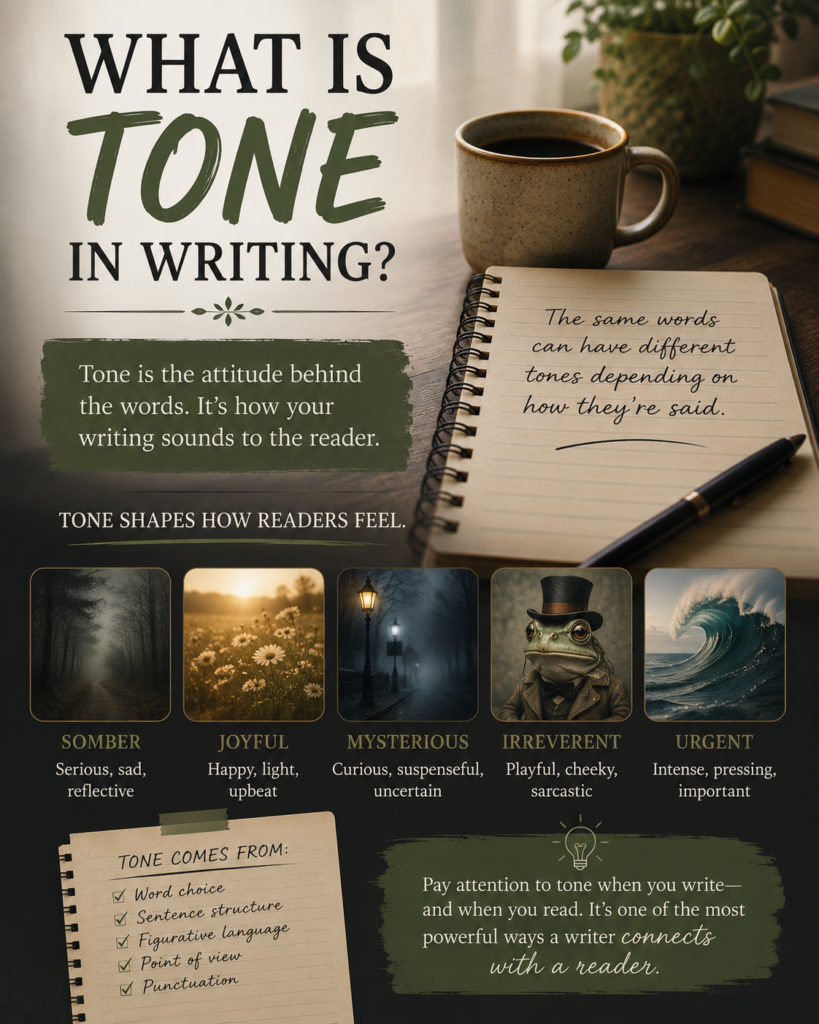
Tone is the writer’s attitude.
A simple answer to What Is Tone in Writing? is this: tone shows how the author feels about what is happening. That feeling comes through word choice, sentence style, details, and dialogue.
For example, a narrator might describe a storm as “wild and beautiful.” That sounds excited or impressed. Another narrator might call the same storm “cruel and endless.” That sounds fearful or bitter.
Tone is not always direct. A writer may never say, “I feel angry.” Instead, the anger appears in sharp words, short sentences, or harsh images.
What Is Tone in Writing? Why It Matters in Literature
Tone changes how readers understand a scene.
When students ask What Is Tone in Writing?, they are really asking how a writer guides our reaction. Tone can make a character seem foolish, brave, selfish, or kind.
In literature, tone also helps reveal theme. A sad tone may show loss. A mocking tone may point out pride or weakness. A hopeful tone may suggest that change is possible.
On an essay or AP Literature exam, tone is often the key to a strong analysis. If you can explain the tone, you can explain how the author creates meaning.
What Is Tone in Writing? Examples from Famous Literature
Examples make tone easier to hear.
In Edgar Allan Poe’s “The Tell-Tale Heart,” the tone is tense and nervous. The narrator keeps trying to prove he is sane, but his words make him sound more unstable.
In Jane Austen’s Pride and Prejudice, the tone is often witty and ironic. Austen gently mocks pride, social rules, and quick judgments.
In George Orwell’s 1984, the tone is bleak and serious. The cold language helps readers feel the danger of a world where the government controls truth.
The best way to answer What Is Tone in Writing? is to look at how the author’s attitude shapes each passage. Tone is not just what happens. It is how the writing feels about what happens.
What Is Tone in Writing? Tone vs. Mood
Mood and tone are related, but they are not the same.
Tone is the author’s attitude. Mood is the feeling created in the reader.
For example, a story might have a fearful tone because the narrator describes danger with panic. That tone can create a scary mood for the reader.
If you want a deeper breakdown, read our guide on tone vs. mood in literature.
What Is Tone in Writing? How to Spot It While Reading
You can find tone by paying close attention to small choices.
Start with word choice. Ask if the words sound warm, cold, respectful, bitter, excited, or calm.
Then look at sentence style. Short sentences can sound tense or blunt. Longer sentences can feel thoughtful or emotional, depending on the words around them.
Dialogue also gives clues. A character who says, “How wonderful,” may sound sincere in one scene and sarcastic in another.
When you ask What Is Tone in Writing?, do not stop at naming a tone word. Always connect that word to proof from the text.
Common Tone Words Students Can Use
Tone words help you describe the author’s attitude with more care.
- Serious
- Playful
- Angry
- Hopeful
- Mocking
- Sad
- Respectful
- Suspicious
Try to avoid vague words like “good” or “bad.” A stronger tone word makes your analysis clearer.
A Practical Tip for Reading Tone
Use this quick method when you read a passage.
Circle two or three words that show attitude. Then write one tone word in the margin.
After that, ask: “How does this tone affect the meaning of the passage?” This turns a simple observation into real literary analysis.
For more help with poetry terms, the Poetry Foundation’s glossary entry on tone is a useful resource. You can also explore broad literary background through Britannica’s overview of literature.
Helpful Books to Read for Tone
These books are useful for seeing tone in action.
- Pride and Prejudice by Jane Austen
- 1984 by George Orwell
As you read, pause after key scenes and ask how the author’s attitude comes through.
FAQ: What Is Tone in Writing?
What Is Tone in Writing?
Tone is the author’s attitude toward the subject, characters, or audience. It shows through words, details, and style.
How is tone different from mood?
Tone is the writer’s attitude. Mood is the feeling the reader gets from the text. For a full explanation, see this guide to the difference between tone and mood.
Can a story have more than one tone?
Yes. A story may start with a playful tone and later become serious. Tone can shift as events change.
Why does tone matter in an essay?
Tone helps you explain how the author creates meaning. It gives you a clear path from evidence to interpretation.
Key Takeaway
What Is Tone in Writing? It is the attitude behind the words. To analyze it well, name the tone, prove it with text, and explain why it matters.












