
Flash Memoir Prompt: Dream or Plan You Quietly Let Go of without Telling Anyone

flash memoir dreams

A warm flash memoir prompt for remembering the dream or plan you quietly let go of, through one small scene, one physical detail, and the truth you may not have said out loud.

Maybe it lived in a notebook for a while. Maybe it was a course catalog folded into your bag, a half-finished application, a business idea scribbled on the back of a receipt, or a town you kept checking on weather apps even though you never moved there.

Some dreams do not end with a dramatic speech. They do not slam the door. They simply stop being mentioned. Today’s flash memoir prompt dream plan quietly let go invites you to look at one of those quiet endings with care, not judgment.

flash memoir dreams

The Prompt

Write about a dream or plan you quietly let go of without telling anyone.

This prompt can unlock a meaningful memory because private disappointments often leave small traces. You may remember the day you stopped practicing, the evening you closed the browser tab, or the moment you put the folder in a drawer and did not open it again.

The story does not have to be tragic. Letting go can happen for many reasons. You grew older. Money changed. Someone needed you. The dream no longer fit. Or maybe you were tired of wanting something that kept moving away.

Why This Memory Matters

A dream you never announced can still shape your life. In fact, it may carry a special kind of weight because no one else knew enough to ask what happened.

This kind of memory often reveals the difference between who you imagined becoming and who you became. That does not mean one version is better. It means there was a turning point, even if no one saw it.

Maybe you once planned to become a singer, but you stopped showing up for auditions. Maybe you wanted to leave your hometown, but your suitcase never made it past the closet. Or maybe you planned to write a novel, start over, learn a language, adopt a child, open a bakery, or tell someone how you felt.

The quiet part is important. When a dream is public, people help create the story around it. They ask questions. They offer comfort. And they make comments. But when a dream is private, the memory stays close to the body. You might remember the smell of coffee beside your laptop, the ache in your neck, or the sound of rain while you deleted a file.

That is where good flash memoir often begins. It starts before the explanation. It starts with what you noticed.

How to Approach This Flash Memoir Prompt Dream Plan Quietly Let Go

Begin with one object connected to the dream. Choose something ordinary: a form, a pair of shoes, a brochure, a musical instrument, a saved email, a paintbrush, a recipe card, a gym bag.

Do not try to tell the whole history of the dream. Pick one scene. Maybe it is the moment you realized you had stopped caring. Maybe it is the day you packed the object away. Or maybe it is the moment you watched someone else do the thing you once wanted for yourself.

Write what your hands did first. Did you fold the paper? Close the box? Leave the room? Pretend to be busy? Small actions can reveal more than a long explanation.

Then let the emotion arrive slowly. You do not need to name it right away. Try writing the scene as if you are observing yourself from across the room. What would a camera see? What sound would it pick up? And what would be easy to miss?

If you enjoy looking closely at details, you might also like this guide on how to annotate literature. The same skill can help in memoir. You learn to notice patterns, repeated images, and the quiet places where meaning gathers.

For this flash memoir prompt dream plan quietly let go, resist the urge to wrap the piece in a perfect lesson. You may not know exactly why you let the plan fade. That uncertainty can make the writing feel honest.

A Quick Example

I kept the community college catalog under my bed for almost a year. The pages were soft at the corners because I had turned to the nursing program so many times. I liked the photograph of the students in blue scrubs, all of them smiling like they had somewhere important to be. On a Saturday morning, I pulled the catalog out while my kids watched cartoons in the next room. The application deadline was circled in purple pen. I stared at it while my toast cooled on the plate. Then I slid the catalog into the recycling bin under the sink. I did not cry. I rinsed a cereal bowl and let the water run too long. No one asked what I had thrown away.

Try It Yourself

Set a timer for ten minutes and write about the object, place, or day connected to the plan you stopped speaking about. Start small. Let the first sentence be plain: “The folder was blue,” or “I stopped going after the third lesson.”

Try to stay with one memory instead of explaining your whole life around it. If you feel tempted to defend your choice, pause and return to the scene. What was the light like? What did you do next? Who was nearby and unaware?

You may discover that the dream did not vanish. It may have changed shape. Or you may find that letting it go was an act of survival, wisdom, fear, love, or timing. The page does not need you to decide right away.

This flash memoir prompt dream plan quietly let go is not about blaming yourself for what did not happen. It is about giving a private ending a place to be seen.

Want More Flash Memoir Prompts?

Explore all 365 prompts in The Memory Trigger: 365 Flash Memoir Writing Prompts. It offers a full year of short, focused invitations for writing real memories with honesty and detail.
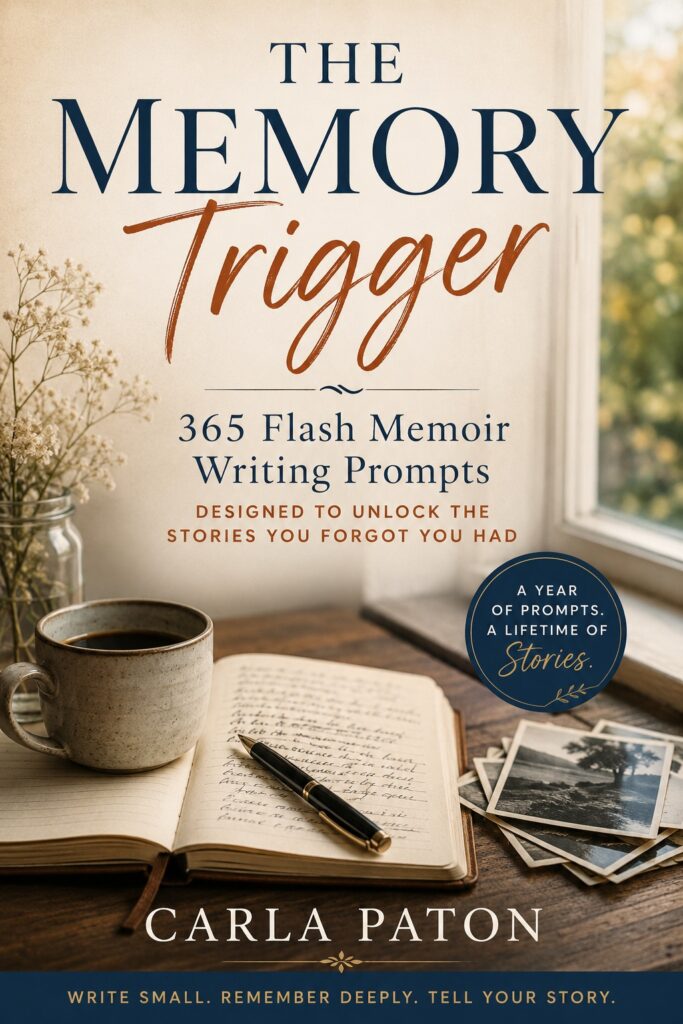

The Memory Trigger

Flash Memoir Prompt: Last Time You Felt Completely Certain About Something You No Longer Believe

Flash Memoir prompt

A focused flash memoir prompt for tracing the moment when certainty cracked, using one memory, one scene, and one honest shift in belief.

You can probably remember the feeling: your voice a little too firm, your mind already made up, your body carrying the clean comfort of being right. Maybe you were sitting at a kitchen table, standing in a hallway, reading a message, or walking away from someone with total confidence in what you thought you knew.

Then time did what time does. It added facts. It softened you. It proved you wrong, or at least less right than you believed. This flash memoir prompt last time felt completely certain invites you to return to that exact edge, the final moment before your belief changed shape.

That can be a powerful place to write from. Certainty is rarely just an idea. It has a temperature, a sound, a posture. It lives in the raised eyebrow, the slammed car door, the underlined sentence, the friend you stopped listening to too soon.

Flash Memoir prompt

The Prompt

Write about the last time you felt completely certain about something you no longer believe.

This prompt works because it asks you to write about a change without forcing you to explain your whole life. You do not need to cover years of growth or every reason your thinking changed. You only need to return to one memory when your old belief still felt solid.

That old certainty might be about a person, a place, a dream, your family, your future, or yourself. You might have believed you would never leave your hometown. You might have believed a friendship would last forever. You might have believed success had one clear shape.

The strongest response will not rush to the lesson. It will let the reader stand beside you in the moment before the change became clear.

Why This Memory Matters

Certainty can be comforting. It can also be protective. When we are sure, we do not have to sit with doubt. We do not have to ask harder questions. We do not have to see the parts of a story that make us uncomfortable.

This kind of memory can reveal who you were trying to be at the time. Were you trying to be loyal? Safe? Impressive? Independent? Forgiving? Strong?

For example, a teenager who feels certain they will never become like their parents may be writing about fear. A college student who feels certain they chose the right major may be writing about pressure. A spouse who feels certain an argument does not matter may be writing about what they missed.

This flash memoir prompt last time felt completely certain is not about shaming your past self. It is about seeing that person clearly. You can write with tenderness toward the version of you who needed that belief to feel steady.

It may also help to think about the difference between what you felt and what the scene seemed to say. If you enjoy close reading, the same skill you use when you annotate literature can help here. Notice the evidence in the memory before you decide what it means.

How to Approach This Prompt

Begin with a physical detail. Do not start with, “I used to believe…” Start with the shoes you were wearing, the chipped mug in your hand, the blue glow of your phone, or the smell of rain on the sidewalk.

Then narrow the memory to one scene. Choose the last time you remember feeling fully sure. Maybe someone challenged you, and you brushed them off. Maybe you said the belief out loud. Maybe you made a choice because you trusted it so completely.

Write what you noticed before you explain what it meant. Let the reader see the room. Let them hear the sentence you said. Let them feel the confidence in your body.

You do not have to tell the whole backstory. In fact, the piece may be stronger if you resist that urge. Flash memoir often works best when it lets one small moment carry a larger truth.

If you get stuck, try this opening line: “The last time I believed that, I was…” Then finish the sentence with a place or act. “The last time I believed that, I was folding a black dress into a suitcase.” “The last time I believed that, I was laughing too loudly at dinner.”

You can also pay attention to the emotional atmosphere of the memory. Was the tone confident, bitter, hopeful, proud, or scared? If you want a simple refresher, this guide to tone vs. mood in literature can help you think about the feeling your scene gives off.

A Quick Example

The last time I felt certain I would never move back home, I was standing in my mother’s driveway with two laundry baskets in my trunk. I had driven three hours from my apartment just to wash clothes for free, but I still told myself I had escaped. The porch light flickered above us. My mother handed me a container of soup wrapped in a dish towel, and I rolled my eyes because I thought needing her meant failing. “I’m fine,” I said, too fast. She nodded like she believed me. Years later, after the breakup and the empty bank account and the quiet bedroom upstairs, I understood that home had never been the trap. My pride had been.

Try It Yourself

Set a timer for ten minutes and write from this flash memoir prompt last time felt completely certain. Pick one belief you no longer hold, then find the final scene where that belief still felt true.

Do not worry about making yourself look wise. Let your past self be human. Let the certainty be real on the page. The change will show itself if you stay close to the moment.

If the writing feels too big, shrink it. Write about one sentence you said. Write about one object in the room. Write about what your hands were doing while you believed you were right.

When you finish, read it once and underline the line that feels most alive. That line may be the real beginning of your piece.

Want More Flash Memoir Prompts?

If this prompt opened a memory you did not expect, you may enjoy building a steady flash memoir habit. Explore all 365 prompts in The Memory Trigger: 365 Flash Memoir Writing Prompts.

The Memory Trigger

Flash Memoir Prompt: Last Time You Talked to a Version of Yourself that No Longer Exists

memoir version of yourself

A brief, tender writing invitation to explore the last time you talked to a version of yourself that no longer exists, using one clear memory, one physical detail, and one emotional truth.

Maybe it happened while deleting old photos. Maybe you found a message thread from years ago and barely recognized the person typing your words. The jokes were familiar, but the need inside them was not. You were trying so hard to be liked, brave, difficult, invisible, impressive, or fine.

This flash memoir prompt last time talked version no longer exists asks you to pause at that strange edge between who you were and who you are now. It is not about judging your old self. It is about meeting them for one small scene and noticing what they still have to tell you.

memoir version of yourself

The Prompt

Write about the last time you talked to a version of yourself that no longer exists.

This prompt can unlock a memory because it gives you a person to write toward. That person is you, but also not quite you anymore. Maybe it is the student who thought one bad grade would ruin everything. Maybe it is the parent who had no idea how tired they were. Maybe it is the younger you who stayed too long in a place that made them small.

A flash memoir prompt last time talked version no longer exists works best when you choose one real moment. Do not try to explain your whole life change. Instead, look for a final conversation, a private thought, a mirror glance, a journal entry, or a moment when you realize, “I do not live in that old self anymore.”

Why This Memory Matters

We often change without a ceremony. There is no bell when we become less afraid. There is no receipt when we stop needing approval from someone who once held too much power. One day, we answer differently. One day, we walk away sooner. One day, we read an old note and think, “Oh, I remember being that person.”

This kind of memory matters because it shows growth without turning it into a speech. The old version of you might have been hopeful, lonely, stubborn, proud, or scared. They might have been doing the best they could with what they knew.

Writing about them with care can help you see the distance you have traveled. It can also help you avoid making your past self the villain. In memoir, the strongest moments often come from honest attention, not perfect wisdom.

If you are a student or newer writer, this prompt is also a useful way to study tone. Are you writing with regret, kindness, humor, or relief? If you want help noticing that difference, this guide to tone vs. mood in literature can help you name the feeling your scene creates.

How to Approach This Prompt

Begin with a physical detail. Choose something small enough to hold the scene in place. A cracked phone screen. A bathroom mirror. A school hallway. A coffee cup you gripped too tightly. A sweatshirt you wore during a hard year.

Then write the scene before you explain it. What did you see? What did your body feel like? What words were said out loud, if any? Memoir becomes more powerful when the reader can stand inside the moment with you.

Try starting with this sentence: “The last time I felt like that version of me, I was…” Let the sentence lead you into one place. Keep the frame tight. You do not need to tell every reason that version of you disappeared.

You might also write as if you are speaking directly to your old self. Use “you” if it feels natural. For example: “You thought silence would keep the peace. You did not know it was costing you sleep.” This can create a quiet conversation between past and present.

If you get stuck, slow down and observe the memory like a reader. Notice what repeats, what feels strange now, and what detail carries the most emotion. For more practice with close attention, you might enjoy this guide on how to annotate literature, since the same skill can help you read your own memories more carefully.

The goal is not to prove you are better now. The goal is to tell the truth about a small ending. This flash memoir prompt last time talked version no longer exists is really about the quiet goodbye we do not always know we are saying.

A Quick Example

I found her in the notes app, between a grocery list and a half-written apology. She was twenty-three and convinced that if she explained herself clearly enough, everyone would understand and stay. The note began, “I know I’m probably overreacting.” I sat on the edge of my bed in my work clothes, shoes still on, and read the whole thing twice. Outside, someone was dragging trash bins to the curb. I wanted to reach through the screen and take the phone from her hand. I wanted to say, “You are allowed to be upset before someone else agrees with you.” Instead, I deleted the note. Then I opened a blank one and wrote, “I believe you.”

Try It Yourself

Set a timer for ten minutes and write one scene. Choose the last time you remember being close to that old version of yourself. Do not worry about making it polished. Just stay near the moment.

You may write about a conversation with another person, or you may write about a silent exchange with yourself. A photograph can count. A journal page can count. A song that pulls you back into an old room can count.

When you finish, read it once and underline the sentence that feels most true. That sentence may be the heart of the piece. If you revise later, build around it, but do not rush to explain it away.

Want More Flash Memoir Prompts?

If this prompt opened a memory you did not expect, keep following that thread. Short prompts can lead to honest writing because they ask for one clear scene instead of a whole life story. Explore all 365 prompts in The Memory Trigger: 365 Flash Memoir Writing Prompts.

The Memory Trigger
error

Enjoy this article? Please spread the word :)

Follow by Email
BLUESKY
fb-share-icon
Reddit
LinkedIn
Share
RSS