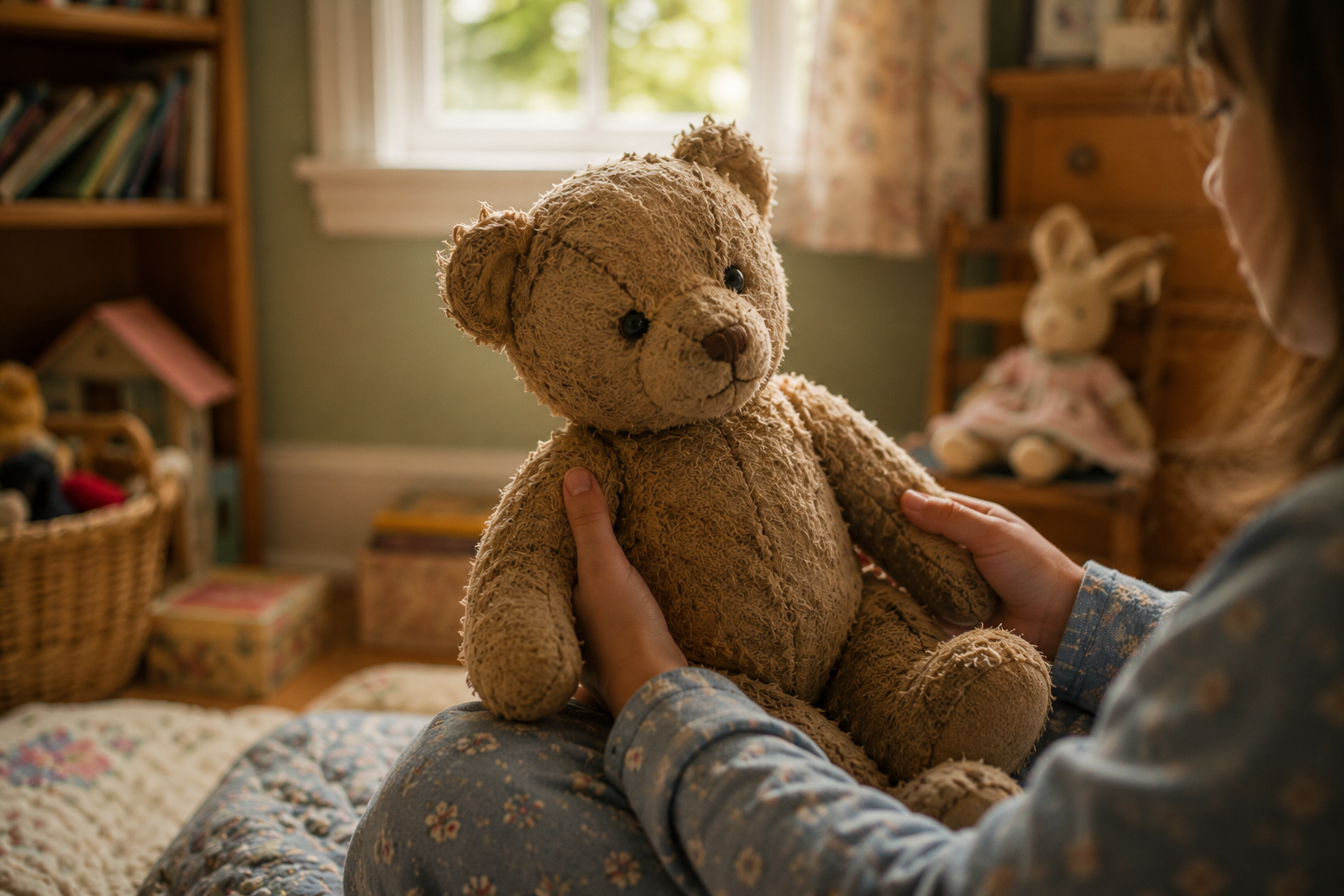
A small childhood object can hold a surprisingly serious kind of love, and this flash memoir prompt about a toy or object from childhood you loved in a way that felt almost serious invites you to return to one focused memory, one sensory detail, and one emotional truth.
Maybe it was a stuffed animal you slept with long after you were “too old.” Maybe it was a plastic horse, a cracked action figure, a music box, a blanket, a toy truck with one missing wheel, or a rock you truly believed had chosen you. Whatever it was, you did not love it casually. You gave it a job. You trusted it. You may have protected it like it had a life of its own.
That is the heart of this flash memoir prompt toy object childhood loved way. It asks you to remember the time before you had adult words for attachment, comfort, loneliness, imagination, or loyalty. You only had the object. You only had how it felt in your hand.
The Prompt
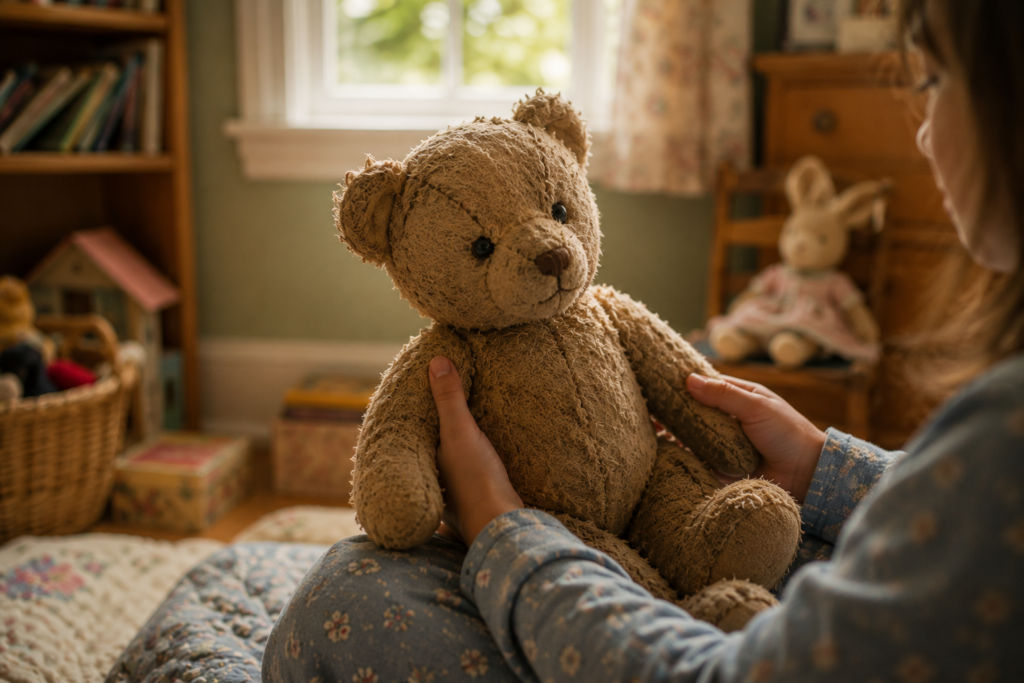
Write about a toy or object from childhood that you loved in a way that felt almost serious.
This prompt can unlock a strong memory because children often pour large feelings into small things. A toy can become a friend. A blanket can become safety. A keychain, shell, doll, or baseball card can become proof that the world is still in order.
You do not need to explain your whole childhood. In fact, this prompt works best when you stay close to one scene. Choose one moment when your love for the object showed itself clearly. Maybe you hid it from a sibling. Maybe you panicked when it went missing. Maybe you packed it first for a trip. Maybe you whispered something to it that you would not say to anyone else.
Why This Memory Matters
Objects in memoir often work like symbols, even when we do not plan them that way. A teddy bear is never just a teddy bear if it helped you survive the dark. A toy sword is never only plastic if it made you feel brave. If you want to think more about how objects carry meaning in stories, this guide on how to find symbolism in a story can help you notice the deeper layers without forcing them.
This kind of memory matters because it shows who you were before you knew how to hide your feelings. Children are often very direct in their loves. They name things. They repair things with tape. They tuck things into backpacks for protection. They believe an object can miss them back.
As an adult, you may feel tempted to laugh at that younger self. Try not to rush there. The seriousness is the point. What did that object do for you? Did it make you feel less alone? Did it give shape to your imagination? Did it help you feel steady during a time that felt uncertain?
A strong flash memoir response does not need a dramatic plot. It needs attention. The story may be as small as the moment you found your beloved toy under the bed after thinking it was gone forever. If the feeling was real, the memory is worth writing.
How to Approach This Prompt
Begin with the object itself. Do not start by explaining why it mattered. Start with what it looked like.
Was the fur matted? Was the paint chipped? Did it smell like dust, soap, crayons, or your old bedroom? Did it fit in your palm, or did you have to drag it by one arm? Physical detail gives the reader a doorway into the memory.
Then narrow the memory to one scene. Avoid trying to tell the whole story of every toy you ever loved. Choose one object and one moment. For example, write about the day you brought it to school in your coat pocket, or the night you could not sleep until someone found it.
Let the younger version of you act first. Show what you did before telling us what it meant. Maybe you lined the toy up beside your dinner plate. Maybe you cried when someone joked about throwing it away. Maybe you washed it carefully in the bathroom sink and felt guilty for getting it wet.


If you are teaching this prompt to students, you might also ask them to mark sensory details in their own drafts. This simple practice is close to the skill used when students annotate literature: notice what stands out, circle the charged detail, and ask why it matters.
One helpful opening sentence is: “I knew I loved it too much when…” That line moves you straight into a moment of action. It also lets the seriousness of the love appear naturally.
A Quick Example
I knew I loved the blue marble too much when I refused to trade it for five stickers and a grape soda. It was not even the prettiest marble in my shoebox. It had a cloudy spot inside, like a tiny storm had been trapped there. I kept it in the front pocket of my jeans and rubbed it with my thumb when adults talked too loudly in the kitchen. Once, my brother took it and rolled it under the couch. I screamed so hard my throat hurt. My mother found it covered in dust and placed it in my palm without a word. I closed my fingers around it and felt my whole body calm down, as if the world had clicked back into place.
Try It Yourself
Set a timer for ten minutes and write about one childhood toy or object you loved with real seriousness. Stay with one scene. Let the object be seen, touched, lost, found, protected, or carried.
If you get stuck, write about your hands. What did they do with the object? Did they clutch it, hide it, clean it, fix it, or pass it to someone else with great caution? Hands often remember what the mind tries to skip.
Do not worry about making the memory sound important. Let it be small. Let it be a little funny if it was funny. Let it be tender if it still feels tender. The goal of this flash memoir prompt toy object childhood loved way is to honor how real that attachment felt at the time.
When you finish, read your draft once and underline the sentence that feels most alive. That sentence may point to the real center of the memory.
Want More Flash Memoir Prompts?
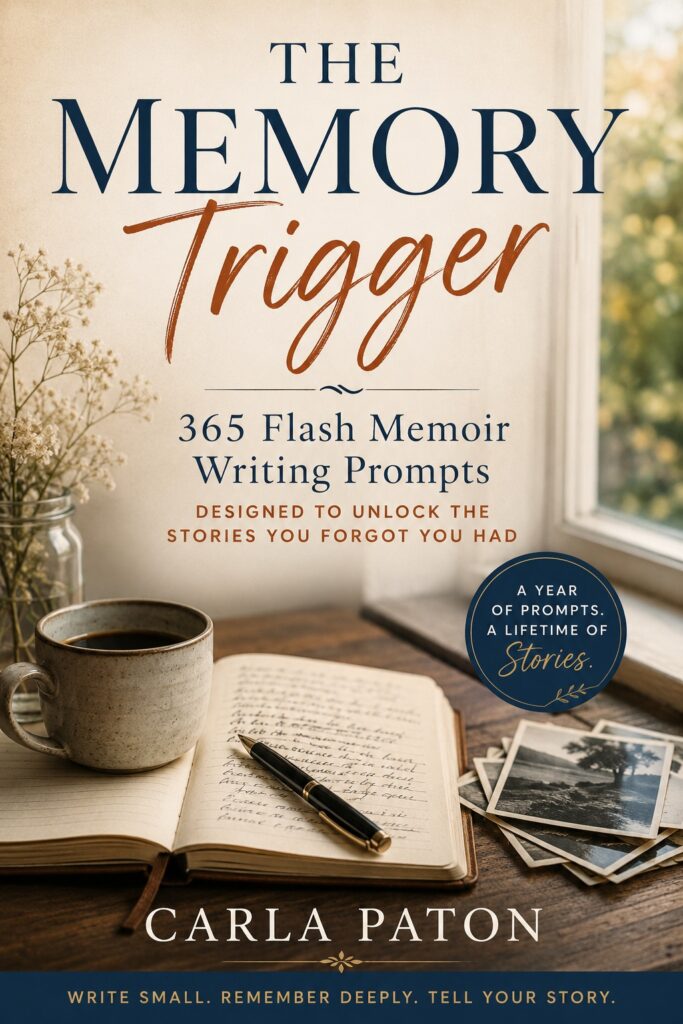
If this prompt opened a door, keep going. Short memoir practice can help you collect the small scenes that shaped you, one memory at a time. Explore all 365 prompts in The Memory Trigger: 365 Flash Memoir Writing Prompts.