Best Dark Academia Dream Logic: Books, Symbols, and Why This Mood Haunts Readers

Dark Academia dream logic

Best Dark Academia Dream Logic captures a strange mix of old libraries, secret guilt, blurred time, and minds under pressure. It is the feeling that a story makes sense like a dream, even when the plot feels unstable.

For students and literature fans, this style can make books feel both beautiful and unsafe. It turns school, art, and knowledge into places where desire and fear meet.

In this Guide

  • What Best Dark Academia Dream Logic means
  • Why readers love this mood
  • Classic and modern examples
  • Symbols and themes to watch for
  • Recommended books to search on Amazon
  • How to read this style more closely
  • FAQs

What Is Best Dark Academia Dream Logic?

This mood blends campus life, hidden knowledge, and dreamlike fear.

Best Dark Academia Dream Logic is not a strict genre. It is a way a story feels. The setting may have ivy-covered schools, rare books, Latin phrases, candlelit rooms, and students who seem too intense for their own good.

The “dream logic” part means events may feel strange but still emotional. A character may repeat a memory, enter a room that feels symbolic, or sense danger before it has a clear cause.

Dark academia often asks one hard question: what happens when the love of beauty becomes a form of danger?

Why Best Dark Academia Dream Logic Feels So Powerful

Readers like this style because it makes learning feel charged with mystery.

School is supposed to be a place of reason. In these stories, it becomes a maze. A classroom can feel like a courtroom. A library can feel like a temple. A professor can feel like a guide or a threat.

Best Dark Academia Dream Logic works because it reflects how memory often feels. We do not always remember life in neat order. We remember sharp images, shame, desire, weather, and tone.

This is why books in this mode often feel haunted even without ghosts. The past itself becomes the ghost.

Best Dark Academia Dream Logic in Classic Literature

Many older works helped shape this moody, intellectual style.

Mary Shelley’s Frankenstein is a strong early example. Victor Frankenstein seeks forbidden knowledge, but his learning turns into guilt and horror. The novel’s icy landscapes and feverish memories give it a dreamlike force.

Oscar Wilde’s The Picture of Dorian Gray also fits the mood. Dorian chases beauty and pleasure, while his portrait carries the truth of his soul. The story feels elegant, but its logic is moral and strange, like a nightmare dressed in silk.

Charlotte Brontë’s Jane Eyre uses Gothic dream logic through locked rooms, strange sounds, and emotional secrets. Thornfield Hall is not a school, yet it acts like one. Jane learns how power, love, and silence shape a life.

For background on Gothic fiction, Britannica offers a helpful overview of the Gothic novel.

Modern Books with Best Dark Academia Dream Logic

Modern dark academia often turns friendship and ambition into a trap.

Donna Tartt’s The Secret History is one of the best-known examples. A group of elite college students studies ancient Greek, then crosses a moral line. The book feels calm on the surface, but dread builds under every conversation.

M. L. Rio’s If We Were Villains uses Shakespeare, theater, and obsession. The students speak through plays, which makes real life feel staged. Their world becomes so intense that truth and performance blur.

Leigh Bardugo’s Ninth House brings secret societies into a darker Yale setting. It uses magic, trauma, and campus power to show how old institutions can hide harm behind tradition.

In each case, Best Dark Academia Dream Logic comes from a clash between beauty and corruption. The characters want meaning, but meaning often costs them peace.

Key Symbols in Best Dark Academia Dream Logic

Symbols in this style often look beautiful before they turn sharp.

Books are the most obvious symbol. They stand for knowledge, status, and escape. Yet they can also become proof that a character would rather live in ideas than face real harm.

Mirrors often suggest a split self. A character may look polished in public but feel broken inside. In The Picture of Dorian Gray, the portrait acts like a mirror that tells the truth.

Old buildings matter too. A school, mansion, or chapel can hold secrets inside its walls. These spaces make the past feel alive.

Weather often carries emotion. Fog can suggest confusion. Snow can suggest distance or moral coldness. Rain can make a scene feel like a confession.

If you want to spot these signs faster, try close reading in literature. It helps you notice how small details shape the whole story.

Themes That Define Best Dark Academia Dream Logic

The best stories in this mood turn big ideas into personal danger.

One major theme is forbidden knowledge. Characters want to know more than they should. That desire can look noble at first, but it often leads to pride.

Another theme is performance. Students and scholars may act wiser, richer, or more cultured than they are. Over time, the mask becomes hard to remove.

Guilt is also central. In many dark academia books, guilt does not appear as a simple regret. It returns as dreams, strange visions, repeated memories, or fear of being seen.

Best Dark Academia Dream Logic often shows that the mind can become its own haunted house.

Recommended Books to Search on Amazon

These titles are strong choices if you want to explore this mood further.

  • The Secret History by Donna Tartt
  • If We Were Villains by M. L. Rio

Both books use art, school, and secrecy to create an intense atmosphere. They are also useful for students who want to study tone, unreliable memory, and literary allusion.

For poetry that shares this symbolic and shadowed mood, the Poetry Foundation’s page on symbolism can help explain how images carry deeper meaning.

How to Read Best Dark Academia Dream Logic Like a Literature Student

You do not need to solve every strange moment right away.

Start with the setting. Ask what the school, room, or library seems to want from the characters. In dark academia, places often act like silent judges.

Watch repeated images. If a book keeps returning to mirrors, blood, candles, cold air, or Latin phrases, those details are not random. They create a pattern.

Pay attention to narration. Many stories with Best Dark Academia Dream Logic use memory as a filter. The narrator may not lie, but they may hide from the full truth.

A helpful method is to slow down and mark key words, images, and shifts in tone. This guide to how close reading works can help you build that skill.

Why This Style Matters in Literary Culture

Dark academia is popular because it speaks to real pressure around success.

Many students know what it feels like to chase grades, praise, and identity at the same time. Dark academia turns that stress into art. It shows the beauty of learning, but it also warns against worshiping it.

Best Dark Academia Dream Logic matters because it captures how ambition can feel unreal. When people live for status, genius, or taste, they may lose touch with care and truth.

That is why these stories stay with readers. They make beauty feel dangerous, and they make danger feel strangely beautiful.

FAQs About Best Dark Academia Dream Logic

What does Best Dark Academia Dream Logic mean?

It means a dark academia style that uses dreamlike scenes, strange memory, and symbolic details. The story may feel unreal, but its emotions still make sense.

Is dark academia always Gothic?

No. Dark academia often uses Gothic elements, such as secrets, old buildings, and dread. Yet it can also focus on school pressure, art, class, and moral failure.

What book is the best place to start?

The Secret History by Donna Tartt is a strong starting point for older students. It shows many core dark academia traits in one novel.

Why do these stories use so many symbols?

Symbols help show what characters cannot say out loud. A room, book, portrait, or storm can reveal fear, guilt, or desire.

Can high school students study this style?

Yes. Students can compare it with Gothic novels, Romantic literature, Shakespeare, or modern campus novels. The key is to focus on theme, tone, and imagery.

Key Takeaway

Best Dark Academia Dream Logic turns learning into a beautiful maze. Its best stories remind us that knowledge matters, but wisdom needs honesty, mercy, and self-control.

When a book feels like an old library in a dream, pay attention. The shadows may be where the story tells the truth.

image-slider-with-thumbnail1.jpeg
PlayPause
previous arrow
next arrow
image-slider-with-thumbnail1.jpeg
image-slider-with-thumbnail3.jpeg
image-slider-with-thumbnail4.jpeg
ChatGPT Image Jun 27, 2026, 06_33_13 PM
ChatGPT Image Jun 27, 2026, 06_36_37 PM
ChatGPT Image Jun 27, 2026, 06_38_39 PM
ChatGPT Image Jun 27, 2026, 06_31_22 PM
image-slider-with-thumbnail7.jpeg
ChatGPT Image Jun 27, 2026, 06_29_43 PM
ChatGPT Image Jun 27, 2026, 06_27_44 PM
image-slider-with-thumbnail6.jpeg
ChatGPT Image Jun 27, 2026, 06_15_07 PM
image-slider-with-thumbnail5.jpeg
ChatGPT Image Jun 27, 2026, 06_22_43 PM
ChatGPT Image Jun 27, 2026, 06_25_37 PM
ChatGPT Image Jun 27, 2026, 06_19_43 PM
ChatGPT Image Jun 27, 2026, 06_12_00 PM
ChatGPT Image Jun 27, 2026, 06_08_50 PM
ChatGPT Image Jun 26, 2026, 04_54_23 PM
ChatGPT Image Jun 27, 2026, 05_53_51 PM
ChatGPT Image Jun 28, 2026, 08_35_55 AM
previous arrow
next arrow

Best Dark Academia Libraries and Bookstores: A Literary Guide to Moody, Bookish Spaces

Dark Academia Libraries

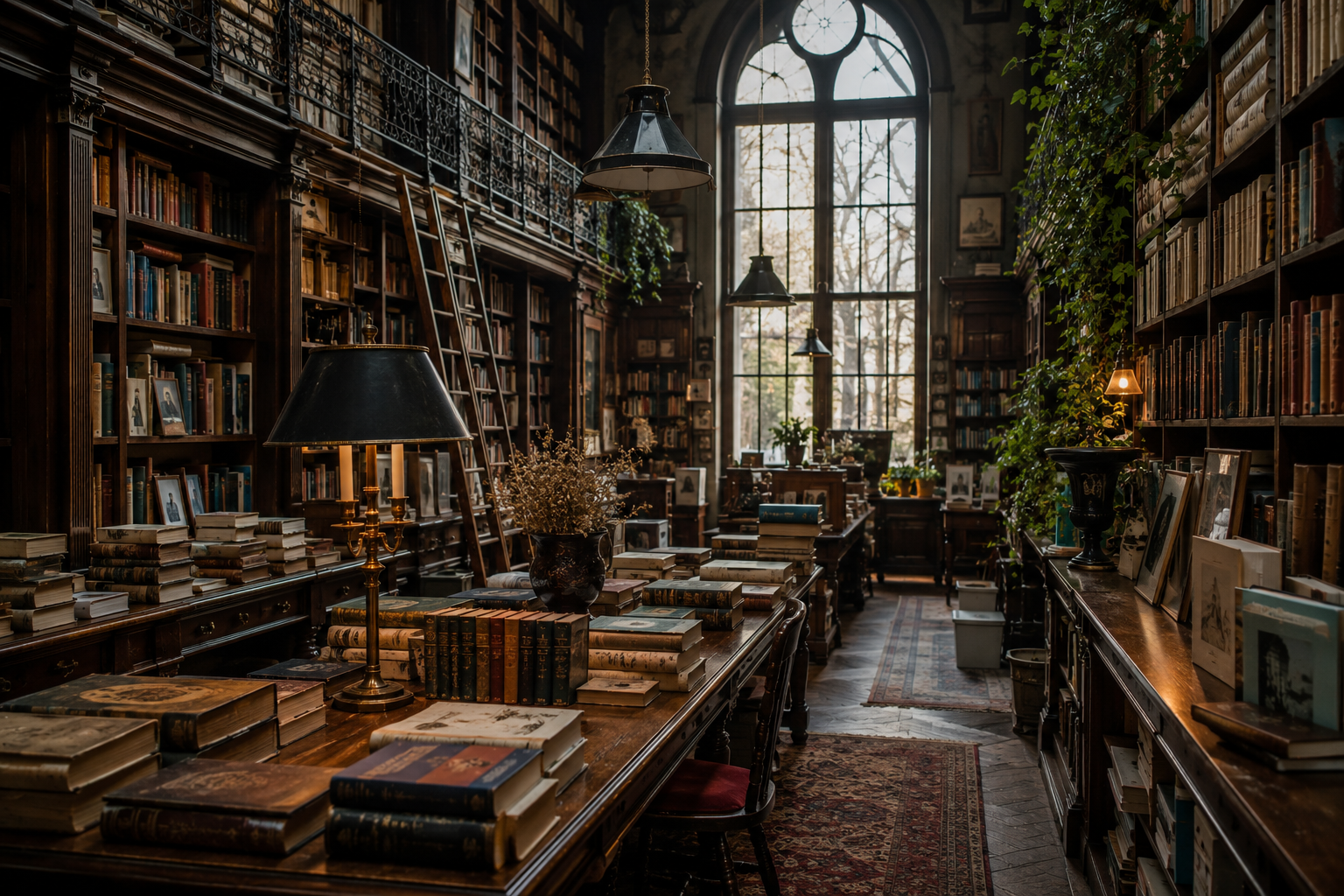
Best Dark Academia Libraries and Bookstores are more than pretty rooms with old books. They shape a mood built on study, mystery, beauty, and the quiet pull of the past.

For students and book lovers, these spaces can help explain why dark academia feels so tied to literature. They turn reading into an experience, not just a task.

In this Guide

  • What makes dark academia book spaces so powerful
  • Famous libraries with dark academia energy
  • Bookstores that fit the aesthetic
  • Books that capture the mood
  • Symbols and themes in dark academia spaces
  • FAQs
  • Key takeaway
Dark Academia Libraries

What Makes the Best Dark Academia Libraries and Bookstores Feel So Powerful?

Dark academia spaces work because they make knowledge feel secret, old, and slightly dangerous.

The Best Dark Academia Libraries and Bookstores often share a few traits: dim light, tall shelves, quiet corners, and a sense of history. They feel like places where someone could find a lost letter, a rare book, or a clue in the margin.

In literature, these spaces often stand for more than study. They can show ambition, class, obsession, or the desire to escape normal life.

Think of The Secret History by Donna Tartt. The college setting feels beautiful, but it also hides pride and guilt. The library mood adds pressure because the characters treat knowledge like power.

Best Dark Academia Libraries and Bookstores in Real Life

Some real places feel like they were built for a novel full of secrets.

The Best Dark Academia Libraries and Bookstores often have old wood, high ceilings, and shelves that seem to go on forever. These places invite slow reading and deep focus.

Bodleian Library, Oxford

The Bodleian Library is one of the most famous libraries in the world. Its stone walls and ancient reading rooms make it a key dark academia setting.

It also reminds readers of how old universities can feel both inspiring and closed off. That tension is a major part of the dark academia mood.

Trinity College Library, Dublin

Trinity College Library is known for the Long Room. It has rows of books, marble busts, and a grand silence that feels almost sacred.

This library shows why books can seem like treasures. It also suggests that learning can become a kind of ritual.

Livraria Lello, Porto

Livraria Lello in Portugal is one of the most striking bookstores in the world. Its curved staircase and stained glass make it feel both elegant and unreal.

It is easy to imagine a character finding a strange book there. That is part of why the Best Dark Academia Libraries and Bookstores stay in the reader’s mind.

Best Dark Academia Libraries and Bookstores in Literature

Books often turn libraries and bookstores into places of discovery, danger, or self-change.

The Best Dark Academia Libraries and Bookstores in fiction are not just backdrops. They push characters toward hidden truths.

In Frankenstein by Mary Shelley, Victor’s studies lead him into moral danger. The books and labs around him show how knowledge can break its limits.

In Jane Eyre by Charlotte Brontë, rooms full of books and old secrets help build the Gothic mood. The house feels like a mind with locked doors.

In Babel by R. F. Kuang, Oxford becomes a place of beauty and control. Books, language, and power are tied together in a way that fits dark academia very well.

Why Students Love the Best Dark Academia Libraries and Bookstores

These spaces make reading feel personal, serious, and a little magical.

Many students enjoy the Best Dark Academia Libraries and Bookstores because they make schoolwork feel connected to a larger world. A quiet library can turn a hard poem or novel into something worth chasing.

Dark academia also gives students a style for focus. A desk, a used copy of a classic, and a rainy afternoon can make study feel less like a chore.

Still, the best dark academia stories do not treat school as perfect. They ask hard questions about pride, status, and who gets access to knowledge.

That is why setting matters so much in literature. If you want to study how themes grow from place and conflict, this guide to themes in To Kill a Mockingbird is a helpful next read.

Symbolism and Themes in Dark Academia Book Spaces

Libraries and bookstores often stand for the mind, the past, and the search for truth.
In the Best Dark Academia Libraries and Bookstores, a locked cabinet may stand for forbidden knowledge. A dusty shelf may suggest history that no one wants to face.

Silence is also important. It can feel peaceful, but it can also feel tense. In a dark academia novel, silence may hide fear, guilt, or secrets.

Light matters too. Candles, lamps, and stained glass often show partial truth. Characters may see enough to keep going, but not enough to feel safe.
This is close to Gothic literature, where buildings often reflect inner fear. For more background on the Gothic tradition, Britannica has a clear overview of the Gothic novel.

These books match the mood of old libraries, hidden knowledge, and intense study.

If you want to understand the Best Dark Academia Libraries and Bookstores as a literary mood, start with these titles:

  • The Secret History by Donna Tartt
  • Babel by R. F. Kuang

The Secret History is a modern classic of dark academia. It explores beauty, guilt, and the danger of treating art like a private world.

Babel uses Oxford as a symbol of learning and empire. It asks who pays the cost when knowledge becomes a tool of power.

Students who enjoy poetry can also explore the Poetry Foundation for poems that fit the mood, especially works about memory, time, and loss.

How to Build a Dark Academia Reading Mood at Home

You do not need an ancient library to read like you are in one.

Choose a quiet space and keep your phone out of reach. Use a small lamp instead of bright overhead light.

Pick a book that rewards close attention. Keep a notebook nearby for quotes, questions, and symbols.

The Best Dark Academia Libraries and Bookstores inspire readers because they slow life down. You can create that same feeling with care and routine.

What Dark Academia Teaches Us About Reading

Dark academia reminds us that books can change how people see power, beauty, and truth.

The Best Dark Academia Libraries and Bookstores are not only stylish places. They show how reading can open doors, but also how knowledge can tempt people to feel superior.

This is why dark academia works so well for literary study. It connects setting, theme, and character in a clear way.

When you read any novel, ask what the setting reveals. A courtroom, school, library, or street can shape the moral world of a story. You can see this same idea in how setting supports theme in To Kill a Mockingbird.

FAQ: Best Dark Academia Libraries and Bookstores

What are the Best Dark Academia Libraries and Bookstores?

They are libraries and bookstores with a moody, historic, and book-centered feel. They often include old shelves, quiet study areas, and a strong sense of mystery.

Why do dark academia stories use libraries so often?

Libraries symbolize knowledge, secrets, and ambition. They give characters a place to search for truth or hide from it.

Is dark academia only about old universities?

No. Old schools are common, but the mood can appear anywhere books, study, and mystery shape the story.

What book should I read first for dark academia?

The Secret History by Donna Tartt is a strong place to start. It helped define the modern dark academia style.

Key Takeaway

The Best Dark Academia Libraries and Bookstores matter because they make reading feel alive with mystery, beauty, and risk.

They remind us that books are never just objects on a shelf. In literature, they can unlock truth, expose pride, and change a character’s life.

What Is Dark Academia? A Beginner-Friendly Guide to the Literary Aesthetic

what is dark academia in literature

If you have ever asked, “What Is Dark Academia?”, the short answer is this: it is a literary style and mood built around learning, mystery, beauty, and danger. It often shows smart characters drawn into old books, elite schools, secret groups, and moral trouble.

Dark academia matters because it makes knowledge feel powerful, but not always safe. It asks what people may risk for truth, status, or genius.

In this Guide

  • What Is Dark Academia? in plain terms
  • How dark academia works in literature
  • Why the genre matters
  • Common traits and themes
  • Famous examples
  • Books to read next
  • FAQ
  • A practical analysis tip

What Is Dark Academia?

Dark academia is a mood, a style, and a type of story.

What Is Dark Academia? In simple terms, it is a blend of intense study, old-world beauty, and darkness. The setting may be a university, library, boarding school, museum, or private study.

The word “dark” matters. These stories are not just about reading books and wearing tweed coats. They often include obsession, guilt, death, envy, or secrets.

The “academia” part matters too. Characters often care deeply about art, history, language, philosophy, or ancient texts. Their love of knowledge can lift them up, but it can also trap them.

What Is Dark Academia? in Literature?

In literature, dark academia turns school and study into a source of tension.

So, What Is Dark Academia? It is not just an aesthetic from social media. In books, it becomes a way to explore power, class, ambition, and moral failure.

A dark academia story often begins with a character who wants to belong. They may enter a famous school, join a small intellectual circle, or meet a brilliant teacher.

At first, the world looks elegant and rare. Then the beauty starts to crack. The reader sees jealousy, cruelty, or fear under the polished surface.

Why Dark Academia Matters in Literature

Dark academia matters because it questions the value of knowledge without wisdom.

Many students are taught to admire intelligence. These stories ask a harder question: what if intelligence becomes pride?

That question appears in older literature too. In Frankenstein by Mary Shelley, Victor Frankenstein wants to unlock the secret of life. His study leads to horror because he ignores duty and care.

This is one reason dark academia speaks to many readers. It shows that books, schools, and ideas can shape lives. It also shows that brilliance does not make a person good.

Common Traits of Dark Academia Stories

Dark academia has a few clear signs that help readers spot it.

The setting often feels old and enclosed. Think stone buildings, quiet halls, candlelit rooms, or libraries full of rare books.

The characters often feel intense. They may quote classic texts, chase beauty, or treat study like a sacred duty.

The plot often hides a secret. A group may share a crime, a lie, or a forbidden ritual. The truth usually costs more than the characters expect.

The tone is serious and moody. It may feel close to Gothic fiction, which often uses mystery, fear, old places, and emotional pressure. You can read more about the Gothic tradition in Britannica’s overview of the Gothic novel.

What Is Dark Academia? and Gothic Fiction

Dark academia often borrows from Gothic literature.

What Is Dark Academia? It is not the same as Gothic fiction, but the two overlap. Both love shadowy spaces, hidden guilt, and characters who face the past.

In a Gothic novel, the danger may come from a haunted house, a family curse, or a buried crime. In dark academia, the danger often grows inside a school, a study group, or a mind that wants too much.

Romantic poetry also shapes the mood. Dark academia often admires beauty, longing, and tragic genius. For helpful background, see the Poetry Foundation’s page on Romanticism.

Recognizable Examples of Dark Academia

Some books are clearly dark academia, while others helped shape the style.

The Secret History by Donna Tartt is one of the best-known modern examples. It follows a group of classics students at an elite college. Their love of ancient Greek culture turns into secrecy and crime.

Frankenstein by Mary Shelley is not usually sold as dark academia, but it has many of the same concerns. Victor’s private study, ambition, and moral blindness make it a strong early example of the genre’s ideas.

Hamlet by William Shakespeare also connects to the mood. Hamlet is a student, a thinker, and a prince trapped by grief and suspicion. The play links thought, death, and moral doubt in a way dark academia readers often enjoy.

When someone asks, “What Is Dark Academia?”, these works help show the answer. The genre is not only about a look. It is about the cost of knowledge and the danger of wanting to seem brilliant.

Books to Read If You Like Dark Academia

These books are strong places to start if you want more of the dark academia mood.

  • The Secret History by Donna Tartt
  • Frankenstein by Mary Shelley

You can search for these titles on Amazon, at your local library, or through a school database. If you are new to literary analysis, start with one book and track how the setting shapes the characters’ choices.

How to Analyze Dark Academia Like a Student of Literature

Dark academia becomes easier to analyze when you look past the surface style.

Do not stop at clothing, candles, or old books. Ask what those details mean. A library may suggest learning, but it may also suggest control, silence, or hidden power.

Pay close attention to who gets access to knowledge. Many dark academia stories involve class, wealth, or social status. A character may want to study, but they may also want to belong.

If you want a stronger method, use this guide on how to read literature like a scholar. It can help you move from plot summary to deeper analysis.

FAQ: What Is Dark Academia?

What Is Dark Academia? in one sentence

Dark academia is a literary mood that blends learning, beauty, secrecy, and moral danger.

Is dark academia a genre or an aesthetic?

It can be both. Online, it is often an aesthetic. In literature, it works more like a genre or style with shared themes.

Does dark academia always take place at a school?

No. Schools are common, but the story can also take place in libraries, museums, old houses, or private study spaces.

Why do students like dark academia?

Many students connect with its focus on ambition, pressure, identity, and the desire to prove yourself.

Is Harry Potter dark academia?

It has some overlap, such as a school setting and secret history. Still, it is usually read as fantasy first, not dark academia.

Key Takeaway

What Is Dark Academia? It is a way of telling stories where knowledge feels beautiful, powerful, and risky. When you read it, ask one practical question: what does the character want from learning, and what price do they pay for it?

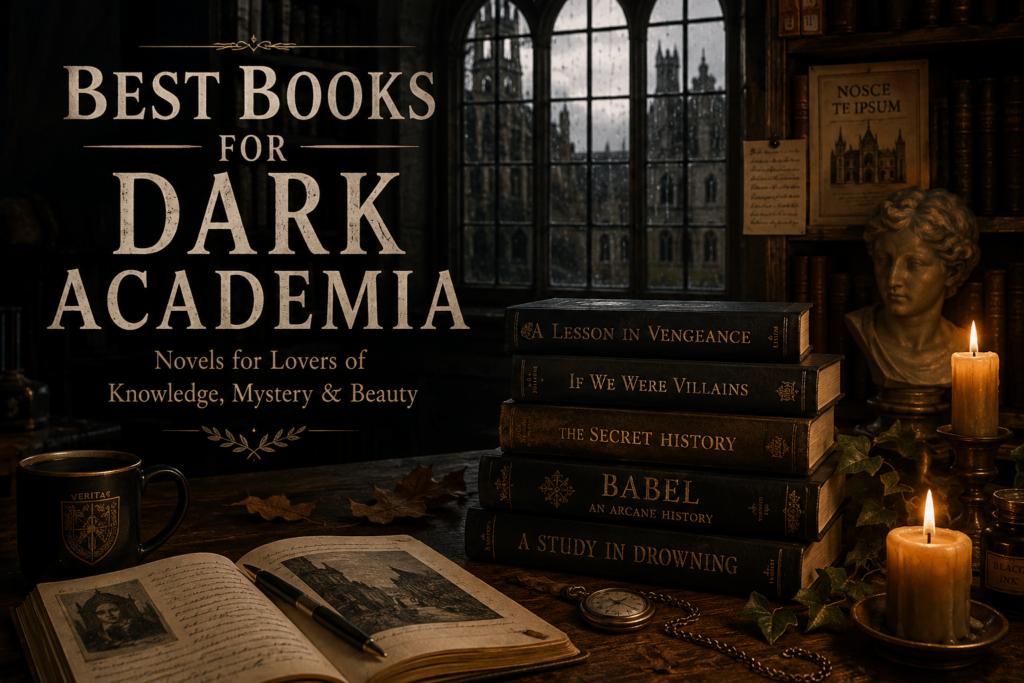
Best Books for Dark Academia

Dark Academia books
Dark Academia books

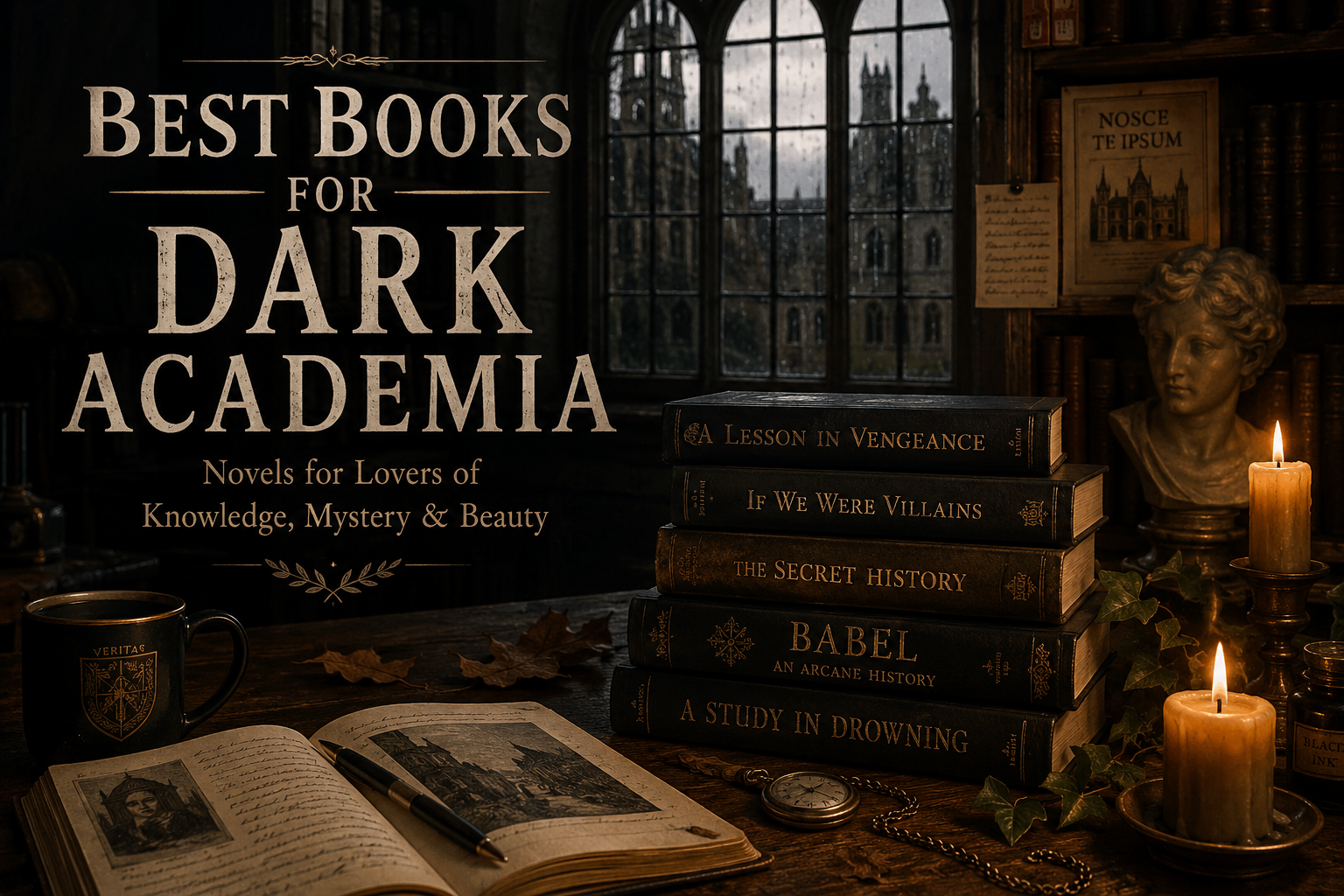
The Best Books for Dark Academia mix mystery, ambition, beauty, and danger. These stories often take place in schools, libraries, old houses, or elite circles where knowledge feels powerful and risky.

If you like candlelit study rooms, secret clubs, moral questions, and characters who want too much, this guide will help you find your next read.

In this Guide

  • What makes dark academia books so popular
  • Best Books for Dark Academia to read first
  • Major themes and symbols
  • Books worth buying or borrowing
  • How students can read dark academia well
  • FAQs

What Makes the Best Books for Dark Academia So Compelling?

Dark academia is about learning, but it is also about obsession.

The Best Books for Dark Academia often show smart characters who chase beauty, status, or truth. At first, their world looks polished. Soon, it starts to crack.

These books often include old campuses, Latin phrases, rare books, art, poetry, and hidden guilt. The setting matters because it makes learning feel grand, but also cold.

Dark academia also asks a hard question: What happens when intelligence is not matched by kindness?

Best Books for Dark Academia: Classic and Modern Picks

These books capture the mood of dark academia in different ways, from elite schools to haunted minds.

The Secret History by Donna Tartt

Many readers see The Secret History as the heart of dark academia. It follows a group of college students who study Greek classics under a strange and powerful professor.

The book explores beauty, guilt, and the danger of feeling above normal rules. It is one of the Best Books for Dark Academia because it turns scholarship into suspense.

If We Were Villains by M.L. Rio

This novel follows theater students who live and breathe Shakespeare. Their friendships are intense, and their roles begin to blur with real life.

The book is a strong choice for students who enjoy drama, rivalry, and literary clues. It also shows how art can shape identity in harmful ways.

Frankenstein by Mary Shelley

Frankenstein is not set in a modern university, but it fits the dark academia mood well. Victor Frankenstein wants knowledge so badly that he forgets his duty to others.

The novel warns readers about ambition without care. It is also a major work in Gothic literature, a tradition you can learn more about through Britannica’s overview of the Gothic novel.

The Picture of Dorian Gray by Oscar Wilde

This novel is full of art, beauty, style, and moral decay. Dorian wants to stay young while his portrait carries the damage of his choices.

It belongs with the Best Books for Dark Academia because it asks what people will trade for beauty and pleasure.

Jane Eyre by Charlotte Brontë

Jane Eyre has a strong Gothic mood, a mysterious house, and a heroine who values education and self-respect. Jane’s inner life matters as much as the plot.

The novel works well for students who want dark atmosphere but also moral strength.

Babel by R.F. Kuang

Babel is a modern dark academia novel about language, empire, and power. It takes place in Oxford and asks who benefits from elite education.

This book is a great pick for readers who want dark academia with sharp social criticism.

Major Themes in the Best Books for Dark Academia

Dark academia feels stylish, but its deepest power comes from its themes.

In the Best Books for Dark Academia, ambition often becomes dangerous. Characters want to be brilliant, rare, or admired. That desire can push them toward lies and harm.

Class is another major theme. Many dark academia stories show who gets access to elite schools, private libraries, and powerful mentors. The mood may feel romantic, but the system can be unfair.

Secrecy also plays a key role. Hidden rooms, private languages, and secret groups create suspense. They also show how knowledge can divide people.

For another look at wealth, image, and moral decline, read our Great Gatsby analysis. Gatsby is not a dark academia novel, but it shares the same interest in status and illusion.

Symbolism in the Best Books for Dark Academia

Symbols help dark academia feel rich, strange, and memorable.

Books and libraries often stand for power. They suggest wisdom, but they can also suggest control. A locked library may mean that knowledge is not open to everyone.

Old buildings often symbolize tradition. A stone campus or decaying mansion can look beautiful while hiding fear, guilt, or corruption.

Mirrors and portraits often show divided identity. In The Picture of Dorian Gray, the portrait becomes a symbol of the soul. It shows the truth that Dorian refuses to face.

Storms, fog, and candlelight also shape the mood. They make the world feel uncertain, which fits stories about secrets and guilt.

Books Worth Buying or Borrowing for a Dark Academia Shelf

If you want to start a small shelf, begin with books that show the range of the genre.

Here are a few strong choices you can find at many bookstores, libraries, or on Amazon without needing any special edition:

  • The Secret History by Donna Tartt
  • If We Were Villains by M.L. Rio

These titles are easy entry points because they have strong plots, literary references, and tense student groups.

How to Read the Best Books for Dark Academia in School

Dark academia books are fun to read, but they also reward close attention.

When you read the Best Books for Dark Academia, track what the main character wants. Then ask what they are willing to risk to get it.

Pay attention to setting. A classroom, library, or old house is never just a backdrop. It often reflects power, fear, or desire.

Notice references to art, poetry, and myth. These allusions can reveal what the characters admire. They can also show how characters use culture to excuse bad choices.

If you study poetry with dark academia themes, the Poetry Foundation’s page on T.S. Eliot is a helpful place to start. Eliot’s work often explores decay, memory, and modern anxiety.

Why the Best Books for Dark Academia Still Matter

Dark academia is not just an aesthetic. It speaks to real fears about success, pressure, and belonging.

Students may connect with these stories because school can feel intense. Grades, image, talent, and social status can seem like everything.

The Best Books for Dark Academia remind readers that knowledge should not come at the cost of empathy. A brilliant mind can still make cruel choices.

That warning is part of what makes the genre last.

FAQs About the Best Books for Dark Academia

Here are quick answers to common questions about the genre.

What are the Best Books for Dark Academia for beginners?

The Best Books for Dark Academia for beginners include The Secret History, If We Were Villains, and Frankenstein. These books show the genre’s mood, themes, and moral questions clearly.

Is dark academia always set at a school?

No. Many dark academia stories take place at schools or universities, but the genre can also include old houses, museums, libraries, and artistic circles.

Why is Frankenstein considered dark academia?

Frankenstein fits because it focuses on dangerous knowledge, ambition, and isolation. Victor wants to master life itself, but he ignores the human cost.

Are dark academia books good for AP Literature?

Yes, many are useful for AP Literature because they deal with theme, symbolism, character flaws, and moral conflict. Classics like Frankenstein and Jane Eyre are especially strong choices.

Key Takeaway

The Best Books for Dark Academia are not only about old libraries and clever students. They show how beauty, learning, and ambition can become dangerous when people forget compassion.

If you want books with mood, mystery, and serious ideas, dark academia is a rich place to begin. 📚

error

Enjoy this article? Please spread the word :)

Follow by Email
BLUESKY
fb-share-icon
Reddit
LinkedIn
Share
RSS