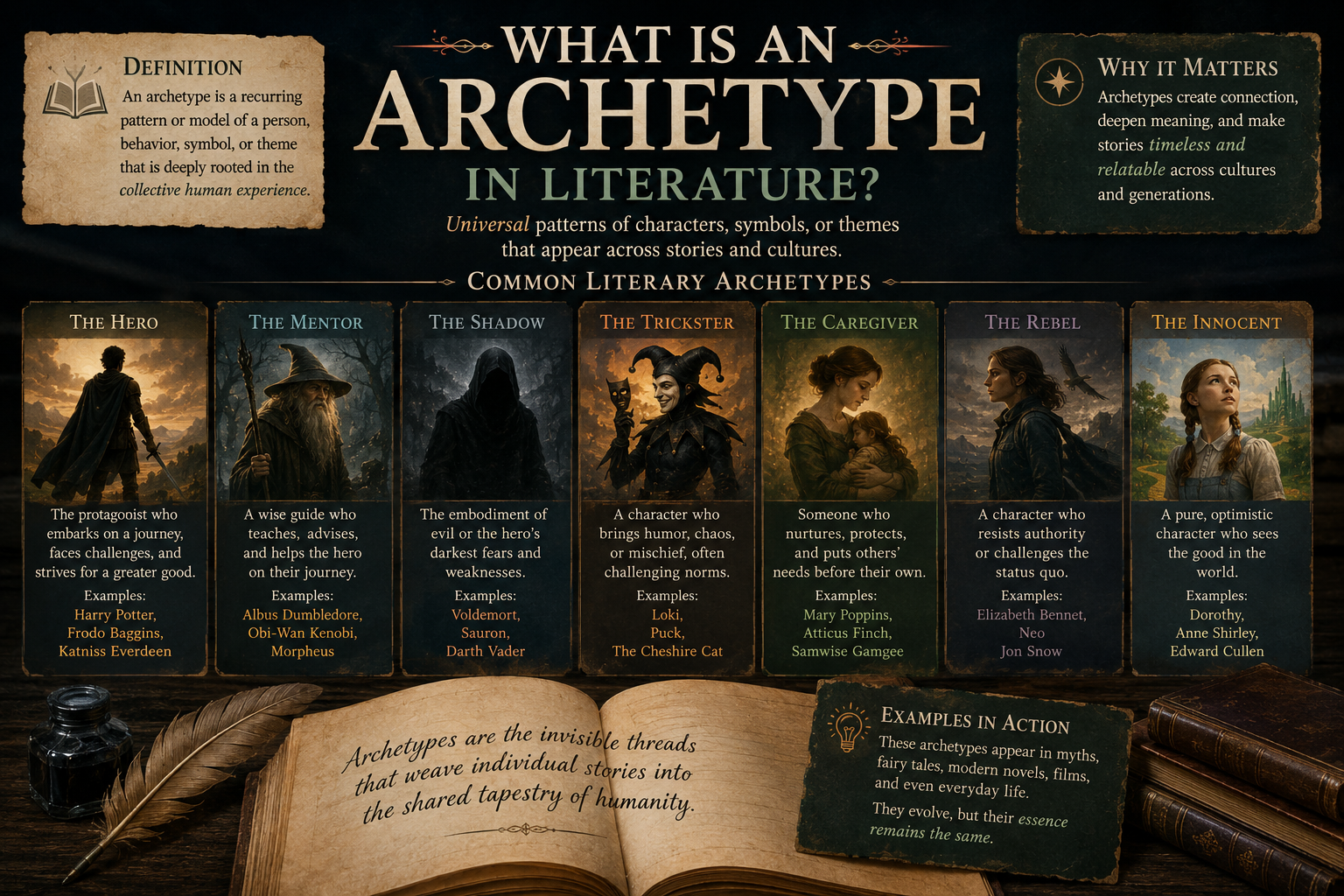
What Is an Archetype in Literature? It is a common pattern, character type, story idea, or symbol that appears again and again across books and cultures.
Once you know how archetypes work, many stories become easier to understand. You start to see why certain heroes, villains, journeys, and lessons feel familiar.
In this Guide
- What an archetype means
- Why archetypes matter
- Common types of archetypes
- Famous examples in literature
- How to spot archetypes while you read
- Books to explore
- FAQ
What Is an Archetype in Literature?
Archetypes are story patterns that readers recognize fast.
So, What Is an Archetype in Literature? It is a repeated model that shows up in many stories. It can be a type of character, a plot pattern, a setting, or a symbol.
For example, the “hero” is an archetype. So is the “mentor,” the “quest,” and the “dark forest.” These ideas appear in myths, fairy tales, novels, plays, and films.
An archetype is not the same as a cliché. A cliché feels overused or lazy. An archetype feels familiar because it connects to deep human fears, hopes, and choices.
What Is an Archetype in Literature? Why It Matters
Archetypes help stories speak to readers across time and place.
When you ask, What Is an Archetype in Literature? you are really asking why some stories feel universal. Archetypes help answer that.
They give readers a quick way into a story. If a wise older figure appears, we may expect guidance. If a young hero leaves home, we may expect growth and danger.
Archetypes also help writers build meaning. A character may follow an archetype at first, then break away from it. That change can reveal a theme.
For literary analysis, archetypes can help you explain how a text connects to larger ideas. Love, fear, power, sacrifice, and identity often appear through familiar patterns.
What Is an Archetype in Literature? Common Types
Most archetypes fit into a few broad groups.
What Is an Archetype in Literature? It can be more than one thing. A novel may use character archetypes, plot archetypes, and symbolic archetypes at the same time.
Character Archetypes
A character archetype is a familiar role in a story.
The hero faces a major challenge. The mentor gives wisdom. The villain blocks the hero’s goal. The trickster causes trouble and exposes truth.
In Harry Potter, Harry is the hero, Dumbledore is a mentor, and Voldemort is the villain. These roles are easy to spot, but each character still has unique traits.
Plot Archetypes
A plot archetype is a common story path.
The quest is one of the most famous. A character leaves home, faces tests, and returns changed. You can see this in The Odyssey, The Lord of the Rings, and many adventure stories.
Another plot archetype is the fall. A character loses power or innocence because of pride, greed, or a poor choice. Shakespeare’s tragedies often use this pattern.
Symbolic Archetypes
A symbolic archetype is an image or place with a shared meaning.
Light often suggests truth or hope. Darkness may suggest fear or confusion. Water can suggest rebirth, change, or danger.
If you want help with this part, read our guide on how to find symbolism in a story. Symbolic archetypes often work closely with symbols.
Famous Examples of Archetypes in Literature
Well-known books make archetypes easier to see.
In The Odyssey by Homer, Odysseus follows the quest archetype. He wants to return home, but he must face monsters, temptation, and loss before he gets there.
In Cinderella, the main character fits the innocent hero archetype. She suffers unfair treatment, but she stays kind and gains a new life.
In Romeo and Juliet, the lovers fit the star-crossed lovers archetype. Their love is real, but family conflict and fate push them toward tragedy.
In The Hunger Games, Katniss Everdeen fits the reluctant hero archetype. She does not seek fame or power. She acts because she wants to protect her sister.
These examples show why What Is an Archetype in Literature? is such a useful question. It helps readers compare stories that may seem very different at first.
How to Spot Archetypes While You Read
A simple question can help you find archetypes fast.
Ask yourself: “Have I seen this kind of character, journey, or image before?” If the answer is yes, you may have found an archetype.
Look for repeated roles. Is there a guide, a rebel, a ruler, or an outsider? Then ask what that role adds to the story.
Look at the main conflict too. Is the character on a quest? Are they tempted? Do they face a fall from power? These patterns often point to archetypes.
Pay close attention to places and objects. A garden, desert, storm, or road may carry archetypal meaning. For more help, use this guide to spot symbols in fiction.
Once you know What Is an Archetype in Literature? you can move beyond naming it. The stronger analysis explains why the author uses it.
Archetype vs. Stereotype: What Is the Difference?
These two ideas can look alike, but they are not the same.
An archetype is a broad story pattern with deep meaning. It can be complex and flexible.
A stereotype is a flat or unfair idea about a person or group. It often reduces people to one trait.
For example, a “wise mentor” can be an archetype if the character has depth. But if the character only exists to give advice and has no inner life, the role may feel flat.
Books to Explore Archetypes
These books can help you see archetypes in action.
- The Odyssey by Homer
- Mythology by Edith Hamilton
- The Hero with a Thousand Faces by Joseph Campbell
Joseph Campbell’s book is more advanced, but it is famous for its ideas about the hero’s journey. For background on archetypes, you can also read Britannica’s overview of archetype in literature.
For poetry and myth-based reading, the Poetry Foundation is also a strong source.
FAQ: What Is an Archetype in Literature?
What Is an Archetype in Literature?
An archetype is a common character type, plot pattern, symbol, or idea that appears in many stories. It feels familiar because readers have seen it before in other texts.
What is a simple example of an archetype?
The hero is a simple example. Heroes often face danger, make hard choices, and grow through struggle.
Is an archetype the same as a theme?
No. An archetype is a pattern or role. A theme is the message or big idea the story explores.
Why do authors use archetypes?
Authors use archetypes because they help readers connect to a story quickly. They also help build meaning and deepen conflict.
How can I write about archetypes in an essay?
Name the archetype, give evidence from the text, then explain what it reveals about the character, conflict, or theme.
Key Takeaway
What Is an Archetype in Literature? It is a familiar story pattern that helps readers understand characters, plots, symbols, and themes. When you spot one, do not stop there. Ask what the author does with it and why it matters.