

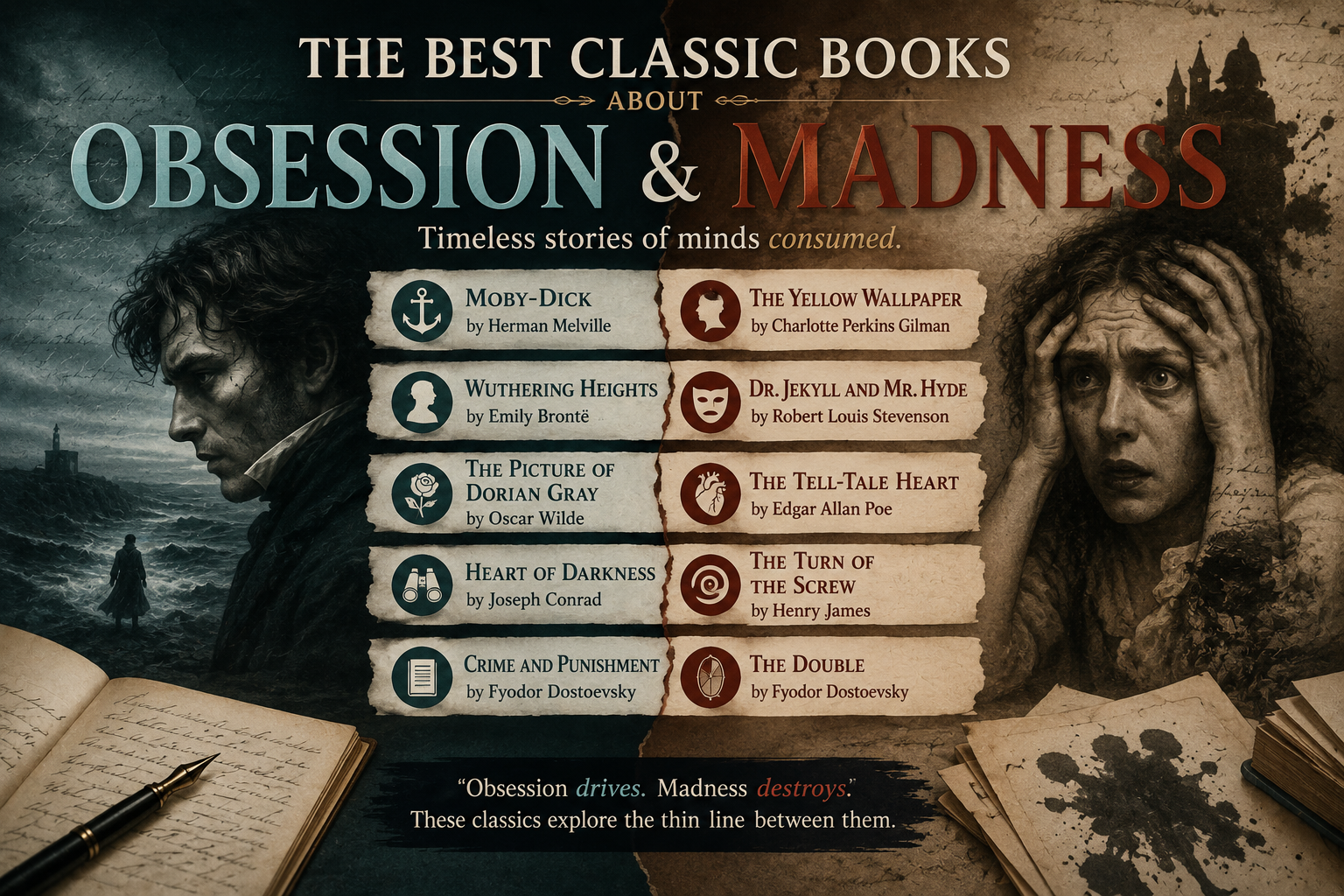
The Best Classic Obsession and Madness stories show what happens when a person cannot let go of an idea, a fear, or a desire. These books are powerful because they turn the mind into a battlefield.
For students, these works also offer rich material for essays about character, symbolism, guilt, and control.
In this Guide
- Why obsession and madness matter in classic literature
- Best Classic Obsession and Madness books to read
- Symbols and themes to watch for
- How these stories connect to literary culture
- Recommended books
- FAQs
Why Best Classic Obsession and Madness Stories Still Matter
These stories remain popular because they ask scary but human questions.
The Best Classic Obsession and Madness works often begin with a character who wants one thing too much. That desire may be love, revenge, power, truth, or control.
As the story moves on, the character loses balance. The reader watches a mind turn against itself.
This makes the conflict feel personal. Monsters may appear, but the deeper danger often lives inside the character.
Best Classic Obsession and Madness Books Students Should Know
These works are often taught because they mix strong plots with deep themes.
The Best Classic Obsession and Madness texts do not all treat mental distress in the same way. Some use it as horror. Others use it to show pressure from society, guilt, or isolation.
Frankenstein by Mary Shelley
Victor Frankenstein becomes obsessed with creating life. His dream sounds noble at first, but it grows into pride and fear.
The novel shows how obsession can turn knowledge into danger. Victor wants power over nature, yet he cannot face the results of his own work.
Macbeth by William Shakespeare
Macbeth’s hunger for power pushes him toward murder. After that, guilt begins to break him down.
Lady Macbeth also shows how a strong mind can crack under shame. Her sleepwalking scene is one of the clearest images of guilt in classic drama.
Moby-Dick by Herman Melville
Captain Ahab’s obsession with the white whale controls his whole life. He sees the whale as more than an animal.
For Ahab, the whale becomes a symbol of pain and fate. His madness spreads through the ship and pulls others into danger.
The Tell-Tale Heart by Edgar Allan Poe
Poe’s narrator insists he is sane, but his words prove the opposite. The story turns guilt into sound through the beating heart.
This is one reason Poe remains central to the Best Classic Obsession and Madness tradition. You can learn more about his work at the Poetry Foundation’s Edgar Allan Poe page.
Symbols in Best Classic Obsession and Madness Literature
Symbols help readers see what a character cannot say out loud.
In the Best Classic Obsession and Madness stories, objects often carry emotional weight. A spot of blood, a locked room, or a strange sound may reveal fear better than a speech.
In Macbeth, blood stands for guilt. Macbeth and Lady Macbeth cannot wash away what they have done.
In Moby-Dick, the white whale becomes a symbol of mystery and suffering. Ahab turns it into the center of his life.
In The Tell-Tale Heart, the heartbeat becomes guilt made physical. The sound may be real, or it may come from the narrator’s mind.
These symbols matter because they make inner conflict visible. They let readers track a character’s fall without needing direct explanation.
Major Themes in Best Classic Obsession and Madness Stories
These themes help students build strong literary analysis.
The Best Classic Obsession and Madness works often explore the cost of crossing limits. A character wants to break a rule set by nature, society, or morality.
Another key theme is guilt. Many characters try to hide what they have done, but the mind keeps returning to it.
Isolation is also important. Victor Frankenstein cuts himself off from others. Ahab separates himself through pride. Poe’s narrators often sound trapped inside their own thoughts.
These themes connect well with other major works taught in school. For example, questions about justice, fear, and moral pressure also shape the major themes in To Kill a Mockingbird.
How Obsession and Madness Shape Literary Culture
These stories changed how later writers imagined fear and the self.
The Best Classic Obsession and Madness tradition helped shape Gothic fiction, mystery, horror, and modern psychological novels. Many later works borrow the idea that the mind can be the darkest setting.
Gothic literature often uses old houses, shadows, secrets, and fear. Yet the true horror usually comes from what people hide or refuse to face.
For more background, Britannica offers a helpful overview of the Gothic novel and its major features.
These works also invite careful reading. Students should avoid treating madness as a simple “plot twist.” In strong literature, it often reflects pressure, grief, shame, or a broken social world.
Recommended Books for Obsession and Madness in Classic Literature
These books are strong choices for students who want powerful characters and essay-friendly themes.
- Frankenstein by Mary Shelley
- Crime and Punishment by Fyodor Dostoevsky
Both books fit the Best Classic Obsession and Madness theme because they focus on guilt, fear, and the mind under pressure.
How to Write About Best Classic Obsession and Madness in an Essay
A strong essay should focus on cause and effect.
Do not just say a character is obsessed or mad. Explain what causes the change and how the author shows it.
Look for repeated images, strange speech, private thoughts, and moments of denial. These details often reveal the character’s mental state.
You can also compare obsession to moral conflict. Many classic characters do not fall apart at random. They fall apart because they refuse to face truth.
If you want to connect this kind of analysis to other works, review how themes work in To Kill a Mockingbird and apply the same method to Gothic or tragic texts.
FAQs About Best Classic Obsession and Madness
What does Best Classic Obsession and Madness mean in literature?
It refers to classic works where a character’s fixed desire or mental collapse drives the story. These texts often explore guilt, fear, power, and isolation.
What is the best classic book about obsession?
Moby-Dick is one of the clearest examples. Captain Ahab’s obsession shapes the whole novel and leads to disaster.
Is Frankenstein about madness or ambition?
It is about both. Victor’s ambition becomes obsessive, and that obsession damages his judgment.
Why do teachers assign these stories?
They offer rich symbols, complex characters, and strong themes. They also help students practice close reading.
Key Takeaway
The Best Classic Obsession and Madness stories last because they show how a single desire can take over a life. They remind us that the most haunting conflicts often begin inside the mind.
For students, these works are more than dark tales. They are sharp studies of guilt, pressure, and the danger of losing balance.












