What Is Satire in Literature? Satire is writing that uses humor, irony, or exaggeration to point out flaws in people, society, politics, or human behavior.
It can make readers laugh, but its real goal is often serious. Satire asks us to notice what is wrong and think about why it matters.
Satire is a literary tool that uses jokes with a purpose.
If someone asks, What Is Satire in Literature?, the clearest answer is this: satire makes fun of something in order to criticize it. The target might be a person, a law, a belief, or a social habit.
Satire is not the same as simple comedy. Comedy may exist just to entertain. Satire entertains, but it also pushes readers to see a problem.
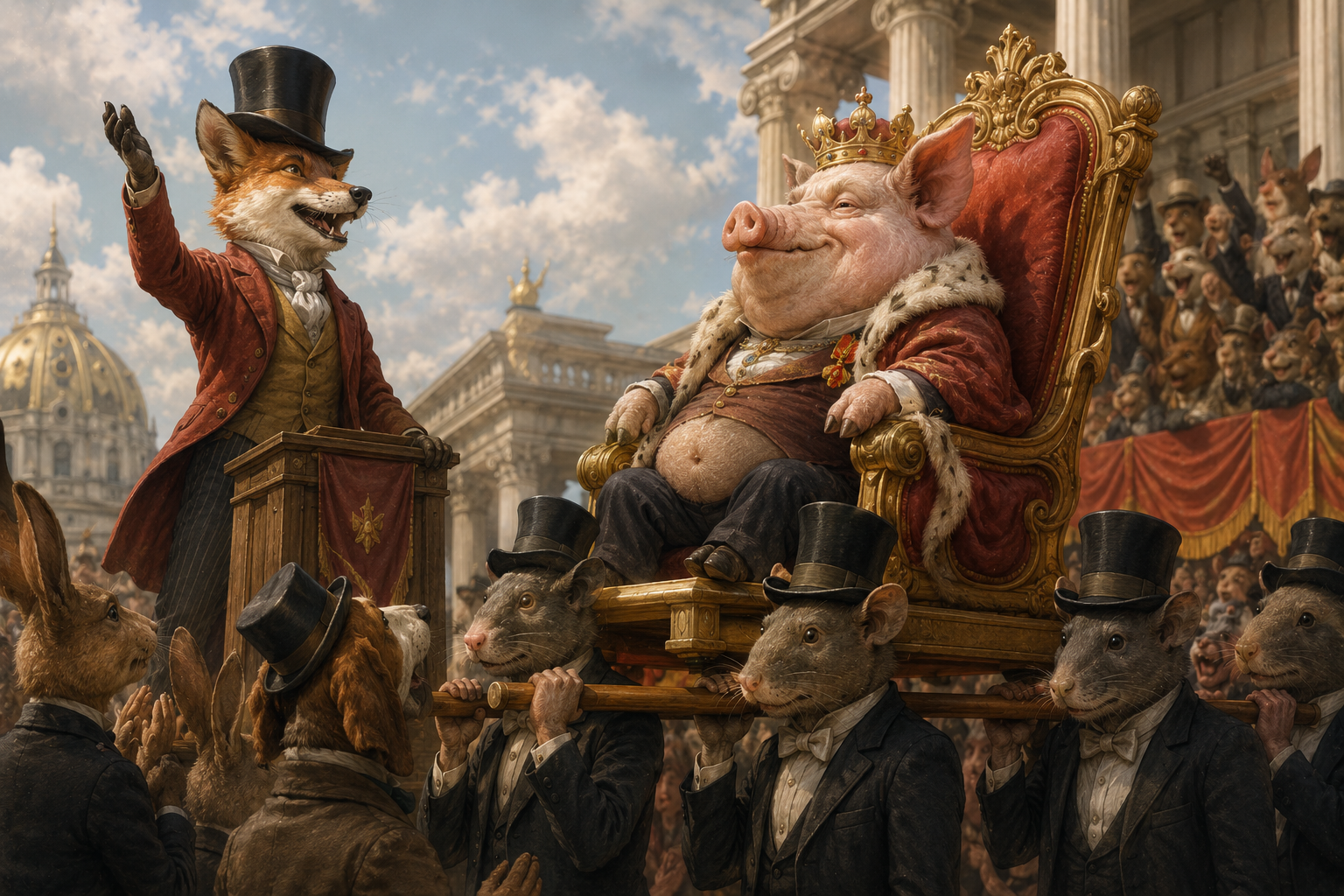
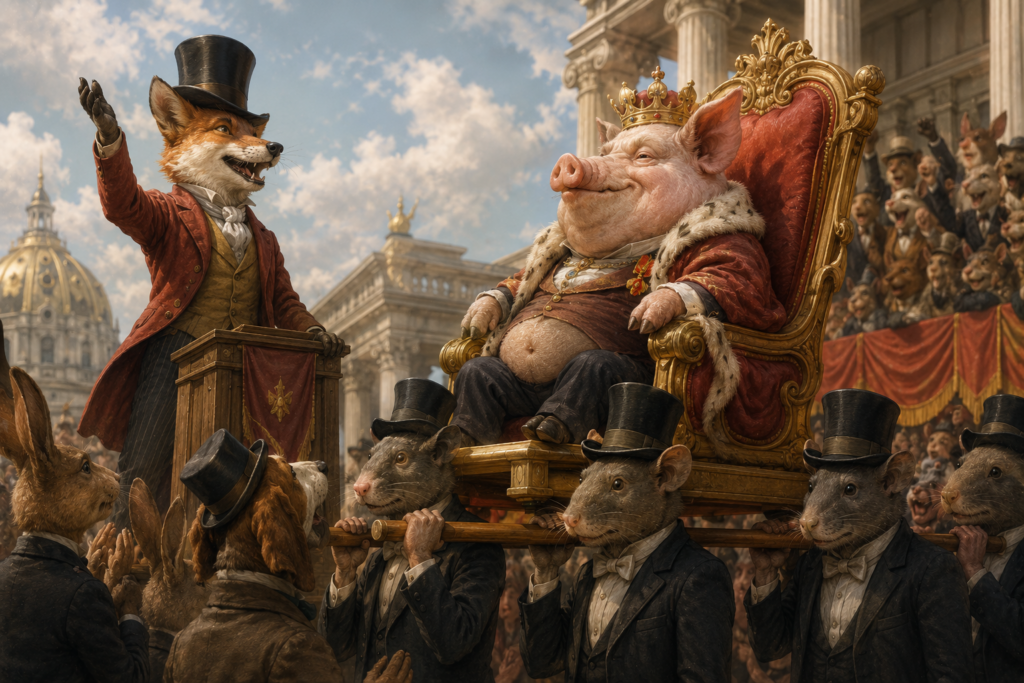
For example, a writer may create a foolish king to show that a real government is corrupt. The story may feel funny, but the message can be sharp.
What Is Satire in Literature? Why It Matters
Satire matters because it helps writers speak truth in a clever way.
In many time periods, writers could not openly attack leaders or social systems. Satire gave them a safer path. They could hide criticism inside jokes, fantasy, or strange events.
Satire also makes readers active. You have to ask, “What is the writer really saying?” That makes satire useful in high school, AP Literature, and college classes.
When students ask, What Is Satire in Literature?, they are really asking how writers use humor to reveal truth. That skill helps with close reading and essay writing.
If you want to study satire beside other terms, this literary devices list is a helpful place to start.
How Satire Works in a Story
Satire often works by making a problem look strange, silly, or extreme.
Writers may use irony, which means the real meaning is different from what appears on the surface. A character may praise a bad law so much that readers realize the law is foolish.
Writers may also use exaggeration. They make a flaw larger than life so readers cannot miss it.
Another common tool is parody. A parody copies the style of something familiar, but changes it to expose its weak points.
So, What Is Satire in Literature? It is not just “being funny.” It is humor with a target and a reason.
Famous Examples of Satire in Literature
Some of the most famous books in English use satire to question power and human weakness.
Animal Farm by George Orwell is one of the clearest examples. The novel uses farm animals to criticize political corruption and the abuse of power. The story seems simple, but its message is serious.
Gulliver’s Travels by Jonathan Swift also uses satire. Gulliver visits strange lands, but those strange places reflect real problems in politics, science, and human pride.
Swift’s essay “A Modest Proposal” is a darker example. He uses shocking irony to attack the cruel treatment of poor people in Ireland. The essay does not mean what it seems to say, which is why it is often taught as classic satire.
The Importance of Being Earnest by Oscar Wilde satirizes social manners and class. The characters care deeply about names, image, and status. Wilde makes their world funny so readers can see how shallow it is.
What Is Satire in Literature? Common Types to Know
Satire can take different forms, but the main goal stays the same.
Horatian satire is light and playful. It gently mocks human foolishness. This type may make readers smile before they notice the criticism.
Juvenalian satire is darker and more direct. It attacks serious problems like greed, injustice, or cruelty.
Menippean satire often targets ideas, beliefs, or attitudes. It may feel strange, bold, or mixed in style.
When you ask, What Is Satire in Literature?, it helps to know which type you see. A gentle joke and a harsh attack can both be satire, but they create different effects.
How to Spot Satire While Reading
Satire becomes easier to notice when you look for a mismatch.
Ask yourself what seems too foolish, too perfect, or too extreme. If a scene feels funny but also uncomfortable, satire may be at work.
Look for the target. Who or what is being criticized? The target might be a character, a social rule, a government, or a common belief.
Then look for the tone. Is the writer playful, angry, calm, or bitter? Tone can tell you how serious the criticism is.
For more tools that can help with this kind of reading, check out this guide to common literary devices.
What Is Satire in Literature? A Quick Classroom Example
Satire often appears in school texts because it rewards close reading.
Imagine a story about a town where everyone must wear giant hats to prove they are smart. The bigger the hat, the smarter the person is supposed to be.
At first, this sounds silly. But the story might be satirizing people who care more about status than real wisdom.
That is the heart of the answer to What Is Satire in Literature? A writer creates something funny or strange so readers can see a real-world problem more clearly.
Books That Show Satire Clearly
These books are useful if you want to see satire in action.
Animal Farm by George Orwell
Gulliver’s Travels by Jonathan Swift
Both books are widely taught and easy to connect to major themes like power, pride, and corruption.
Practical Tip for Analyzing Satire
Use one simple question as you read: What is the writer making fun of, and why?
Once you find the target, look for the method. Is the writer using irony, exaggeration, parody, or a strange situation?
Then connect the joke to the message. A strong satire essay does not just say, “This is funny.” It explains what the humor reveals.
FAQ: What Is Satire in Literature?
What Is Satire in Literature?
Satire is writing that uses humor, irony, or exaggeration to criticize human flaws, social problems, or political issues.
Is satire always funny?
No. Satire can be funny, but it can also feel dark, bitter, or shocking. Its main goal is criticism.
What is the difference between satire and sarcasm?
Sarcasm is often a sharp remark. Satire is a larger form of criticism that can shape a whole poem, play, essay, or novel.
Why do authors use satire?
Authors use satire to expose problems in a way that grabs attention. It can make serious ideas easier to notice and harder to ignore.
Key Takeaway
What Is Satire in Literature? It is humor with a purpose. Satire makes readers laugh, think, and question the world around them.
What Is Stream of Consciousness Writing? It is a style that shows a character’s thoughts as they move through the mind.
This guide will help you spot the style, understand why writers use it, and read it with more confidence.
In this Guide
What stream of consciousness means
How it works on the page
Why it matters in literature
Famous examples to know
Books that use this style
Common questions
A practical reading tip
What Is Stream of Consciousness Writing?
Stream of consciousness writing tries to copy the natural flow of thought.
In real life, our thoughts do not always move in neat order. We jump from memory to fear, from a sound in the room to a private worry.
That is the basic idea behind What Is Stream of Consciousness Writing? Instead of giving a clear outside view, the writer takes us inside a character’s mind.
The result can feel personal, messy, honest, and intense. It often shows thought before the character has time to shape it into clear speech.
What Is Stream of Consciousness Writing? How It Works on the Page
This style often breaks normal rules to show how the mind really moves.
A stream of consciousness passage may have long sentences. It may skip from one idea to another with little warning.
Some writers leave out normal punctuation. Others use sentence fragments, sudden memories, or repeated words.
For example, a character might hear church bells and suddenly think about childhood, guilt, a lost friend, and the weather. The outside action may be small, but the inner life is huge.
So when someone asks, What Is Stream of Consciousness Writing? a simple answer is this: it is writing that follows thought as it happens.
Why What Is Stream of Consciousness Writing? Matters in Literature
This style helps readers feel close to a character’s mind.
Many novels tell us what a character does. Stream of consciousness shows us how a character thinks and feels in the moment.
This can reveal fear, desire, shame, grief, or confusion without a clear explanation from the narrator.
It also helps writers show that people are complex. A character may act calm, while their thoughts show panic or doubt.
For students, What Is Stream of Consciousness Writing? is an important question because the style often links to theme, character, and point of view.
Famous Examples of Stream of Consciousness Writing
Some of the best-known modern novels use this style to explore inner life.
James Joyce’s Ulysses is one of the most famous examples. Joyce follows characters through ordinary moments while their thoughts move in rich and surprising ways.
Virginia Woolf’s Mrs. Dalloway also uses this style. The novel moves through one day, but the characters’ thoughts reach into memory, regret, and hope.
William Faulkner’s The Sound and the Fury uses shifting voices and broken thought patterns. The style helps show how each character experiences time and pain.
If your teacher asks, What Is Stream of Consciousness Writing? these novels are strong examples to mention.
Stream of Consciousness vs. Interior Monologue
These two terms are close, but they are not always the same.
Interior monologue means we hear a character’s inner thoughts. Those thoughts may still be fairly clear and organized.
Stream of consciousness is often less neat. It tries to show thought as it flows, even when it feels scattered or strange.
Think of interior monologue as a character “talking” inside their head. Think of stream of consciousness as the mind before it turns thought into a clean sentence.
How to Recognize Stream of Consciousness Writing
You can spot this style by looking for signs of thought in motion.
Watch for sudden shifts in time. A character may move from the present to a memory with no clear warning.
Look for unusual punctuation or long sentences. These choices can copy the speed or pressure of thought.
Notice if the writing feels more focused on inner life than outside action. If the mind matters more than the plot moment, you may be reading stream of consciousness.
When you wonder, What Is Stream of Consciousness Writing? ask what the style lets you see that normal narration might hide.
Books to Read for Stream of Consciousness Writing
These books are useful if you want to see the style in action.
Mrs. Dalloway by Virginia Woolf
Ulysses by James Joyce
The Sound and the Fury by William Faulkner
For background on modernist fiction, you can read Britannica’s overview of stream of consciousness.
What is the simplest definition of stream of consciousness writing?
It is a writing style that shows a character’s thoughts as they flow through the mind.
Is stream of consciousness hard to read?
It can be hard at first because it may not follow normal order. Reading slowly helps.
Why do authors use stream of consciousness?
Authors use it to show private thoughts, deep emotion, and the way memory affects the present.
Is stream of consciousness the same as first-person narration?
No. First-person narration uses “I,” but it can still be clear and ordered. Stream of consciousness focuses on the raw movement of thought.
What Is Stream of Consciousness Writing? in one sentence?
It is a style that makes the reader feel as if they are inside a character’s mind.
Key Takeaway
What Is Stream of Consciousness Writing? It is a powerful way to show thought, memory, and emotion from the inside.
Practical tip: when you read it, do not try to understand every line at once. Track the character’s feelings first, then look back at how the style creates those feelings.
Postmodern books can feel strange at first, but their patterns are easier to spot once you know what to look for. This guide explains Common Postmodern Literary Techniques with clear examples, so students can read these texts with more confidence.
These techniques often challenge truth, order, identity, and the idea that stories must follow normal rules.
In this Guide
What postmodern literature tries to do
Common techniques students should know
Examples from famous books
How to spot these techniques while reading
Why writers use them
Recommended books
FAQ
What Postmodern Literature Tries to Do
Postmodern literature questions the rules that many older stories follow.
Traditional novels often try to create a believable world. They may have a clear plot, stable characters, and a firm ending. Postmodern works often break those expectations.
Instead of giving one clear meaning, a postmodern text may offer many meanings. It may even make readers wonder if meaning can ever be fixed.
This is why Common Postmodern Literary Techniques can seem confusing at first. They are meant to make you pause and ask, “Who is telling the truth?” or “Why is this story built this way?”
For a wider background on the movement, Britannica’s overview of postmodernism is a useful place to start.
Common Postmodern Literary Techniques Students Should Know
These are the tools many postmodern writers use to disrupt normal storytelling.
Metafiction is one of the most important Common Postmodern Literary Techniques. It happens when a story calls attention to itself as a story.
For example, in Italo Calvino’s If on a winter’s night a traveler, the reader becomes part of the book. The novel keeps reminding you that you are reading a novel.
Fragmentation means the story appears in broken parts. The plot may jump between scenes, voices, or time periods.
Kurt Vonnegut’s Slaughterhouse-Five uses this technique. Billy Pilgrim’s life does not unfold in a straight line, which reflects trauma and confusion.
Intertextuality means one text refers to another text. A postmodern novel may borrow from older books, myths, pop culture, or history.
Jean Rhys’s Wide Sargasso Sea responds to Jane Eyre. It gives a new voice to Bertha Mason, a character who was pushed to the side in Charlotte Brontë’s novel.
Unreliable narration happens when the narrator cannot fully be trusted. The narrator may lie, misunderstand events, or leave out key facts.
Vladimir Nabokov’s Pale Fire uses an unreliable commentator who takes over the text. The result is funny, strange, and deeply uncertain.
Common Postmodern Literary Techniques in Famous Books
Seeing these techniques in real books makes them much easier to understand.
In Slaughterhouse-Five, Vonnegut uses time jumps, dark humor, and a broken structure. These Common Postmodern Literary Techniques help show how war damages memory and identity.
In The Things They Carried by Tim O’Brien, the line between truth and fiction becomes blurry. O’Brien tells readers that some stories may not be factual, yet they may still feel emotionally true.
In Rosencrantz and Guildenstern Are Dead by Tom Stoppard, minor characters from Hamlet become the focus. The play uses absurd humor and literary borrowing to question fate, free will, and meaning.
In The French Lieutenant’s Woman by John Fowles, the narrator breaks into the story and gives more than one possible ending. This reminds readers that novels are shaped by choices.
These examples show how Common Postmodern Literary Techniques can make a book feel playful, serious, strange, or all of those at once.
Why Writers Use Common Postmodern Literary Techniques
Postmodern writers often use these tools to challenge easy answers.
Many postmodern works were shaped by war, mass media, political distrust, and rapid cultural change. Writers began to question whether old forms could still explain modern life.
That is why Common Postmodern Literary Techniques often deal with doubt. They ask whether history is reliable, whether identity is stable, and whether language can fully capture truth.
These techniques also invite readers to take an active role. You are not just following a plot. You are piecing together meaning.
This can feel hard, but it can also make the reading experience more exciting. A postmodern text often treats the reader like a co-creator.
Common Postmodern Literary Techniques and Theme
Technique and theme often work together in postmodern literature.
If a novel has a broken structure, that structure may reflect a broken world. If a narrator lies, the book may explore the limits of truth.
For example, The Things They Carried does not just use blurred truth as a trick. It uses that technique to show how memory and trauma affect storytelling.
Wide Sargasso Sea uses intertextuality to question who gets to tell a story. By rewriting part of Jane Eyre, Rhys challenges power, race, and gender in the older novel.
When you study Common Postmodern Literary Techniques, do not stop at naming them. Ask what they reveal about the book’s larger message.
Practical Takeaways for Students
Postmodern texts reward patience and careful reading.
When you read, mark moments that feel strange. A confusing scene may be the key to the whole work.
Keep track of shifts in time, voice, and structure. These details often show where the author wants your attention.
For essays, connect the technique to meaning. Do not only write, “The novel uses metafiction.” Explain how metafiction shapes the reader’s view of truth, control, or identity.
If you use Common Postmodern Literary Techniques as a study lens, difficult books become less random and more purposeful.
Recommended Books to Understand Postmodern Literature
These books offer strong examples of postmodern style and structure.
Slaughterhouse-Five by Kurt Vonnegut
If on a winter’s night a traveler by Italo Calvino
They are methods writers use to challenge normal storytelling. Examples include metafiction, fragmentation, intertextuality, and unreliable narration.
Why is postmodern literature hard to read?
It often avoids clear answers. The plot may feel broken, and the narrator may not be trustworthy.
Is postmodern literature always confusing?
No. Some works are playful and funny. Others are difficult because they ask readers to question truth, history, and identity.
How do I write about postmodern techniques in an essay?
Name the technique, give a clear example, and explain its effect. Focus on how the technique supports the theme.
Key Takeaway
Common Postmodern Literary Techniques help writers question truth, structure, and meaning. Once you learn to spot them, postmodern literature becomes less confusing and much more rewarding.
What Is Surrealism in Literature? It is a style of writing that uses dreams, strange images, and impossible events to reveal deeper truth.
Surrealist literature can feel confusing at first, but it often has a clear purpose. It helps writers show fear, desire, memory, and the hidden parts of the mind.
In this Guide
What surrealism means in literature
Why surrealism matters
Common surrealist features
Famous surrealist examples
How surrealism differs from fantasy
Tips for reading surrealist texts
Recommended books
FAQ
What Is Surrealism in Literature? A Clear Definition
Surrealism in literature mixes real life with dreamlike or impossible events.
So, What Is Surrealism in Literature? In simple terms, it is writing that breaks normal logic to explore the unconscious mind.
A surreal story may show a person turning into an insect, a city with impossible rules, or a dream that feels more honest than waking life.
The point is not always to make sense right away. The point is to make the reader feel that something hidden has come to the surface.
The movement began in the early 1900s and was shaped by writers and artists who wanted to move beyond ordinary realism. You can learn more about its history from Britannica’s overview of Surrealism.
Why What Is Surrealism in Literature? Matters
Surrealism matters because it gives writers a way to show truths that plain realism may not capture.
Real life does not always feel neat. Grief can feel unreal. Fear can twist time. A memory can return like a dream.
That is why the question What Is Surrealism in Literature? is useful for students. It helps you see why a strange scene may have emotional meaning.
Surrealist writing often asks readers to trust images, moods, and symbols. A scene may seem odd, but it can still reveal a character’s inner world.
What Is Surrealism in Literature? Key Features to Notice
Surrealist writing often feels strange, but it usually has patterns you can learn to spot.
When students ask, What Is Surrealism in Literature?, they are often asking what to look for on the page.
One common feature is dream logic. Events may shift without a normal cause. A room may become a forest. A dead person may speak as if nothing has changed.
Another feature is surprise. Surrealism often places normal details next to impossible ones. The contrast makes the scene feel both familiar and unsettling.
You may also notice symbols that do not have one simple meaning. A locked door might suggest fear, desire, memory, or guilt.
Famous Examples of Surrealism in Literature
Many well-known works use surreal images to explore serious ideas.
Franz Kafka’s The Metamorphosis is one of the most famous examples. Gregor Samsa wakes up as a giant insect, yet his family reacts with cold routine.
This strange event helps show guilt, isolation, and the pressure of family duty. If someone asks, What Is Surrealism in Literature?, Kafka is often a strong place to start.
Lewis Carroll’s Alice’s Adventures in Wonderland also uses dreamlike logic. Alice meets impossible creatures and enters a world where rules keep changing.
Toni Morrison’s Beloved includes ghostly and unreal elements that express trauma and memory. The surreal parts are not random. They help show how the past can haunt the present.
First, write down the strange image or event. Next, write what emotion it creates.
For example, if a character walks through a house with endless rooms, you might note “confusion” or “feeling trapped.”
This method keeps you from guessing too fast. It helps you move from the weird detail to a strong idea.
Recommended Books to Explore Surrealism
If you want to understand What Is Surrealism in Literature?, these books are a good place to begin.
The Metamorphosis by Franz Kafka
Alice’s Adventures in Wonderland by Lewis Carroll
Beloved by Toni Morrison
Each book uses unreal moments in a different way. Kafka feels anxious and cold. Carroll feels playful but unsettling. Morrison uses the supernatural to explore memory and pain.
FAQ: What Is Surrealism in Literature?
What Is Surrealism in Literature? in one sentence?
It is a style of writing that uses dreamlike or impossible events to reveal hidden thoughts, emotions, or truths.
Is surrealism the same as fantasy?
No. Fantasy usually has a made-up world with rules, while surrealism often breaks normal logic to create a dreamlike effect.
Why do authors use surrealism?
Authors use surrealism to show feelings and ideas that may be hard to explain in realistic scenes.
Is The Metamorphosis surrealist?
Yes, it is often read as surreal or proto-surrealist because it uses an impossible event to explore isolation and guilt.
How can I write about surrealism in an essay?
Choose one strange image, explain how it feels, then connect it to a theme or character conflict.
Key Takeaway
What Is Surrealism in Literature? It is a way of using the strange to tell the truth.
When a text feels dreamlike, do not dismiss it. Ask what the impossible moment reveals about the mind, the world, or the story’s deeper meaning.
A clear guide to the most important literary devices students encounter when analyzing novels, poetry, and classic literature.
When readers begin studying literature more closely, they quickly encounter the term literary devices. These are the techniques writers use to shape language, structure narratives, and guide how readers interpret a story.
Authors rely on literary devices such as metaphor, symbolism, irony, and foreshadowing to communicate ideas beneath the surface of the plot. Once readers begin recognizing these techniques, patterns and meanings that once seemed hidden become easier to interpret.
Understanding literary devices is an important step for anyone who wants to learn literary analysis. Instead of only asking what happens in a story, readers begin asking how a writer’s language creates meaning.
Understanding literary devices helps readers interpret literature more thoughtfully. By recognizing patterns in language, imagery, symbolism, and narrative structure, readers move beyond simple plot summaries and begin discovering the deeper ideas within a text.
In This Guide
In this article you will learn:
• what literary devices are and why authors use them • a literary devices list with 32 important techniques • examples of literary devices from famous works of literature • how recognizing literary devices improves literary analysis
Image by Carla Paton
Quick Literary Devices List
This guide explains the following literary devices:
Below is a quick reference table summarizing some of the most common literary devices. Each device is explained in more detail later in this guide.
Metaphor: a direct comparison between two unlike things. Simile: a comparison using the words like or as. Symbolism: using an object to represent a deeper meaning. Foreshadowing: hints that suggest future events in a story. Imagery: descriptive language that appeals to the senses. Irony: a contrast between expectation and reality. Allusion: a reference to another text, event, or myth. Personification: giving human qualities to nonhuman things. Hyperbole: exaggerated language used for emphasis. Motif: a recurring image or idea in a text. Theme: the central idea explored in a literary work. Tone: the author’s attitude toward the subject. Mood: the emotional atmosphere experienced by readers. Juxtaposition: placing contrasting ideas side by side. Flashback: a narrative shift to an earlier time in the story.
What Are Literary Devices?
Literary devices are techniques writers use to communicate meaning, shape narrative structure, and influence how readers interpret a text.
Some literary devices focus on language, such as metaphor or imagery. Others affect narrative structure, such as flashback or foreshadowing. Still others influence how readers interpret themes, characters, and symbolism.
Recognizing literary devices helps readers move beyond simple summaries and begin interpreting how literature communicates deeper ideas.
If you are new to these techniques, these guides may also help:
When reading literature, look for patterns. If an image, phrase, or idea appears repeatedly, it may signal an important literary device such as symbolism or motif.
32 Literary Devices Explained With Examples
Below is a literary devices list explaining 32 common techniques used in literature.
1. Metaphor Example
A metaphor compares two unlike things directly to suggest a deeper similarity.
Example from Wuthering Heights by Emily Brontë:
“I am Heathcliff.”
This metaphor suggests that their identities and emotional lives are inseparable. Catherine’s statement is a metaphor expressing the profound emotional and psychological bond she feels with Heathcliff.
2. Simile Example
A simile compares two things using the words like or as.
Example: Descriptions in Gothic novels such as Dracula often compare darkness or fear to death itself, reinforcing the story’s atmosphere.
Example from Dracula by Bram Stoker:
“The castle is a veritable prison, and I am a prisoner.”
Although not a formal “like/as” comparison, Stoker repeatedly uses simile-like comparisons to emphasize Jonathan Harker’s sense of confinement.
3. Symbolism Example
Symbolism occurs when an object represents a deeper meaning.
Example from Frankenstein by Mary Shelley:
“Learn from me… how dangerous is the acquirement of knowledge.”
Here, the creature and Victor’s experiment symbolize the dangers of uncontrolled scientific ambition.
This printable guide summarizes 32 literary devices with simple definitions and examples from classic literature so you can keep them handy while reading or writing literary analysis essays.
9. Hyperbole Example
Hyperbole is intentional exaggeration used for emphasis.
Example from Wuthering Heights:
“I cannot live without my soul!”
Heathcliff exaggerates his emotional dependence on Catherine.
10. Motif Example
A motif is a recurring element that reinforces themes.
Example from Frankenstein:
“A flash of lightning illuminated the object.”
Light and fire repeatedly appear throughout the novel, symbolizing knowledge.
11. Theme Example
A theme is the central idea explored in a literary work.
Example from Pride and Prejudice by Jane Austen:
“Happiness in marriage is entirely a matter of chance.”
This line introduces themes of marriage, social expectations, and compatibility.
Austen’s precise word choice establishes Emma’s character immediately.
23. Narrative Voice Example
The narrative voice determines how a story is told.
Example from Frankenstein:
The novel includes multiple narrators, including Walton and Victor.
“You will rejoice to hear that no disaster has accompanied the commencement of an enterprise…”
24. Dialogue Example
Dialogue is conversation between characters.
Example from Pride and Prejudice:
“She is tolerable…”
This brief dialogue reveals Darcy’s pride and sets up Elizabeth’s later prejudice.
25. Setting Example
Setting describes the time and place of a story.
Example from Wuthering Heights:
“Wuthering Heights is the name of Mr. Heathcliff’s dwelling.”
The isolated moorland setting shapes the novel’s emotional atmosphere.
26. Satire Example
Satire criticizes social behavior.
Example from Pride and Prejudice:
“It is a truth universally acknowledged…”
Austen humorously critiques society’s obsession with marriage.
27. Climax Example
The climax is the turning point of the narrative.
Example from Frankenstein:
The confrontation between Victor and the creature marks the peak of tension.
28. Resolution Example
The resolution concludes the story’s conflicts.
Example from Frankenstein:
“He was soon borne away by the waves.”
The creature disappears after Victor’s death.
29. Characterization Example
Characterization reveals personality traits.
Example from Pride and Prejudice:
Elizabeth’s wit appears in her response to Darcy:
“I could easily forgive his pride, if he had not mortified mine.”
30. Symbol Example
A symbol represents a larger idea.
Example from Frankenstein:
“A spark of being.”
Fire symbolizes knowledge and discovery throughout the novel.
31. Oxymoron Example
Oxymoron: a figure of speech that combines two contradictory terms to create a striking expression.
Example from Romeo and Juliet by William Shakespeare:
“O brawling love! O loving hate!”
In this line, Shakespeare pairs opposite ideas—love and hate—to emphasize Romeo’s emotional confusion.
Oxymorons highlight emotional tension and can make language more dramatic or memorable.
32. Dramatic Irony Example
Dramatic irony: a literary device in which the audience knows something that the characters in the story do not.
Example from Romeo and Juliet:
“O happy dagger!”
Juliet believes Romeo is dead and takes her own life, but the audience knows that his death resulted from tragic misunderstanding. This gap in knowledge creates intense emotional tension.
Dramatic irony is especially common in tragedies and plays, where audiences are aware of information that characters lack.
How to Identify Literary Devices When Reading
Recognizing literary devices becomes easier with practice. When reading literature, look for patterns that signal deeper meaning.
Notice repeated language or imagery. Writers often repeat symbols or motifs to emphasize themes. Pay attention to unusual comparisons such as metaphors or similes. Shifts in tone or mood can also reveal important narrative moments.
If you want to practice these skills, you may find these guides helpful:
Understanding literary devices becomes much easier when you practice noticing them in real texts. As you read novels, poems, and plays, try marking passages where authors use techniques such as imagery, symbolism, metaphor, or foreshadowing. Over time, these patterns become easier to recognize.
If you would like structured practice, you can sign up below to download the free Close Reading Worksheet Pack, which includes guided exercises designed to help students identify literary devices, themes, and patterns while reading literature.
The worksheets are designed for use with classic texts and can help you apply the techniques discussed in this guide.
Download the Literary Devices Cheat Sheet
If you want a quick reference for studying or writing essays, download the free Literary Devices Cheat Sheet. It includes a printable one-page summary of the 32 literary devices explained in this guide.