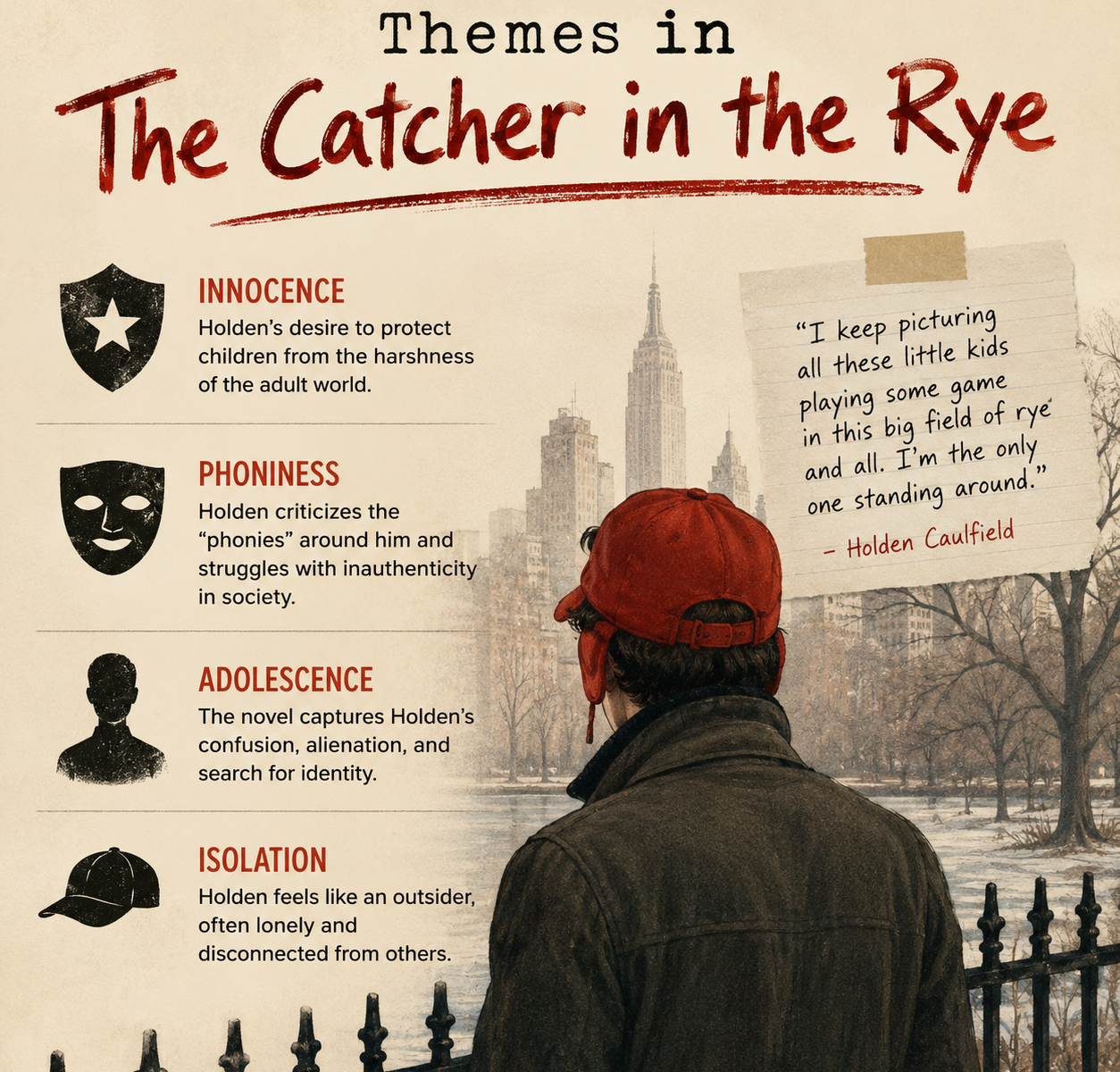
Learning how to find the Theme of a Story can make reading feel less confusing and more meaningful. A theme is the big idea a story explores, such as courage, greed, love, justice, or growing up.
This guide will show you a clear process you can use for homework, essays, class talks, or your own writing.
In this Guide
- What theme means
- How to find the theme step by step
- How characters reveal theme
- How conflict and endings point to theme
- Examples from famous books
- Common mistakes to avoid
- Book suggestions
- FAQ

What Does Theme Mean in a Story?
Theme is the message or idea a story asks you to think about.
A theme is not just one word. “Love” is a topic. A theme says something about that topic, such as “Love can make people brave.”
Stories can have more than one theme. A novel like To Kill a Mockingbird explores justice, prejudice, courage, and innocence.
If you want a deeper lesson on theme, this guide on how to identify theme in literature gives more examples and tips.
How to Find the Theme of a Story in 5 Clear Steps
A simple process can help you move from plot details to a strong theme statement.
When students ask How to Find the Theme of a Story, the best answer is to look for patterns. Theme is not hidden in one sentence. It grows from the whole story.
Step 1: Ask what the story is mostly about
Start with the main topics. These may be friendship, fear, power, family, freedom, or guilt.
In The Great Gatsby, some topics are wealth, dreams, love, and status. These topics are clues, but they are not full themes yet.
Step 2: Watch what the main character learns
Characters often change because of what they face. That change can point to the theme.
In A Christmas Carol, Ebenezer Scrooge learns that money matters less than kindness and human connection.
Step 3: Notice the main conflict
Conflict shows what the story tests. It may test a character’s honesty, loyalty, courage, or pride.
In Lord of the Flies, the conflict shows how quickly order can break down when fear and power take over.
Step 4: Study the ending
The ending often gives the clearest clue. Ask what the final events suggest about life or people.
Does the hero win? Does someone pay a price? Or, does the story end with hope or warning?
Step 5: Turn the idea into a full sentence
A strong theme statement should make a claim. It should not be just a topic.
Weak: “Friendship.”
Stronger: “True friendship helps people face fear.”
How to Find the Theme of a Story Through Characters
Characters are one of the best places to look for theme.
If you want to know How to Find the Theme of a Story, ask what the main character wants. Then ask what the story teaches them about that desire.
In The Hunger Games, Katniss wants to survive. Over time, the story also shows how love, sacrifice, and public courage can challenge an unfair system.
Look at the choices characters make under pressure. Their choices often reveal the story’s message.
How to Find the Theme of a Story Through Conflict and Ending
Conflict and endings often reveal what the author wants readers to notice.
Another useful way to practice How to Find the Theme of a Story is to ask, “What problem keeps returning?” A repeated problem usually connects to a key theme.
In Romeo and Juliet, the conflict between the two families leads to loss. One theme could be: “Long-held hatred can destroy innocent lives.”
The ending matters because it shows the result of the characters’ actions. If a character lies and loses everything, the story may explore honesty, pride, or trust.
Quick Examples of Theme in Well-Known Literature
Examples can make theme easier to see.
In To Kill a Mockingbird by Harper Lee, one theme is that real courage means doing what is right, even when you may not win.
In Animal Farm by George Orwell, one theme is that power can corrupt people who claim to fight for equality.
Lastly, in The Giver by Lois Lowry, one theme is that a safe life without freedom can cost people their humanity.
If you practice How to Find the Theme of a Story with books you already know, the skill gets easier fast.
Common Mistakes to Avoid When Finding Theme
These mistakes can lead to weak or unclear answers.
Mistake 1: Confusing theme with topic
A topic is one word or a short phrase. A theme is a full idea about that topic.
Topic: “Greed.”
Theme: “Greed can make people ignore what truly matters.”
Mistake 2: Writing a theme that is too broad
“Life is hard” is too general. It could fit almost any story.
Try to make the theme match the actual events in the text.
Mistake 3: Ignoring evidence
A theme needs support. Use character choices, conflict, symbols, or the ending as proof.
For more help with this skill, read our full guide on identifying theme in literature.
Mistake 4: Assuming there is only one theme
Many stories have several themes. Your answer can be right if you can support it with evidence.
How Writers Can Use Theme
Theme is not only for readers. Writers can use it to shape stronger stories.
If you write fiction, ask what your character must learn or face. That question can guide the plot.
You do not need to state the theme directly. Let readers see it through choices, conflict, and change.
Writers who understand How to Find the Theme of a Story often become better at creating theme in their own work.
Helpful Books for Learning Theme
These books are useful for students, teachers, and young writers.
- How to Read Literature Like a Professor by Thomas C. Foster
- The Elements of Style by William Strunk Jr. and E.B. White
- Reading Like a Writer by Francine Prose
Helpful Outside Resources
For author background and literary context, Britannica’s literature overview is a reliable place to start.
For poetry, themes, and close reading, the Poetry Foundation offers poems, poet pages, and learning tools.
FAQ: How to Find the Theme of a Story
What is the easiest way to find the theme?
Look at what the main character learns. Then turn that lesson into a full sentence about life or people.
Can a story have more than one theme?
Yes. Many stories explore several themes. Choose one you can support with strong evidence.
Is theme the same as the moral?
Not always. A moral is usually a clear lesson. A theme can be more complex and open to discussion.
How do I write a theme statement?
Pick a topic, then say what the story suggests about it. Avoid using only one word.
Why is theme important?
Theme helps readers understand why the story matters beyond the plot.
Key Takeaway
How to Find the Theme of a Story comes down to one habit: look for what the story teaches through character choices, conflict, and the ending.
Next time you read, ask, “What does this story seem to say about life?” That question will lead you toward the theme. 📚