What Is a Motif in Literature?

Motif in Literature
Motif in Literature

What Is a Motif in Literature?

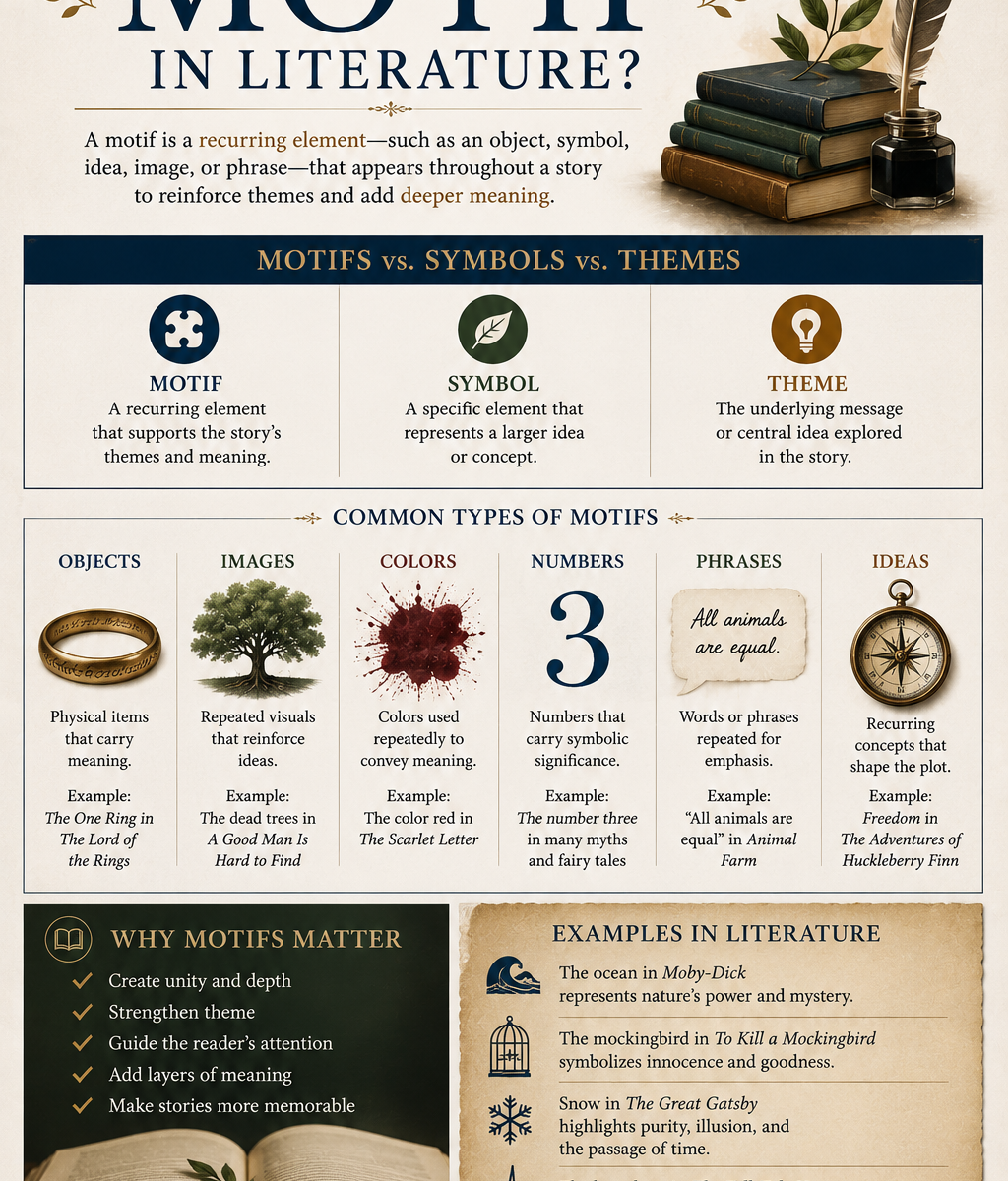
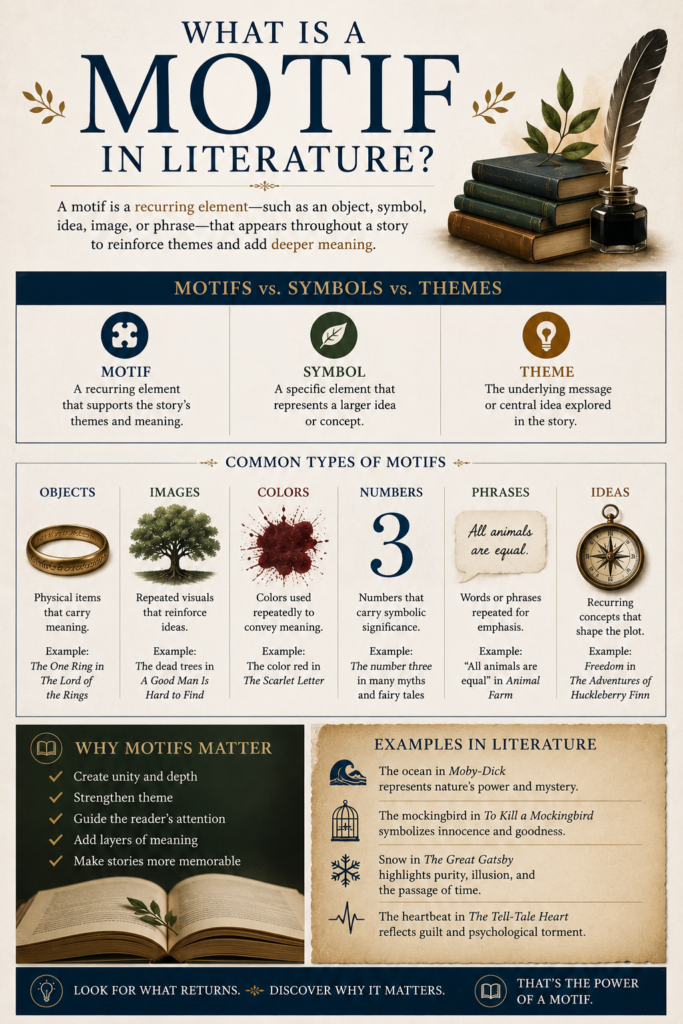
What Is a Motif in Literature? A motif is a repeated detail, image, word, object, or idea that helps build meaning in a story.

Once you know how to spot motifs, you can see how authors guide readers toward deeper themes without stating them directly.

In this Guide

  • What a motif means
  • Why motifs matter
  • Motif vs. theme
  • Famous motif examples
  • How to spot motifs while reading
  • Books that help you practice
  • FAQ

What Is a Motif in Literature? A Simple Definition

A motif is a repeated pattern that adds meaning to a text.

A motif can be an object, color, phrase, sound, place, or action that appears more than once. It is not random. The author repeats it for a reason.

The answer to What Is a Motif in Literature? is simple: it is a clue that points toward a larger idea.

For example, if a novel keeps showing locked doors, the motif may suggest secrets, fear, or limits. The door itself matters, but the repeated pattern matters more.

Why Motifs Matter in Literature

Motifs help readers notice what a story is really about.

Authors use motifs to connect scenes that may seem separate. A repeated image can remind you of a character’s struggle or a story’s main conflict.

Motifs also make literature feel richer. They give a text shape and rhythm. When a motif appears again, it often carries more meaning than it did before.

This is why teachers often ask students to track repeated details. A motif can lead you straight to a strong theme statement.

If you want to compare motifs with other tools writers use, this literary devices list is a helpful place to start.

What Is a Motif in Literature? Motif vs. Theme

A motif repeats. A theme reveals a message.

This is one of the most common points of confusion. A motif is a pattern inside the story. A theme is the deeper idea the story explores.

Think of it this way: rain might be a motif. The theme might be that grief changes how people see the world.

In Macbeth, blood appears again and again. Blood is a motif. It connects to themes of guilt, violence, and moral collapse.

You can read more about Shakespeare’s play through Britannica’s overview of Macbeth.

What Is a Motif in Literature? Common Examples Students Know

Many famous books use motifs that are easy to recognize once you look for them.

In The Great Gatsby by F. Scott Fitzgerald, the green light is a key motif. It appears across the water and comes to represent Gatsby’s hope, longing, and dream of a perfect future.

In To Kill a Mockingbird by Harper Lee, mockingbirds act as a motif tied to innocence. The repeated idea helps readers think about who gets harmed even when they have done no wrong.

In Lord of the Flies by William Golding, the conch shell becomes a motif connected to order and rules. As the boys lose respect for it, their society begins to break apart.

In poetry, a repeated image can work the same way. The Poetry Foundation offers many poems where repeated images carry meaning. You can explore examples at the Poetry Foundation.

How a Motif Builds Theme

A motif often acts like a bridge between details and big ideas.

When a writer repeats a detail, that detail starts to collect meaning. By the end of the story, it may reveal something about love, power, identity, or fear.

For example, a story may repeat images of mirrors. At first, they may seem like simple objects. Later, they may connect to a character’s struggle with self-image or truth.

This is why motifs are useful in essays. They give you evidence you can point to. You can quote the repeated detail, then explain how it supports the theme.

How to Spot a Motif While Reading

Look for details that return at important moments.

When students ask, What Is a Motif in Literature?, the best answer is often found through practice. Notice what keeps coming back.

Pay attention to repeated colors, objects, phrases, weather, places, or actions. Then ask what those details seem to suggest.

A good test is this: if the detail appeared only once, it might just be description. If it returns and gains meaning, it may be a motif.

For more help with related terms, see this guide to common literary devices.

Books to Practice Finding Motifs

These books make motif practice clear and useful.

  • The Great Gatsby by F. Scott Fitzgerald
  • Macbeth by William Shakespeare

Both texts use repeated images in ways that connect strongly to theme. They are also common in high school and college literature classes.

FAQ: What Is a Motif in Literature?

What is a motif in literature in simple words?

A motif is something that repeats in a story and helps create meaning. It can be an image, object, word, or idea.

How is a motif different from a symbol?

A symbol stands for something beyond itself. A motif repeats across the text and often includes symbols, images, or ideas.

Can a character be a motif?

A character is usually not a motif. But a repeated action, phrase, or role connected to a character can become one.

Why do teachers ask about motifs?

Motifs help students find themes. They also give strong evidence for literary analysis essays.

What Is a Motif in Literature? Why should I care?

It helps you read with more insight. Motifs show how small details connect to the story’s bigger message.

Key Takeaway

What Is a Motif in Literature? It is a repeated detail that helps reveal deeper meaning.

Here is a simple reading tip: when something shows up more than once, mark it. Then ask, “What idea does this pattern point toward?” That question can lead you to a stronger analysis.
Best Literary Human Nature: Books That Show Who We Really Are

Best human nature books

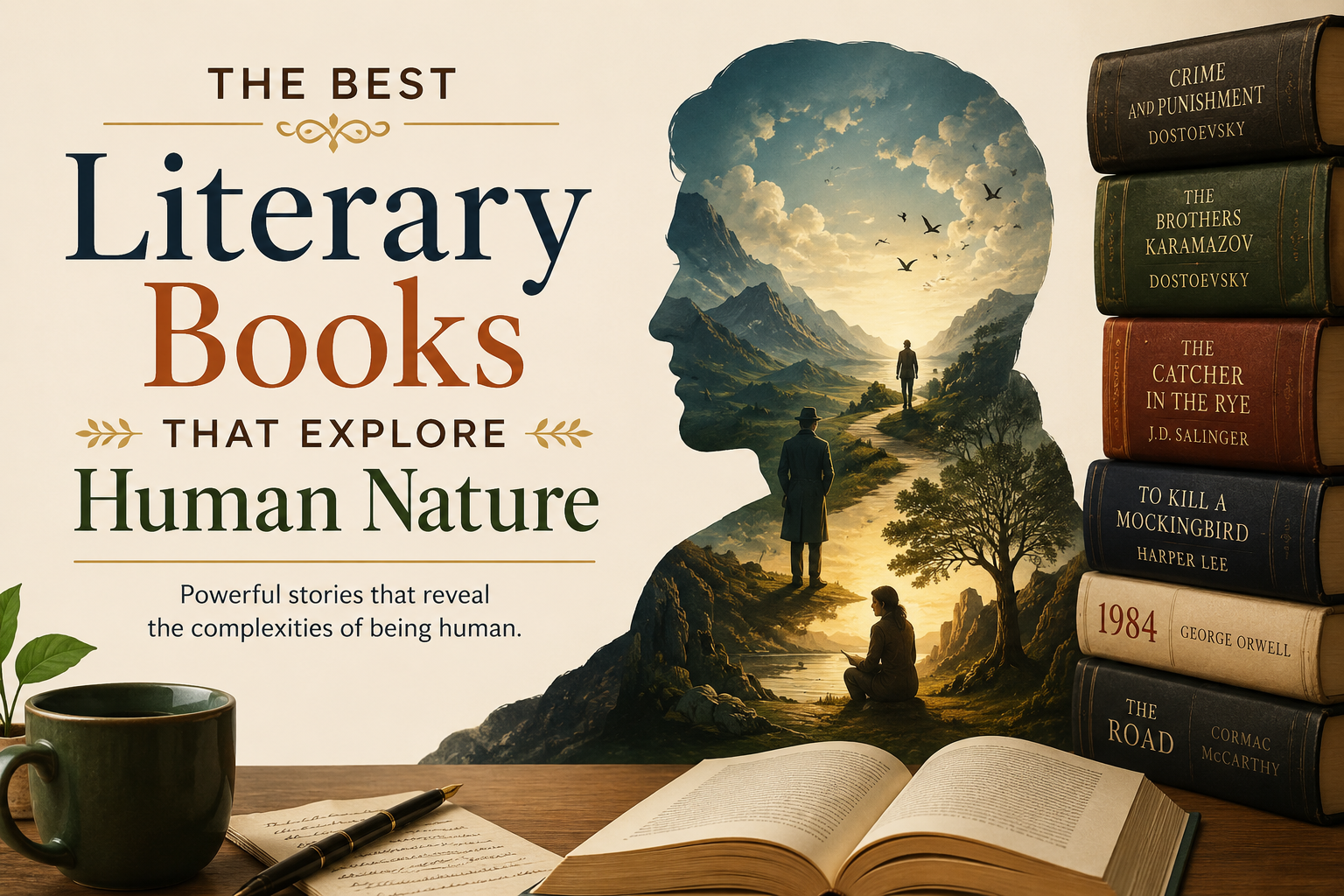
Great stories help us see the truth about people, even when that truth feels hard to face. Best Literary Human Nature looks at books that explore fear, pride, love, guilt, and moral choice.

These works matter because they ask a simple question: what do people do when life tests them?

In this Guide

  • What Best Literary Human Nature means
  • Why human nature matters in literature
  • Best Literary Human Nature books to read
  • Symbols and themes that reveal character
  • How students can write about human nature
  • FAQs
  • Key takeaway

What Best Literary Human Nature Means

Stories about human nature show what people want, fear, hide, and choose.

The phrase Best Literary Human Nature may sound broad, but the idea is clear. It points to books that reveal how people act under pressure.

Some characters try to do the right thing. Others choose power, comfort, or revenge. Literature lets us watch those choices from a safe distance.

That is why these books stay with us. They do not just tell us what happened. They show us why people behave the way they do.

Why Best Literary Human Nature Stories Still Matter

The best books feel alive because their characters feel real.

Best Literary Human Nature stories matter because readers can see parts of themselves in the characters. A reader may not rule a kingdom like Macbeth, but they may know what ambition feels like.

In William Shakespeare’s Macbeth, ambition grows into violence. Macbeth wants power so badly that he loses his peace, his honor, and his sense of self.

In Mary Shelley’s Frankenstein, Victor wants glory through science. His mistake is not just that he creates life. His deeper failure is that he refuses to care for what he has made.

These stories ask us to think about responsibility. They also ask if people are born flawed or shaped by the choices around them.

Best Literary Human Nature Books to Read

These books are strong choices for students because they are rich, readable, and full of moral conflict.

The Best Literary Human Nature books often focus on a character who faces a hard test. That test may come from society, family, power, or guilt.

To Kill a Mockingbird by Harper Lee

This novel explores justice, fear, and moral courage. Atticus Finch shows that doing the right thing can cost a person comfort and safety.

Scout learns that people are more complex than they first appear. The book asks readers to look past rumor and prejudice.

Lord of the Flies by William Golding

This novel places schoolboys on an island without adult rules. At first, they try to build order. Soon, fear and power begin to take over.

Golding suggests that cruelty can grow when people lose limits. The story is often used in classrooms because it raises sharp questions about civilization and human nature.

Other strong examples

Students may also study The Great Gatsby by F. Scott Fitzgerald or Hamlet by William Shakespeare. Both works show how desire can twist a person’s view of truth.

For helpful background on the idea of human nature, readers can explore Britannica’s overview of human nature.

Best Literary Human Nature Themes Students Should Know

Themes help readers move from “what happened” to “what the story means.”

When students study Best Literary Human Nature, they often notice the same big ideas across different books. These ideas repeat because people face the same inner battles in many times and places.

Ambition and its cost

Ambition can help a character grow. It can also lead to ruin.

Macbeth is the classic example. His desire for power destroys his loyalty and peace of mind.

Goodness under pressure

Many novels ask if a person can stay good when the world is unfair. To Kill a Mockingbird explores this through Atticus, Scout, and the trial of Tom Robinson.

The book does not pretend goodness is easy. It shows that moral courage often feels lonely.

Fear and group behavior

Lord of the Flies shows how fear can spread through a group. The boys begin to follow the loudest voices, not the wisest ones.

This theme matters because people often act differently in a crowd. Literature helps us question that shift.

Symbols That Reveal Human Nature

Symbols give stories deeper meaning without heavy explanation.

In Best Literary Human Nature works, symbols often show what characters cannot say out loud. A symbol may reveal guilt, innocence, power, or loss.

In Lord of the Flies, the conch shell stands for order and shared rules. When the shell loses power, the boys lose their grip on peace.

In Frankenstein, light often connects to knowledge. Yet Shelley shows that knowledge without care can become dangerous.

In The Great Gatsby, the green light stands for Gatsby’s dream. It also shows how desire can trap a person in the past.

Poetry can do this too. The Poetry Foundation’s page on Robert Frost is useful for readers who want to see how poems explore choice and regret.

How to Write About Best Literary Human Nature in an Essay

A strong essay does not just name a theme. It explains how the author builds that theme through character, conflict, and symbol.

If you write about Best Literary Human Nature, start with a clear claim. Do not say, “This book shows human nature.” Say what the book argues about human nature.

For example, an essay on Macbeth could argue that unchecked ambition destroys moral judgment. An essay on Lord of the Flies could argue that fear weakens social order.

Your thesis should be specific, arguable, and tied to the text. If you need help, use this guide on how to write a thesis statement for a literary analysis essay.

After that, choose scenes that prove your point. Focus on what characters say, what they hide, and how they change.

Recommended Books for Best Literary Human Nature Readers

These books are often easy to find and useful for class discussions.

To Kill a Mockingbird by Harper Lee is a strong choice for readers who want a story about justice and moral growth.

Lord of the Flies by William Golding is ideal for readers who want a darker look at fear, power, and group behavior.

Both books work well for essays because they offer clear conflicts and strong symbols. They also give students many ways to discuss Best Literary Human Nature without forcing one simple answer.

Common Mistakes When Reading Human Nature in Literature

It is easy to make human nature sound too simple.

One common mistake is to call a character “good” or “bad” and stop there. Most great books avoid simple labels.

Another mistake is to ignore the setting. A character’s world shapes their choices. Social pressure, fear, and unfair rules often push characters toward action.

A better approach is to ask why a character makes a choice. Then ask what the author wants readers to learn from that choice.

FAQs About Best Literary Human Nature

What does Best Literary Human Nature mean?

Best Literary Human Nature refers to books and stories that reveal how people think, choose, and change. These works often focus on moral conflict.

What is a good book about human nature for students?

To Kill a Mockingbird is a strong choice. It deals with justice, courage, and the way people judge others.

Why do teachers assign books about human nature?

Teachers assign these books because they help students think deeply about character and theme. They also connect literature to real life.

Is human nature a theme?

Human nature is a broad idea, not a theme by itself. A stronger theme would say something specific, such as “fear can make people give up their values.”

How can I find symbols related to human nature?

Look for objects, images, or repeated details that connect to a character’s inner life. Then ask how the symbol changes as the story moves forward.

Key Takeaway

Best Literary Human Nature stories matter because they show people at their most honest moments. They help readers see how fear, desire, guilt, and hope shape human choice.

The strongest literature does not give easy answers. It gives us characters who feel real, choices that matter, and questions we keep asking long after the final page. 📚

Round vs Flat Characters in Fiction: A Clear Guide

Round vs Flat Characters

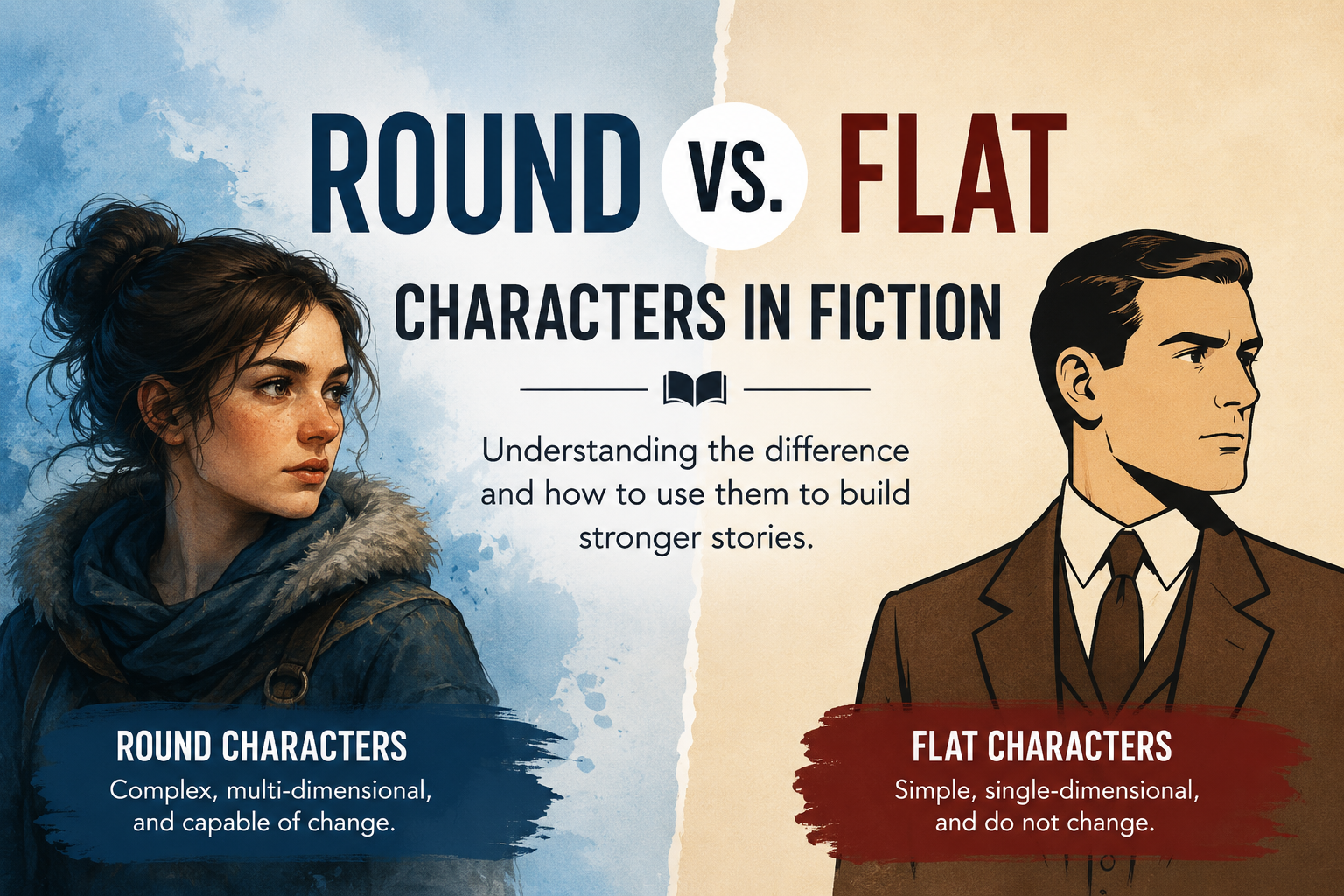
Round vs Flat Characters in Fiction is a key idea in literary analysis. Once you know the difference, you can explain why some characters feel real and complex while others serve a clear, simple role.

This guide breaks the idea down in plain language, with examples from famous books and tips you can use in essays.

In this Guide

  • What round characters are
  • What flat characters are
  • Round vs Flat Characters in Fiction examples
  • How to use the idea in literary analysis
  • Common mistakes to avoid
  • Book suggestions
  • FAQ
Round vs Flat Characters

What Are Round Characters?

Round characters feel complex, layered, and close to real people.

A round character has more than one side. They may have mixed feelings, personal flaws, hidden fears, or changing beliefs.

Round characters often surprise us, but their actions still make sense. They are not random. Their choices grow out of who they are.

Elizabeth Bennet in Pride and Prejudice is a strong example. She is smart and funny, but she also misjudges Darcy. Her pride affects how she sees others.

By the end of the novel, Elizabeth learns more about herself. That growth makes her feel human.

You can read more background on the novel through Britannica’s overview of Pride and Prejudice.

What Are Flat Characters?

Flat characters are simple, clear, and easy to understand.

A flat character usually has one main trait. They do not have deep inner conflict, and they may not change much.

This does not mean they are badly written. Flat characters can be useful. They can add humor, reveal a theme, or push the plot forward.

Mr. Collins in Pride and Prejudice is a good example. He is proud, awkward, and eager to please Lady Catherine. He does not have much depth, but he plays an important role.

Flat characters often help readers see the main characters more clearly.

Round vs Flat Characters in Fiction: The Main Difference

Round vs Flat Characters in Fiction comes down to depth and complexity.

A round character has an inner life. A flat character has a simpler role. One is built with layers, while the other is shaped around a clear purpose.

Think of Scrooge in A Christmas Carol. At first, he may seem flat because he is greedy and cold. But as the story moves forward, we see his fear, regret, and pain.

Scrooge becomes round because the story reveals why he acts the way he does. His change also matters to the whole meaning of the book.

In contrast, some minor characters in the same story stay simple. They may show kindness, poverty, or social pressure without much personal depth.

That contrast helps the story work.

Round vs Flat Characters in Fiction Examples from Literature

Examples make Round vs Flat Characters in Fiction much easier to understand.

In To Kill a Mockingbird, Scout Finch is round. She grows as she learns about justice, fear, and unfair treatment. Her view of the world changes.

Atticus Finch also has depth. He is calm and moral, but he faces pressure from his town. His choices show courage without making him perfect.

In Animal Farm, many characters are flatter on purpose. Napoleon often stands for power and control. Boxer stands for loyalty and hard work.

George Orwell uses flat characters to support satire. The point is not deep psychology. The point is political meaning.

In Harry Potter, Harry is round because he has fear, anger, love, and doubt. Some side characters are flatter, but they still help build the world.

Why Writers Use Both Round and Flat Characters

Good fiction does not need every character to be round.

If every character had a deep backstory, many stories would feel crowded. Flat characters help keep the focus on the main conflict.

A round character often carries the emotional weight of the story. A flat character may create pressure, offer comic relief, or show a social idea.

In Romeo and Juliet, Romeo and Juliet feel more complex than many side characters. Their feelings change quickly, and their choices shape the tragedy.

Characters like the Nurse have strong traits that are easy to spot. She is lively and practical, which makes her memorable even if she is less complex.

Round vs Flat Characters in Fiction and Character Change

Round vs Flat Characters in Fiction is related to change, but it is not the same thing.

A round character does not always change. Some round characters stay the same, but readers still see many sides of them.

A flat character can change in a small way, but still remain simple. The key question is depth, not just change.

For example, a villain may become nicer at the end of a story. If we do not learn much about their mind, fears, or motives, they may still feel flat.

On the other hand, Hamlet is round even before he makes final choices. He thinks deeply, doubts himself, and struggles with grief.

How to Analyze Round vs Flat Characters in Fiction

Round vs Flat Characters in Fiction can help you write stronger literary analysis.

Start by asking what the character wants. Then look at what makes the character hard to define. A round character often has tension inside them.

Ask these questions:

  • Does the character have more than one clear trait?
  • Does the character face inner conflict?
  • Does the character change how readers understand the theme?
  • Does the character mostly serve one purpose?

If you want a fuller method, see our guide on how to analyze characters in literature.

When you write about the distinction, do not just label the character. Explain why the label matters.

For example, do not only say, “Scrooge is round.” Say, “Scrooge is round because Dickens reveals his fear of loneliness, which helps the story argue that people can change.”

Common Mistakes with Round vs Flat Characters in Fiction

Many students think “round” means good and “flat” means bad. That is not true.

A flat character can be well written if the role is clear. A round character can still fail if the author does not make the person believable.

Another mistake is to confuse flat characters with minor characters. A minor character can be round if the story gives them depth.

Readers also mix up flat characters with static characters. A static character does not change much. A flat character lacks deep complexity.

The terms overlap sometimes, but they do not mean the same thing.

How to Use Round vs Flat Characters in Fiction in an Essay

Round vs Flat Characters in Fiction gives you a useful tool for claims about theme.

Your essay should connect character type to meaning. Ask why the author made a character simple or complex.

Here is a strong sentence frame:

“The author presents [character] as a [round/flat] character in order to show [theme or idea].”

Example:

“Orwell presents Boxer as a mostly flat character in order to show how loyalty can be used by those in power.”

This kind of sentence does more than name a term. It links the character to the author’s message.

Books to Look Up on Amazon

These books are useful if you want more practice with Round vs Flat Characters in Fiction.

  • Pride and Prejudice by Jane Austen
  • A Christmas Carol by Charles Dickens
  • Animal Farm by George Orwell

Each book gives clear chances to compare deep characters with simpler ones.

Quick Reference: Round vs Flat Characters in Fiction

Round vs Flat Characters in Fiction is easiest to remember this way:

  • Round characters have depth, conflict, and layers.
  • Flat characters have a simple role or main trait.
  • Both types can be useful in a strong story.

For more general background on fiction as a literary form, see Britannica’s article on the novel.

FAQ: Round vs Flat Characters in Fiction

What is the difference between round and flat characters?

A round character has depth and complexity. A flat character is simpler and usually has one main role or trait.

Can a flat character be important?

Yes. Flat characters can support the plot, reveal a theme, or make the main character stand out.

Is a round character always a main character?

No. Main characters are often round, but some minor characters can also have depth.

Is a flat character the same as a static character?

No. A static character does not change much. A flat character lacks depth. A character can be both, but the terms are different.

How do I write about round and flat characters in an essay?

Explain how the character type helps show a theme. Do not stop at the label.

Key Takeaway

Round vs Flat Characters in Fiction is not about good versus bad writing. It is about how much depth a character has and how that character helps the story make meaning.

What Is a Dynamic Character in Literature?

dynamic character

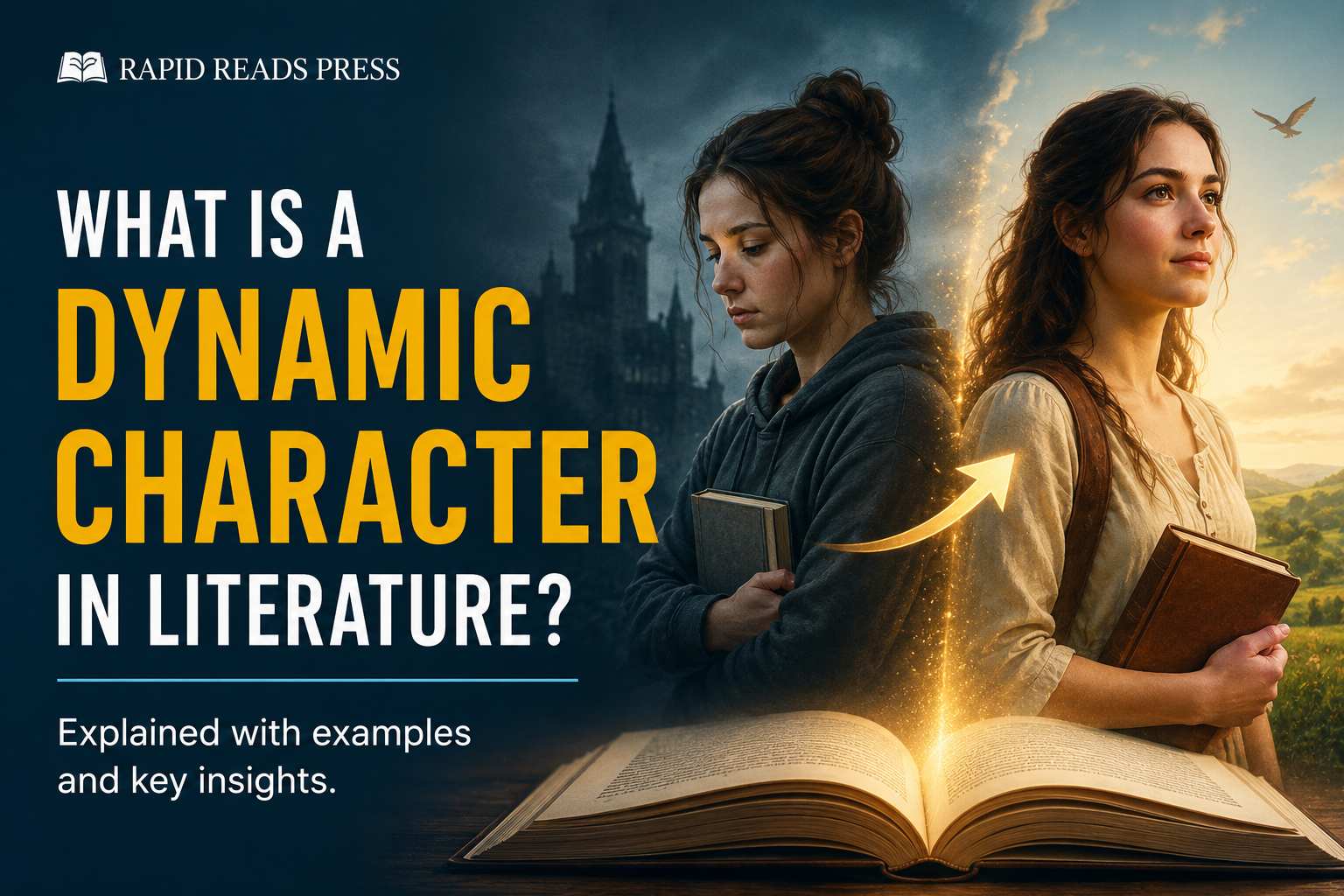
It is a character who changes in an important way over the course of a story.

This guide explains the idea in simple terms, shows why it matters, and gives clear examples from books many students know.

In this Guide

  • What a dynamic character means
  • Why dynamic characters matter
  • Dynamic character examples
  • How to spot a dynamic character
  • Books to read for practice
  • FAQ
dynamic character

A Clear Definition

A dynamic character changes in a deep and meaningful way.

The change may involve beliefs, values, goals, or how the character sees the world. It is not just a new haircut, a new job, or a new location.

When students ask, What Is a Dynamic Character in Literature?, the simplest answer is this: a dynamic character learns, grows, falls apart, or becomes someone different because of the story’s events.

For example, Ebenezer Scrooge in A Christmas Carol begins as selfish and cold. By the end, he becomes generous and caring. His change is central to the story.

Why It Matters

Dynamic characters help readers see how conflict can shape a person.

A story feels more powerful when a character has to face hard choices. Those choices can reveal fear, pride, courage, guilt, or love.

What Is a Dynamic Character in Literature? It is often the answer to why a story feels meaningful. The plot may show what happens, but the character’s change shows why it matters.

In many novels, the main character’s growth connects to the theme. If a story is about forgiveness, the dynamic character may need to let go of anger. If a story is about identity, the character may need to understand who they truly are.

If you want a deeper method for studying characters, this guide on how to analyze characters in literature can help you build stronger notes.

Dynamic vs. Static Characters

A dynamic character changes. A static character stays mostly the same.

A static character is not always boring or unimportant. Some static characters help highlight the growth of another character.

In Pride and Prejudice, Elizabeth Bennet is a dynamic character because she changes how she judges Darcy. She learns that her first opinion was not fully fair.

Mr. Collins, on the other hand, stays mostly the same. His lack of growth makes him a useful contrast to Elizabeth’s self-awareness.

So, What Is a Dynamic Character in Literature? Think of a character whose inner life shifts in a clear way from the beginning to the end.

Recognizable Examples

Many famous books use dynamic characters to carry the emotional weight of the story.

Ebenezer Scrooge in A Christmas Carol changes from greedy to generous. His journey shows that moral change is possible.

Elizabeth Bennet in Pride and Prejudice learns to question her own pride and quick judgments. Her growth makes the love story feel earned.

Harry Potter in the Harry Potter series grows from a lonely boy into a braver and more self-aware young man. His change happens across many books, not all at once.

For more context on classic authors and works, you can visit Britannica’s page on Charles Dickens or explore author materials at the Poetry Foundation.

How to Spot a Dynamic Character

Look for a clear before-and-after pattern.

Ask what the character wants at the start. Then ask what the character understands by the end.

A dynamic character often faces a conflict that forces a choice. That choice may expose a flaw, teach a lesson, or push the character toward change.

When thinking about What Is a Dynamic Character in Literature?, focus on inner change. A character may travel far, lose money, or gain power, but those events only matter if they change the character in a real way.

Here are helpful questions:

  • What does the character believe at the beginning?
  • What conflict challenges that belief?
  • What does the character understand at the end?
  • Does the change connect to the theme?

Common Mistakes Students Make

One common mistake is calling every main character dynamic.

A character can be important and still remain static. The key is not how much page time the character gets. The key is whether the character changes in a meaningful way.

Another mistake is confusing mood with growth. A character who feels sad in one chapter and happy in the next has not necessarily changed. A dynamic character has a deeper shift in values, beliefs, or self-understanding.

If you need a full approach, use this character analysis guide to connect traits, conflict, and theme.

Books That Help You Study Dynamic Characters

These books are useful if you want to practice spotting character change:

  • A Christmas Carol by Charles Dickens
  • Pride and Prejudice by Jane Austen

Both books make character growth easy to see, which helps if you are new to literary analysis.

FAQ: What Is a Dynamic Character in Literature?

What Is a Dynamic Character in Literature?

A dynamic character is a character who changes in an important internal way during a story. The change may affect beliefs, values, choices, or self-knowledge.

Does a dynamic character have to become a better person?

No. A dynamic character can improve, but they can also become worse. The main point is that they change in a meaningful way.

Can a minor character be dynamic?

Yes. A minor character can be dynamic if the story shows a clear inner change. Main characters are just more likely to get that kind of attention.

Is a dynamic character the same as a round character?

No. A round character is complex and feels realistic. A dynamic character changes. A character can be both, but the terms do not mean the same thing.

Key Takeaway

What Is a Dynamic Character in Literature? It is a character who changes in a meaningful way because of the story’s conflict.

When you read, track what a character believes at the start and what they understand at the end. That simple habit can lead to stronger essays and better literary analysis. 📚

error

Enjoy this article? Please spread the word :)

Follow by Email
BLUESKY
fb-share-icon
Reddit
LinkedIn
Share
RSS