


Flash Memoir Prompt: Family Member Who Saw You Most Clearly

flash memoir prompt family member

At a noisy kitchen table, someone notices you have gone quiet before you even know how to say what is wrong. This flash memoir prompt family member who saw most clearly invites you to write about the person in your family who understood something true about you, even if they never made a speech about it.

flash memoir prompt family member

The Prompt: Flash Memoir Prompt Family Member Who Saw Most Clearly

Write about the family member who saw you most clearly.

This prompt can open a powerful memory because being seen often happens in small ways. It might be a grandmother who knew you hated crowds. A brother who understood your jokes before anyone else did. An aunt who noticed your talent long before you called it a dream.

You do not need to explain your whole relationship with this person. In fact, the best response may come from one narrow scene. Think of a moment when someone in your family recognized who you were, what you needed, or what you were trying to hide.

Why This Memory Matters

Many family stories focus on conflict, tradition, loss, or love. This one asks a quieter question: who noticed you?

That kind of memory can be tender, but it can also be complicated. Maybe the person who saw you clearly was not the person you expected. Maybe they understood one part of you and missed another. Maybe they offered comfort, blunt honesty, or a look across the room that said, “I know.”

When you write about this person, you may uncover the shape of your younger self. You may remember what you wanted others to know about you. You may also see how much it mattered when one person paid attention.

This prompt is especially useful because it helps you write from evidence instead of summary. Rather than saying, “My uncle understood me,” you can show him leaving a library book on your bed. Rather than saying, “My sister knew I was scared,” you can show her sliding into the seat beside you without asking questions.

If you enjoy looking closely at people, this kind of memoir work has something in common with learning how to analyze characters in literature. The goal is to notice action, speech, silence, and detail. A real person, like a character on the page, becomes clearer through what they do.

How to Approach This Prompt

Begin with a physical detail. Do not start with the meaning. Start with the room, the weather, the smell of dinner, the sound of a screen door, or the way your family member stood with one hand on the counter.

Then place yourself in one scene. Choose one moment when this person seemed to understand you better than others did. Keep the memory small enough to hold in your hand.

You might ask yourself:

What did they notice about me that others missed?

What did they say, or choose not to say?

How did my body feel when I realized they understood?

Try to write what happened before you explain what it meant. Let the reader see the gesture first. The meaning can arrive later, often in the final few lines.

For example, you might write about your father quietly fixing the strap on your backpack before the first day at a new school. You might write about your cousin laughing at the strange drawing in your notebook and asking to see more. You might write about your mother knowing you were pretending to like a sport and handing you a sketchpad instead.

A good flash memoir does not need a grand ending. It needs a clear moment. If you are used to marking up books for clues, you can use a similar habit here. Notice the details you would underline if this scene appeared in a story. If that helps, these tips on how to annotate literature can also remind you how much meaning can live in a small phrase or image.

As you write, avoid trying to prove that this person always saw you clearly. People are rarely that simple. Instead, write one true memory. Let it stand on its own.

The Flash Memoirist
previous arrow
next arrow

A Quick Example

My grandfather never asked why I brought a book to every family party. Everyone else teased me for reading beside the cooler while cousins played tag in the yard. He just lowered himself into the lawn chair next to mine and handed me a paper plate with a hot dog on it. “Good spot,” he said, looking toward the maple tree that gave the best shade. Later, when my aunt called me antisocial, he tapped the cover of my book with one finger. “She’s listening,” he said. “Just differently.” I remember the mustard on my thumb, the grass stuck to my sandals, and the relief of not having to defend myself. He did not make me louder. He made quiet feel allowed.

Try It Yourself

Set a timer for ten minutes and write about the family member who saw you most clearly. If the memory feels too big, shrink it. Start with where you were sitting. Start with the sound of their voice. Start with the thing they noticed before anyone else did.

You can write this as a tribute, a question, or even a complicated memory. The person may still be in your life, or they may be gone. They may have seen the artist, the worrier, the reader, the caretaker, the rebel, or the child who needed a little more room.

Return to this flash memoir prompt family member who saw most clearly whenever you want to write about recognition without turning it into a speech. Let one scene carry the feeling.

Want More Flash Memoir Prompts?

If this prompt opened a memory, keep going. A daily prompt can help you build a steady writing habit without needing a large plan first. Explore all 365 prompts in The Memory Trigger: 365 Flash Memoir Writing Prompts.
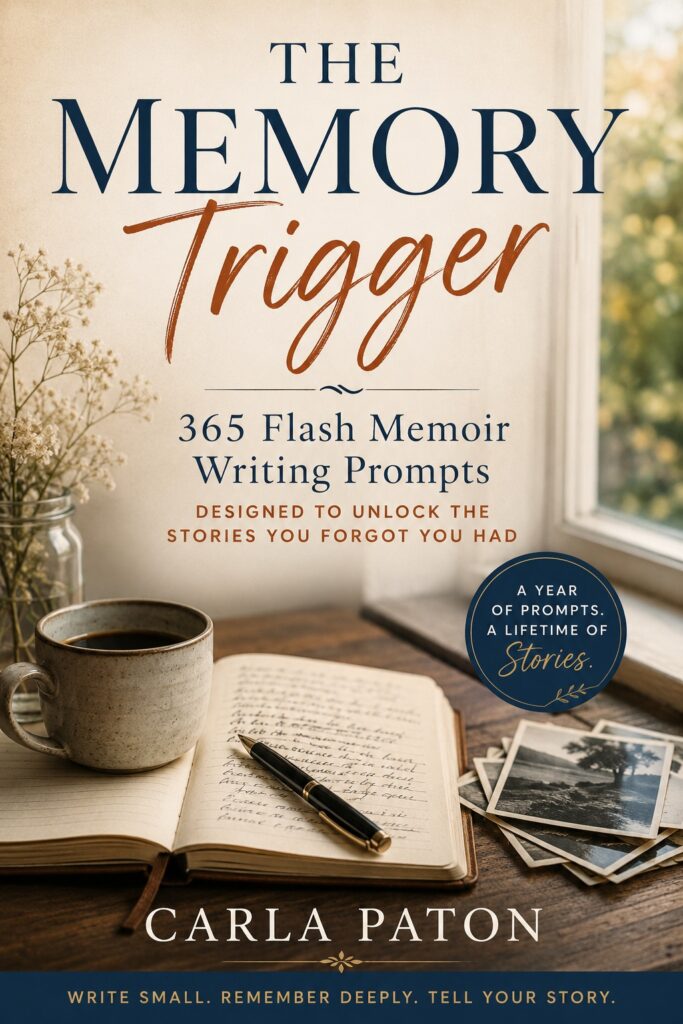

The Memory Trigger

Flash Memoir Prompt: Moment when Your Family Surprised You by Being Exactly What You Needed

flash memoir prompt family surprise

A focused writing invitation for remembering the moment your family became exactly the help, comfort, or steady presence you did not know how to ask for. Maybe you expected a lecture. Maybe you expected silence. Maybe you expected your family to miss the point, tease you, or make the whole thing louder than it already felt. Then, somehow, they did the right thing. They brought the blanket, made the call, sat beside you, changed the subject, or simply stayed. This flash memoir prompt about a moment family surprised you by being what you needed asks you to look closely at that small shift.

flash memoir prompt family surprise

The Prompt

Write about a moment when your family surprised you by being exactly what you needed.

This prompt can open a memory that may look ordinary from the outside. A ride home. A quiet dinner. A hand on your shoulder. A sibling who did not joke for once. A parent who did not ask questions. Flash memoir works well when the moment is small enough to hold in one scene, yet charged with feeling.

The focus is not proving that your family was perfect. It is noticing one time when the people around you met the moment better than you expected. That kind of memory often carries both surprise and relief.

Why This Memory Matters

Family stories can get stuck in old patterns. We remember who always talks too much, who avoids hard topics, who fixes things, who disappears, and who thinks food can solve everything. Those patterns may be true, but they are not the whole story.

This prompt invites you to write about a break in the pattern. Maybe your loud family went quiet because you needed peace. Maybe your practical father cried with you instead of offering advice. Maybe your sister, who usually competed with you, defended you without being asked.

That surprise matters because it shows change, tenderness, and complexity. In literature, we often pay attention to character shifts because they reveal what someone values under pressure. The same idea can help in memoir. If you want more practice noticing those changes, this guide on how to analyze characters in literature can also help you observe real people with more care.

A flash memoir prompt moment family surprised by being present at the right time may uncover a story about illness, grief, embarrassment, fear, or a day when you felt unseen. It may also uncover humor. Some families show love in strange ways. A burned casserole, an awkward pep talk, or a badly wrapped gift can still become the exact thing you needed.

The Flash Memoirist
previous arrow
next arrow

How to Approach This Prompt

Begin with the physical detail that proves you were inside the moment. Do not start with the lesson. Start with the chair, the kitchen light, the sound of tires on wet pavement, the smell of coffee, or the way your brother kept tapping his foot because he did not know what to say.

Then narrow the memory to one scene. You do not need to explain your whole family history. Let the reader understand the pattern through what happens in that moment. If your mother usually gave advice, show the moment she stayed quiet. If your cousins usually joked, show the moment they carried your boxes without making fun of you.

Write what you noticed before you explain what it meant. For example, you might write, “My father put my favorite mug beside me and left the room,” before you write, “That was how I knew he understood.” The detail gives the feeling room to rise on its own.

It can also help to make quick notes before drafting. Mark the moment when your expectation changed. What did you think would happen? What actually happened? What did your body do when you realized they had helped? If you like breaking a text into small clues, the same habit used to annotate literature can help you mark your own memory for meaning.

Try not to polish the family into saints. The power of this flash memoir prompt moment family surprised by being exactly enough comes from honesty. They may have been clumsy. They may have said the wrong thing first. The surprise may be that, after all that, they still showed up.

A Quick Example

I called my older brother from the grocery store parking lot because I had failed my driving test. Again. I expected him to laugh. He had passed on the first try and had never let me forget it. Instead, he said, “Stay there.” Fifteen minutes later, his truck pulled in beside my mother’s car. He handed me a cherry slushie and took the passenger seat. “Show me the route,” he said. For an hour, he let me drive around the empty streets behind the high school. He did not sing, tease, or grab the door handle. When I made a wide turn, he only said, “Try that one again.” By the time we pulled back into the parking lot, the ice in my cup had melted, but my hands had stopped shaking.

Try It Yourself

Set a timer for ten minutes and write one scene from this prompt. Keep your attention on what happened in the room, car, hallway, yard, or kitchen. Let the meaning arrive after the action.

If you get stuck, write this sentence and continue from there: “I thought they would _____, but instead they _____.” That contrast can lead you straight into the memory. You may find that the real story is not about dramatic rescue. It may be about being known in a quiet, specific way.

This flash memoir prompt moment family surprised by being what you needed can be tender, funny, or bittersweet. Trust the version that feels true. A short piece does not need a perfect ending. It only needs one honest turn.

Want More Flash Memoir Prompts?

If this prompt helped you remember one surprising family moment, keep going. Small memories often lead to deeper ones when you give them time and attention. Explore all 365 prompts in The Memory Trigger: 365 Flash Memoir Writing Prompts.

The Memory Trigger
error

Enjoy this article? Please spread the word :)

Follow by Email
BLUESKY
fb-share-icon
Reddit
LinkedIn
Share
RSS







