A gentle flash memoir invitation for remembering a moment when your shoulders dropped, your breath settled, and your body felt like a safe place to be.
Maybe it happened in a place no one else would call special. Your feet were tucked under a kitchen chair. Your hair was still damp from a shower. You were walking home with a warm drink in your hand, and for once you were not fixing, hiding, judging, or bracing.
If you searched for a flash memoir prompt last time felt completely at ease in your own body, this prompt is asking you to pause on that kind of moment. Not the perfect version of yourself. Not the body you wished for. The body you had, in one exact scene, when it felt enough.

The Prompt
Write about the last time you felt completely at ease in your own body.
This prompt can unlock a meaningful memory because the body often remembers peace before the mind has words for it. You may not recall the date or every detail, but you might remember the weight of a blanket, the feel of bare feet on cool floor, or the deep breath you did not have to force.
A flash memoir prompt last time felt completely at ease can lead to a quiet story. It does not need a big plot. The power may be in the small shift from tension to rest.
Why This Memory Matters
Many of us spend a lot of time aware of our bodies in critical ways. We notice discomfort, awkwardness, tiredness, pain, size, age, or how others might see us. So a memory of ease can feel surprisingly tender.
This kind of story may uncover more than comfort. It may reveal safety, trust, relief, or belonging. You might remember a time when you were alone and free from performance. You might remember being with someone who made you feel accepted without effort.
For some writers, the memory may be connected to movement. Dancing in a living room. Swimming after a hard week. Stretching in the sun. For others, it may be rest. Sitting on a porch. Lying in bed with clean sheets. Holding a child who finally fell asleep.
As you write, notice the emotional weather of the scene. Is the memory calm, playful, surprised, or bittersweet? If you want help naming the feeling around the memory, this guide to tone and mood in literature can help you see the difference between what happened and how it felt.
How to Approach This Prompt
Begin with one physical detail. Do not start by explaining your relationship with your body across your whole life. That is too much for one short piece. Start smaller.
You might write, “My feet were in the lake,” or “The sweatshirt was too big in the best way,” or “I had just stopped holding my stomach in.” Let the body open the door.
Then narrow the memory to one scene. Choose ten minutes, not ten years. Where were you? What was touching your skin? What sounds were near you? Or what did your body no longer feel the need to do?
Try to write what you noticed before you explain what it meant. This is the same skill readers use when they slow down and mark details in a text. If you want a simple method for paying closer attention, this piece on how to annotate literature offers a useful way to notice first and interpret second.
For this prompt, you might ask yourself one focused question: What did ease feel like in my body? Maybe it felt like warmth, looseness, balance, silence, or a laugh that came out before you could stop it.
Avoid trying to make the memory sound profound right away. Let it be ordinary. The meaning can rise from the details.
A Quick Example
The last time I felt completely at ease in my body, I was floating in my sister’s backyard pool after everyone else had gone inside. It was late August, and the water held the day’s heat. My ears were under the surface, so the world sounded far away and soft. I remember looking up at the porch light and seeing moths circle it like tiny scraps of paper. For once, I was not thinking about how I looked in a swimsuit. I was not pulling at the fabric or comparing myself to anyone. My arms drifted out beside me. My knees rose and sank. I felt my breath move through me, steady and plain. But I did not feel beautiful exactly. I felt unbothered. That was better.
Try It Yourself
Set a timer for ten minutes and write from the prompt without stopping to judge the memory. If more than one moment comes to mind, choose the one with the clearest physical detail.
You do not have to write a body-positive essay. You do not have to solve every complicated feeling. Just return to one moment of ease and describe it honestly.
This flash memoir prompt last time felt completely at ease in your body works best when you trust the small scene. Let the chair, the water, the blanket, the sidewalk, or the quiet room carry part of the story for you.
Want More Flash Memoir Prompts?
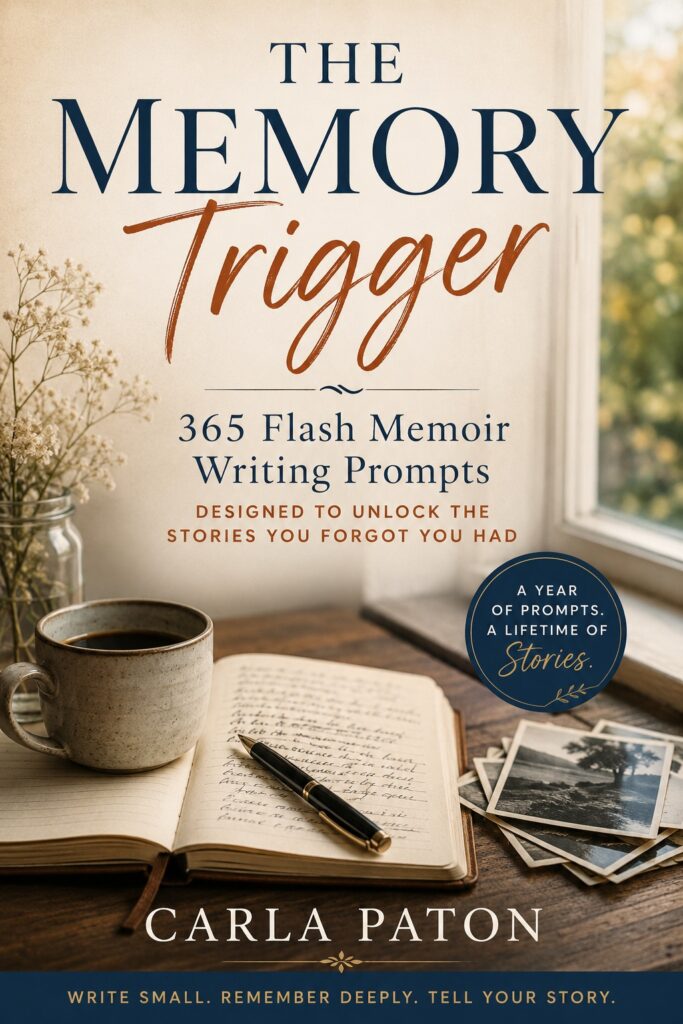
If this prompt opened a memory you did not expect, keep going. Short prompts can help you build a steady writing habit, one scene at a time. Explore all 365 prompts in The Memory Trigger: 365 Flash Memoir Writing Prompts.