A brief flash memoir prompt for the last time you believed something about the world, then felt that belief crack open in one small, honest moment.

The Prompt
Write about the last time you believed something about the world that turned out not to be true.
This flash memoir prompt last time believed something world invites you to remember a moment when your understanding shifted. It might have been a big belief, like thinking adults always knew what they were doing. It might have been smaller, like believing a friendship would never change, a place would always stay the same, or hard work always led to a fair result.
The power of this prompt is in the turn. At first, you thought the world worked one way. Then something happened. A sentence, a silence, a closed door, a news story, a look on someone’s face. Suddenly, the old idea did not fit anymore.
Why This Memory Matters
Some memories stay with us because they changed what we knew. Others stay because they changed what we trusted.
This prompt may lead you to a story about innocence, disappointment, surprise, or even relief. Maybe you once believed everyone was watching you, then realized most people were busy worrying about themselves. Maybe you believed your parents were fearless, then saw one of them cry in the car. Maybe you believed success had a clear path, then watched someone kind and talented struggle anyway.
A memory like this does not need to end with a grand lesson. In fact, it may work better if it stays close to the scene. Memoir often becomes stronger when it lets the reader feel the moment before explaining it. If you want to practice seeing deeper meaning in a small moment, you might enjoy learning more about how to identify theme in literature, since memoir and literature both grow from patterns, choices, and change.
The belief you lost might have made life easier for a while. It might have protected you. It might have made a person or place seem simple. Writing about the moment that belief changed can help you explore the strange mix of grief and growth that comes with seeing the world more clearly.


How to Approach This Prompt
Begin with the moment before you understood. Do not start by explaining the belief in a broad way. Start with what you saw, heard, touched, or smelled.
For example, instead of writing, “I used to think adults always had answers,” you might begin with the sound of your mother’s keys dropping into a glass bowl, or your teacher staring at the chalkboard for too long, or your father sitting at the kitchen table with a stack of bills.
Narrow the memory to one scene. This is especially important for a flash memoir prompt last time believed something world, because the subject can become huge very quickly. You are not writing the history of your entire worldview. You are writing one moment when the old belief stopped working.
Try this simple path:
First, show what you believed. Then show the scene that challenged it. Then end with the feeling that remained afterward.
You can also jot notes in the margin before you draft. What did you notice first? What confused you? What did you understand only later? If that kind of close attention helps you think, these tips on how to annotate literature may also help you mark up your own memories before you shape them into a short piece.
Keep your language plain. A sentence like “I watched the smile leave his face” may carry more weight than a long explanation about disillusionment. Let the reader stand beside you in the room.
A Quick Example
I was twelve when I learned that nice houses could be sad. My best friend lived in a blue two-story house with white shutters, the kind I thought meant everything inside was calm. That afternoon, we were making microwave popcorn when her parents started arguing upstairs. Not TV arguing. Real arguing, with one voice low and one voice sharp. She turned the microwave fan on high and kept her eyes on the spinning bag. I pretended to read the popcorn box. Butter smell filled the kitchen, thick and fake. When the timer beeped, neither of us moved. I had believed some homes were safe because they looked safe from the street. After that, every lit window looked more private to me.
Try It Yourself
Set a timer for ten minutes and write the scene as simply as you can. Use the prompt exactly: Write about the last time you believed something about the world that turned out not to be true.
If you get stuck, finish this sentence: “Before that day, I thought…” Then move straight into a physical detail. A hand on a doorknob. A phone face down on the table. A hallway that felt too quiet.
Do not worry about making the memory sound wise. The wisdom can stay hidden in the details. Your job is to notice the shift, then follow it honestly.
Want More Flash Memoir Prompts?
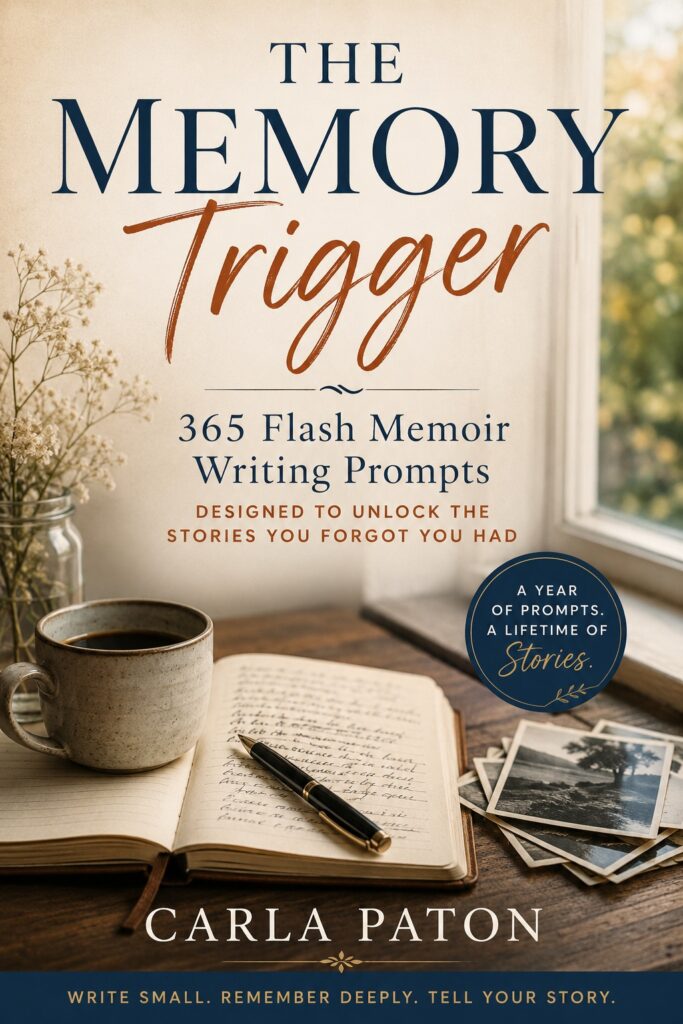
If this flash memoir prompt last time believed something world helped you uncover a charged memory, keep going. Small moments often open the largest doors. Explore all 365 prompts in The Memory Trigger: 365 Flash Memoir Writing Prompts.