
Themes in Never Let Me Go: A Student-Friendly Guide

Never Let Me Go Themes

The themes in Never Let Me Go help readers see why Kazuo Ishiguro’s quiet novel feels so painful. This guide explains the major ideas students should notice, from memory and love to power and human worth.

In this Guide

  • Why the novel’s themes matter
  • Human worth and dignity
  • Memory and storytelling
  • Love, friendship, and hope
  • Control and social systems
  • Symbols that support the themes
  • The ending and its meaning
  • Books to pair with the novel
  • FAQ
Never Let Me Go Themes

Why the themes in Never Let Me Go matter

Ishiguro does not explain the world of the novel all at once. He lets readers feel its sadness before they fully understand it.

The themes in Never Let Me Go matter because the story asks a hard question: what makes a life valuable? Kathy, Tommy, and Ruth grow up at Hailsham, a school that seems strange but safe. Later, readers learn that their lives have been planned for them since birth.

This slow reveal makes the novel powerful. Instead of using action or shock, Ishiguro uses memory, small details, and calm narration. The quiet tone makes the horror feel even stronger.

For more background on the author, students can read this short profile from Britannica on Kazuo Ishiguro.

Themes in Never Let Me Go: human worth and dignity

The novel pushes readers to ask who gets treated as fully human.

One of the central themes in Never Let Me Go is **human worth**. The students at Hailsham create art, form friendships, feel jealousy, and dream about the future. In every emotional way, they are human.

Yet society sees them as useful bodies, not complete people. Their purpose is to donate organs. This cruel fact exposes how people can use language to hide violence.

The word “donor” sounds calm and medical. It hides the truth that these young people have no real choice. Ishiguro shows how polite words can make an unjust system seem normal.

This theme connects well to Mary Shelley’s Frankenstein. Both novels ask readers to look at beings who are judged by others, then ask where real humanity should be found.

Themes in Never Let Me Go: memory and storytelling

Kathy tells the story from memory, so the past becomes the heart of the novel.

The themes in Never Let Me Go make memory feel fragile and precious. Kathy looks back at Hailsham, her friendships, and her mistakes. She does not tell the story like a history book. She tells it like someone who needs the past to make sense of her life.

Memory gives Kathy comfort, but it also hurts her. She remembers moments when Ruth lied, Tommy felt ashamed, or teachers acted cold. These scenes help readers see how the characters learn about their world piece by piece.

Kathy’s memories also show how people hold on to meaning when they cannot control much else. She cannot change her fate, but she can choose how to remember the people she loved.

This is a strong AP Literature point. The narrator’s voice shapes the meaning of the whole book. Kathy’s calm tone does not mean she feels nothing. It may show how much she has learned to hide.

Love and friendship in a world with little freedom

The novel’s love story is quiet, but it carries deep emotional weight.

When students discuss themes in Never Let Me Go, they often focus on Kathy and Tommy. Their relationship is tender, awkward, and late. It never becomes the kind of love story that gives readers a perfect ending.

That is the point. Love matters in the novel because it exists even when it cannot save anyone. Kathy and Tommy’s bond does not stop the donation system. It does not give them a normal future.

Still, their love proves that they have inner lives. They hope, fear, regret, and care for each other. Ishiguro shows that love has value even when it cannot defeat death.

Ruth also matters here. She hurts Kathy and Tommy, but she later tries to repair the damage. Her guilt makes her feel real, not simply cruel.

Themes in Never Let Me Go: control and social systems

The book shows how a society can train people to accept unfair rules.

Control is one of the darkest themes in Never Let Me Go. The students are not locked in cages, but their choices are still limited. They grow up inside a system that teaches them what to expect.

Hailsham gives them art, lessons, and a sense of being special. Yet it also prepares them for a life they did not choose. The school seems kinder than other places, but it still serves the same cruel system.

This is why the novel feels different from a book like 1984 by George Orwell. Orwell shows a loud, brutal state. Ishiguro shows a softer kind of control, where people obey because they have been trained not to imagine another life.

That makes the novel more disturbing. The characters know something is wrong, but they do not rebel in a dramatic way. Their world has shaped their sense of what is possible.

Symbols that support the major ideas

Ishiguro uses simple objects to deepen the novel’s meaning.

The tape Kathy loves, titled Songs After Dark, is one of the most important symbols. Kathy’s favorite song helps her imagine care, motherhood, and loss. When Madame sees Kathy dance with a pillow, she cries because she sees a future that Kathy can never have.

The gallery is another key symbol. The students believe their art may prove they have souls. This belief reveals their need to be seen as human, but it also shows the cruelty of a world that asks them to prove what should be obvious.

The title itself matters. “Never let me go” sounds like a plea for love, memory, and safety. The sad truth is that everyone in the novel must let go of someone.

If you want help with this skill, read our guide on how to find symbolism in a story.

How the themes in Never Let Me Go shape the ending

The ending is quiet because the novel’s tragedy has always been quiet.

By the end, the themes in Never Let Me Go come together through Kathy’s grief. Tommy has died after his donations. Ruth is gone too. Kathy is left with memory and a short time before her own donations begin.

The final image of Kathy staring at rubbish caught on a fence is simple but painful. It suggests loss, distance, and the way people leave pieces of themselves behind.

The ending does not offer rescue. Instead, it asks readers to face the cost of a world that values some lives less than others. That is why the novel stays with students long after the last page.

Relevant books to search on Amazon or at your library

These books pair well with Ishiguro’s novel because they explore identity, power, and what it means to be human.

  • Frankenstein by Mary Shelley
  • The Handmaid’s Tale by Margaret Atwood

Students who want more author context can also explore Ishiguro’s Nobel Prize page from The Nobel Prize.

FAQ: themes in Never Let Me Go

Use these quick answers to review the novel before class or an essay.

What is the main theme of Never Let Me Go?

The main theme is the value of human life. The novel asks why some people are denied dignity, choice, and a future.

Why is memory so important in the novel?

Memory helps Kathy hold on to the people she loved. It also helps readers see how the truth about her world slowly becomes clear.

Is Never Let Me Go a dystopian novel?

Yes, but it is a quiet dystopia. The danger comes from a calm social system, not from constant violence.

What does Hailsham represent?

Hailsham represents both care and control. It gives the students a better childhood, but it still prepares them for a cruel fate.

Key takeaway

The themes in Never Let Me Go show how love, memory, and art can prove human worth, even inside a world that refuses to honor it.
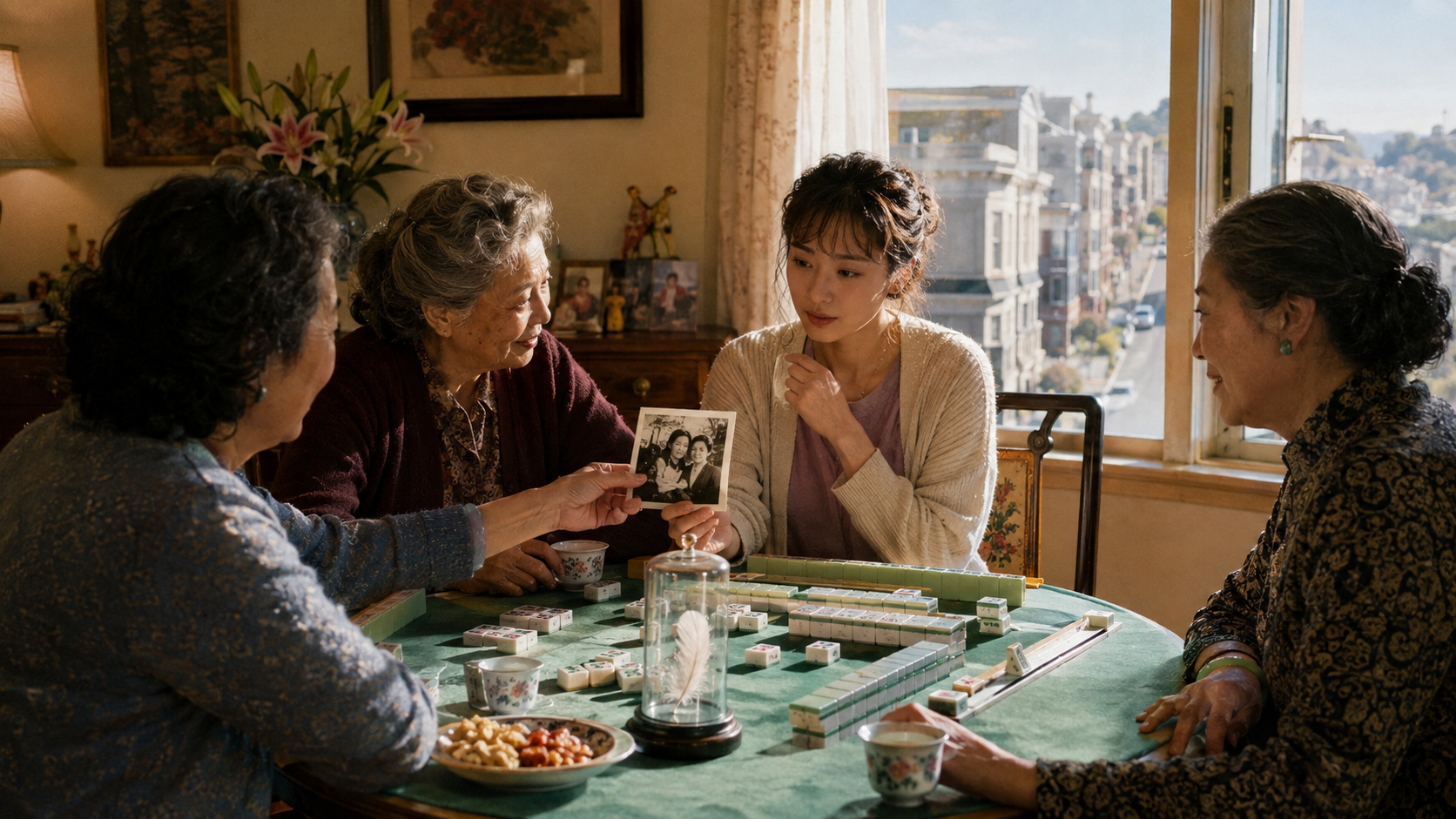
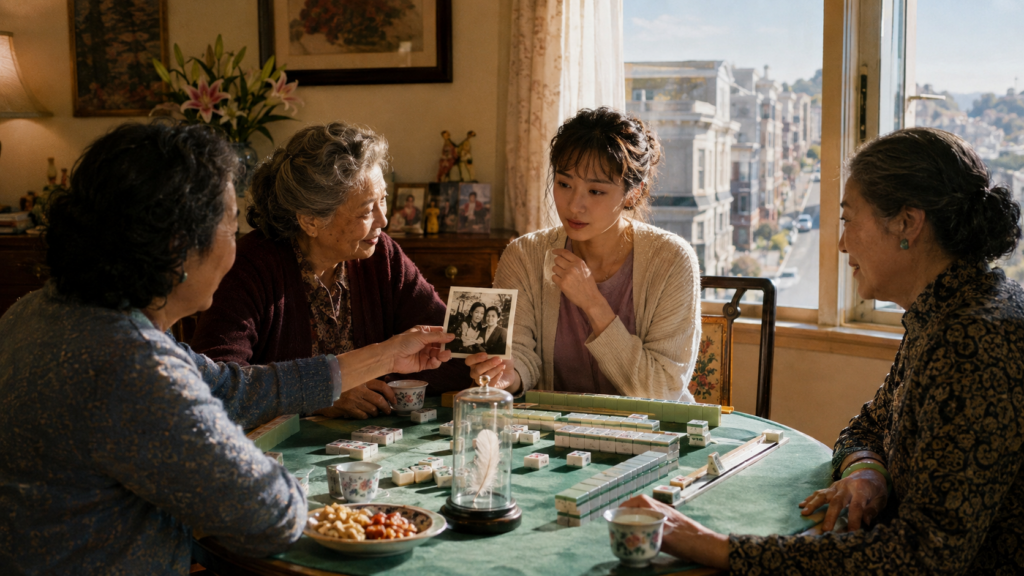
The Joy Luck Club Summary and Analysis for Students

Joy Luck Club Summary

This guide offers The Joy Luck Club summary and analysis for students who need a clear path into Amy Tan’s novel. We will cover the plot, the structure, the main conflicts, and the deeper literary meaning.

Tan’s book can feel complex at first because it moves between voices and time periods. Once you see how the stories connect, the novel becomes much easier to understand.

In this Guide

Use this section to find the part of the novel you need most.

  • The Joy Luck Club summary and analysis: quick overview
  • Plot summary
  • Structure and point of view
  • Major conflicts
  • Themes and symbols
  • Study tips and FAQ
Joy Luck Club Summary

The Joy Luck Club summary and analysis: Quick Overview

Amy Tan’s novel is about mothers and daughters who love each other, yet often fail to understand each other.

The Joy Luck Club, published in 1989, follows four Chinese immigrant mothers and their American-born daughters in San Francisco. The older women carry painful memories from China. Their daughters face pressure to define themselves in America.

The title refers to a club started by Suyuan Woo. The women gather to play mahjong, share food, and protect hope during hard times. After Suyuan dies, her daughter Jing-mei takes her place at the table.

For class, The Joy Luck Club summary and analysis should focus on how stories pass from mother to daughter. The novel suggests that family history can hurt, but it can also heal.

If you want to study Tan’s life and career, the Britannica profile of Amy Tan gives helpful background.

Plot Summary of The Joy Luck Club

The novel does not follow one straight timeline, but its core story is easy to trace.

Jing-mei Woo has recently lost her mother, Suyuan. She joins the Joy Luck Club in her mother’s place and learns that Suyuan left behind twin daughters in China during wartime.

Jing-mei feels unsure about her role. She worries that she does not know enough about her mother to carry her story forward.

The novel then moves through the lives of the other families. An-mei Hsu teaches her daughter Rose to know her own worth. Lindo Jong teaches Waverly about strength, even when their pride causes tension.

Ying-ying St. Clair watches her daughter Lena accept an unequal marriage. Ying-ying wants Lena to find the voice she herself lost years before.

By the end, Jing-mei travels to China and meets her half-sisters. This final scene brings the novel’s emotional threads together. Jing-mei begins to understand Suyuan not as a distant mother, but as a full person with grief, courage, and hope.

The Joy Luck Club summary and analysis of Structure

The structure mirrors the way memory works: broken, personal, and powerful.

The novel is made of linked stories, not one simple chapter-by-chapter plot. Each family gets moments of focus, and each voice adds a new piece to the whole.

In The Joy Luck Club summary and analysis, this structure matters because it shows how identity is built from many stories. No single woman can explain the full meaning of the book alone.

The structure is similar to The House on Mango Street by Sandra Cisneros. Both books use short connected sections to build a larger portrait of family, place, and selfhood.

This form also asks readers to pay close attention. A small detail in one story may matter much more later. If you need help with that skill, see our guide on how close reading works in literature.

The Joy Luck Club summary and analysis of Themes

The novel’s themes center on voice, memory, and the hard work of understanding family.

The Joy Luck Club summary and analysis often starts with the theme of mother-daughter love. The mothers want to protect their daughters from pain. The daughters often hear that protection as control.

Another key theme is cultural identity. The daughters grow up in America, while their mothers carry Chinese customs and memories. This gap leads to conflict, but it also creates a rich double vision of the world.

Storytelling is one of the novel’s most important powers. The mothers tell stories so their daughters will not lose the past. The daughters learn that these stories are not just family gossip. They are maps for survival.

The novel also explores silence. Many characters do not say what they feel until pain forces the truth out. Tan shows that silence can protect people, but it can also trap them.

The Joy Luck Club summary and analysis of Conflict

Most of the novel’s conflict comes from love that has not found the right words.

The main conflict is between mothers and daughters. The mothers speak from memory, fear, and sacrifice. The daughters speak from desire, pride, and confusion.

Waverly and Lindo clash over success and independence. Waverly thinks her mother judges her. Lindo sees a daughter who does not always understand the cost of strength.

Rose and An-mei face a different conflict. Rose has learned to stay quiet in her marriage. An-mei wants her to speak with courage, because she knows what silence can cost.

Jing-mei and Suyuan’s conflict continues even after Suyuan dies. Jing-mei believed she disappointed her mother. The trip to China helps her see that her mother gave her a story, not just a set of demands.

Important Symbols in The Joy Luck Club

Tan uses objects and games to show hidden emotional truths.

Mahjong stands for community and survival. The game brings the women together when life feels unstable. It also gives the novel its main gathering place.

The swan feather stands for hope passed from mother to daughter. It suggests that even a small object can carry a large dream.

Chess in Waverly’s story stands for strategy and pressure. Waverly learns how to win, but she also learns how success can strain a family bond.

Food often reveals love that characters cannot say out loud. Meals show care, judgment, memory, and tension at the same time.

Why the Ending Matters

The ending gives Jing-mei a new sense of belonging.

When Jing-mei meets her sisters in China, she does more than complete a family reunion. She becomes a bridge between Suyuan’s past and the family’s future.

The photograph at the end matters because it joins three daughters through one mother’s story. Jing-mei finally sees that she is not separate from her mother’s history. She is part of it.

This ending does not solve every problem in the novel. It gives emotional closure because Jing-mei accepts the duty to remember.

How to Write About The Joy Luck Club in Class

Strong essays about this novel focus on how form and meaning work together.

A good thesis might argue that Tan uses shifting points of view to show how family truth changes from one generation to the next.

You can also write about symbols. For example, mahjong is not just a game. It is a sign of friendship, survival, and memory.

When you quote the novel, do not just drop in a line. Explain who speaks, what the moment reveals, and why the detail matters. For more help, review this guide to close reading a literary passage.

From Idea to Novel Blueprint

These books pair well with Tan’s novel for essays or independent reading.

  • The Joy Luck Club by Amy Tan
  • The Woman Warrior by Maxine Hong Kingston

If you compare these books, look at how each one uses memory and family stories to explore identity.

FAQ About The Joy Luck Club

Here are quick answers to common student questions.

What should I include in The Joy Luck Club summary and analysis?

Include the main family relationships, the linked-story structure, the mother-daughter conflicts, and the themes of memory and identity.

Who is the main character?

Jing-mei Woo is often seen as the central figure because her story frames the novel. Still, the book works as a shared portrait of several women.

What is the main message of the novel?

The novel shows that understanding family often requires listening to painful stories from the past.

Why is the structure confusing?

The book moves across different voices and memories. Once you track each mother-daughter pair, the structure becomes clearer.

Is The Joy Luck Club hard to read?

It can feel complex at first, but the language is clear. The challenge comes from the shifting points of view.

Key Takeaway

The novel is about learning to hear the stories that shaped you.

The Joy Luck Club summary and analysis shows that Amy Tan’s novel is not just about conflict between generations. It is about how love, memory, and language can cross a painful gap.

For students, the best way into the book is to follow the stories. Each one adds a new layer to the meaning of family.

error

Enjoy this article? Please spread the word :)

Follow by Email
BLUESKY
fb-share-icon
Reddit
LinkedIn
Share
RSS