Gothic literature can feel dark, strange, and full of mystery, but its symbols often give readers the clearest clues. This guide to Gothic Symbols and Their Meanings will help you understand what haunted houses, shadows, storms, and other images often suggest in classic texts.
In this Guide
Use this quick table of contents to find the section you need.
- Why Gothic symbols matter
- Common Gothic symbols
- Examples from famous literature
- How to interpret Gothic symbols
- Books to read next
- FAQ
- Key takeaway
Gothic Symbols and Their Meanings: Why They Matter
Gothic symbols turn fear into something readers can study.
In Gothic stories, scary details rarely exist only to shock the reader. A locked room may point to a secret. A storm may reflect a character’s fear. A ruined house may show a family’s moral decay.
That is why Gothic Symbols and Their Meanings matter for students. They help you move past “this story is creepy” and toward a stronger idea, such as “this story uses fear to show guilt.”
Gothic literature often deals with hidden sins, family curses, madness, death, and loss of control. Symbols let writers suggest these ideas without spelling them out.
If you want a broader method for spotting symbols in any text, you can also use this student guide to finding symbolism in a story.
Common Gothic Symbols and Their Meanings
Many Gothic symbols appear again and again because they speak to deep human fears.
Below are some of the most common examples of Gothic Symbols and Their Meanings that you may see in novels, poems, and short stories.
The Haunted House
A haunted house often stands for the past. It may hold secrets, guilt, or trauma that a family refuses to face.
In many Gothic works, the house feels alive. Its broken walls, dark halls, and locked doors suggest that something is wrong beneath the surface.
In Edgar Allan Poe’s “The Fall of the House of Usher,” the house reflects the Usher family itself. As the house falls apart, the family line also falls apart.
Darkness and Shadows
Darkness often stands for fear, confusion, or evil. Shadows can suggest that truth is hidden or that a character does not understand their own mind.
Gothic writers use darkness to create mood, but they also use it to show moral danger. When a character enters a dark room, they may also enter a darker part of themselves.
Storms
Storms often show inner conflict. Thunder, wind, and rain can reflect a character’s fear or rage.
In Mary Shelley’s Frankenstein, stormy weather fits Victor Frankenstein’s intense emotions. Nature seems to respond to his guilt and terror.
Locked Rooms
A locked room usually suggests a secret. It may hide a crime, a forbidden truth, or a painful memory.
When a character tries to open a locked room, the story often moves closer to a major reveal. The symbol creates suspense because both the character and the reader want to know what is inside.
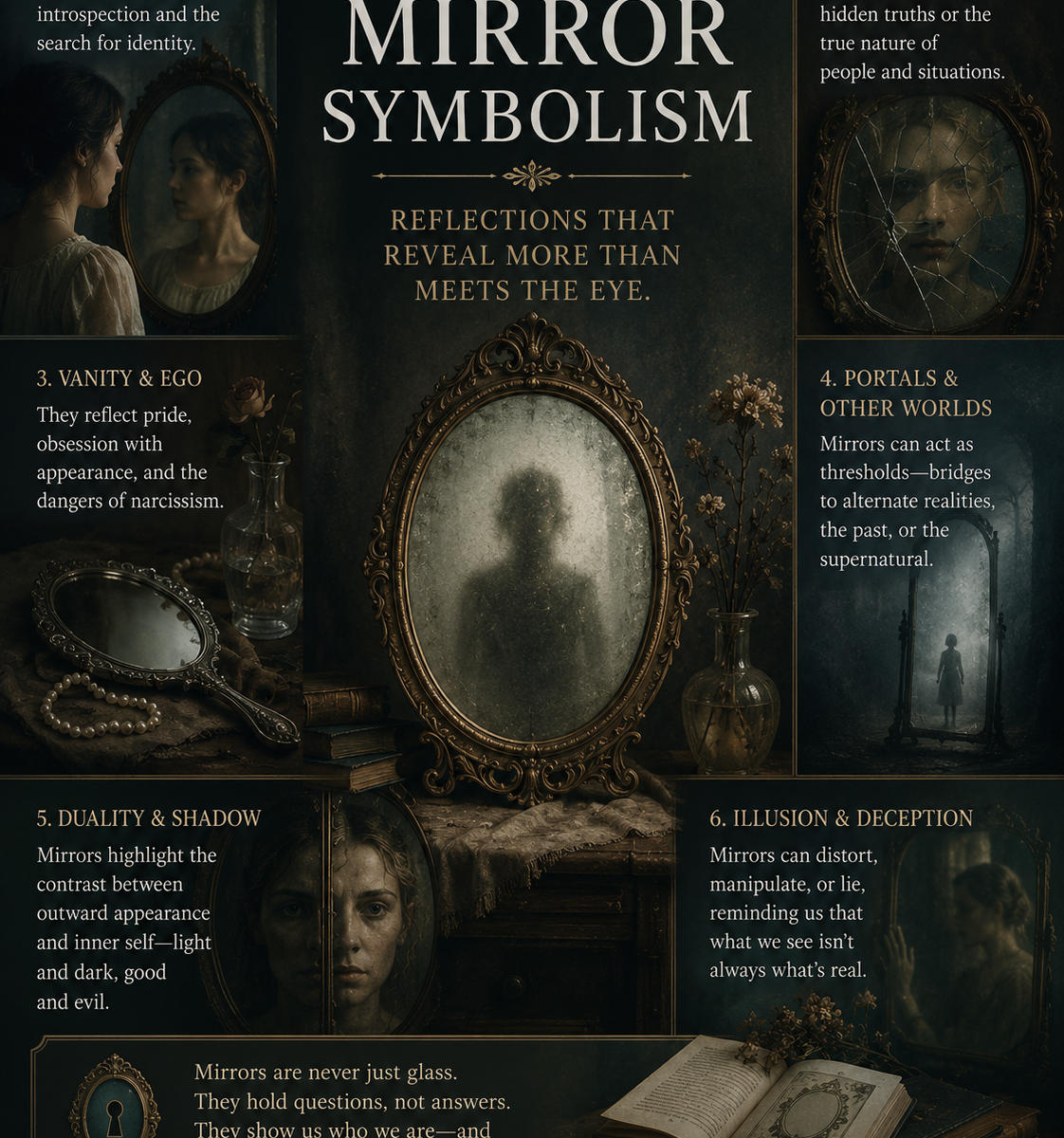
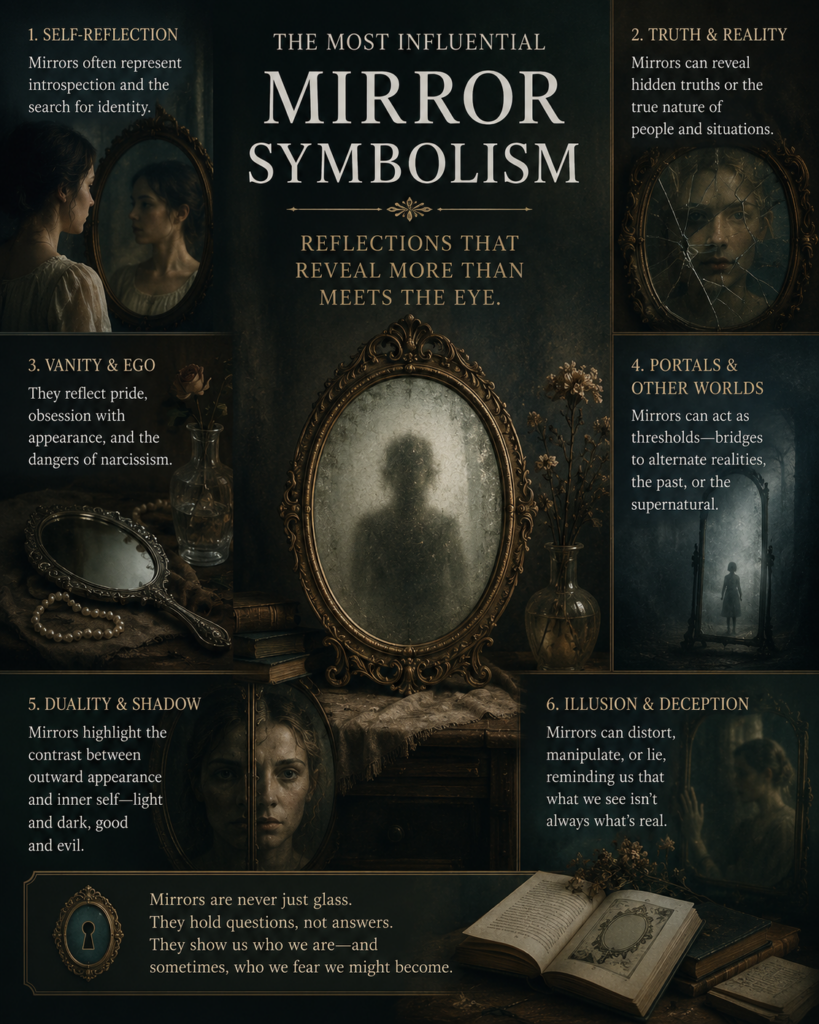
Mirrors
Mirrors often point to identity. They can show self-knowledge, vanity, or a split between how a person looks and who they really are.
In Gothic stories, a mirror may not bring comfort. It may show a character something they fear about themselves.
Ghosts
Ghosts often stand for the past that will not stay buried. They can represent guilt, memory, or unfinished business.
Not every Gothic ghost must be real. Sometimes the ghost may show a character’s unstable mind or deep regret.
Blood
Blood often suggests violence, guilt, family ties, or inherited danger. It can also remind readers that Gothic stories are deeply tied to the body.
In vampire fiction, blood can stand for desire and fear at the same time. It can also show how one person takes power from another.
Gothic Symbols and Their Meanings in Famous Literature
Classic Gothic texts use symbols to build fear and deepen theme.
When you study Gothic Symbols and Their Meanings, it helps to connect each image to a specific work. These examples show how symbols do more than decorate a scene.
Frankenstein by Mary Shelley
In Frankenstein, light often stands for knowledge. Victor wants to discover the secret of life, but that “light” becomes dangerous.
The creature also becomes a symbol. He represents what can happen when ambition loses compassion. Victor creates life, then refuses responsibility for it.
The icy landscape near the end of the novel adds another layer. It suggests isolation, emotional coldness, and the final cost of Victor’s choices.
“The Fall of the House of Usher” by Edgar Allan Poe
Poe’s story is one of the clearest examples of Gothic symbolism. The house, the family, and the mood all connect.
The crack in the house suggests hidden weakness. It also hints that the Usher family is already broken.
When the house collapses, the symbol becomes literal. The family and the building fall together.
Dracula by Bram Stoker
In Dracula, blood carries heavy meaning. It connects fear, power, life, and control.
Dracula’s castle also matters. It is old, isolated, and hard to escape. The castle suggests a world ruled by ancient fear.
The contrast between modern London and Dracula’s old world helps the novel explore a major Gothic fear: the past may return and threaten the present.
Jane Eyre by Charlotte Brontë
Jane Eyre uses Gothic symbols within a coming-of-age story. Thornfield Hall seems grand, but it hides pain and secrecy.
The mysterious laughter in the house creates fear. It also points to a truth that Jane does not yet know.
The fire in the novel can suggest danger, passion, and change. It destroys, but it also clears the way for a different future.
For more background on the Gothic novel as a genre, Britannica offers a helpful overview here: Gothic novel.
How to Interpret Gothic Symbols and Their Meanings
You do not need to guess wildly when you study Gothic symbols.
A strong reading should connect the symbol to the story’s characters, setting, and conflict. The goal is not just to name the symbol. The goal is to explain what it does.
Start by asking where the symbol appears. Does it show up during moments of fear? Does it appear near a secret? Does it change as the story moves forward?
Then connect the symbol to theme. If a house decays as a family declines, the house may symbolize moral collapse. If a storm appears when a character feels guilt, the weather may reflect inner chaos.
Here is a simple sentence frame you can use in an essay:
The symbol of ______ suggests ______ because ______.
For example: “The symbol of the locked room suggests hidden guilt because the family refuses to speak about what happened there.”
This kind of sentence helps you avoid vague claims. It also shows your teacher that you can connect evidence to meaning.
If symbolism feels tricky, review this clear guide on how to find symbolism in a story before you write your analysis.
Gothic Symbols and Their Meanings for Essays
Gothic symbols can help you write stronger thesis statements and body paragraphs.
When you write about Gothic Symbols and Their Meanings, try to focus on one symbol at a time. A narrow focus often leads to a better essay.
For example, instead of writing, “Poe uses many Gothic symbols,” try this: “Poe uses the crumbling House of Usher to show that hidden family corruption must eventually collapse.”
That thesis is stronger because it names the symbol and explains the meaning. It also points to a theme.
In a body paragraph, use a short quote or scene detail. Then explain how the symbol works. Do not stop after saying, “This creates a spooky mood.” Ask what that spooky mood reveals.
Why Gothic Symbols Still Matter Today
Gothic symbols still feel powerful because people still fear what they cannot control.
Modern horror films, mystery novels, and dark fantasy often borrow from Gothic literature. Haunted houses, old portraits, family secrets, and strange doubles still appear in popular stories.
These symbols last because they connect to real fears. People fear being trapped. They fear the past. They fear what might be hidden inside their own minds.
That is why Gothic Symbols and Their Meanings remain useful for students. They help readers understand both older literature and modern stories.
You can explore more Gothic poems and authors through the Poetry Foundation’s page on Gothic literature.
Books to Read Next
These books are strong choices if you want to study Gothic symbols in action.
- Frankenstein by Mary Shelley
- Dracula by Bram Stoker
Both books are widely taught in high school, AP Literature, and college courses. They also give you clear examples of Gothic mood, setting, and symbolism.
FAQ: Gothic Symbols and Their Meanings
These quick answers can help with homework, class discussion, or essay planning.
What are Gothic symbols?
Gothic symbols are objects, places, or images that suggest deeper meaning in dark or mysterious stories. Common examples include haunted houses, storms, ghosts, and locked rooms.
Why are Gothic symbols important?
They help reveal theme, mood, and character conflict. They often point to fear, guilt, secrecy, or the return of the past.
What is the most common Gothic symbol?
The haunted house is one of the most common Gothic symbols. It often represents hidden secrets, family decay, or a troubled past.
How do I write about Gothic Symbols and Their Meanings in an essay?
Choose one symbol, connect it to a theme, and use a scene or quote as evidence. Explain what the symbol reveals about the story.
Key Takeaway
Gothic Symbols and Their Meanings help readers see how fear, secrecy, and guilt shape a story. When you study a Gothic symbol, ask what it hides, what it reveals, and how it connects to the text’s deeper message.