

Books About Villains and Moral Complexity Every Student Should Read
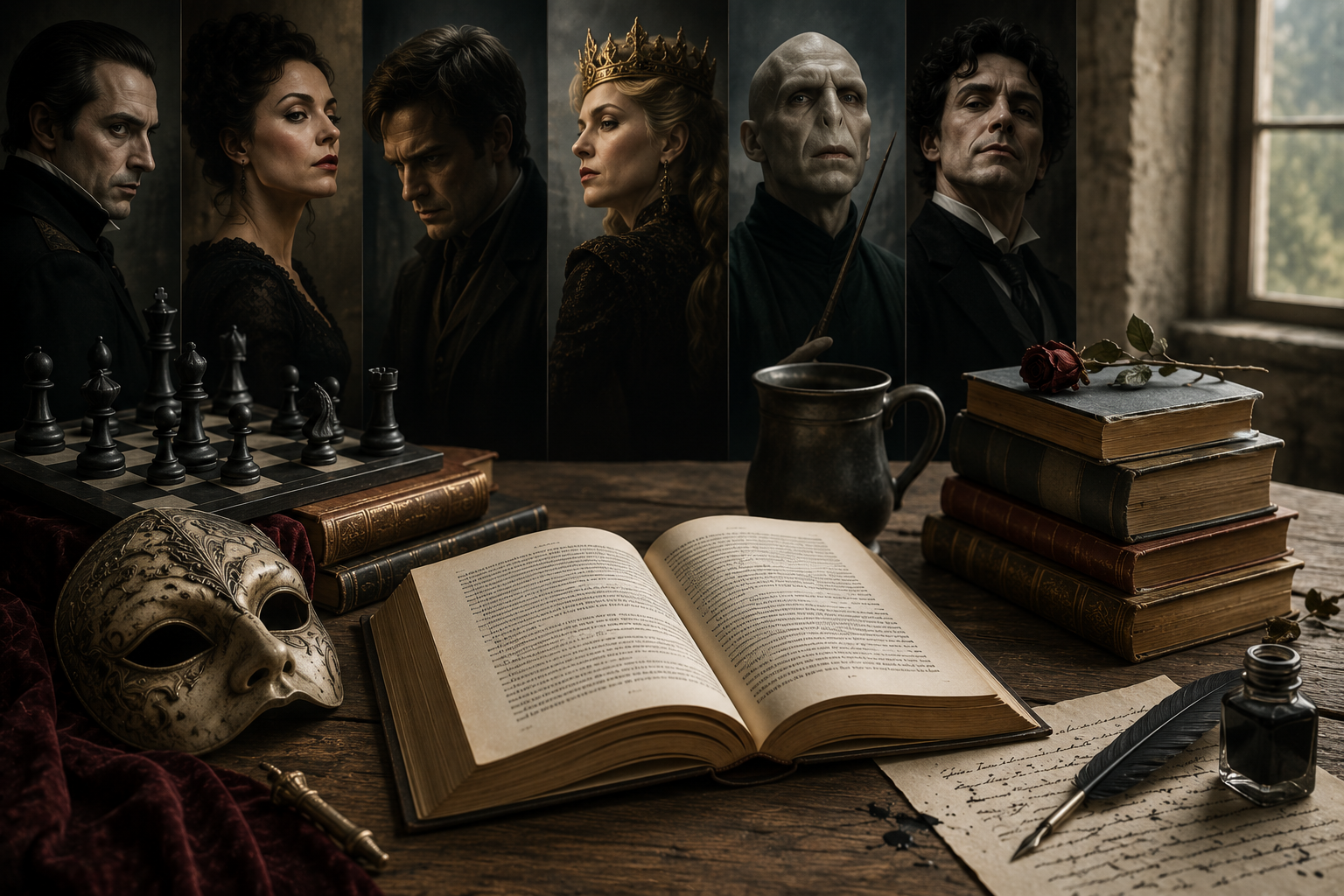
Great villains do more than scare us. Books about Villains and Moral Complexity show how fear, pride, pain, and power can shape a person’s choices.
These stories help students ask deeper questions about guilt, justice, and what makes a character truly “bad.”
In this Guide
- Why morally complex villains matter
- Best books about villains and difficult choices
- Symbols and themes linked to villain characters
- How to study villains in class essays
- FAQs about villains in literature
Why Villains and Moral Complexity Matter in Literature
The best villains often feel human, even when their actions are cruel.
A flat villain does evil just because the plot needs danger. A complex villain has motives, wounds, beliefs, or goals that make readers pause.
This is why Villains and Moral Complexity matter so much in literature. They force us to ask if evil comes from choice, pain, society, or ambition.
Think of Macbeth. He begins as a brave soldier, not a monster. His hunger for power grows until he destroys others and himself.
That fall is what makes him so powerful to study. He is guilty, but he is not simple.
Books About Villains and Moral Complexity Students Should Know
These works show how writers build villains with depth, conflict, and meaning.
Frankenstein by Mary Shelley is one of the best books for studying Villains and Moral Complexity. The creature commits terrible acts, but he is also lonely, rejected, and desperate for love.
Victor Frankenstein may seem like the hero at first. Yet his pride and refusal to take responsibility cause much of the tragedy.
Macbeth by William Shakespeare gives readers a villain who creates his own ruin. Macbeth knows murder is wrong, but ambition leads him forward.
Lady Macbeth also adds depth to the story. She pushes Macbeth toward violence, then breaks under the weight of guilt.
Paradise Lost by John Milton presents Satan as proud, bold, and persuasive. Readers may understand his anger, even while they see the danger in his pride.
For background on Shelley’s novel, Britannica has a clear overview of Frankenstein. The Poetry Foundation also offers helpful material on John Milton.
Amazon Book Suggestions for Villains and Moral Complexity
These titles are useful for students, book clubs, and AP Literature readers.
- Frankenstein by Mary Shelley
- Macbeth by William Shakespeare
- Paradise Lost by John Milton
Each book gives a different view of Villains and Moral Complexity. One explores rejection, one explores ambition, and one explores pride.
Symbols and Themes in Villains and Moral Complexity
Writers often use symbols to show the hidden life of a villain.
In Macbeth, blood stands for guilt. Macbeth thinks he can wash it away, but the stain stays in his mind.
In Frankenstein, fire can mean knowledge and danger. The creature learns from fire, but he also learns pain from it.
In Paradise Lost, darkness often connects to pride and separation from God. Satan’s world reflects his inner state.
These symbols make Villains and Moral Complexity easier to see. They show that evil is not only action. It can also be fear, shame, or a broken view of the world.
How to Analyze Villains and Moral Complexity in Essays
A strong essay does not just say a villain is evil. It explains how the writer makes that villain feel complicated.
Start with the character’s choices. Ask what the villain wants, what they fear, and what they believe they deserve.
Then look at the cost of those choices. Who gets hurt? Does the villain feel guilt? Does the story ask readers to pity them?
If you need help with this step, read our guide on how to analyze characters in literature.
When you write about Villains and Moral Complexity, use quotes that show inner conflict. A single line of guilt, fear, or pride can reveal more than a long plot summary.
What Makes a Villain Morally Complex?
A morally complex villain has reasons, but those reasons do not excuse the harm they cause.
This balance is important. If a story only excuses the villain, it loses moral weight. If it only condemns the villain, it may feel too simple.
Good stories about Villains and Moral Complexity keep both sides in view. They let readers understand the character without letting the character escape blame.
That is why students often enjoy writing about villains. These characters leave room for debate.
Modern Examples of Villains and Moral Complexity
Modern stories often blur the line between hero and villain.
In The Hunger Games, President Snow is clearly cruel. Yet the larger system around him also matters, since power protects itself through fear.
In Harry Potter, Severus Snape is not a simple villain. His choices are painful, flawed, and shaped by love, bitterness, and regret.
These examples show why Villains and Moral Complexity still matter today. Readers want characters who feel real, even when they make dark choices.
FAQs About Villains and Moral Complexity
What does moral complexity mean in literature?
Moral complexity means a character cannot be judged in a simple way. They may do wrong things for reasons readers can understand.
Why are complex villains more interesting?
Complex villains feel more human. They create conflict because readers may feel pity, anger, and doubt at the same time.
Is a morally complex villain the same as an antihero?
No. An antihero is often the main character and may still work toward a good goal. A villain usually causes harm or blocks the hero.
What is a good book for studying Villains and Moral Complexity?
Frankenstein is a strong choice. It asks readers to think about blame, cruelty, loneliness, and responsibility.
Conclusion: Why These Villains Stay With Us
The best villains are not memorable because they are evil. They stay with us because they reveal something true about human weakness.
Books about Villains and Moral Complexity help students read with more care. They show that literature can question judgment without removing responsibility.
Key Takeaway
Villains and Moral Complexity teach us that the darkest characters often reveal the hardest truths about choice, guilt, and power.












